

Have you ever noticed how your body responds differently to stress than your friends' or family members' do? Perhaps you experience headaches while others develop digestive discomfort, or you find yourself feeling irritable when someone else might feel anxious. Traditional Chinese Medicine's (TCM) Five Element Theory offers one perspective on these individual differences.
For over 2,000 years, TCM practitioners have used this framework to understand the body's patterns and responses. Learning about the five elements may help you recognise your own health tendencies and make more informed choices about your wellbeing.
What are the 5 elements in TCM?
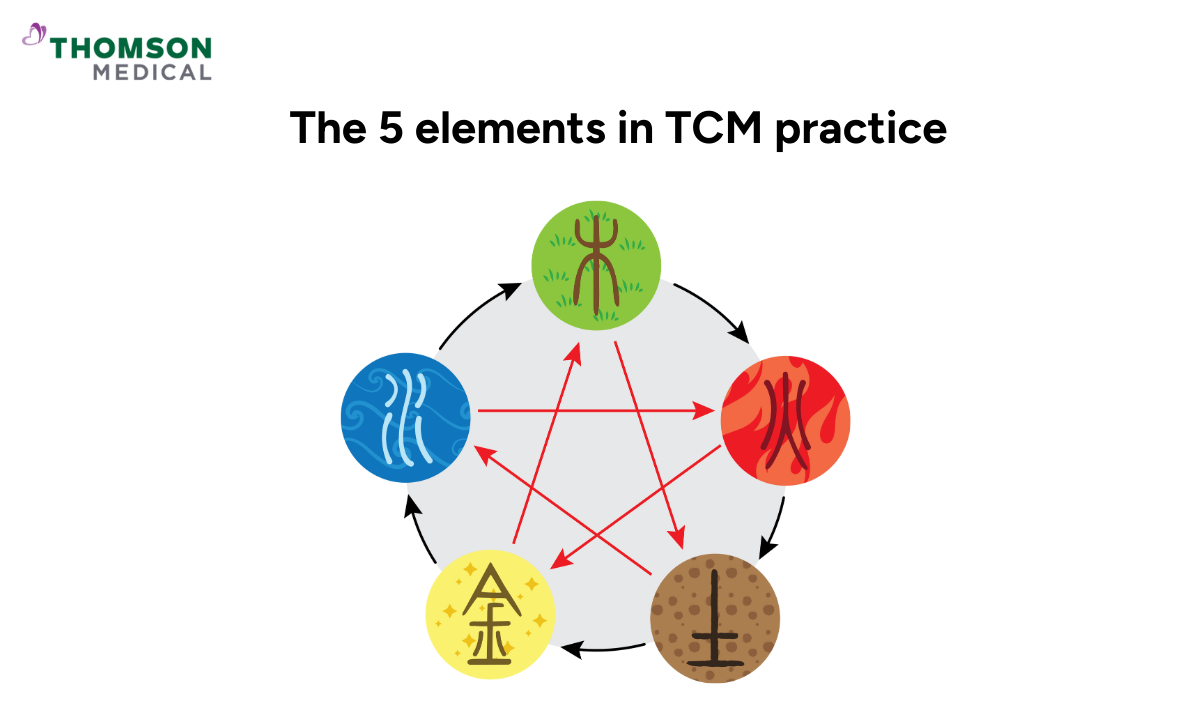
In TCM, the five elements – Wood, Fire, Earth, Metal, and Water – each represent different aspects of nature. Each element corresponds to specific organs, emotions, colours, tastes, and sensory organs within your body.
Here's an overview of each element and its traditional associations:
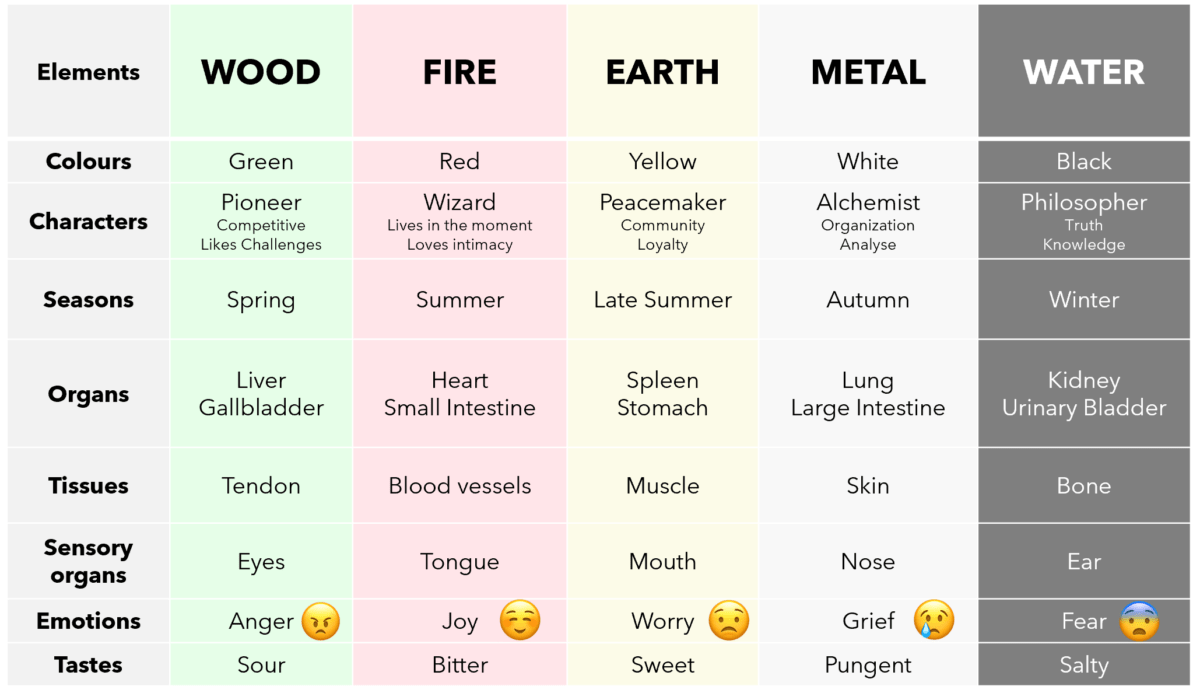
This theory dates back to ancient China's Warring States Period (476-221 BC) and continues to inform TCM practice today. You might think of these elements as different personality types for your body – each with its own strengths, weaknesses, and ways of responding to stress or illness.
How does the 5-element theory work in TCM?
During a TCM consultation, your physician will usually ask about your symptoms and examine your tongue and pulse. The 5-element theory provides one framework that practitioners use to understand these observations and identify potential imbalances.
Each element relates to different organ systems, offering TCM physicians a way to view your health from various angles. For example, two people experiencing stress might notice different physical responses:
Someone with Wood characteristics might experience dry or itchy eyes and feel easily frustrated.
Someone with Earth characteristics might notice bloating or digestive changes.
However, it’s important to note that the 5-element theory is just one diagnostic tool, not a diagnosis in itself.
These symptoms describe tendencies rather than fixed conditions. A proper TCM assessment still requires a full consultation, including medical history, lifestyle factors, and a thorough evaluation of signs and symptoms.
If you're experiencing recurring symptoms and want to understand what your body might be trying to tell you, schedule an appointment with Thomson Chinese Medicine. Our TCM physicians can assess your health patterns and help identify which element influences your wellbeing.
Our physicians in Singapore
Loading...
How knowing your element helps you understand your body and health
In TCM your dominant element reflects how your body and mind tend to respond to daily life. Identifying this pattern can help you make sense of recurring symptoms, emotional tendencies, and why certain habits affect you more than others.
Knowing your TCM element can help you:
Recognise your body’s natural strengths and weak spots:
Each element is linked to specific organs and body systems.
If your element is out of balance, you may notice repeated issues in certain areas, such as digestion, sleep, stress response, or energy levels.
Understand emotional patterns that affect physical health:
TCM views emotions as closely connected to physical wellbeing.
Your element may influence how you experience stress, worry, frustration, or fatigue, which in turn can impact your overall health.
Make more personalised lifestyle choices:
Once you know your element, you can better tailor your diet, daily routine, and self-care habits to support balance rather than strain your system.
Identify early signs of imbalance:
Instead of waiting for symptoms to worsen, understanding your element helps you notice subtle changes such as low energy, poor sleep, or frequent tension – so you can address them earlier.
Guide TCM treatments more effectively:
TCM practitioners use element patterns to personalise treatments such as acupuncture, herbal therapy, and massage, focusing on restoring balance rather than just relieving symptoms.
Balancing your element through lifestyle and diet
Once your TCM physician identifies your dominant element, small lifestyle, and dietary changes may help support balance and overall wellbeing. These recommendations are personalised and focus on working with your body’s natural tendencies rather than against them.
Depending on your element, your physician may suggest:
Dietary adjustments that support digestion, energy levels, and internal balance
Daily routines that encourage adequate rest, gentle movement, and stress management
Mind–body practices such as breathing exercises, meditation, or Tai Chi to support emotional balance
Seasonal awareness, helping you adapt your habits as your body’s needs change throughout the year
These changes are usually gradual and sustainable, aiming to support your health over time rather than offering quick fixes.
If you're unsure which lifestyle or dietary changes would support your body's needs, schedule an appointment with Thomson Chinese Medicine. Our TCM physicians can help determine your element type and recommend a personalised approach that works for you.
FAQ
Can you have more than one element in TCM?
While most people have one dominant element that shapes their personality and health patterns, you can have characteristics from multiple elements. Your dominant element usually remains consistent, but secondary elements may influence you as well.
What organs are associated with each of the 5 elements?
In TCM philosophy, each of the five elements relates to specific organ systems in your body:
- Wood corresponds to the liver and gallbladder
- Fire corresponds to the heart and small intestine
- Earth relates to the spleen and stomach
- Metal connects to the lungs and large intestine
- Water links to the kidneys and bladder
These connections form the foundation of how TCM practitioners view the relationships between different parts of your body.
What emotions are linked to each element in TCM?
Each element has an associated emotion, including:
- Wood is associated with anger and frustration
- Fire is associated with joy and anxiety
- Earth is associated with worry and overthinking
- Metal is associated with grief and sadness
- Water is associated with fear
When an element is imbalanced, its related emotion may become more pronounced.
How does knowing my element help with health symptoms?
Understanding your element helps you recognise patterns in how your body responds to stress or illness. This means you can take preventive steps and choose treatments that address the root cause rather than just the symptoms.
Can your dominant element change over time?
Your dominant element generally stays the same throughout your life. However, life circumstances, stress, and ageing can temporarily influence how strongly certain elements express themselves in your health and behaviour.
What is the difference between the five-element theory and Yin Yang?
Yin Yang describes the balance of opposing forces in your body (such as hot and cold, active and restful), while the five-element theory explains how different organ systems interact and influence each other. Both concepts work together in TCM diagnosis.
The information provided is intended for general guidance only and should not be considered medical advice. For personalised recommendations and advice based on your unique conditions, schedule an appointment with Thomson Medical today.
Citations
Kim, J. (2025, June 6). Understanding the five element theory in traditional Chinese medicine – Santa Clara Acupuncture. Santa Clara Acupuncture. https://www.santaclaraacupuncture.com/blog-1/understanding-the-five-element-theory-in-traditional-chinese-medicine
Physician Seah Ai Wei
Traditional Chinese Medicine
Thomson Chinese Medicine (TCM United Square) and 1 other
English, Mandarin
Alliance MediNet
