

Every parent knows that familiar tug at the heart when their little one wakes up with a fever or a stuffy nose. We do our best to cuddle, comfort, and care for them through every sniffle.
While many childhood illnesses pass quickly, the flu can be a little tougher on young bodies than an ordinary cold. That’s why the annual flu vaccine brings so much reassurance – lowering the risk of serious illness, easing symptoms if your child does fall sick, and offering added protection for the whole family.
How does flu affect your child?
Influenza, often simply called flu, is more than just a bad cold. It is a contagious viral infection that spreads easily through droplets when someone coughs or sneezes. In children, symptoms of flu often come on suddenly. It can bring days of high fever, cough, sore throat, runny nose, body aches, tiredness, or headaches.
Most children recover with rest and fluids, but some may develop flu complications such as ear infections, pneumonia, or wheezing. The good news is that flu vaccination is an effective way to protect your child's health during peak flu seasons.
Why the flu vaccine matters for kids?
You may wonder whether the flu vaccine is truly necessary, especially when you know how frightened or tearful your little one can be during injections. It’s understandable to question anything that brings them discomfort, as that’s part of loving and protecting your child.
But this is also why the flu vaccine matters. Children have developing immune systems, which places them at a higher risk of catching the flu and experiencing complications compared with adults.
Vaccination not only lowers their chances of becoming seriously unwell but also helps protect your whole family, especially elderly grandparents or tiny babies who are too young to be vaccinated.
Because of these benefits, both the World Health Organization (WHO) and Singapore’s Ministry of Health (MOH) recommend flu vaccination for all children aged 6 months and above.
Is the flu vaccine safe for kids?

As parents, we naturally want to protect our children in every way we can. It’s completely normal to feel cautious about anything that goes into their little bodies.
Many mums and dads share the same concern about the safety of vaccines, so it’s reassuring to know that the flu vaccine used in Singapore undergoes strict quality control and has an excellent safety record, with serious reactions being extremely rare. Thousands of children receive the flu shot every year, and most of them have not experienced any problems with it.
Is the nasal spray flu vaccine a good option for your child?
For children aged 2 years and above, the nasal spray flu vaccine can be a needle-free option. It’s gently sprayed into the nostrils, which many little ones prefer, especially if they’re anxious about injections.
However, this option isn’t suitable for every child, such as those with asthma, weakened immunity, or who are on certain medications.
If you’re considering the nasal spray vaccine because you’d like to avoid the pain or tears that may come with an injection, consult your child’s doctor first. He can help you decide which vaccine is the safest and most effective choice for your child.
Give your child the strongest protection possible this flu season by arranging his vaccination with us. Our Thomson Paediatric Centre is ready to welcome you and support your little one with gentle, trusted care. Request an appointment today.
Our paediatrician in Singapore
Loading...
Does the influenza vaccine protect against all types of flu?
Flu viruses change slightly each year, which is why the vaccine is updated annually to target the strains expected to circulate most widely. While it can’t cover every single variant, the seasonal flu vaccine still offers strong and meaningful protection for your child.
Children who are vaccinated are far less likely to need antibiotics for secondary infections, and when they do fall sick, their symptoms are usually milder and recovery is quicker. The flu vaccine also greatly reduces the risk of hospitalisation and complications, such as pneumonia.
Think of the vaccine as giving your child’s immune system a helpful heads-up before flu season begins. Even though it’s not perfect, it remains one of the simplest and most effective ways to keep your little one safe and healthy each year.
When should your child get the flu shot?
It takes about two weeks for the body to build strong immunity after vaccination, and it’s best to vaccinate your child before flu season starts. Many families choose to get the flu shot in April or October, so their children stay well protected throughout both peak periods.
If your child is receiving the flu vaccine for the first time and is between 6 months and 8 years old, he may need two doses, four weeks apart. As such, planning ahead helps make sure that he is fully protected.
The same applies if your family is travelling to countries with winters or regions currently experiencing flu outbreaks. A consultation with your child’s paediatrician can help you choose the best timing based on your travel plans and your kid’s health.
Above all, remember that annual flu vaccination is the best way to keep your little one protected year after year, especially as flu strains evolve.
Common side effects after flu shot
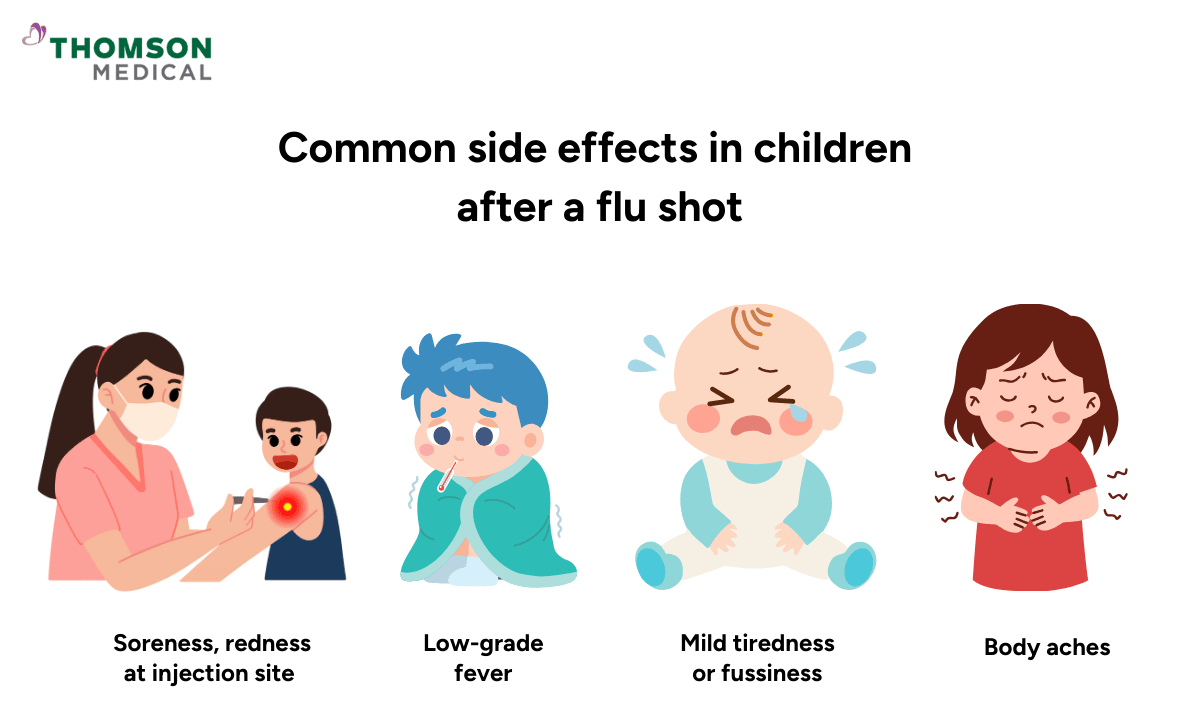
Your child may experience a few mild side effects after his flu vaccination, much like what you may have noticed with other routine childhood vaccines, such as:
Soreness or redness at the injection site
Low-grade fever
Mild tiredness or fussiness
Body aches
These reactions are a sign that his immune system is learning how to recognise and fight the flu virus, not that the vaccine is harming him in any way.
Most of these symptoms are short-lived and settle on their own within a day or two. They don’t affect your child’s long-term health, and they certainly don’t mean that the vaccine is unsafe.
Think of it as a small, temporary discomfort that offers your child months of protection against a virus that can otherwise make them very unwell.
How to help your kid ease discomfort after flu shot
Most little ones bounce back quickly and forget the injection even happened. However, if your child seems a bit sore or unsettled, a few simple steps can make the experience much gentler for him.
Here are things that you can do to help your child feel more comfortable:
Offer plenty of fluids
Apply a cool compress to the injection site
Give extra cuddles (sometimes that’s all he needs)
Use paracetamol if advised by your child’s doctor
With a bit of tenderness and patience, your child will be back to their cheerful self in no time.
Choosing to vaccinate your child against the flu is a simple yet powerful way to keep them healthy through each changing season. If you’d like personalised advice about flu vaccination, request an appointment with Thomson Paediatric Centre. Our paediatricians are ready to support you and your child with clear guidance and gentle care.
FAQ
How often should my child get the flu vaccination?
Children should receive a flu vaccine once a year, as flu strains change and immunity naturally decreases over time. Annual vaccination offers the best protection through each flu season.
At what age can my child get the flu vaccine?
Your child can receive the flu vaccine at 6 months old. Children under 8 years old receiving it for the first time may need two doses for full protection.
What happens if kids don't get flu shots?
Unvaccinated children are at higher risk of catching the flu, experiencing more severe symptoms, or developing complications like pneumonia. They may also spread the virus more easily to family members.
Can my kid get a flu shot with a cold?
If your child has a mild cold, the flu shot is usually still safe. However, if he has a high fever or seems very unwell, it’s best to postpone vaccination and check with your child’s paediatrician.
How much does a flu shot cost in Singapore?
Singaporean children aged 6–59 months can receive the flu vaccine free of charge at CHAS GP clinics or polyclinics. If the vaccination is given at a private clinic, or if the child is not eligible for subsidies, a fee may apply, usually around SGD 35–45, depending on the clinic. Do check with the clinic before the visit to confirm eligibility and costs.
Why does my child still have a cold even though he got a flu shot?
The flu shot protects your child specifically against influenza, but common colds are caused by many other viruses that the vaccine doesn’t cover. Even so, children who are vaccinated tend to cope better when they do fall sick. Their symptoms are often milder, and they recover more quickly.
The information provided is intended for general guidance only and should not be considered medical advice. For personalised recommendations and advice based on your unique situation, please consult a specialist at Thomson Medical.Request an appointment with Thomson Medical today.