

As you age, it’s only natural to feel nervous when you notice changes in your skin. You may notice wrinkles and fine lines appearing, and your skin may no longer look as plump and smooth as it once did. After all, your skin isn't just an external body part, it also has a significant impact on your confidence.
Let's take a closer look at what causes skin ageing and what you can do to help slow down the process.
What is ageing skin?
Ageing skin is a normal change that happens to everyone as they get older. These changes may appear in different ways depending on your skin type and lifestyle. There are two main processes through which your skin ages:
Intrinsic ageing:
It’s the natural ageing process driven by your genes and age, regardless of external factors.
Photo-ageing:
It’s premature ageing caused when you’re exposed to too much ultraviolet (UV) radiation from the sun.
The good news is that Asian skin has some natural advantages against photo-ageing. The high melanin content in your skin offers better protection from the sun, which means you have a lower risk of certain skin cancers. However, this skin type is more prone to developing skin pigmentation issues like dark spots when exposed to sunlight.
Common signs of ageing skin
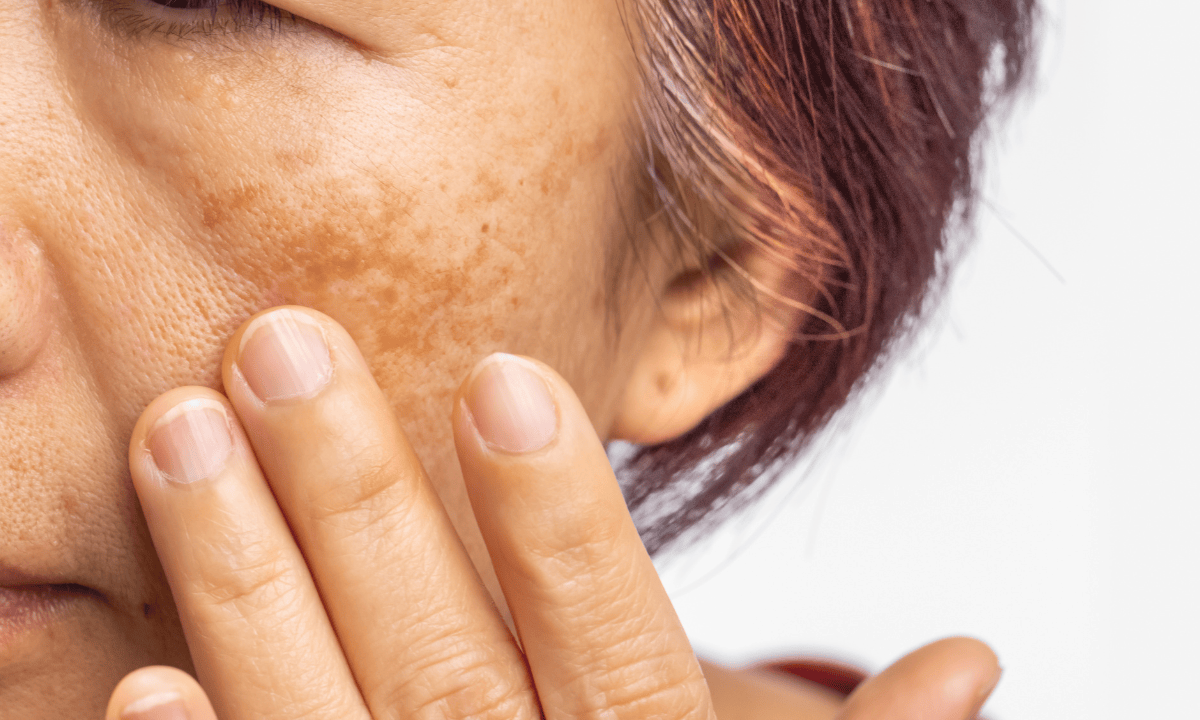
Although ageing affects everyone differently, there are common signs of ageing skin that you can look out for, which include:
Melasma
Melasma is a common concern in Asian skin. It appears as brown or grey-brown patches, usually on your cheeks, the bridge of your nose, forehead, and temples.
Melasma is particularly common if you’re between your mid-20s and late 30s, and it affects women more than men. There are some factors that can increase your risk of developing melasma, including:
Sun exposure
Hormonal changes
Genetic predisposition
Pregnancy
The use of oral contraceptives
If you’re experiencing melasma, don’t worry too much, as it’s completely treatable. Sun protection and topical treatments are usually the first steps. Chemical peels and certain laser treatments can also help lighten melasma.
Your doctor will check your skin condition and help you decide the approach that best suits your skin and lifestyle.
Solar lentigines (age spots)
Another common ageing sign you may notice is solar lentigines, also known as age spots or sun spots. They usually develop due to long-term sun exposure, often appearing in individuals in their 30s and 40s and are more common in people with fair skin.
Solar lentigines look like brown spots with clear borders, and over time, they may merge to form a larger patch. If you have age spots, your doctor may recommend laser therapy or intense pulsed light treatment, as these are effective in lightening the spots.
Hori’s naevus
This condition, also known as acquired dermal melanocytosis (ADM), predominantly affects East Asian women, usually appearing in their 30s and 40s. When it occurs, you'll notice grey-brown spots on your upper cheeks and the bridge of your nose. Since Hori's naevus can run in families, if your mother or sister has these spots, you may also develop them.
Because the pigmentation sits deeper in the skin than age spots, topical lightening creams often don’t work well. Instead, your doctor will suggest multiple sessions with laser therapy to treat this skin condition.
Wrinkles and fine lines
Wrinkles are perhaps the most recognised signs of ageing skin. This is because when you get older, your skin produces less collagen and elastin, the proteins that keep your skin firm and elastic. This process leads to decreased firmness and the formation of lines.
You'll notice fine lines first around your eyes (often called crow's feet) and around your mouth. Deeper wrinkles develop later, especially on your forehead and between your eyebrows.
Although wrinkles are a natural part of ageing, it's understandable if you're concerned about them. However, there are many effective anti-ageing treatment options available. These range from topical retinoids that you can use at home to procedures carried out by a dermatologist (skin specialist).
Not sure which skin concern you're dealing with? Schedule an appointment with Thomson Medical. Our dermatologist can help assess your condition, explain what you're going through, and provide a personalised care plan.
Our skin specialist in Singapore
Loading...
How to slow skin ageing
Although it's impossible to stop ageing altogether, you can control how it affects your skin. The most effective method is through sun protection, as UV exposure accelerates both skin pigmentation issues and wrinkle formation.
Some effective daily habits that can protect your skin include:
- Apply broad-spectrum sunscreen generously:
- It helps protect your skin against both UVB and UVA rays.
- If you’re sweating or near water, choose water-resistant formulas.
- Reapply every two hours:
- If you’re swimming or sweating, you may need to apply more frequently.
- Avoid direct sun exposure:
- UV rays are usually strongest between 10 AM and 4 PM, so if you have to go outside during this time, make sure you have protection.
- Use additional protection:
- Wear a wide-brimmed hat, long sleeves, and sunglasses when you go outside.
Lifestyle factors that affect ageing skin
Other than sun protection, several lifestyle factors play important roles in how your skin ages and knowing these factors can help you make choices that improve the health of your skin.
These factors include:
Smoking:
Smoking can accelerate skin ageing in many ways. It reduces blood flow to your skin and damages collagen.
Quitting this habit isn’t easy, but if you’re ready, your doctor can provide resources and support you along the journey.
Diet and hydration:
While there is no food that can prevent ageing changes, a balanced diet rich in vitamins, healthy fats, and antioxidants can support your skin health from the inside out.
It’s natural to expect the best result, but don’t be hard on yourself. Small and consistent changes often work best.
Treatment options for ageing skin
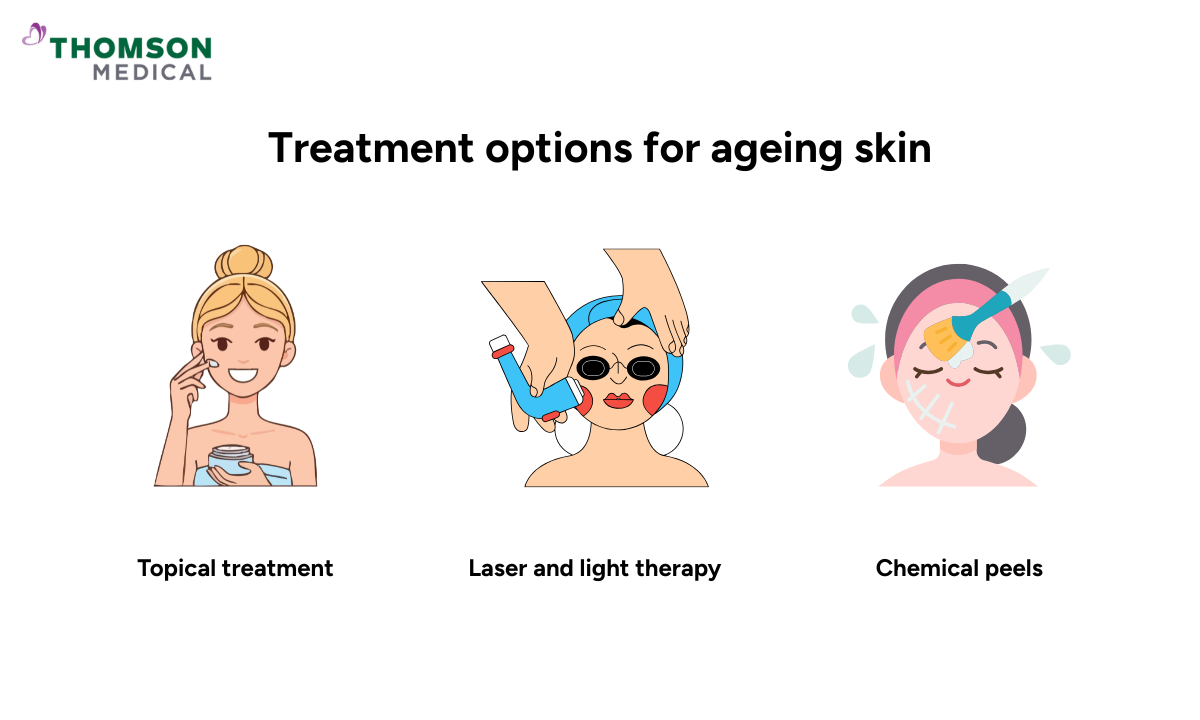
If you’re already seeing signs of ageing skin, there are treatments available to help improve your skin's appearance. Your dermatologist will guide you through the options and suggest the most suitable one for your concerns.
Your treatment plan may include:
Topical treatment:
These are often the first step and may include ingredients like retinoids, hydroquinone, or vitamin C. It involves applying creams or serums directly to your skin.
- Sometimes, your doctor might combine different ingredients to address your specific concerns.
Laser and light therapy:
Laser treatment can be effective for age spots, melasma, and Hori's naevus.
The number of treatments you will need depends on your condition. Some spots can be removed within one or two sessions, while others may require more.
After your laser treatment, it’s important to follow your doctor's instructions for aftercare to prevent pigmentation from coming back.
Chemical peels:
A chemical solution is applied to remove the top layers of your skin, revealing fresher, less pigmented skin underneath.
There are different strengths of chemical peels, so your doctor will recommend the best one for your needs.
Your dermatologist will create a personalised treatment plan based on your skin type and concerns. They'll also monitor your progress and adjust the approach to make sure you achieve the best results.
To help you address your skin concerns, schedule an appointment with Thomson Specialist Skin Centre for consultations and personalised advice for your skin condition.
FAQ
Why should I have pigmentation checked?
Getting checked with your dermatologist is important, even if you think your spots are just from sun exposure or ageing. Cancerous skin lesions can sometimes look like moles or benign spots, making them easy to dismiss.
An accurate diagnosis also matters because treatment methods differ significantly. What works for age spots might not work for melasma or Hori's naevus. That’s why your dermatologist needs to assess your condition to recommend the right care and treatment plan.
How do I know which treatment is right for me?
The best treatment depends on your specific skin concerns, skin type, and lifestyle. Your dermatologist will evaluate your condition and discuss options that fit your needs and goals. They'll also explain what to expect from each treatment, so you can make an informed decision.
What is the role of collagen in ageing skin, and can it be restored?
Collagen is a protein that gives your skin structure, firmness, and elasticity, making it look plump and smooth. As you age, your body produces less collagen, and the collagen you have breaks down faster. This leads to thinner skin, fine lines, and wrinkles.
While it's difficult to restore collagen to youthful levels, you can support your skin's collagen production by using topical retinoids to stimulate collagen production, laser therapy, and radiofrequency. Protecting your skin from the sun also prevents further collagen breakdown.
Some people also consider collagen supplements, though evidence for their effectiveness on skin is still being studied. If you're unsure which treatment to try, don't hesitate to consult with a dermatologist.
Why does skin lose elasticity and develop wrinkles over time?
Skin loses elasticity because of changes in two key proteins, collagen and elastin. Elastin is what allows your skin to bounce back when you press on it or make facial expressions.
Over time, several factors reduce elastin production and damage existing elastin fibres:
Natural ageing processes (intrinsic ageing)
UV radiation exposure
Repeated facial movements
Loss of fat and bone density in your face
The result is skin that doesn't snap back as before, leading to sagging and wrinkle formation. This process is natural, but lifestyle factors, especially sun protection and healthy habits, can significantly slow it down.
What are the best daily skincare routines for mature or ageing skin?
A good daily routine doesn't have to be complicated or expensive. Here's a simple but effective approach that you can try:
- Morning:
- Gentle cleanser
- Antioxidant serum (like vitamin C)
- Moisturiser appropriate for your skin type
- Broad-spectrum sunscreen (SPF 30 or higher)
- Evening:
- Gentle cleanser to remove makeup and sunscreen
- Treatment products (like retinoids, if prescribed)
- Moisturiser or night cream
There is no one-size-fits-all approach, so your dermatologist will help you tailor this routine to your specific condition, whether that's pigmentation, wrinkles, or dryness. The key here is consistency - a simple routine you follow daily works better than a complex one you use sporadically.
Can ageing skin concerns be completely reversed?
This is a common question many people have. With the right care, age spots can be lightened or removed, skin texture can be refined, and fine lines can be softened. However, it's difficult to completely reverse all signs of ageing.
Your dermatologist will give you realistic expectations about what treatments can achieve for your specific concerns.
The information is intended for general guidance only and should not be considered medical advice. For personalised recommendations and advice based on your unique situation, consult a specialist at Thomson Specialist Skin Centre today.
Dr Tan Hiok Hee
Dermatology (Skin)
Thomson Specialist Skin Centre (Novena Specialist Center)
English, Mandarin
.png%3Fbranch%3Dprod&w=640&q=75)