

Chest pain can be unsettling, especially when it does not match the warning signs you may have heard about.
If your discomfort feels different from the classic symptoms of a heart attack, you may be experiencing what doctors describe as atypical chest pain. Understanding what this term means can help reduce anxiety and make sense of what your body is telling you.
Atypical chest pain can show up in many ways, such as a dull ache, sharp twinges, or an unusual sense of tightness. Knowing what these sensations may indicate and when it is important to seek medical advice can give you reassurance and help you get the right care at the right time.
What is atypical chest pain?
Atypical chest pain refers to chest discomfort that doesn't follow the usual pattern of cardiac chest pain. While typical heart-related chest pain often presents as crushing pressure or tightness in the centre of your chest, atypical chest pain can feel quite different.
Instead of a heavy, squeezing sensation, you might feel something sharp and stabbing, a burning feeling, or discomfort that comes and goes unpredictably.
Some days it might be barely noticeable; other days it could feel more intense. This unpredictability can be unsettling, especially when you're trying to work out whether something is seriously wrong.
Many people experience atypical chest pain at some point in their lives. The discomfort can range from mild to severe and may be accompanied by other symptoms.
Symptoms of atypical chest pain
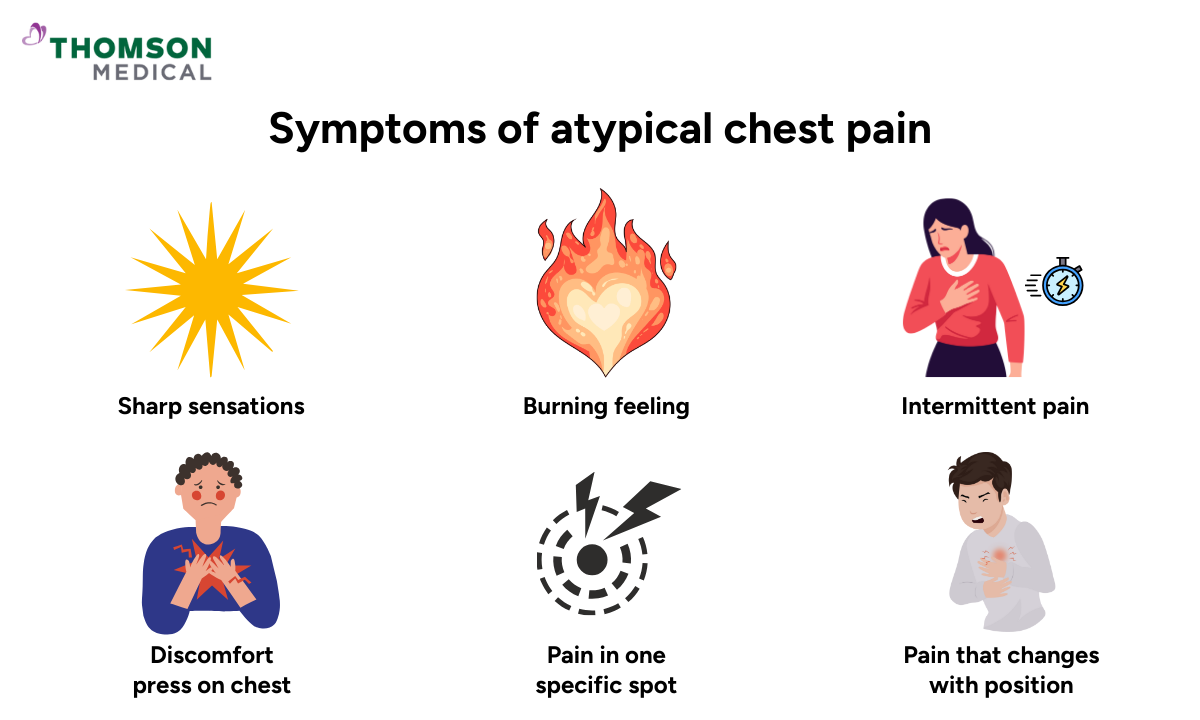
Being aware of these different presentations can help you identify when something needs medical attention, even if it doesn't feel like the "classic" heart attack symptoms you've heard about.
Common symptoms of atypical chest pain include:
Sharp or stabbing sensations rather than pressure or heaviness
A burning feeling in your chest that may resemble heartburn or indigestion
Fleeting or intermittent pain that comes and goes over minutes or hours
Pain that changes with position or when you breathe deeply, cough, or move
Discomfort that worsens when you press on your chest wall or move your arms
Pain focused on one specific spot rather than spreading across your chest
Symptoms that last for hours or days without significant worsening
These symptoms can feel unsettling, but recognising them is the first step towards getting the right care. Moreover, paying attention to how your symptoms feel and when they occur can bring you closer to answers, relief, and the reassurance you deserve.
Causes of atypical chest pain
Atypical chest pain can stem from many different conditions, ranging from minor issues to more serious concerns. Learning about what might be causing your discomfort can bring you comfort and clarity, helping to ease that nagging worry while guiding you towards the care that's right for you.
Musculoskeletal causes
Your chest wall contains muscles, bones, and cartilage that can become strained or inflamed. These musculoskeletal issues are among the most common causes of atypical chest pain, and they often improve with rest and proper care.
Common musculoskeletal causes include:
Costochondritis:
Inflammation of the cartilage connecting your ribs to your breastbone, often causing tenderness and sharp pain
Muscle strain:
Overuse or injury to chest wall muscles from exercise, heavy lifting, or repetitive movements
Rib injuries:
Bruising or minor fractures that create localised chest discomfort
Poor posture:
Prolonged hunching or tension that strains chest muscles and surrounding tissues
These conditions typically cause pain that worsens with movement or pressure on the affected area.
Gastrointestinal causes
Your digestive system lies close to your heart, which means gastrointestinal issues can sometimes mimic chest pain. These conditions are quite common and often respond well to treatment and lifestyle adjustments.
Digestive causes of chest pain may include:
Gastro-oesophageal reflux disease (GERD):
Stomach acid flowing back into your oesophagus, creating a burning sensation
Oesophageal spasm:
Painful contractions of the oesophagus that can feel like cardiac pain
Peptic ulcers:
Sores in your stomach lining that may cause upper abdominal or lower chest discomfort
Gallbladder problems:
Inflammation or gallstones that create pain in your upper right abdomen or chest
Many people find that these symptoms worsen after eating, when lying down, or during times of stress.
Respiratory causes
Conditions affecting your lungs or airways can also produce chest pain that feels atypical. These respiratory issues may be accompanied by breathing difficulties or cough, which can help distinguish them from cardiac causes.
Respiratory conditions that may cause chest pain include:
Pleurisy:
Inflammation of the lining around your lungs, causing sharp pain when you breathe
Bronchitis or pneumonia:
Infections that create chest discomfort along with cough and fever
Asthma:
Airway inflammation that can cause chest tightness and difficulty breathing
Pulmonary embolism:
A blood clot in your lung (this is a medical emergency requiring immediate care)
If your chest pain worsens with breathing or is accompanied by shortness of breath, you should start seeking medical evaluation for proper care.
Anxiety- and stress-related causes
Your emotional wellbeing and physical sensations are deeply connected. Anxiety, panic attacks, and chronic stress can produce very real chest pain that may feel sharp, tight, or uncomfortable.
Psychological causes can include:
Panic attacks:
Sudden episodes of intense fear accompanied by chest tightness, rapid heartbeat, and shortness of breath
Generalised anxiety:
Chronic worry that creates muscle tension and chest discomfort
Stress:
Prolonged tension that affects your body physically, including chest wall muscles
This type of chest pain is genuine and deserves compassionate care, even though it stems from anxiety rather than physical illness.
Cardiac causes
Whilst atypical chest pain is less likely to be cardiac in nature, heart-related issues can occasionally present with unusual symptoms. These conditions require prompt medical evaluation to ensure proper diagnosis and treatment.
Cardiac causes for atypical chest pain include:
Microvascular angina:
Reduced blood flow in small heart vessels, causing chest discomfort
Coronary artery spasm:
Temporary tightening of blood vessels supplying your heart
Pericarditis:
Inflammation of the sac around your heart, creating sharp, position-dependent pain
Heart valve problems:
Issues with heart valves that may cause various types of chest discomfort
It's worth noting that heart problems can sometimes present with atypical symptoms, particularly in women, older adults, and those with diabetes. If you have any concerns about your chest pain, seeking evaluation is always the right choice.
When to seek urgent care for atypical chest pain
Knowing when chest pain requires immediate medical attention can be lifesaving. While many causes of chest pain aren't life-threatening, there are certain symptoms that need prompt medical evaluation so we can ensure you're safe and well cared for.
It's important to seek urgent medical care if your chest pain is accompanied by:
Sudden, severe chest pain that feels different from anything you've experienced before
Pain radiating to your jaw, neck, arms, back, or abdomen – even if the chest pain itself feels atypical
Shortness of breath or difficulty breathing that makes it hard to complete sentences
Sweating, nausea, or vomiting occurring along with chest discomfort
Feeling lightheaded, dizzy, or as if you might faint
Rapid or irregular heartbeat that feels concerning or unusual
Chest pain following a recent injury, surgery, or period of immobility (this could indicate a blood clot)
If you're experiencing any of these symptoms alongside your chest pain, please don't hesitate to seek care right away, even if your chest pain feels unusual or doesn't match what you've heard about heart attacks.
What to expect at an urgent care centre
When you arrive at an Urgent Care Centre (UCC) or emergency department with chest pain, the medical team will work quickly and compassionately to assess your condition. They understand how frightening chest pain can be, and their priority is to provide you with clear answers and appropriate care.
During your visit, the healthcare team may:
Take a detailed history of your symptoms, including when they started and what makes them better or worse
Perform a physical examination to assess your heart, lungs, and chest wall
Order diagnostic tests such as an electrocardiogram (ECG), chest X-ray, or blood tests to rule out serious causes
Provide immediate treatment if needed, or refer you to a specialist for further evaluation
Offer reassurance and guidance about managing your symptoms and when to seek follow-up care
Thomson Medical Centre operates a 24-hour urgent care centre that specialises in women's and family health concerns. The centre can manage conditions that require prompt evaluation but don't necessitate emergency services. Our goal is to help you understand what's causing your chest pain and ensure you receive the right level of care.
Managing atypical chest pain at home
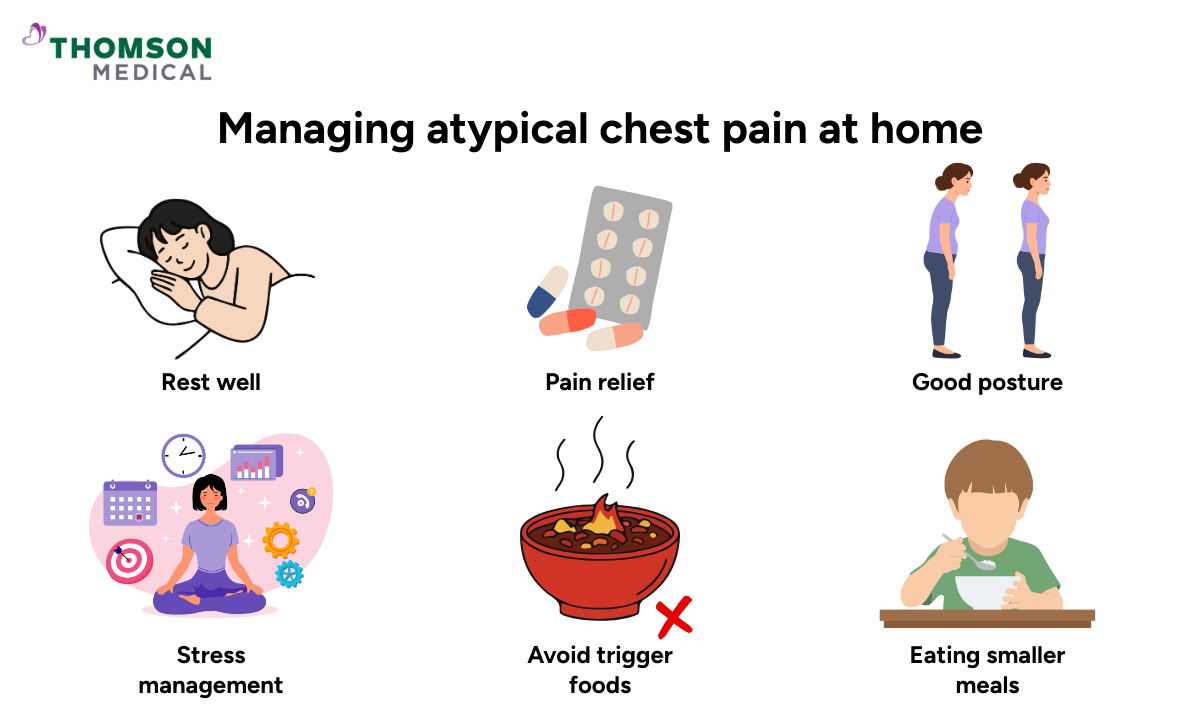
If your chest pain has been evaluated and serious causes have been ruled out, there are several approaches you can take to manage your symptoms at home. Always follow your healthcare provider's specific advice for your situation.
Self-care strategies that may help include:
Rest and gentle movement:
Avoid strenuous activity if you have musculoskeletal chest pain, but gentle stretching may help
Over-the-counter pain relief:
Medications like pain relief may ease musculoskeletal discomfort (always follow dosing instructions)
Dietary adjustments:
If reflux causes your chest pain, avoiding trigger foods and eating smaller meals may provide relief
Stress management:
Relaxation techniques, deep breathing, or mindfulness can help with anxiety-related chest pain
Good posture:
Maintaining proper alignment can reduce strain on your chest wall muscles
These approaches work best when you understand the underlying cause of your chest pain and have received appropriate medical guidance.
FAQ
What does atypical chest pain feel like?
Atypical chest pain can feel different for everyone, but it's often described as sharp, stabbing, or burning rather than the heavy pressure associated with typical heart pain.
You might notice it comes and goes, changes with movement or breathing, or feels tender when you press on your chest. If you're experiencing chest discomfort that feels concerning, it's always worth getting checked.
How long does atypical chest pain last?
The duration varies depending on the cause. Some people experience brief episodes lasting a few minutes, whilst others may have persistent discomfort for hours or even days. If your chest pain lasts more than a few minutes and you're worried, please don't hesitate to seek medical care.
What is the difference between angina and atypical chest pain?
Angina is a specific type of chest pain caused by reduced blood flow to your heart muscle, usually triggered by physical exertion or stress. It typically feels like pressure, squeezing, or heaviness in the centre of your chest and eases with rest.
Meanwhile, atypical chest pain is a broader term that describes chest discomfort with different characteristics:
Sharp pain
Burning sensation
Position-dependent discomfort
Can stem from various causes:
Musculoskeletal issues
Digestive problems
Anxiety
Sometimes cardiac conditions presenting unusually
Is my chest pain muscular or cardiac?
It can be difficult to tell on your own, which is why professional evaluation is so important.
Muscular chest pain often worsens with movement, deep breathing, or when you press on the tender area, and it may improve with rest.
Cardiac chest pain is more likely to be accompanied by symptoms like shortness of breath, sweating, nausea, or pain radiating to your jaw or arm.
When in doubt, it's always safer to seek medical assessment.
Can acid reflux cause chest pain that feels like a heart attack?
Yes, severe acid reflux or GERD can create chest pain that's surprisingly similar to cardiac pain. The burning sensation can radiate upward and feel quite frightening.
However, reflux-related chest pain often occurs after eating, when lying down, or when bending over, and may be accompanied by a sour taste or difficulty swallowing. Because the symptoms can overlap, it's important to have chest pain properly evaluated, especially if it's new or concerning to you.
How can I tell if my chest pain is serious?
While it's not always easy to determine the seriousness of chest pain on your own, certain warning signs warrant immediate attention:
Sudden severe pain
Difficulty breathing
Sweating
Nausea
Dizziness
Pain that spreads to other areas
If you're ever unsure or feeling frightened, seeking medical evaluation is always appropriate.
The information is intended for general guidance only and should not be considered medical advice. For personalised recommendations and advice based on your unique situation, please consult a specialist at Thomson Medical. Request an appointment with Thomson Medical today.