

Did you know? Baby dental care should begin before the first tooth appears. This is because bacteria can build up on your baby's gums and tongue before their teeth even emerge, which can lead to dental problems later on.
However, early oral care does more than just prevent tooth decay. It helps establish good oral hygiene habits, supports proper speech development, and helps your little one feel confident with their smile when they grow up.
When do babies get their first teeth?
Most babies welcome their first tooth between 6 and 10 months of age. The lower front teeth (incisors) usually appear first, followed by the upper front teeth shortly after. However, every baby follows their own timeline. Some experience early teething as soon as 3 months, while others won't see their first tooth until around 12 months. Rarely, a baby is born with one or two teeth already visible.
By age 3, most children have all 20 of their primary teeth in place. If your baby hasn't grown any teeth by their first birthday, there's no need to worry. This variation is completely normal and simply part of your child's unique developmental journey.
What are the signs of teething?

Teething is when your baby's teeth start to push through their gums. It is a normal part of development that every child experiences in their own way. While some babies go through teething without any discomfort, others may feel a little uncomfortable during this time.
Common signs of teething include:
Increased drooling
Chewing on toys, dummies, or other objects
Red or swollen gums where teeth are emerging
Mild irritability or fussiness, especially during the day
Rubbing their gums together
Many babies become irritable during the day and some rub their gums together or pull at their ears (particularly on the same side as the emerging tooth). You may also notice that your baby doesn't eat as well as usual and has more dirty nappies.
If your baby has a fever, diarrhoea, or seems genuinely unwell, check in with your baby's dentist. Teething doesn't typically cause these symptoms, and your little one might need medical attention.
Our paediatric dentists in Singapore
Loading...
How can parents help to ease teething discomfort?
If your baby seems uncomfortable whilst teething, there are several ways you can help soothe their gums and provide relief.
Try these comforting approaches:
Gently massage their gums with a clean finger
Offer a cool (not frozen) teething ring to chew on
Provide chilled healthy foods if your baby is eating solids
Give them something firm to suck on, like a sugar-free rusk
Try mushier foods recommended, chewing
Teething gels aren't usually recommended, as they may not be effective in relieving pain and can sometimes cause harmful side effects.
If your baby remains restless despite you having tried these gentle approaches, request an appointment at Thomson Medical. Our paediatric dentists can help identify the cause of your baby's discomfort and guide you on the best next steps.
How do you clean your baby's mouth before their teeth appear?
Good oral care starts before the first tooth arrives. Clean your baby's gums daily with a clean, damp cloth, especially after meals. This removes bacteria and sugars that can lead to dental issues. Gently wipe the gum tissues to keep your baby's mouth fresh and healthy.
This early routine also helps your little one get used to having their mouth cleaned, making the transition to toothbrushing much easier when those first teeth do appear.
When should you start brushing your baby's teeth?
The moment that first tiny tooth appears, it's time to start a gentle brushing routine. Use an infant toothbrush designed specifically for children under 2 years old. These brushes have extra-gentle bristles that are kind to your little one's delicate gums.
If your baby doesn't quite like the toothbrush at first (which is completely normal), you can use a clean, damp flannel or gauze to gently wipe the front and back of each tooth instead.
Toothpaste guidelines by age:
Under 18 months:
Use only water on the toothbrush unless your baby’s dentist advises otherwise.
18 months to 3 years:
Begin using a tiny smear of fluoridated toothpaste (about the size of a grain of rice).
3 years and older:
Increase to a pea-sized amount of toothpaste.
Brush your baby's teeth twice daily, once in the morning and once before bedtime. Take care to clean both the front and back surfaces of each tooth, as well as along the gum line where food particles can gather.
What's the proper technique for brushing a baby's teeth?
Finding the right position makes brushing easier and more comfortable for both of you. Try sitting on a bed or the floor with your baby lying down so their head rests gently on your lap. This position allows you to see their mouth clearly whilst helping your little one feel secure and calm.
How to brush effectively:
Cup your baby's chin in your hands with their head resting against your body for stability
Gently lift their upper lip to access all tooth surfaces
Use soft, circular motions to clean each tooth thoroughly
Pay attention to both the front and back surfaces, as well as the gum line
Remember to gently wipe their tongue as well. This removes bacteria and keeps their breath fresh
Replace your baby's toothbrush every 3 months, or sooner if the bristles start to look worn or frayed. It's also important to get a new toothbrush after your baby has been ill, as bacteria can linger on the bristles.
How can you help to prevent tooth decay?
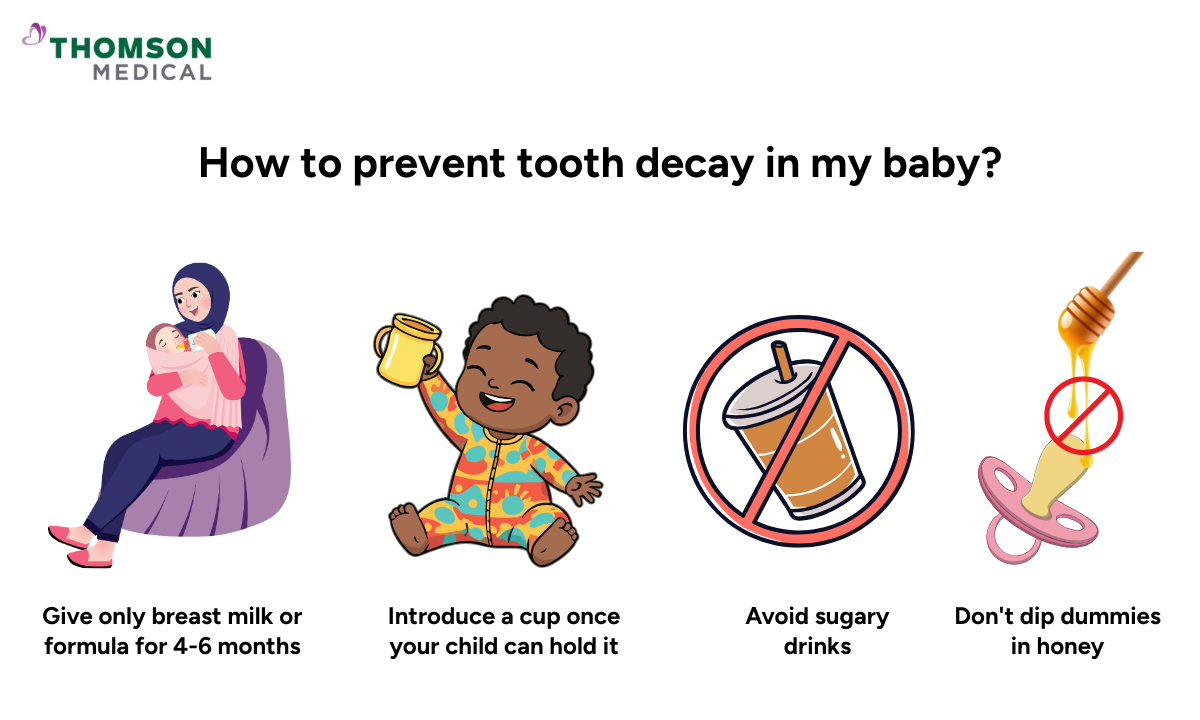
What your baby eats and drinks plays a major role in preventing tooth decay. Here are practical ways to protect those tiny teeth:
Feeding practices:
Give only breast milk or formula until introducing solids at 4-6 months
Give small sips of water once your baby is over 6 months
Never put your baby to bed with a milk bottle, as this can lead to tooth decay and pose a choking risk
Begin weaning from night feeds around age one
Introduce a cup when your child can hold one
Diet considerations:
Avoid sugary drinks like soft drinks and fruit juice
Skip sugary food
Choose fresh fruits and vegetables as snacks
Make water the primary drink besides milk
Offer water after milk feeds to rinse away milk residue
Other important practices:
Don't dip dummies in honey, sugar, or other sweet substances
Avoid sharing utensils with your baby
Don't clean dummies with your mouth
Use separate spoons for testing food temperature
These simple habits help prevent the transfer of decay-causing bacteria from your mouth to your baby's.
When should you first take your baby to the dentist?
It is recommended that you schedule your baby's first dental appointment by their first birthday or within six months of their first tooth appearing, whichever comes first. These early visits serve an important purpose, they help your child become comfortable with the dental environment and allow for early detection of any potential concerns before they develop into bigger issues.
Signs that need immediate attention:
White or brown spots on teeth
Noticeable changes in tooth colour
Persistent swollen or bleeding gums
Difficulty eating or sensitivity to foods
If you notice any of these signs, it's worth booking a dental appointment promptly. Addressing concerns early often prevents them from developing into more serious issues that require more extensive care.
If something about your baby’s teeth doesn’t look quite right, request an appointment at Thomson Medical. Our paediatric dentists can help assess the issue early and guide you on the best next steps.
How often should your child visit the dentist?
After their first introductory visit, dental check-ups are usually recommended every 4 to 6 months. These regular visits allow the dentist to monitor your child's dental development, identify potential concerns early, as well as providing professional cleanings and fluoride treatments when appropriate.
Other than the clinical benefits, these routine appointments also help your child build positive, familiar associations with dental care. This makes future visits feel much easier and less stressful for your little one.
How can you prepare your child for dental visits?
Creating a positive experience around dental visits starts at home. Talk about the dentist in a cheerful way. Avoid using words like "pain" or "hurt", and even saying "it won't hurt" can create negative associations.
Instead, tell your child that the dentist will count their teeth and make sure they're healthy and strong. Keep the conversation light and positive. Making dental visits a normal part of life helps prevent fear and anxiety.
FAQ
When should parents begin dental care for their baby?
Begin even before their first tooth appears. Gently wipe your baby's gums with a clean, damp cloth twice daily, especially after feeds and before bedtime. This removes bacteria and milk residue whilst helping your baby become comfortable with oral care from the start.
Should babies under the age of 1 use toothpaste?
For babies under 18 months, only use water for brushing, unless advised otherwise by your dentist. Once your baby is 18 months or older, introduce a tiny smear of fluoride toothpaste, about the size of a grain of rice. Always supervise brushing to prevent swallowing.
What happens if you don't clean your baby's gums?
Even without teeth, gums collect sugars and particles that feed harmful bacteria. This can irritate gum tissue and create an environment where cavities form more easily once milk teeth emerge. Regular cleaning prevents problems before they start.
What is the white stuff in your baby's mouth after breastfeeding?
If you notice a white coating on your baby's tongue resembling cottage cheese that doesn't wipe away easily, it could be oral thrush (a common fungal infection). White patches may also appear on the cheeks or gums. Please contact your baby's dentist for proper diagnosis and treatment.
Can teething cause fever?
Your baby's temperature may rise very slightly during teething, but a true fever (over 38°C) isn't associated with teething. If your baby has a fever, it's typically a sign of illness or infection. Please contact your baby's dentist if you're concerned.
What role does fluoride play in baby dental care?
Fluoride is a mineral that strengthens tooth enamel and helps prevent cavities. Many areas add fluoride to tap water as a public health measure. Once your baby starts solid foods around 6 months, you can offer a few ounces of tap water in a sippy or straw cup. If you're unsure whether your tap water contains fluoride, ask your baby's dentist. They can advise whether fluoride supplements might be beneficial.
The information provided is intended for general guidance only and should not be considered medical advice. For personalised recommendations and tailored advice, please request an appointment with Thomson Medical today.