

If you find yourself changing your baby’s nappy more often than usual, it's natural to feel concerned, especially if you notice looser or more watery stools. Is this just part of normal development, or could it be a sign of diarrhoea?
In babies, stool patterns can vary depending on age and feeding type. However, frequent watery stools, especially when accompanied by fussiness, fever, or reduced feeding, may indicate diarrhoea. While it is common in infants, careful monitoring is important to prevent dehydration.
Understanding what is typical, possible causes of diarrhoea, and signs that require medical attention can help you respond calmly and support your baby’s recovery.
Does your baby truly have diarrhoea?
If you’re feeling confused about what counts as diarrhoea and what’s just normal baby stool, you’re not alone. In the first few months, your baby's digestion is still finding its rhythm, and their stool patterns shift constantly as they feed, grow, and develop.
What does normal baby stool look like?
In babies under six months, stool frequency is all over the map. Some babies poop after nearly every feed, while others go once every day or two.
Breastfed and formula-fed babies also have different patterns. Breastfed babies tend to have looser, more frequent, yellow stools that might look seedy or even watery. Formula-fed babies usually have thicker, more formed poos and go less often.
Once you introduce solid foods, bowel movements often settle into a more regular rhythm, less frequent and more formed. The texture, colour, and smell will change as your baby's gut learns to digest new foods.
What is diarrhoea?
Not all loose stools are diarrhoea. True diarrhoea usually means a sudden shift from what's normal for your baby.
If your baby has diarrhoea, you may notice their stool looking:
Much looser than usual
More frequent than usual
Larger volume than usual
Ongoing watery stools
If you're unsure, don’t just ask yourself, "Is this loose?" You should also ask, "Is this different than normal for my baby?"
Common causes of baby diarrhoea
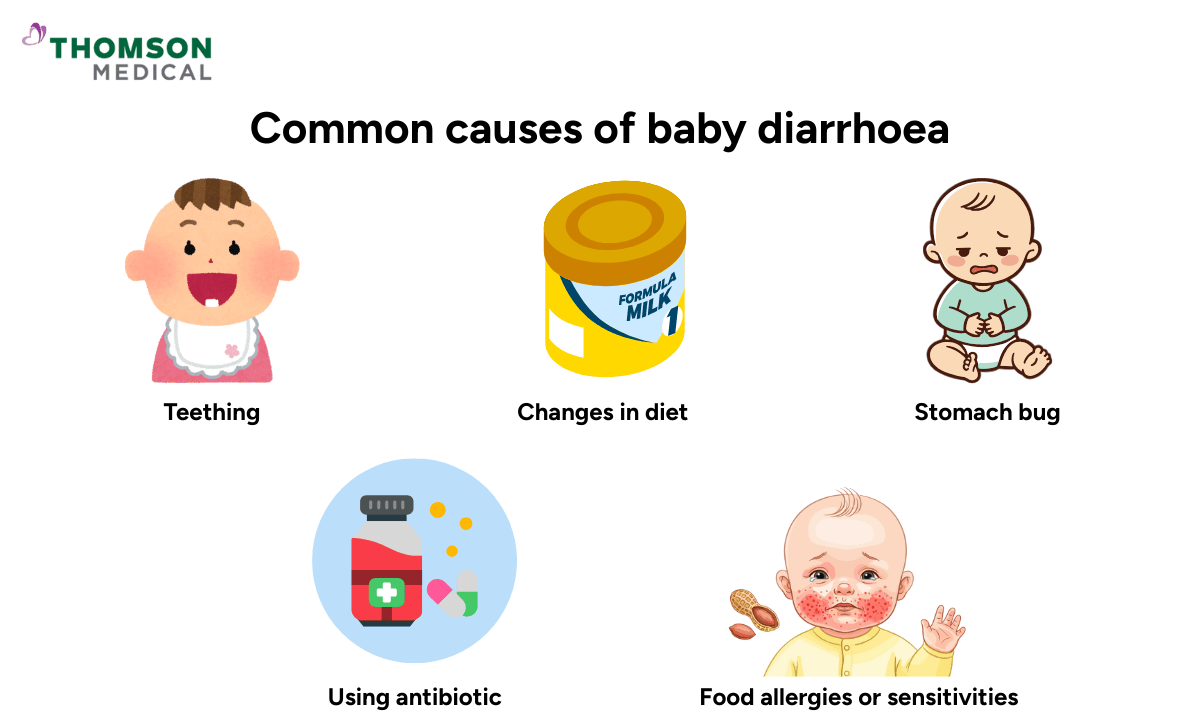
When your baby has diarrhoea, it's easy to start blaming yourself. Breastfeeding mothers wonder if something they ate caused it. Parents question the food they prepared or the water they used or worry that they should have stopped their baby from putting toys in their mouth.
But baby diarrhoea usually isn't something you caused. It’s a part of common childhood illnesses and normal development.
Teething
Teething means more drool, more swallowing, and changes in how the gut moves. So, when your baby is teething, you might notice looser stools than usual. It's not a sign they're sick – just their body going through a normal developmental phase.
Changes in diet
When your baby starts solids, switches formula, or tries new foods, their gut needs time to adjust. Diarrhoea can happen during this transition. This is common and usually passes as your baby's digestive system gets used to the new food.
Stomach bug (gastroenteritis)
This is the most common reason babies get diarrhoea from illness. Viruses irritate the gut and cause loose stools, vomiting, fever, and poor appetite.
Babies and young children catch these viral infections because their immune systems are still learning. The stomach bug virus spreads easily through everyday contact, including hands, surfaces, toys, shared spaces, and even in clean, careful homes.
You didn't fail to prevent this. It's a normal part of childhood, and your baby's body is learning to fight everyday germs. Nearly every child gets a stomach bug in early life, regardless of how careful their parents are.
Antibiotic-associated diarrhea
Antibiotics kill the harmful bacteria causing your baby’s infection, but they can also affect the good bacteria in their gut. This disruption is what often causes temporary diarrhoea. In most cases, your baby's digestion settles once their gut balance recovers.
Food allergies or sensitivities
In some babies, conditions like cow's milk protein allergy or sensitivities to foods such as eggs, soy, or wheat can trigger diarrhoea and digestive discomfort.
With medical guidance, you can identify the trigger food and adjust your baby's diet or formula. Most families manage this well once they know what to avoid. And many babies outgrow food allergies as they get older.
Less common medical causes
Occasionally, diarrhoea in babies can be linked to underlying medical conditions, such as:
Gut bacterial infections (such as Salmonella, Shigella, E. coli)
Lactose intolerance
Malabsorption conditions
Congenital digestive disorders
These are rare and usually come with other warning signs, including chronic diarrhoea, poor weight gain, or symptoms that don't improve with usual care.
These aren't things you'd easily miss. Your doctor usually looks for them when symptoms don't follow the typical pattern.
Is baby diarrhoea always serious?
Diarrhoea looks scary and can feel overwhelming, but for most babies, it isn't dangerous. It's usually caused by common infections, mild digestive upset, or normal developmental changes. Your baby's body is usually just reacting to a temporary condition and will recover with basic care and a bit of time.
When should you worry?
It's normal to feel stuck between two worries: wondering whether waiting might be risky and whether a hospital visit is the right step at that moment.
You can usually monitor your baby at home if they are:
Alert and responsive
Still feeding
Having wet nappies
Showing no signs of worsening illness
No high fever or blood in the stool
In these situations, your baby's body is handling it well, and caring for them at home is usually enough.
When your baby needs urgent care
Bring your baby to paediatric urgent care if they have:
Signs of severe dehydration
Lethargy, extreme sleepiness, or unresponsiveness
High fever
Blood in the stool
Persistent vomiting with diarrhoea
Fast or difficult breathing
Severe abdominal pain or a swollen belly
These symptoms might be a signal that your baby's body is struggling and needs medical help.

How to tell if your baby is getting dehydrated
Dehydration is what most parents worry about during diarrhoea – and for good reason.
When babies lose too much fluid, they can quickly become weak and unwell. Severe dehydration can lead to complications like electrolyte imbalances or low blood sugar. That's why keeping an eye on hydration matters.
Watch for these signs:
Fewer wet nappies
Dark yellow urine
Dry lips or mouth
No tears when crying
Sunken eyes
Lethargy or unusual sleepiness
Soft spot on your baby's head (fontanelle)
It's normal to count every dirty nappy, but how your baby acts – their energy, alertness, and hydration – tells you more about how they're doing.
Our doctors for paediatric urgent care
Loading...
Treating baby diarrhoea at home
If your baby's symptoms are mild and not getting worse, basic home care is usually enough. Here's how to help your baby feel better while their body recovers.
Keeping your baby hydrated
When your baby has diarrhoea, hydration comes first.
To help your baby stay hydrated, you should:
Continue breastfeeding or bottle feeding
Use oral rehydration solutions if needed
Offer small, frequent feeds
The goal isn't to stop the stools – it's to keep your baby hydrated while their body heals.
What foods to offer and avoid
You may worry that offering the wrong food could make things worse or feel torn between wanting to give “nutritious” meals and fearing that your baby’s gut needs rest. This phase isn’t about forcing food or pushing nutrition – it’s about giving the gut time to heal.
For older babies on solids:
Offer gentle foods: rice, banana, toast, porridge
Avoid sugary drinks, juices, fried foods, and spicy foods
Keep meals small and frequent
Don't worry too much about nutrition right now. Small amounts of gentle food and plenty of fluids are what your baby needs to recover.
Nappy care to prevent rash
Nappy or diaper rash often follows diarrhoea, and seeing your baby’s red, sore skin can be heartbreaking.
Here’s what helps:
Change nappies frequently to reduce skin contact with stool
Clean gently, using soft wipes or warm water instead of harsh rubbing
Pat dry rather than rubbing
Use a thick barrier cream to protect your baby’s skin
Let the skin air-dry whenever possible
If the rash looks very sore, open, or isn’t improving, your doctor can recommend medicated creams or treatment.
Nappy rash usually clears up once the diarrhoea settles. Your baby’s skin heals as beautifully as it becomes irritated, and the discomfort passes sooner than it feels in the moment.
Comfort measures that help
When your baby has diarrhoea, it’s not just their body that’s uncomfortable – their emotions may be unsettled too. They might feel tired, irritable, and clingy, making them harder to soothe than usual.
Help your little one stay calm and relaxed by:
Providing extra cuddles and closeness
Ensuring that they have a calm, quiet environment with less stimulation
Sticking to familiar routines
Plenty of rest and downtime
Holding, rocking, or soothing them when they need reassurance
Sometimes, the most powerful medicine isn’t what your child needs. It’s the way you hold, comfort, and stay close. That kind of comfort does more for healing than we often realise.
And if you’re worried, unsure, or need support along the way, reach out to your doctor so you don't need to figure this out on your own.

FAQ
What can I give my child to stop diarrhoea?
There’s usually no need to stop diarrhoea. The priority during this time is hydration and gentle care while your baby’s body recovers naturally.
Why is my baby having diarrhoea but not sick?
Loose stools can happen with normal gut development, teething, diet changes, or mild infections that don’t make your baby look unwell.
How many times should a baby poop if they have diarrhoea?
There’s no fixed number. What matters is a sudden change from your baby’s normal pattern and signs of dehydration, not stool frequency alone.
How many days does teething diarrhoea last?
Teething-related loose stools usually last 3-5 days and improve as symptoms settle.
Can overfeeding cause diarrhoea in babies?
Overfeeding can overwhelm your baby’s digestive system and lead to looser stools. This is usually mild and temporary, and stools often settle once feeding amounts and patterns return to what suits your baby’s digestion.
What should I do if my baby has diarrhoea?
When your baby has diarrhoea, it’s best to:
Focus on keeping your baby hydrated
Continue normal feeding
Monitor for dehydration
Seek medical advice if symptoms worsen or persist
The information provided is intended for general guidance only and should not be considered medical advice. For personalised recommendations based on your medical conditions, request an appointment with Thomson Medical.
For more information, contact us:
Thomson Paediatric Centre
- Thomson Medical Centre (TPC1), #03-06:
6258 3353 (Call) - Thomson Medical Centre (TPC4), #01-03:
6259 7667 (Call) - Jurong:
6665 1000 (Call) - Marine Parade:
6636 3808 (Call) - Punggol:
6341 6000 (Call) - Woodleigh:
8874 3970 (WhatsApp)
Thomson Medical 24-Hour Urgent Care Centre (Novena)
- Call: 6350 8812
Notice:
The range of services, vaccinations, and tests may vary. Please contact us directly to enquire about the current availability.
Request an Appointment