

It can happen so quickly. You look away for a moment, and your baby slips from the bed. In those first seconds, it is completely natural to feel frightened and unsure about what to do next.
Falls are actually one of the most common accidents in early childhood, and in most cases, a fall from the bed causes nothing more than a scare for both parent and baby. Knowing what signs to watch for and when to seek medical advice can help you stay calm and respond with confidence.
Why does your baby fall from their bed?
Watching your baby discover new abilities is one of parenthood's greatest joys. Each roll, crawl, and climbing attempt shows how much they're growing. But with these exciting milestones comes something that worries every parent: the increased risk of falls.
Falls from beds are particularly common between six months and two years, when babies become more mobile but haven't yet developed a full sense of danger.
Your baby's developmental journey naturally includes:
Rolling over (around 4-6 months): Often the first surprise tumble
Crawling and scooting (6-10 months): When they start exploring edges
Pulling up and climbing (8-18 months): The most adventurous phase
Walking and running (12-24 months): When falls become more frequent
During these months, your little one is learning about their body and the world around them.
Most falls from bed height (typically 60-80 cm) result in minor bumps or bruises. However, babies' heads are proportionally larger and heavier than their bodies, which means head injuries can occur even from seemingly low heights. The good news is that serious injuries are relatively rare, and most babies recover completely with no lasting effects.
What matters most is understanding what to look for after a fall. This knowledge helps you determine whether your baby needs immediate medical care or simply your comfort and observation at home.
Immediate warning signs to watch for (In first 2 hours)
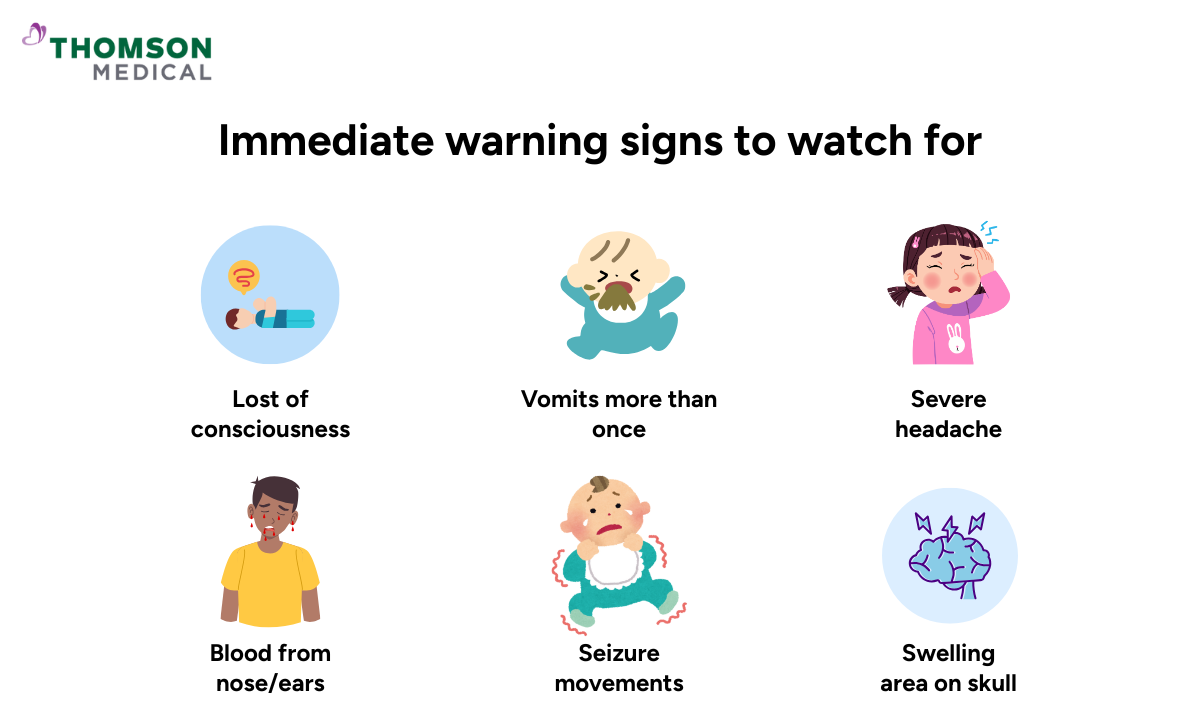
In the moments and hours immediately after a fall, certain signs can indicate that your baby needs medical attention. Here's what to watch for:
Signs of serious injury
If you notice any of these symptoms, seek medical help immediately. They could indicate a more serious head injury that needs urgent assessment:
Loss of consciousness, even briefly
Vomiting more than once (a single episode of vomiting can be normal due to crying)
Severe or worsening headache (indicated by persistent crying or irritability)
Blood or clear fluid leaking from the nose or ears
Swelling or a soft spot (depression) on the skull
Seizures or unusual jerking movements
Difficulty waking or unusual sleepiness
Unequal pupil sizes or pupils that don't react to light
Weakness in the arms or legs, or difficulty moving normally
Confusion or unusual behaviour for your baby's age
Common but less concerning signs
These signs are usually not serious, but it's still important to monitor your baby closely:
A single episode of vomiting
A small bump or bruise on the head (goose egg)
Brief crying that settles with comfort
Minor grazes or scratches
Temporary fussiness or clinginess
If your baby seems alert, is feeding normally, and responds to you as usual within 30 minutes of the fall, those are good signs. Even so, you should always continue to monitor closely for the next 24 to 48 hours.
Delayed warning signs (24-48 hours after the fall)
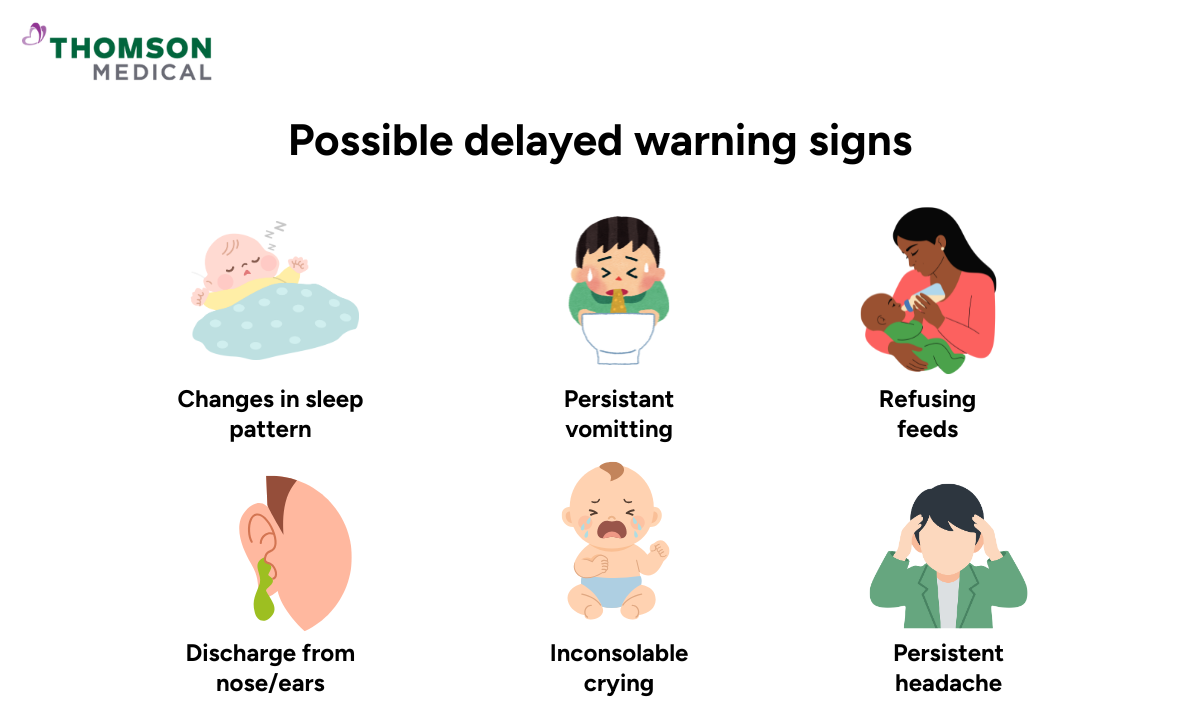
Some symptoms may not appear immediately and can develop over the following days.
This doesn't mean you need to stay awake all night watching your baby, but do remain observant for these symptoms during their normal waking hours:
Changes in sleep patterns (sleeping much more or less than usual)
Persistent vomiting (more than twice)
Unusual irritability or inconsolable crying
Loss of appetite or refusing feeds
Loss of balance or coordination (in older babies who are walking)
Changes in behaviour or personality
Persistent headache (indicated by ongoing fussiness and head-holding)
Discharge from the ears or nose
Bruising that appears or worsens over time, particularly around the eyes or behind the ears
Most babies will be completely back to normal within a few hours of a minor fall. If you notice any of these delayed symptoms, consider speaking with a professional paediatrician who can check your child’s condition and confirm if any further steps need to be taken.
Our urgent care specialist
Loading...
When to seek urgent care
We understand how frightening it is when you're unsure whether your baby needs immediate medical attention. Trust your instincts as a parent – if something doesn't feel right, it's always better to seek help.
Contact your paediatrician during office hours if:
You're worried about your baby's behaviour after a fall
Your baby has persistent mild vomiting
There's a large bump or bruise that concerns you
Your baby seems more irritable or clingy than usual for more than 24 hours
You simply need reassurance (it's always okay to call)
You should seek urgent care immediately if your baby:
Has lost consciousness at any point
Has a seizure or convulsion
Is difficult to wake or unusually drowsy
Has vomited more than twice
Has blood or clear fluid coming from the nose or ears
Has a large, soft, or sunken area on the skull
Shows signs of severe pain (inconsolable crying)
Has unequal pupils or eyes that don't move together normally
Shows weakness or inability to move an arm or leg normally
Fell from a height greater than 90 cm (3 feet)
Is under 3 months old (young babies are more vulnerable to head injuries)
If you're unsure whether to seek help, it's always better to err on the side of caution. Falls can be frightening, and when it's your baby, every instinct tells you to make sure they're okay.
If you notice any of the signs above, or if something simply doesn't feel right to you, visiting an Urgent Care Centre (UCC) can provide the prompt assessment you need without the long wait times of an emergency department. UCCs are equipped to evaluate head injuries, order imaging if needed, and either reassure you that your baby is fine or arrange further care if necessary. This middle ground between your GP and A&E means you can get answers quickly, when timing matters most.

What to do if your baby falls from the bed
When your baby falls, your immediate response can make a difference.
Here's how to handle the situation calmly and effectively:
Stay calm and assess the situation:
Take a deep breath. Your baby will take cues from you, so staying calm helps them feel safe.
Check for immediate injuries:
Look for any obvious wounds, unusual positioning of limbs, or signs of severe distress.
Comfort your baby:
Pick them up gently and offer comfort. Crying is actually a good sign—it means they're conscious and breathing normally.
Apply ice if there's swelling:
If a bump appears, apply a cold compress wrapped in a cloth for 10-15 minutes. Never apply ice directly to the skin.
Monitor closely for 24-48 hours:
Watch for any of the warning signs mentioned above. Keep a mental note of your baby's behaviour, feeding, and sleep patterns.

Preventing future falls from the bed
While accidents can happen even in the most careful homes, these practical steps can help reduce the risk of future falls:
Bedroom safety tips
The bedroom is where your baby spends a significant amount of time sleeping and playing, so creating a safe space here can make a real difference:
Never leave your baby unattended on a bed, changing table, or any elevated surface
Place your baby on the floor on a play mat when you need to step away
Use bed rails if your older baby or toddler sleeps in a bed
Consider a floor bed or mattress on the floor for very mobile babies
Keep the area around the bed free from hard objects or sharp corners
Ensure any rugs are non-slip to prevent falls when your baby starts walking
Install safety gates at the top and bottom of stairs
Anchor furniture to the wall to prevent tipping
General safety guidelines
Beyond the bedroom, these simple habits can help protect your baby throughout your home as they become more mobile:
Always use safety straps on changing tables, high chairs, and prams
Lower the cot mattress as your baby learns to sit and stand
Remove pillows, blankets, and soft toys from the cot (these are also SIDS risks)
Supervise siblings when they're playing near the baby
Be extra vigilant during developmental milestones when your baby is learning new skills
Even the most vigilant, loving parents can't prevent every fall, and you shouldn't carry that weight. Your job is to create a safer environment where possible, while giving yourself grace to accept that some tumbles are part of how babies learn and grow.
FAQ
When to worry about a baby falling out of bed?
Get medical help immediately if your baby:
Loses consciousness, even briefly
Vomits more than twice
Becomes unusually drowsy or difficult to wake
Has a seizure
Shows blood or clear fluid from the nose or ears
Won't stop crying or seems in severe pain
Has unequal pupil sizes
Shows weakness in the arms or legs
Has a soft or sunken area on the skull
Also seek assessment if:
Your baby is under 3 months old
The fall was from higher than 90 cm (3 feet)
Something just doesn't feel right to you
How long should I watch my baby after a fall?
The critical period is the first 24 hours, with most serious symptoms appearing within the first 2-6 hours. You should continue to observe your baby for 48 hours after the fall, watching for any delayed symptoms such as persistent vomiting, unusual behaviour, or changes in sleep or feeding patterns.
At what height does a fall become dangerous?
Falls from above 90 cm (3 feet) carry a higher risk of injury, though many babies fall from greater heights without serious harm. The type of surface matters too – falling onto carpet is less risky than onto tile or concrete.
Regardless of height, always assess your baby for warning signs and seek medical advice if you're concerned.
My baby fell and seems fine. Should I still see a doctor?
If your baby is behaving normally, feeding well, and showing no concerning symptoms, it's often safe to monitor at home. However, if you're worried or unsure, you can try calling your paediatrician for reassurance or bringing your baby in for a check-up. It's always better to be cautious when it comes to head injuries.
Should I let my baby sleep after falling from the bed?
It's natural to worry about letting your baby sleep, but rest is actually important for recovery. The old advice to keep a child awake after a head injury is outdated. However, do check on your baby regularly and make sure they can be woken easily. If your baby is difficult to wake or seems unusually drowsy before their normal sleep time, seek medical attention.
How do babies act after a fall?
Most babies cry immediately after a fall, which is actually a good sign, as it shows they're conscious and breathing normally. After being comforted, many babies settle within 10-30 minutes and return to their usual behaviour, feeding, and playing. Some may be a bit clingy or need extra cuddles for the rest of the day, which is completely normal. If your baby seems alert, responds to you, and feeds normally after settling, this is reassuring.
The information is intended for general guidance only and should not be considered medical advice. For personalised recommendations and advice based on your unique situation, please consult a specialist at Thomson Medical. Request an appointment with Thomson Medical today.
For more information, contact us:
Thomson Medical 24-Hour Urgent Care Centre (Novena)
- Call: 6350 8812
Notice:
The range of services, vaccinations, and tests may vary. Please contact us directly to enquire about the current availability.
Request an Appointment