

When your baby's forehead feels warm to the touch, it's natural to worry. Is it just a mild infection, or could it be something more serious? The uncertainty can feel especially daunting, particularly if this is your first time dealing with a fever in such a young child.
A fever happens when your baby's body is fighting off an infection or illness. While most fevers in babies are caused by common infections and settle on their own, some signal conditions that need medical attention. Knowing the difference between "monitor at home" and "go to hospital now" helps you act quickly when it matters and feel calm when it doesn't.
What temperature is too high for a baby?
A normal temperature for babies ranges from 36.5°C to 37.5°C. Anything above 38°C is considered a fever.
For babies under three months, any fever of 38°C or higher needs immediate medical attention. Their immune systems are still immature, and infections can develop quickly.
For babies aged three to six months, contact your doctor if the fever reaches 39°C or higher.
For babies over six months, how they're acting matters more than the exact number on the thermometer. A baby with a 39°C fever who's still playing and drinking is often less worrying than one with 38.5°C who seems really unwell.
When deciding whether to contact your doctor, consider both the temperature reading and how your baby is behaving.
How do you know if your baby's fever is serious?
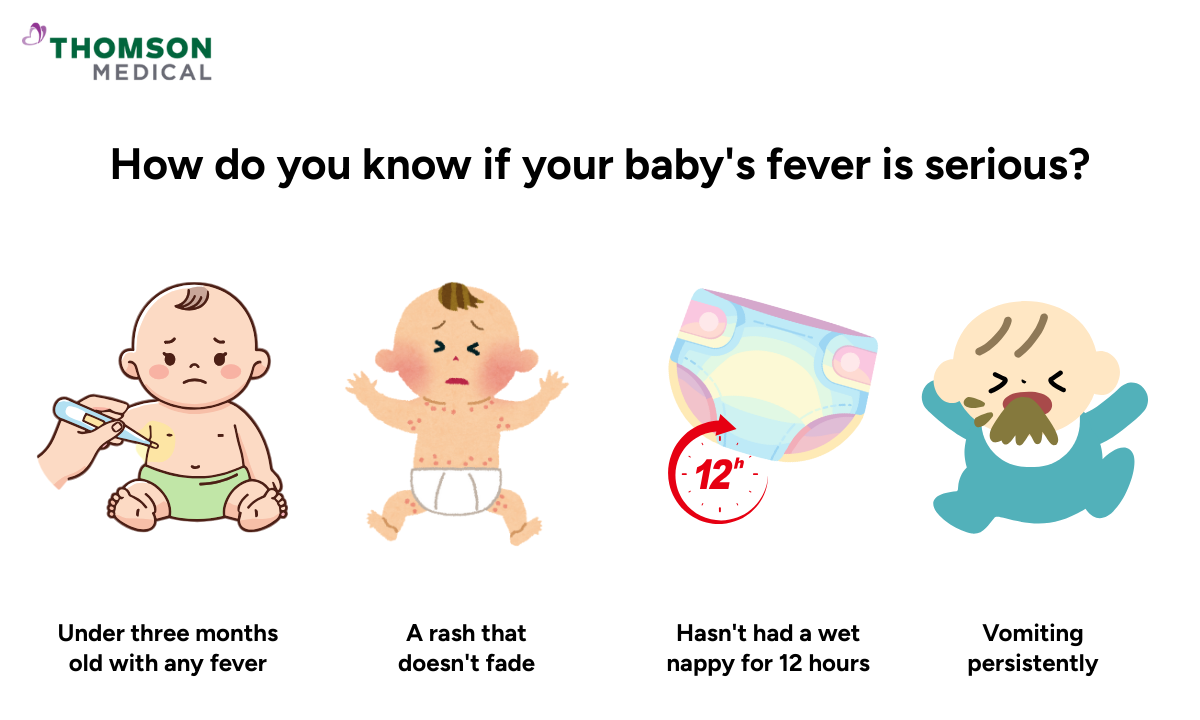
Deciding whether to rush to hospital or monitor at home can feel worrying when your baby is unwell, especially in the middle of the night. Knowing which signs to watch for can help you feel more confident when it matters most.
Go to your doctor immediately if your baby shows any of these signs:
Under three months old with any fever
Difficulty breathing or breathing very fast
Blue, pale, or ashen skin
Unusually floppy or drowsy
Having a febrile seizure
A rash that doesn't fade
Hasn't had a wet nappy for 12 hours
Vomiting persistently and unable to keep fluids down
Most fevers won't involve these symptoms, but if something doesn't feel right, trust your instincts – getting checked and reassured is always better than waiting at home and worrying.
Our paediatrician in Singapore
Loading...
How to take your baby's temperature
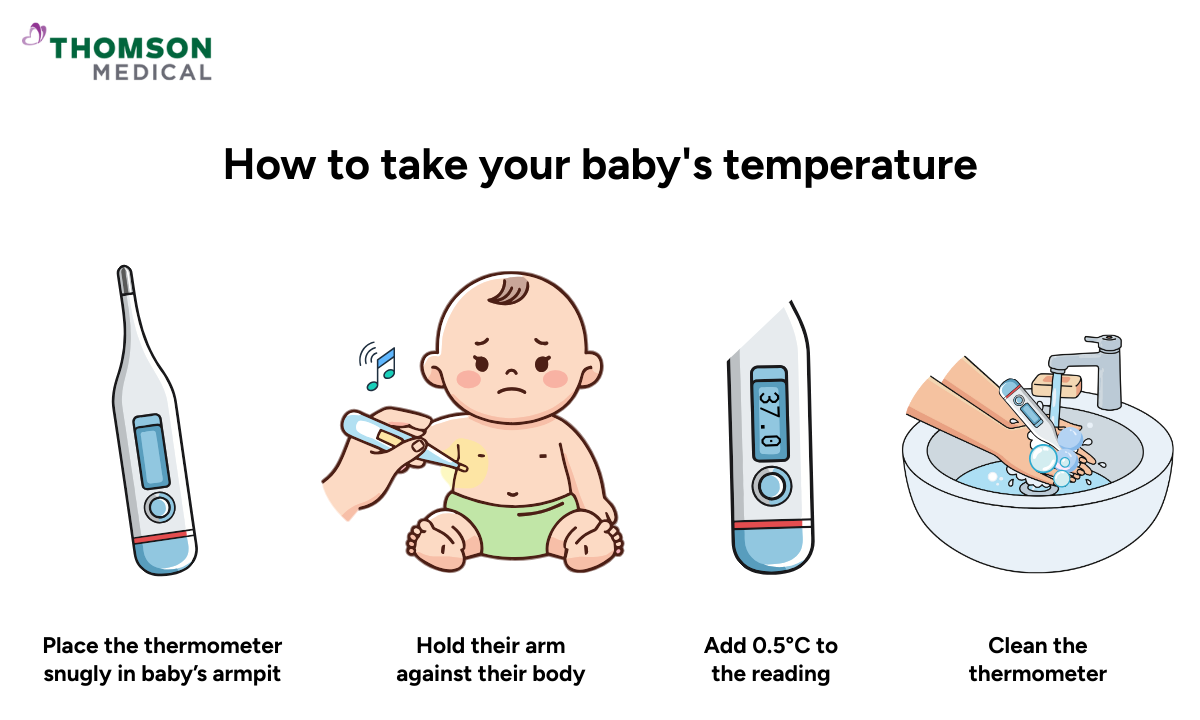
Taking an accurate temperature is straightforward once you know the right technique. For babies, an armpit reading with a digital thermometer is the reliable and comfortable method.
Follow these steps for a reliable reading:
Place the thermometer snugly in your baby's armpit
Hold their arm gently against their body
Wait for the beep, usually about a minute
Add 0.5°C to the reading to get the true body temperature
Clean the thermometer with cool soapy water after each use
Armpit readings run about 0.5°C cooler than core body temperature because the armpit is further from your baby's internal organs. Adding 0.5°C adjusts for this difference and gives you the accurate number for those crucial age-based thresholds, like 38°C for babies under three months.
How to help your baby feel comfortable with a fever
Your care can make all the difference when your little one has a fever. Here's how you can help them feel more comfortable while their body fights infection.
Keep them cool (not cold)
When your baby has a fever, simple steps can help them feel more at ease without overcooling them.
You can help by:
Dressing them in light, breathable clothing. One layer is enough because heavy clothes trap heat and make it harder for a fever to come down.
Keeping the room between 18°C and 20°C
Gently wiping their face, neck, arms, and legs with a soft cloth
Never use cold water or ice to cool your baby. When your baby shivers, their body interprets cold as a threat and generates heat. This actually raises the temperature, which is the opposite of what you're trying to achieve.
Offer plenty of fluids
Keeping your baby hydrated is one of the most important things you can do. When they have a fever, their body loses more water than usual through sweating and faster breathing.
Staying hydrated helps them fight infection while preventing dehydration, which can make your baby feel even worse.
You can help by:
Breastfeeding more frequently if you're nursing
Offering small amounts of cooled boiled water for older babies (over 6 months)
Offering diluted juice for toddlers over 12 months if they prefer it
If you notice fewer wet nappies than usual, your baby may need more fluids. Checking for wet nappies every few hours tells you whether they're getting enough.
When to give fever medicine
Working out the right dose of medicine for your baby can feel overwhelming when you're already worried – and it's worth knowing that you don't always need to give it.
Fever is the body’s natural way of fighting infection, raising your baby’s temperature to make it harder for bacteria and viruses to thrive and support the immune system.
You can give paracetamol or ibuprofen to help your baby feel more comfortable if they seem distressed.
If you do give medicine:
Always check the packaging for the correct dose based on your baby's age and weight
Paracetamol is suitable from two months old
Ibuprofen can be given from three months (if your baby weighs over 5 kg)
Don't give both medications together unless your doctor advises this
Your pharmacist and doctors help you calculate the exact dose if you're unsure, and it's always better to check than to guess.
Don't wake a sleeping baby to give fever medicine. Sleep allows your baby's body to direct all its energy toward fighting infection, bringing the temperature down. If your baby is playing, feeding, and seems content despite the temperature, they may not need medicine.

What causes fever in babies?
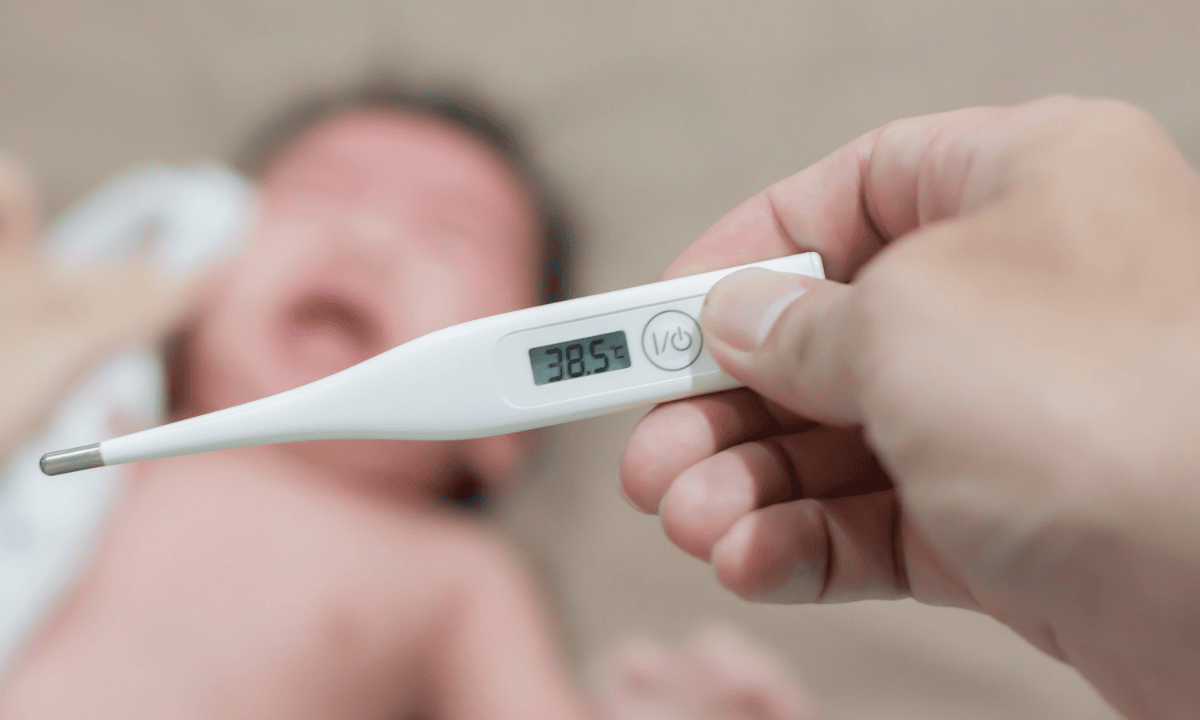
Recognising what might be causing the fever can help you feel more in control. Your baby's other symptoms often give clues about what's causing the fever.
Viral infections
Viral infections are the most common cause of fever in babies. Your baby's body fights these off without medication in most cases.
Alongside the fever, you might notice:
A runny nose or cough
A sore throat
Fussiness or general irritability
Restlessness or difficulty settling
These symptoms usually improve within a week. The fever typically peaks in the first two to three days, then gradually settles as your baby’s immune system gains control. Your comfort and care during this time make a real difference.
Ear infections
Ear infections often follow colds and may need antibiotic treatment.
Signs to watch for:
Your baby pulling at their ear
Trouble sleeping or increased fussiness
Fever alongside ear discomfort
If you suspect an ear infection, book an appointment with your doctor. They can examine your baby's ears and recommend the right treatment.
Urinary tract infections
Urinary tract infections can occur without obvious symptoms, which is why doctors sometimes check urine when a baby has a fever with no clear cause.
You might notice:
Fever without cold symptoms
Unusual fussiness or crying
Strong-smelling urine
Your doctor can test a urine sample to check for infection. If confirmed, antibiotics usually clear it up quickly.
Vaccination reactions
A mild fever after vaccinations is normal and a reassuring sign that the vaccine is working.
What to expect:
Mild fever within 24 to 48 hours of immunisation
Fever that settles within a day or two
Your baby may benefit from paracetamol if they seem uncomfortable
This mild reaction means your baby's immune system is learning to recognise and fight the disease. They're building protection without the risks of actual infection.
Most fevers in healthy babies resolve within three to five days, and the vast majority never develop serious complications. If you feel worried or uncertain at any point, don't hesitate to contact your doctor. You know your baby best, and getting checked is always a reasonable choice.
If you’re unsure what’s causing your baby’s fever or just want reassurance, request an appointment at Thomson Medical. Our doctors can examine your baby, identify the likely cause, and guide you on the right care and monitoring at home.
FAQ
Do high fevers cause seizures?
Febrile seizures can occur in some children when body temperature rises quickly, usually above 38°C. While frightening to witness, febrile seizures are usually harmless and don't cause brain damage.
Your child's immune system triggering the fever doesn't directly cause the seizure. It's the rapid temperature rise that can trigger it.
Does teething cause fevers?
Teething may cause a slight rise in body temperature, but rarely above 38°C. If your baby has a proper fever, don't assume it's just teething. Viral infections and bacterial infections are far more common causes of fever in children.
How high is too high for a fever?
For babies under three months, any fever of 38°C or higher needs emergency room attention immediately. For babies three to six months old, seek urgent help if the fever reaches 39°C or above.
Can I use paracetamol for a 2-month-old baby?
Yes, paracetamol can be given to babies from two months old. Always check the packaging for the correct dose based on your baby's weight and age. However, any baby under three months with a fever needs medical assessment before giving fever medications. Contact your doctor for advice first.
My baby has a fever but seems happy and playful – is that normal?
Yes, this is reassuring and quite common. Many viral illnesses cause fever while children still play, smile, and feed normally.
Your baby's overall behaviour matters more than the temperature number. A happy, alert baby with good fluid intake who's making eye contact is coping well, even with a fever of 39°C. The body's defence system is working as it should.
Should I use cold water or ice to bring down my baby's fever?
Never use cold water, ice, or cool compress methods to reduce fever. Cold temperatures cause shivering, which actually raises body temperature further and makes your baby uncomfortable. If you want to help cool your baby, tepid sponging with lukewarm tap water is safe.
The information provided is intended for general guidance only and should not be considered medical advice. For personalised recommendations and tailored advice based on your little one's situations, request an appointment with Thomson Medical today.
For more information, contact us:
Thomson Paediatric Centre
- Thomson Medical Centre (TPC1), #03-06:
6258 3353 (Call) - Thomson Medical Centre (TPC4), #01-03:
6259 7667 (Call) - Jurong:
6665 1000 (Call) - Marine Parade:
6636 3808 (Call) - Punggol:
6341 6000 (Call) - Woodleigh:
8874 3970 (WhatsApp)
Thomson Medical 24-Hour Urgent Care Centre (Novena)
- Call: 6350 8812
Notice:
The range of services, vaccinations, and tests may vary. Please contact us directly to enquire about the current availability.
Request an Appointment