

Every time you change your baby's nappy, you pause and stare a bit longer than you'd like to admit. Maybe it looks greener than usual, darker than yesterday, or suddenly orange.
Your baby's nappy tells you a lot about what's going on with their health, but figuring out what's normal versus what needs the doctor can feel confusing. Here's what helps, baby poop naturally looks different from day to day, and most of those changes are completely normal.
We'll walk you through the different baby poop colours you might see, what each one actually means, and when you should call your paediatrician.
Normal baby poop colour chart
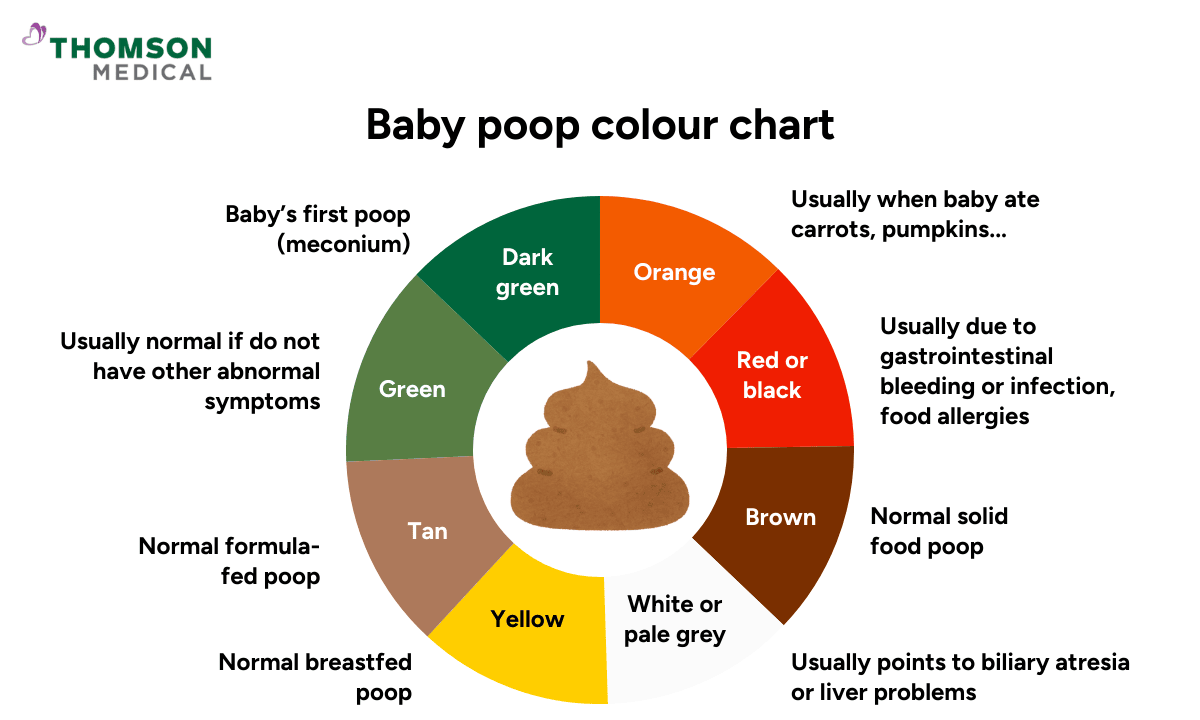
During the first year, your baby's poop changes a lot, probably more than you'd think. What looks strange today might be perfectly normal for where they are right now. Once you know your baby's age and how they're feeding, these colour shifts usually make more sense and worry you less.
Newborn poop
In those first few days, your baby's stools are thick, sticky, and black or very dark green. That's meconium, which clears out everything your baby swallowed while in the womb. Within 3-5 days, you'll see the colour shift to green, then yellow, as your baby begins feeding regularly.
The dark colour can be startling, but it's normal and won't last long.
Breastfed baby poop
If your baby is breastfed, their stools often look softer than you might expect.
Breastfed poops are usually:
Mustard yellow or golden
Loose or watery
Seedy or grainy in texture
Breast milk is gentle and easy to digest, so breastfed poop passes through quickly and looks loose or runny. This is a good sign that your baby is feeding well.
Formula-fed poop
If your baby drinks formula, you'll probably notice their stools look:
Tan to light brown
Thicker and more formed
Slightly less frequent than breastfed stools
Formula takes longer to digest than breast milk, so these differences are a normal part of how your baby’s body processes a different type of feeding method. Many healthy babies poop this way. This is completely normal and healthy.
Solid food poop
When your baby starts solids, nappies can look different every day. This stage feels unpredictable because your baby's digestive system is learning to handle new foods.
You might see:
Darker browns
Mixed or changing colours
Small bits of undigested food
Some parents call this the rainbow phase, as stools can reflect whatever your baby ate that day. These colour shifts usually come from food, not illness. Seeing variety just means your baby is trying new tastes and growing.
Colour changes that are usually harmless
When your baby's poop suddenly looks different from yesterday, it's natural to worry. The good news is that many of these eye-catching colours are part of healthy digestion.
Green poop
Green stools are one of the most common worries parents have. But it is usually a normal variation in your baby's digestion.
This can happen when:
Milk moves through the gut a bit faster
Your baby has a mild tummy upset
Your baby is taking iron supplements
If your baby is otherwise alert, comfortable, and feeding well, green poop on its own is rarely a red flag.
Orange poop
When you see an orange nappy, it's easy to panic. But this colour almost always comes from foods like carrots, pumpkins, or sweet potatoes.
Think of it like food colouring passing through. If your baby seems fine otherwise, orange poop is harmless and just shows what they ate.
Brown variations
As your baby grows and eats more solids, their stools get darker and thicker and more like adult poop.
This shift can happen quickly, but it's a good sign. It means your baby's digestive system is maturing and handling more complex foods. Deeper browns are part of normal development.
Food-related colour changes
Once your baby starts eating solids, their poop colour changes with the menu.
For example:
Eating spinach will turn their stool green
Eating carrots or pumpkin will turn it orange
Eating blueberries will turn it a very dark, almost black colour
Eating beetroot or dragon fruit will turn it red
These foods can make the nappy look dramatic, but it's harmless and clears up in a day or two.
Unsure about what you’re seeing in your baby’s nappy? Our paediatricians will assess and guide you with clear, practical advice. Request a consultation with Thomson Paediatric Centre for personalised support and peace of mind.
Our paediatricians in Singapore
Loading...
When to worry about baby poop colour
Your baby's digestive system is still developing, so changes happen often and don't usually mean anything serious. But a few colours are less common and worth calling your paediatrician about.
White or pale grey
If your baby’s stool looks very pale, grey, or clay-like, it can feel concerning because it lacks the usual yellow or brown tones that come from bile.
Bile is a digestive fluid from the liver, which helps digest fats. White or pale grey stool may indicate that bile flow from the liver to the gut is blocked or reduced. Conditions affecting bile flow, such as biliary atresia or other liver issues, require prompt medical assessment.
Red or bloody
Seeing red in your baby’s nappy can understandably feel frightening, and it’s natural to worry right away.
Blood in stool may be linked to:
Rectal fissures (tiny tears around your baby’s anus from passing a hard stool)
Food sensitivities or allergies
Digestive infection
Since it’s difficult to tell just by looking, it’s safest to let your paediatrician review it and guide you on the next steps.
Black after the newborn period
In the first few days of life, meconium poops are completely normal. But if you notice black poop later in infancy, it’s a little different.
Black, thick, or tar-like stools at this stage may suggest there's digested blood from higher up in the digestive tract. Blood darkens as it moves through the stomach and intestines, which turns the stool black.
This can happen because of:
Small amounts of gastrointestinal bleeding from stomach or intestinal irritation
Gastritis or inflammation of the stomach lining
Reflux irritation in the oesophagus
Swallowed blood (from cracked/bleeding nipples during breastfeeding or a nosebleed)
Many of these causes are treatable and not dangerous when addressed early. If you ever notice any of these colours, try not to blame yourself or feel that you’ve missed something. They’re simply signals that it’s time to seek medical advice so you and your baby can get the right support and move forward with confidence.
When to contact your paediatrician
Many parents hesitate to see a doctor because they don’t want to seem overanxious or feel embarrassed for asking. But here’s something important to remember: reaching out early is never a mistake. Your doctor is here to support you and your baby, not judge you.
It’s best to contact your paediatrician if your baby has:
White or pale grey stools
Red, bloody, or black stools
Fever along with unusual stools
Ongoing diarrhoea
These signs don’t automatically mean something serious is happening. More often, they mean your baby could use a medical review and a bit of extra support. Getting advice early can prevent small issues from becoming bigger worries and gives you peace of mind sooner.
How to monitor baby poop colour
You don’t need to analyse every nappy like a medical test. A few simple habits can keep things manageable and calm.
Here’s what to try:
Take note of new foods or formula changes
Snap a photo if something looks unusual so you can show your doctor later
Try not to compare with other babies, as healthy infants can look very different from one another
Your baby's poop colour can feel surprisingly stressful for something so small, especially when you’re already tired and trying to do everything right. But most changes simply reflect your baby’s growing digestive system.
If you are concerned about the colour of your baby's stools, consult a paediatrician. At Thomson Paediatric Centre, our paediatricians are here to support your little one and provide personalised treatment. Schedule an appointment today.
FAQ
What colour of baby's poop is not normal?
Most shades of yellow, brown, green, or orange are normal. Colours that should be checked by a doctor include:
White or pale grey
Red or bloody
Black (after the newborn period)
Can overfeeding cause green baby poop?
Sometimes, yes. When milk moves through the gut a little faster than usual, including after large or frequent feeds, stools can look green. If your baby is otherwise comfortable and feeding well, this is usually harmless.
Does green baby poop mean milk allergy?
Green poop alone is very common and usually normal. A milk allergy poop is usually green or bloody and mucousy and comes with other symptoms such as rash, vomiting, or poor weight gain.
What colour is normal for formula-fed baby poop?
Formula-fed poop is usually tan, light brown, or medium brown and tends to be thicker and more formed than breastfed stools. This happens because formula takes a little longer to digest.
What’s the difference between blood and food-coloured red poop?
Blood often appears as bright red streaks or spots mixed with stool or mucus. Food-related colour (like beetroot or dragon fruit) tends to tint the whole stool more evenly. If you’re unsure, it’s always safest to check with your healthcare provider.
Should I change my baby’s diet if poop colour changes?
Usually, no. Colour changes often reflect normal digestion or recent foods. If your baby is feeding well and acting normally, there’s no need to adjust the diet unless your doctor advises otherwise.
The information provided is intended for general guidance only and should not be considered medical advice. For personalised recommendations tailored to your baby's specific needs, schedule an appointment with Thomson Paediatric Centre today.