

After a myomectomy, it is common to feel cautious about how you sleep. Your abdomen may still feel tender, and you might worry about putting pressure on your incision or moving the wrong way during the night.
The good news is that a few simple adjustments to your sleeping position can make rest much more comfortable while your body heals. Understanding which positions support recovery and which ones to avoid can help you sleep more easily during the early stages after surgery.
Why your sleep position matters during myomectomy recovery
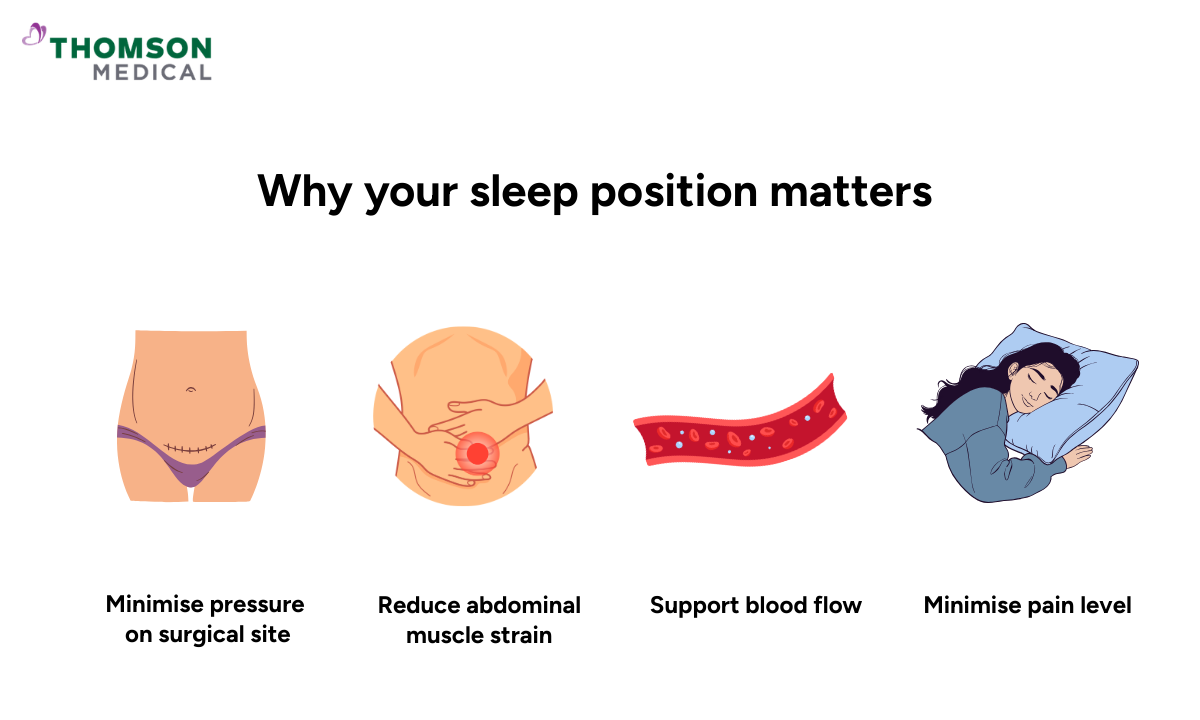
After a myomectomy, your body is doing a lot of work even while you rest. The way you position yourself during sleep directly affects how comfortable that rest is and how smoothly your body heals overnight.
It all comes down to a few things working together:
Pressure on your surgical site:
Certain positions place direct weight on your abdomen or incisions, which can cause pain and slow tissue recovery.
Staying off the wound area gives your body the space it needs to heal.
Abdominal muscle strain:
Your abdominal muscles are involved in more movements than you'd expect, including shifting position during sleep.
A well-supported position reduces the chance of accidentally straining them overnight.
Swelling and circulation:
How you lie affects blood flow to and from the surgical area.
Positions that restrict circulation can worsen swelling and leave you feeling more sore in the morning.
Pain levels at rest:
Even a small amount of unnecessary pressure can turn a manageable ache into a sleepless night.
The right position helps keep pain at a level that allows your body and mind to genuinely rest.
Most women find that once they settle into a supported position, sleep becomes noticeably more manageable, even in those early days post-surgery.
Best way to sleep after myomectomy
Finding a position that feels comfortable after surgery takes a little trial and error. These two tend to work best for most women, depending on where you are in your recovery.
Sleeping on your back with elevation
Lying on your back distributes your body weight evenly, so no single area of your abdomen bears unnecessary pressure. A slight elevation takes that further by reducing fluid pooling around the surgical site. Most surgeons recommend this as the go-to position for the first one to two weeks.
To set it up:
Place a wedge pillow or two regular pillows beneath your upper back to create a gentle incline
Tuck a pillow under your knees to relieve lower-back tension
If you tend to roll during sleep, place a body pillow or rolled blanket along your side to keep you in place
It takes a night or two to get used to, but you may find it becomes comfortable fairly quickly.
Side-sleeping
Side-sleeping is usually an option once initial soreness begins to ease – usually after one to two weeks, and with your surgeon's approval. It tends to suit women recovering from minimally invasive surgery, where healing moves a little faster.
When you're ready, try these steps:
Place a pillow between your knees to keep your hips aligned and reduce pelvic strain
Keep your spine relatively neutral
Go with whichever side feels less tender, and switch if that changes night to night
As your recovery progresses, you'll likely find yourself naturally gravitating towards what feels right. Trust that process, and let your comfort guide you.
Positions to avoid after myomectomy

Just as important as knowing what works is knowing what to steer clear of.
These positions are worth avoiding, at least until your surgeon gives you the go-ahead:
Stomach sleeping:
It might be your usual preference, but lying face down places direct pressure on your abdomen and incisions.
Most women need to avoid this for several weeks, depending on the type of surgery they had.
Sleeping flat without pillow support:
Without any elevation or knee support, your lower back and abdominal muscles have to compensate overnight, which tends to worsen pain by morning.
Curled or twisted positions:
Pulling your knees tightly to your chest or sleeping in a twisted position puts strain on abdominal muscles that are still in the early stages of healing.
If you wake up having shifted into one of these, don't worry – simply readjust and consider adding more pillow support before the next night.
If you're experiencing pain that doesn't seem to ease regardless of how you position yourself, schedule an appointment with Thomson Medical. Our team can help identify whether your discomfort is a normal part of recovery or something that needs attention.
When can you return to normal sleeping positions?
How quickly you can return to your usual sleep positions depends largely on the type of myomectomy you had. Recovery from minimally invasive surgery moves faster than recovery from open surgery, and how you feel day to day will shift as healing progresses.
Type of myomectomy | When you can usually return to normal sleep positions |
Hysteroscopic | Within a few days |
Laparoscopic or robotic | Around 2-3 weeks |
Open (abdominal) | 4-6 weeks or longer |
Every woman heals at her own pace, and it's perfectly normal if your timeline looks slightly different from the above. Moving through these milestones gradually rather than pushing through discomfort is what gives your body the best chance to recover well.
Comfort alone isn't always a reliable sign that everything has healed internally. Before returning to stomach sleeping or other positions that put pressure on the abdomen, it's worth checking in with your surgeon first, even if you're feeling much better.
Gynaecologists at Thomson Medical
Loading...
Tips for better sleep during myomectomy recovery

Good sleep after surgery isn't just about position. It's also about setting yourself up well before the night begins. A few practical adjustments can make the hours of rest you do get feel more restorative.
Create a comfortable sleep environment
Small changes to your bedroom can have a relatively big impact on how well you sleep during recovery:
Keep your room cool and dark
Wear loose, breathable clothing to avoid friction near the incision area
Limit screen time in the hour before bed
Stick to a consistent sleep and wake time where possible
Getting the environment right means your body can focus on what it needs to do – rest and recover.
Managing pain and discomfort at night
Pain that feels manageable during the day can sometimes feel worse when you're lying still.
A few simple habits before bedtime can help keep it under control:
Take prescribed pain relief shortly before bed. Don't wait until discomfort wakes you.
Avoid heavy meals in the evening, as bloating tends to worsen abdominal discomfort
Try slow, deep breathing to gently relax the abdominal area before sleep
If done consistently, these small habits can noticeably improve your quality of sleep over time.
Dealing with night sweats
Some women experience night sweats or hot flashes after a myomectomy, usually linked to temporary hormonal shifts, anaesthesia, or certain pain medications.
If this is disrupting your sleep, try these small changes:
Use lightweight, breathable bedding or a light cotton sheet
Keep a small fan nearby for airflow
Avoid caffeine and spicy foods in the evening
It usually settles as your body adjusts, but if it feels severe or persists beyond a few weeks, mention it to your doctor at your next follow-up.
Recovery is rarely linear, and some nights will genuinely be harder than others. Be patient with yourself through those moments. If anything feels off or doesn't seem to be improving, reach out to your care team sooner rather than later.
If night sweats, persistent pain, or poor sleep are making your recovery feel harder than it should, schedule an appointment with Thomson Medical. Our doctors can review your symptoms and suggest an approach to help you get the rest your body needs to heal.
FAQ
What is the best way to sleep after a myomectomy?
Sleeping on your back with your upper body slightly elevated and a pillow tucked under your knees is one of the best positions, especially in the first one to two weeks. This reduces pressure on the abdomen and helps minimise swelling around the surgical site.
As recovery progresses, side-sleeping with a pillow between your knees becomes an option for most women.
How long after myomectomy should I sleep elevated?
For most women, one to two weeks is a reasonable starting point. If you had open abdominal surgery or are still experiencing significant discomfort, you may need a little longer. Let pain be your guide rather than the calendar.
Can I sleep on my stomach after my myomectomy?
Not in the early weeks. Stomach sleeping places direct pressure on your abdomen and incisions, which can interfere with healing. Most women need to avoid it for at least several weeks, depending on their surgery type and how recovery is progressing.
When can I start sleeping on my side?
Usually somewhere between one to three weeks post-surgery, depending on the type of procedure you had and your current pain level. Start gently, use a pillow between your knees, and check with your surgeon if you're unsure whether you're ready.
What helps with sleeping after myomectomy surgery?
A combination of things tends to work best. Supportive pillow placement, taking pain relief before bed rather than after discomfort sets in, a cool and calm sleep environment, and keeping to a consistent sleep schedule where possible.
Can I use a heat pad while sleeping after myomectomy?
Only if your doctor has specifically approved it. If they have, use the lowest heat setting, keep it away from the incision site, and avoid falling asleep with it still on.
The information provided is intended for general guidance only and should not be considered medical advice. For personalised recommendations based on your medical conditions, request an appointment with Thomson Medical.
For more information, contact us:
Thomson Specialists (Women's Health)
Thomson Women's Clinic (TWC)
- Novena:
6592 6686 (Call), 8611 8986 (WA) - Bukit Batok:
6569 0668 (Call), 8686 3525 (WA) - Choa Chu Kang:
6893 1227 (Call), 8282 1796 (WA) - Jurong:
6262 8588 (Call), 6262 8588 (WA) - Katong (female doctor):
6970 2272 (Call), 8611 9020 (WA) - Punggol:
6243 6843 (Call), 8811 0328 (WA) - Sembawang: 6753 5228
- Sengkang: 6388 8125
- Serangoon (female doctor): 6382 3313
- Tampines: 6857 6266
- Tiong Bahru: 6276 1525
Notice
The range of services may vary between TWC/TS locations. Please contact your preferred branch directly to enquire about the current availability.
Request an Appointment