

Why do some people catch colds easily while others rarely fall ill? Why does spicy food leave one person energised but upset another’s stomach? The answer may lie in something you haven’t thought about – your body constitution.
In Traditional Chinese Medicine (TCM), everyone has a unique body constitution. Knowing yours can help explain why your body reacts the way it does and how to support it gently and naturally.
What is body constitution in TCM?
Traditional Chinese Medicine Body Constitution (TCMBC or 体质) refers to your body’s natural physical, emotional, and functional tendencies. It is shaped by what you inherit from your parents and by how you live – your diet, stress levels, lifestyle habits, and environment.
Your body constitution is not fixed. It can shift over time, especially when daily habits, emotional health, and overall balance change.
TCM recognises nine main body constitutions, including:
Balanced
Dampness-heat
Qi deficiency
Yin deficiency
Yang deficiency
Phlegm dampness
Qi stagnation
Blood stasis
Intrinsic
While every type has its unique strengths and vulnerabilities, you can better understand your own profile by taking a Thomson TCM Body Constitution Assessment to provide your body with the mindful support it needs.
Why TCM body constitution matter

Your TCM body constitution influences:
How easily you fall ill or recover
How your digestion, energy, and emotions behave
How your body responds to stress, food, and climate
It helps explain why two people can live similar lifestyles yet experience very different health outcomes.
For example, skipping meals or pushing through long days without rest may leave someone with a Qi deficiency constitution completely drained. In contrast, a person with a dampness-heat constitution might react to the same habits with breakouts, bloating, irritability, or a heavy sensation.
Understanding your body constitution helps gain insight into your body’s unique needs – what supports you, what drains you, and what throws you out of balance. It allows you to make more targeted lifestyle and dietary choices, helping you maintain better health, prevent recurring issues, and support long-term wellbeing.
Your symptoms aren’t random – they follow a pattern. A TCM body constitution consultation can help uncover the root imbalance behind how you feel and guide the right lifestyle and dietary adjustments. Book a consultation at Thomson Chinese Medicine.
Our physicians
Loading...
What your TCM body constitution says about your health
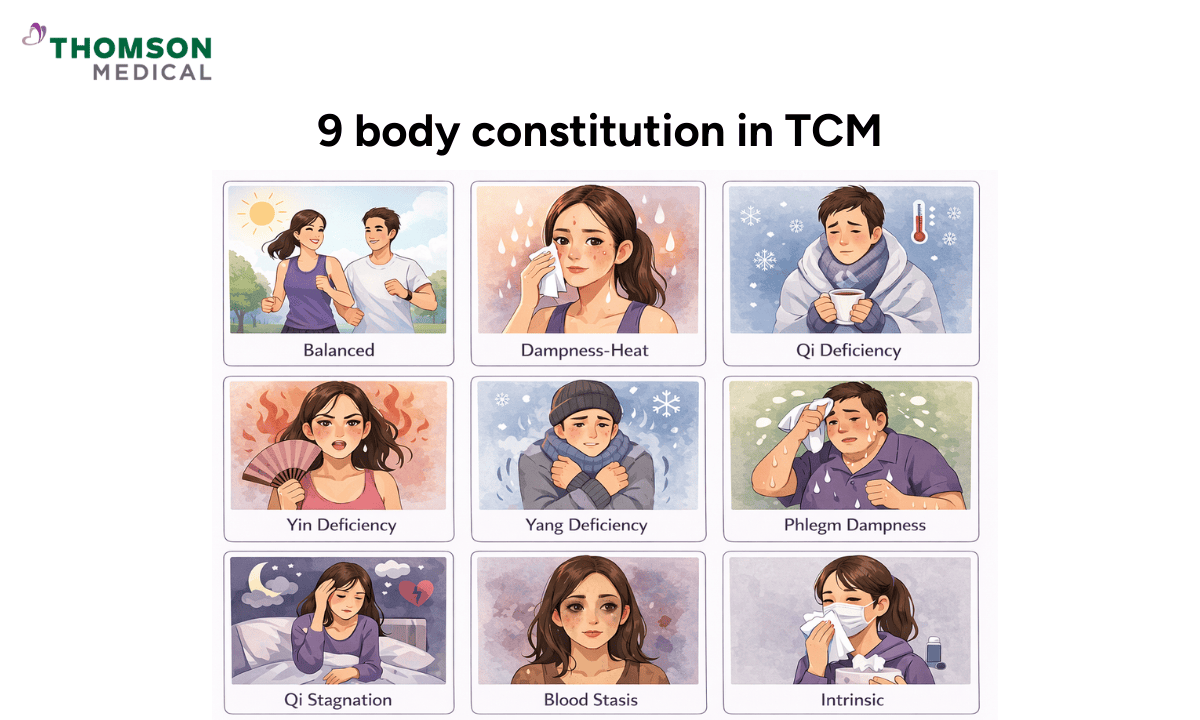
No one fits perfectly into a single category, but most people tend to lean towards one or two constitutions. Below are the different TCM body constitutions and the common signs that may help you recognise yours.
Balanced
This constitution reflects a state of optimal health, where your body adapts well to daily demands and environmental changes.
Some common signs include:
Good energy and appetite
Toned body, radiant skin, thick, shiny hair
Regular bowel movements
Adapts well to different environments and climate changes
To help maintain this balance, it is generally recommended to:
Eat regular meals in moderation
Avoid extreme cold or hot food and greasy and spicy food
Consume more whole grains, fruits and vegetables
Stay physically active with activities such as jogging, brisk walking, Tai Chi, or ball games
Dampness-heat
Excess heat combined with internal dampness often defines this body constitution, especially in warm or humid weather.
Some common signs include:
Oily skin and frequent acne breakouts
Constant thirst and bitter taste in mouth
Sense of heaviness in the body
Sticky or irregular bowel movements
Leukorrhea (white vaginal discharge)
Easily irritated
Dislikes hot and humid weather
To help maintain this balance, it is generally recommended to:
Do activities that regulate the flow of Qi in the Liver and Gallbladder to clear heat and dampness in your body
Choose sweet, cooling and light foods, such as green beans, water spinach, celery, cucumber, winter melon, watermelon, lotus root, barley and red bean porridge
Avoid smoking or drinking, and late nights
Qi deficiency
Lower energy levels and reduced resilience are common themes for people who lean towards this constitution.
Some common traits include:
Soft-spoken, easily out of breath
Prone to exhaustion and colds
Quiet or introverted nature
Poor adaptation to climate changes
To help maintain this balance, it is generally recommended to:
Eat Qi-nourishing foods, like glutinous rice, sweet potato, barley, mushroom, dates, honey, chicken and beef
Avoid overexertion
Engage in gentle exercise such as brisk walking or Tai Chi, Ba Duan Jin
Yin deficiency
This constitution tends to reflect a lack of cooling and nourishing fluids, often creating a sensation of internal heat or dryness.
Some common traits include:
Dry mouth or throat
Always thirsty and prefers cold drinks
Warm, feverish palms and soles
Skinny appearance
Dislikes hot and humid climates
Restless or impatient temperament
To help maintain this balance, it is generally recommended to:
Eat sweet and cooling food, such as duck, sea cucumber, snow pear, white and black fungus, Chinese wolfberry and fish
Stay well-hydrated
Avoid excessive sweating when exercising
Short daytime rests can be helpful
Yang deficiency
If you have this body constitution, you may be more sensitive to cold and tend to feel less warmth.
Some common traits include:
Cold hands and feet
Discomfort after cold foods
Low tolerance to cold environments
To help maintain this balance, it is generally recommended to:
Eat warming foods such as beef, garlic, ginger
Limit raw and cold foods like cucumber and winter melon
Keep your feet, lower back and abdomen warm
Avoid staying in air-conditioned rooms for long periods
Do gentle, warming exercises, such as jogging and Tai Chi
Phlegm dampness
This constitution is characterised by a tendency towards heaviness and sluggishness, especially when digestion is under strain.
Some common signs include:
Overweight, sense of heaviness in arms and legs
Dull facial complexion
Sticky sensation in mouth
Preference for greasy foods and alcohol
Mild-mannered and patient
To help maintain this balance, it is generally recommended to:
Eat more corn, millet, barley, oats, soybean, red bean, tofu, sea cucumber, prawns, Japanese rhizome (huai shan), radish, celery and apples
Limit fatty meat, and sweet and oily food
Maintain emotional balance
Qi stagnation
If your body constitution is Qi stagnation, you may notice emotional tension building up easily, with energy feeling stuck rather than flowing smoothly.
Some of the common traits are:
Thin and frail-looking
Introvert, tendency to overthink and worry too much
Dislike rainy and gloomy weather
Bloating around abdomen
To help maintain this balance, it is generally recommended to:
Stay socially engaged
Practise stress relief and movement
Eat foods that support Qi flow likemillet, kelp, seaweed, radish, kumquat, pomelo, kiwi, hawthorn berry and deep-sea fish
Blood stasis
When circulation is less smooth, this constitution may present through pain, tension, or a duller complexion.
Some of the common traits are:
Dull or dark skin, dark lips, dark under-eye rings, frequent pigmentation
Easy bruising
Engorged veins beneath the tongue
Easily agitated, forgetful
Cannot endure cold environments
To help maintain this balance, it is generally recommended to:
Eat warming foods, such as black beans, black fungus, hawthorn berry, radish, onion, garlic, ginger, mushroom, seaweed, vinegar and rose tea
Cut back on fatty food, sweets and cold drinks
Stay active but avoid overexertion
Keep your body warm
Intrinsic
With an intrinsic constitution, your body tends to be more sensitive, responding more readily to changes in environment or certain foods.
Following are the common traits:
Sensitive to food, pollen, smells, or medications
Allergies, asthma, skin rashes
Symptoms triggered by seasonal changes
To help maintain this balance, it is generally recommended to:
Eat a simple, balanced diet with sufficient vegetables and meat and less spicy foods
Avoid contact with known allergens
Maintain good hygiene and a clean living environment
Support immunity with regular exercise
This overview offers a starting point, but a TCM physician can provide a more accurate assessment and tailored guidance to support your body constitution.
Take the next step by scheduling a consultation at Thomson Chinese Medicine for an in-depth body constitution assessment and practical health guidance.
FAQ
What are the 9 types of body constitution in TCM?
The nine body constitutions in TCM are balanced, Qi deficiency, Yang deficiency, Yin deficiency, phlegm-dampness, dampness-heat, Qi stagnation, Blood stasis, and intrinsic.
How to determine body constitution?
While certain signs may offer clues, the most accurate way to determine your body constitution is through a consultation with a TCM physician. He will assess your symptoms, lifestyle, emotional patterns, tongue appearance, and pulse quality.
How do I know if my body is damp?
If dampness is present, you may notice a heavy sensation in your body, bloating, sticky stools, fatigue, oily skin, or feeling worse in humid weather.
What foods are good for Qi stagnation?
Foods that help move Qi include citrus fruits, radish, leafy greens, ginger, and light, aromatic foods that support digestion.
How do you open your Qi?
Gentle movement, breathing exercises, stress management, regular meals, and practices like acupuncture can help restore smooth Qi flow.
How do I know if my body is Yin or Yang?
People with Yin deficiency often feel warm, dry, or restless, while those with Yang deficiency tend to feel cold, tired, and low in energy. A TCM assessment can clarify this more accurately.
The information provided is intended for general guidance only and should not be considered medical advice. For personalised recommendations and advice based on your unique situation, please consult a specialist at Thomson Medical. Request an appointment with Thomson Medical today.
Physician Jun Negoro
Traditional Chinese Medicine
Thomson Chinese Medicine (TCM Paragon Medical Centre) and 1 other
English, Mandarin
Alliance MediNet
