

If you're considering breast augmentation in Singapore, it's natural to have questions – about the procedure itself, what recovery involves, and whether it's the right decision for you.
Breast augmentation is a surgical procedure that addresses specific physical concerns, whether that's restoring volume after pregnancy, improving symmetry, or achieving a shape that feels more proportionate to your frame.
Before moving forward, it helps to understand what the procedure involves, what you can realistically expect, and what risks to consider – so that when you make your decision, it's a well-informed one.
What is breast augmentation?
Breast augmentation is one of the most common plastic surgeries in Singapore. It’s a surgical procedure that helps enhance the size, shape, or fullness of your breasts using implants placed behind your breast tissue or chest muscle.
You might consider breast augmentation to:
Restore volume lost after pregnancy or breastfeeding
Balance asymmetrical breasts
Feel more confident in your own skin
Before the procedure, you'll have time to discuss exactly what you want. If you're unsure where to start, your surgeon will walk you through your options and help you find what feels right for you.
Types of breast augmentation
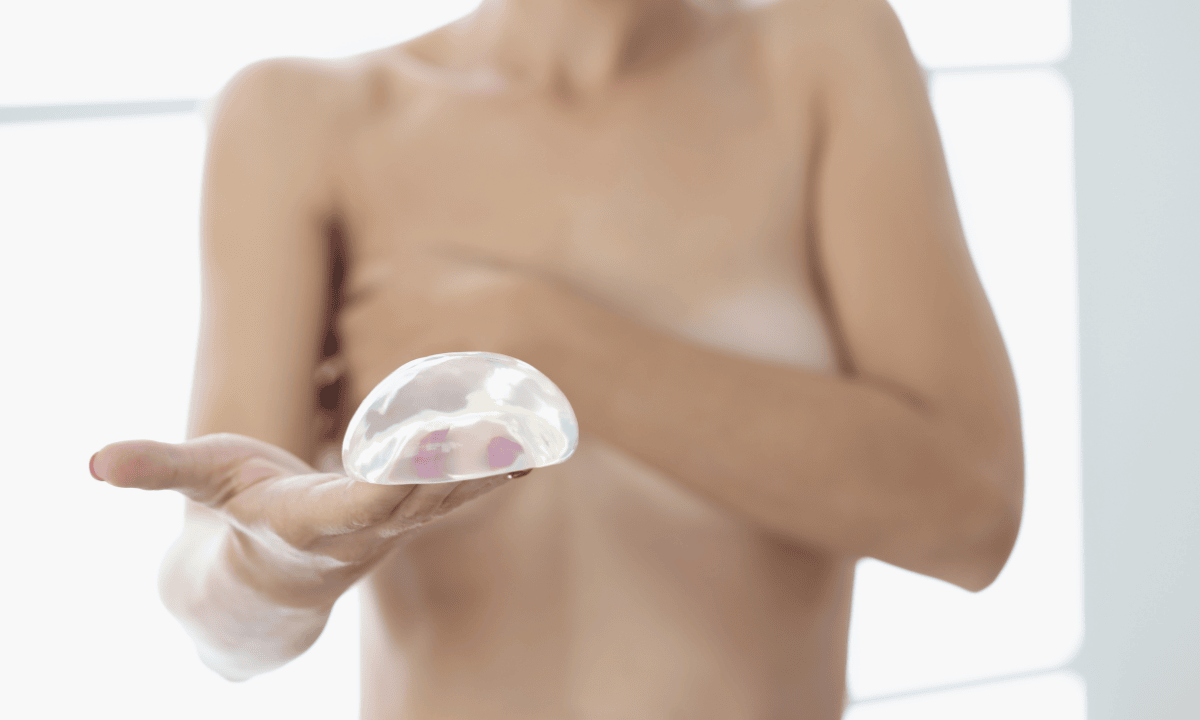
One of the first things you'll explore with your surgeon is which type of implant suits your body and goals. In Singapore, two options are available: silicone and saline. Both are medically approved, but each has its own characteristics.
Your surgeon will take time to explain and help you figure out the one that suits your body and goals.
Silicone implants
Silicone implants are filled with a cohesive silicone gel that resembles the feel of natural breast tissue. Many women prefer these implants because they feel softer and more natural to the touch. The gel stays in place even if the implant shell breaks, though that’s rare with modern implants.
If you have less existing breast tissue, they’re usually the better option because they’re less likely to show rippling under your skin.
Saline implants
Saline implants are filled with sterile salt water. Unlike silicone implants, they’re inserted empty and filled once they’re in place. If a saline implant breaks, your body absorbs the salt water safely. You’ll also notice the change right away, as the breast will go flat.
Some women prefer saline because it allows them to know right away if something goes wrong. This option is also less expensive than silicone.
The right option for you will depend on your body type, your natural breast tissue, and what feels right for you.
What breast augmentation can (and can't) do for you
If you’re considering breast augmentation, you may be asking yourself if this will actually make a difference. Many women who consider this procedure have the same concern.
Knowing what breast augmentation offers and what it won’t change can help you make a decision with clarity and confidence.
What it can help you with:
Physical appearance:
Restoring lost volume and improving overall breast shape following pregnancy, breastfeeding, or weight loss.
Improving symmetry between uneven breasts for a more balanced silhouette.
The emotional changes:
Feeling more at ease in your body after physical changes is a common outcome patients report.
What it won't address:
Sagging or drooping breasts:
If lifting or reshaping is needed, a separate procedure such as a breast lift would be more appropriate.
Natural changes over time:
Your breasts will still be affected by ageing, weight changes, and future pregnancies.
Going in with realistic expectations is important. Breast augmentation can address specific physical concerns, but it works best when your goals are grounded in what the procedure can actually deliver.
If you are considering this procedure, your surgeon can walk you through what is achievable for your body, answer your questions honestly, and help you determine whether this is the right option for you.
If you're ready to explore what breast augmentation can do for you, schedule an appointment with Thomson Breast Centre. Our surgeons will help you explore your options and create a personalised plan that aligns with your goals and lifestyle.
Our breast specialists in Singapore
Loading...
What to expect before, during, and after breast augmentation
If you've never done breast augmentation before, it’s natural to wonder what this process will actually look like. The more you know about what to expect, the more prepared you’ll feel every step of the way.
Before the procedure
Your journey starts long before surgery day. You’ll have an in-depth consultation with your surgeon to discuss your goals, your medical history, and your lifestyle. During this consultation, your surgeon will examine your breasts, take measurements, and help you choose the implant size and type for your body.
You’ll also try on different sizes using sizers to see how they look under your clothes. This part is very important because what looks right on someone else may not suit your body.
Before the surgery, you’ll also need to stop smoking for at least a few weeks. Your surgeon may also suggest you pause taking medications or supplements temporarily.
During the procedure
The procedure takes about one to two hours. You’ll be under general anaesthesia, so you won’t feel anything.
Your surgeon makes a small incision, usually in the crease under your breast, around your areola, or in your armpit, and creates a pocket for the implant. They’ll then position the implant carefully behind your breast tissue or chest muscle.
After the procedure
You’ll wake up in recovery with new breasts. Your breasts will feel tight, and you may experience some discomfort for the first few days.
You’ll need to wear a surgical bra for support during healing. After a week or two, you can return to your normal routine. Your surgeon may suggest avoiding strenuous exercise and heavy lifting for about six weeks.
Your surgeon will schedule follow-up appointments to monitor your healing. The swelling gradually eases over several weeks, and your implants will "settle" into their final position within three to six months.
It’s important to remember that what you see immediately after surgery isn't your final result. Your body needs time to heal, and the appearance of your breasts will continue to settle as you recover.
Your surgeon will be checking in regularly, and if you ever have questions or concerns during recovery, they're there to help. Most healing is straightforward, but it's good to know support is there if you need it.
Is breast augmentation safe?
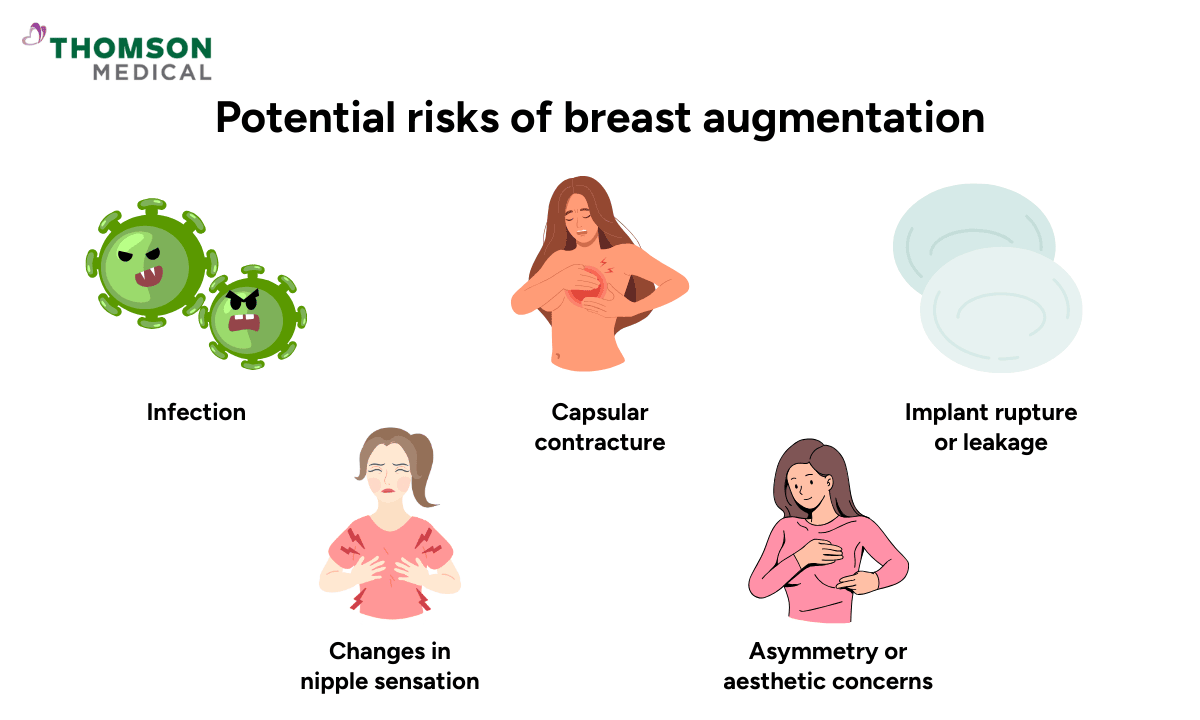
Breast augmentation is generally safe when performed by an experienced, board-certified plastic surgeon in an accredited facility. In Singapore, breast augmentation is regulated under strict medical guidelines to ensure patient safety.
Still, like any surgery, there are possible risks. Your surgeon will discuss these with you in detail during your consultation.
Here are the risks that you need to consider:
Infection:
Infection may sound scary, but today it's relatively rare as long as your surgeons practise proper surgical techniques and aftercare.
- If it happens, infections are generally treatable with antibiotics.
Capsular contracture:
This happens when scar tissue around the implant tightens, which makes the breast feel hard.
Fortunately, modern implants and surgical techniques have reduced this risk significantly.
Implant rupture or leakage:
Today’s implants are durable, though implant rupture or leakage is possible.
Silicone implants can develop silent breaks without showing obvious symptoms. That’s why it’s important to have MRI scans regularly every few years.
Changes in nipple sensation:
Your nipples may feel more or less sensitive than before.
Most of the time, this can go back to normal within a few months, but in rare cases, it can be permanent.
Asymmetry or aesthetic concerns:
These can happen if implants shift or if healing doesn’t go as planned.
This doesn’t happen often, but when it does, revision surgery can correct the issue and help you achieve the result you want.
It's natural to feel concerned after reading about these potential risks. But rest assured that your surgeon will carefully assess your situation and take steps to minimise these risks. They'll help weigh the risks against the benefits before you decide to proceed with breast augmentation.
If anything worries you – whether it's about the procedure, the risks, or recovery – discuss these openly with your surgeon.
If you're still weighing your options or have concerns about the procedure, schedule an appointment with Thomson Breast Centre. Our surgeons will take the time to address every question you have so you can move forward with confidence and peace of mind.
How much does breast augmentation cost in Singapore?
In Singapore, breast augmentation usually ranges from SGD 10,000 to 18,000. The exact price varies based on the type of implant you choose, your surgeon's expertise, and the clinic.
This price usually includes:
Your surgeon's professional fees
The implants themselves
Anaesthesia
Operating facility costs
Your immediate post-operative care
Some clinics offer all-inclusive packages, while others separate each component. That’s why it’s important to ask beforehand so you know exactly what's covered.
Breast augmentation is a significant investment. It's worth taking the time to consider it carefully to make sure it fits your budget without causing stress. If the cost feels overwhelming, you can ask your surgeon or clinic about payment plans.
Remember, this is about you, your body, your confidence, and how you want to feel in your own skin. Take the time you need to find the approach that feels right. When you're ready, you'll have guidance and support to help you move forward with confidence.
Please note that these costs are based on 2026 rates and may vary over time.
FAQ
What's the difference between breast implants and breast augmentation?
They're related but not the same thing. Breast augmentation is the surgery that enhances your breast size. Breast implants, on the other hand, are the actual devices (silicone or saline) placed in your breasts.
What is the best age to get breast implants?
In Singapore, you need to be at least 21 for silicone implants (18 for saline). But the "best" age is when you’re emotionally ready and done growing. Some women get them before having kids, while others wait until after. There's no right or wrong timeline.
How many pounds do breast implants add?
Not much. Most implants weigh one to two pounds total for both breasts. A 300 cc implant (a common moderate size) weighs about 300 grams, or roughly two-thirds of a pound.
Do breast implants get saggy with age?
The implants themselves don't sag, but the breast tissue around them does. How much sagging occurs depends on your skin, lifestyle, weight changes, and whether you have kids after surgery.
How do I choose the right implant size for my body?
Your surgeon will help. They’ll look at your chest, existing tissue, body shape, and what you want. You'll try different sizes with external sizers to see how they look under clothes.
How long do breast implants last?
Modern breast implants don't expire, but this doesn’t mean they’ll last forever. Many women keep their original implants for 10 to 20 years or longer without problems.
However, you may eventually want or need to replace them due to normal wear and tear, changes in your aesthetic preferences, or complications like capsular contracture.
The information provided is intended for general guidance only and should not be considered medical advice. For personalised recommendations based on your medical conditions, request an appointment with Thomson Medical.