
.png%3Fbranch%3Dprod&w=3840&q=75)
Your breasts feel swollen and tender, almost uncomfortably full. When you try to nurse, your baby struggles to latch, and you might be wondering if something's wrong or if this discomfort is just part of early motherhood.
This fullness is your body's way of learning to nourish your baby, and while it can feel overwhelming, it's temporary.
Breast engorgement affects most new mothers in those first vulnerable days, but understanding what's happening can ease the worry and discomfort. With a few simple techniques and gentle care, you'll move through this phase with greater comfort and confidence.
What is breast engorgement?
.png?branch=production)
Breast engorgement happens when your breasts fill up with milk faster than your baby empties them, causing swelling, tightness, and tenderness.
Most women experience breast engorgement in the first week after giving birth. This is when your body transitions from producing small amounts of colostrum – the thick, yellowish milk – to making more mature milk.
Engorgement can also happen later in your breastfeeding journey – when you miss feeds, suddenly change your nursing routine, or begin weaning.
It's important to know that engorgement doesn't mean something is wrong with your body or your feeding technique. It's simply a sign that your milk supply is establishing itself, and with the right approach, the discomfort is temporary and manageable.
What are the symptoms of breast engorgement?
Recognising what engorgement looks and feels like helps you take action early. While the experience differs from woman to woman, there are common signs that show your breasts are overly full.
When engorgement happens, you may notice:
Swollen, hard breasts:
Your breasts may feel firm to the touch, sometimes extending to your armpits.
Pain and tenderness:
Discomfort can range from mild achiness to more severe pain, making it difficult to hold your baby or lie on your stomach.
Flattened nipples:
When swelling is severe, your nipples can flatten, making it harder for your baby to latch.
Warmth:
Your breasts may feel warm (this doesn't necessarily mean you have an infection).
Slight fever:
A low-grade fever (below 38.3°C) can occur but usually goes away within 24 hours.
Why breast engorgement happens
Engorgement occurs when milk builds up faster than it's removed from your breasts. Knowing what triggers it can help you spot patterns and, where possible, take steps to ease the pressure before it becomes uncomfortable.
Common causes include:
Initial milk surge:
Around two to five days after delivery, your body shifts from making small amounts of colostrum to producing much larger volumes of milk.
Your breasts can feel overwhelmed by this sudden change, especially before you and your baby settle into a comfortable feeding rhythm.
Infrequent feeding or pumping:
When feeds are missed or spaced further apart than usual, milk naturally accumulates. The same happens if you skip pumping sessions.
Difficulty with latching:
If your baby is struggling to latch well or isn't feeding efficiently, milk doesn't get fully removed. This isn't your fault – latching takes practice for both of you.
Changes to your routine:
Returning to work, night weaning, or dropping feeds more quickly than your body expects can disrupt the natural balance between what you’re making and what your baby needs.
Weaning too quickly:
When breastfeeding stops suddenly, your body doesn't have the gradual signal it needs to slow down milk production.
It's also worth knowing that engorgement isn't only because of milk. Your breasts experience increased blood flow and fluid retention too, which is why they can feel so intensely swollen and heavy – especially in those first few days when your body is still adjusting to its new role.
If you're experiencing persistent engorgement or struggling to establish a proper feeding routine, schedule an appointment with Thomson ParentCraft Centre. Our lactation consultants can assess your baby's latch and provide personalised guidance to ease your discomfort.
Our ParentCraft trainers
Loading...
How long does breast engorgement last?
The good news is that engorgement is temporary. How long it lasts depends on when it happens and how you respond to it.
For most new mothers, the initial wave of engorgement peaks around day three to five after delivery. Once you and your baby find a regular feeding rhythm, it normally eases within 24 to 48 hours as your body learns to match milk production to your baby's needs.
If it happens later – after missing feeds or changing your routine – it usually settles within 12 to 24 hours once you resume normal nursing or pumping.
However, if your symptoms last beyond a few days or worsen despite home care, don’t hesitate to reach out to your doctor. They can check that no other issues are developing and help you move forward more comfortably.
How to relieve breast engorgement
Engorgement can leave you feeling frustrated and wondering how long you'll need to push through the discomfort. Luckily, there are gentle, effective ways to ease the pressure while your body adjusts to feeding your baby.
Immediate relief techniques
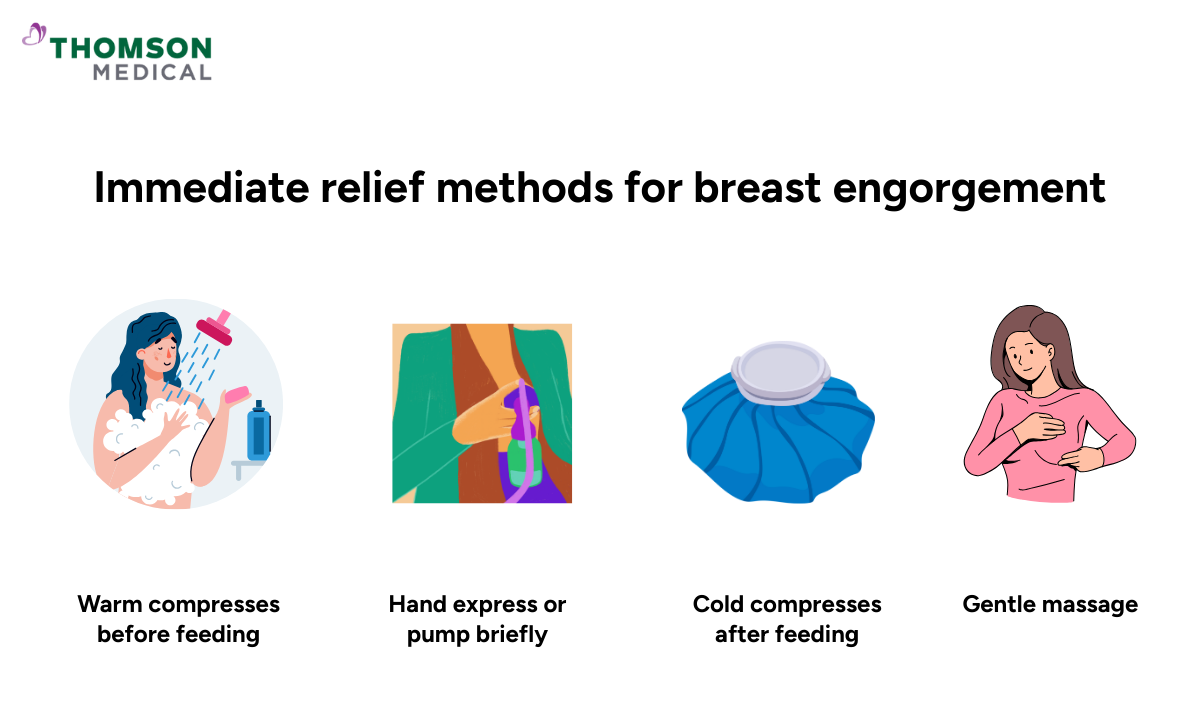
When your breasts feel uncomfortably full, these simple methods can bring comfort:
Warm compresses before feeding:
Use a warm flannel or take a warm shower for two to three minutes.
The warmth encourages milk to flow and softens your breast tissue, making it easier for your baby to latch.
Hand express or pump briefly:
If your breasts are so full that your baby can't latch, express just enough milk to soften the areola (the darker area around your nipple).
Cold compresses after feeding:
Apply cold packs or chilled cabbage leaves for 15 to 20 minutes. The coolness reduces swelling and soothes the soreness.
Gentle massage:
Use light, circular motions while feeding or pumping. This encourages milk to move through your breasts and helps prevent blockages.
Small steps throughout the day can make a real difference. Using these techniques regularly – before the discomfort peaks – helps you stay more comfortable and makes it easier to focus on feeding and bonding with your baby.
Feeding and pumping strategies
One of the most effective ways to ease engorgement is to remove milk regularly and efficiently. This might feel challenging when you're already uncomfortable, but these approaches can help you and your baby find your rhythm:
Feed frequently:
Aim to nurse your baby every two to three hours, or whenever they show hunger cues.
Regular feeding prevents milk from accumulating and helps your body learn how much to produce.
Focus on a good latch:
When your baby latches well, they can remove milk more effectively.
If you're not sure whether the latch is right, or if feeding feels painful, a lactation consultant can offer guidance and support.
Alternate which breast you start with:
Beginning each feed with a different breast helps ensure both sides are emptied regularly and prevents one from becoming overly full.
Pump only when needed:
If you need to be away from your baby or they're unable to feed, pump to stay comfortable.
Just be mindful not to over-pump, as this can signal your body to make more milk and may worsen the engorgement.
Finding the balance between comfort and not overstimulating your supply takes time. Be patient with yourself – your body is learning what your baby needs, and this adjustment usually happens over the next few weeks.
If you're finding it difficult to achieve a proper latch or your baby isn't feeding effectively, request a consultation with Thomson ParentCraft Centre. Our lactation consultants can observe your feeding sessions and create a tailored feeding plan to help you and your baby.
When to see a doctor for breast engorgement
While most cases of engorgement can be managed at home, sometimes it can develop into something that needs medical attention. Knowing when to reach out for help means you can get treatment early and avoid complications.
Contact your doctor if you experience:
High fever:
A temperature above 38.3°C that lasts more than 24 hours may indicate mastitis or an infection.
Severe, localised pain:
Intense pain in one specific area of your breast, especially if it's accompanied by redness or warmth, could signal a blocked duct or infection.
Flu-like symptoms:
Body aches, chills, or exhaustion alongside breast pain may be signs of mastitis.
No improvement after 48 hours:
If you've tried relief measures at home and haven't felt better within two days, it's time to seek professional guidance.
You know your body best. If something feels wrong or you're worried, trust that instinct and reach out to your doctor. Getting help early can prevent the situation from worsening and help you continue feeding your baby more comfortably.
Breast engorgement is a natural part of your breastfeeding journey, not a sign that something's wrong. With gentle care and the right support, this phase will pass as your body adjusts to your baby's needs.
FAQ
Can breast engorgement happen if I'm not breastfeeding?
Yes. Even if you choose not to breastfeed, your body still produces milk after delivery, which can lead to engorgement. Wearing a supportive bra, applying cold compresses, and avoiding breast stimulation can help. The engorgement often resolves within 7-10 days as your body stops producing milk.
Is it normal for only one breast to be engorged?
Yes, it's common for one breast to become more engorged than the other, especially if your baby prefers feeding from one side or if you've missed a feeding on that breast. Make sure to offer both breasts during feeds to keep milk removal balanced.
How do I know if it's engorgement or mastitis?
Engorgement affects both breasts evenly and causes general fullness and discomfort. Mastitis usually affects one breast and causes severe, localised pain, redness, warmth in a specific area, and flu-like symptoms such as high fever and body aches. If you suspect mastitis, seek medical attention promptly.
Can I still breastfeed with engorged breasts?
Yes, and you should continue breastfeeding. Frequent nursing is the best way to relieve engorgement. If your baby has trouble latching due to swelling, hand express a small amount of milk first to soften the areola.
Will breast engorgement affect my milk supply?
If left untreated, severe engorgement can reduce milk supply because the pressure signals your body to produce less milk. Regular feeding or pumping prevents this and helps maintain a healthy supply.
How can I prevent engorgement when weaning?
Wean gradually by dropping one feeding at a time over several weeks. This allows your body to adjust milk production slowly. If you experience discomfort, hand express just enough for relief without fully emptying your breasts.
The information is intended for general guidance only and should not be considered medical advice. For personalised recommendations and advice based on your unique situation, please consult a specialist at Thomson Medical. Request an appointment with Thomson Medical today.
For more information, contact us:
Thomson ParentCraft Centre
Thomson Breast Centre
Request an Appointment