
.png%3Fbranch%3Dprod&w=3840&q=75)
Most people don't pay much attention to what happens in the toilet until they experience persistent constipation or ongoing diarrhoea. If this applies to you, the Bristol Stool Chart can help you understand what your stools reveal about your digestive health and whether you need medical attention.
What is a Bristol stool chart, and what does it indicate?
The Bristol Stool Chart was developed in 1997 at the Bristol Royal Infirmary in the UK as a clinical assessment tool. It categorises stools into seven types based on their shape and consistency.
Doctors often use the chart to estimate how long it takes for food to pass through your digestive tract and to help identify potential issues such as constipation, irritable bowel syndrome, and diarrhoea.
What are the different stool types?

The type of stool you pass depends on how long it spends in your colon. The longer it remains there, the more water is absorbed, making it harder to pass. Conversely, if stool moves through your colon too quickly, it retains too much water, resulting in a loose or watery consistency.
Healthy stools are soft yet well-formed and easy to pass without straining. Healthy bowel habits include having regular bowel movements, meaning that you poop every one to three days.
The Bristol Stool Chart classifies stools into seven types:
Types 1 and 2
Types 1 and 2 often indicate that you have constipation.
Type 1:
Separate hard lumps resembling nuts, which are difficult to pass. It should not happen frequently.
Type 2:
Often a log-shaped but lumpy stool.
Types 3 and 4
Types 3 and 4 are often considered healthy stools.
Type 3:
Similar to type 2, this stool is log-shaped, but has cracks on its surface. This type of stool is considered normal.
Type 4:
Similar to types 2 and 3, it is log-shaped and smooth with a soft texture, resembling a snake. It is considered normal and easy to pass.
Types 5, 6, and 7
Types 5, 6, and 7 suggest that you may have diarrhoea.
Type 5:
Similar to type 1, the sizes of the type 5 stool are small, but these are soft and pass easily. However, it may suggest a lack of fibre in your diet.
Type 6:
Fluffy pieces with ragged edges, appearing mushy. This type is considered too soft and is often associated with mild diarrhoea.
Type 7:
Watery with no solid pieces, entirely liquid. It indicates severe diarrhoea and potential gastrointestinal distress.
Our gastrointestinal specialists
Loading...
What happens if you have abnormal stool, and what causes it?
Abnormal stools, such as types 1, 2, 5, 6, or 7, may result from:
Dietary factors:
Low fibre intake or dehydration.
Gut infections:
Bacterial or viral infections can cause diarrhoea.
Medical conditions:
Conditions like irritable bowel syndrome (IBS), inflammatory bowel disease (IBD), or food intolerances can alter stool consistency.
If you find that you may have abnormal stool matching types 1, 2, 3, 5, 6, or 7, it is best to monitor first whether irregularities such as green poop or hard poop occur for more than a few days before approaching a healthcare professional.
Similarly, chronic constipation can also obstruct bowels, whereas chronic diarrhoea can increase the difficulty for you to absorb the necessary nutrients from food. However, these may be a sign of a more serious condition, so it is better to monitor for a few days before seeing a doctor.
That said, pay attention to any signs of blood in your stool. If you haven't eaten any of the foods that could turn your poop this colour, such as beets, cranberries or tomato juice, consult with a healthcare professional as soon as possible.
If you’re concerned about your bowel health due to hard, separate faeces or fluffy pieces with ragged edges, schedule an appointment with Thomson Medical. Our specialists can help you understand what is causing these abnormal bowel patterns and provide recommendations tailored to your condition.
Does the colour of your stool matter?
As with size and consistency, the colour of your stool can be a helpful signal about what's going on inside your body. Varying shades of brown and even a hint of green poop are considered the norm, especially if you consumed green foods like spinach.
However, if your poop is deviating from the norm and you find yourself passing black or pale stool, it is best to consult a medical professional to figure out the cause, as different coloured stools can be caused by eating certain foods, taking iron supplements, or an underlying condition like bleeding in your digestive tract.
How can you improve your bowel movements?
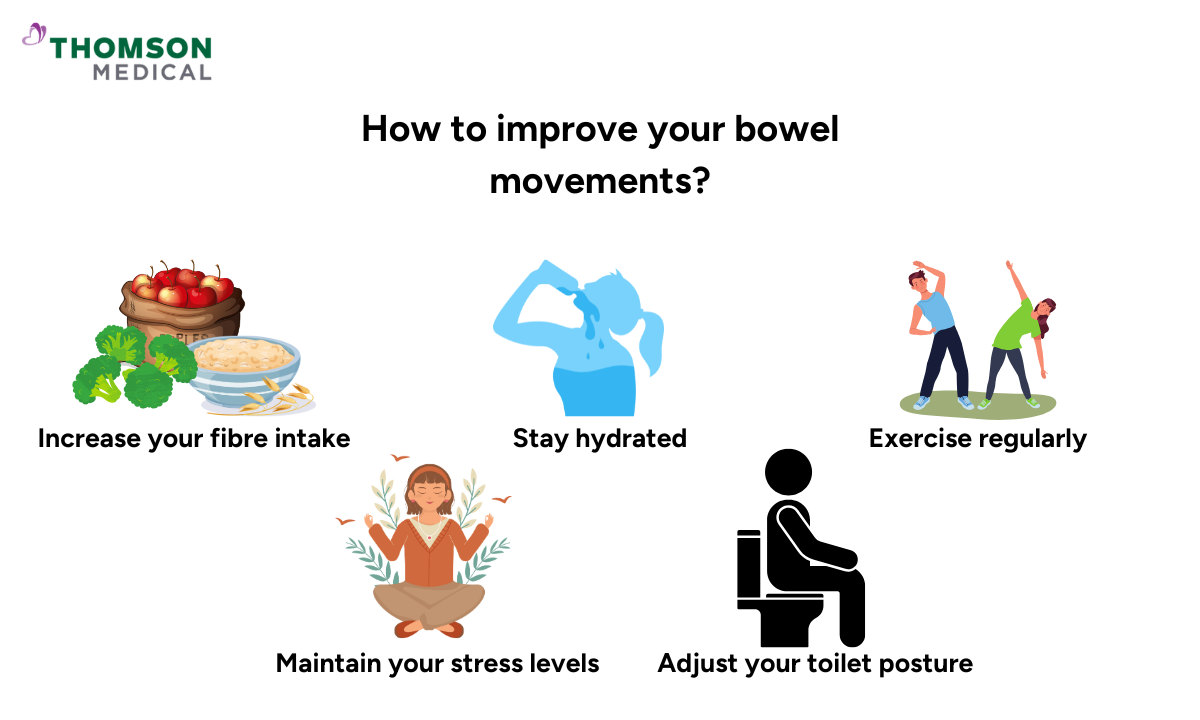
If you are struggling with having regular bowel movements or your poop does not fall under types 3 and 4 on the Bristol stool chart, it is best to make some lifestyle adjustments, such as:
Incorporating more fibre in your diet from foods like oatmeal, peas and apples.
Change your toilet posture to lean forward, rest your forearms on your thighs, lift your heels, or place your feet on a low stool.
Drink plenty of water.
Stay active by exercising regularly.
Managing your stress.
By incorporating such lifestyle changes, it can help alleviate any potential constipation.
When do you need to see a doctor?
You should contact your doctor if abnormal changes to your stool persist for 2 weeks or more. Remember to seek immediate medical treatment if the stool is bright red, black, or a tarry substance. These symptoms suggest blood loss, which could become a medical emergency if left untreated.
By monitoring your stool type and making necessary lifestyle adjustments, you can maintain optimal gut health and live a healthy lifestyle. However, persistent abnormalities should not be ignored.
Gastroenterology services at Thomson Medical
Persistent digestive issues like abnormal stools, chronic constipation, or ongoing diarrhoea can significantly impact your quality of life. At Thomson Medical, our gastroenterologists provide comprehensive care to identify the underlying cause and develop effective treatment plans. Our services include:
Diagnostic procedures:
Colonoscopy and gastroscopy
Stool analysis and blood tests
Imaging studies (CT scans or ultrasounds)
Allergy testing
Treatment and management for:
Irritable Bowel Syndrome (IBS)
Inflammatory Bowel Disease (IBD)
Chronic constipation or diarrhoea
Gastroesophageal reflux disease (GERD)
Digestive disorders
Our specialists provide clear explanations of diagnoses and personalised treatment plans tailored to your conditions. We also provide regular monitoring and follow-up care, as well as dietary and lifestyle guidance.
The cost of a colonoscopy at private hospitals in Singapore ranges from SGD 2,800 to SGD 9,610 for day surgery and from SGD 2,600 to SGD 19,200 for inpatient surgery, depending on the complexity of the procedure. Additional costs may apply for pre-consultations, imaging tests, medications, and follow-up appointments.
For further information about costs and payment options for treatment at Thomson Medical, please contact our medical concierge team.
FAQ
What type of stool is concerning?
Types 1 and 2 (constipation) or Types 6 and 7 (diarrhoea) are concerning if they persist over time.
What does inflammation mean on a Bristol stool chart?
Inflammation may cause looser stools (Types 6 and 7) due to faster intestinal transit times often linked to conditions like IBD.
What are examples of unhealthy stools?
Unhealthy stools include hard pellets (Type 1), lumpy stools (Type 2), mushy stools (Type 6), or watery stools (Type 7).
How to pass a hard stool?
Drink more water, consume high-fibre foods like prunes or oats, and consider gentle laxatives if necessary.
What fruit is good for constipation?
Fruits like prunes, apples (with skin), pears, and berries are excellent for relieving constipation due to their high fibre content.
When should I be concerned about my stool?
Be concerned if you experience persistent changes and abnormalities in stool type, blood in your stool, severe pain, or other alarming symptoms such as weight loss.
The information provided is intended for general guidance only and should not be considered medical advice. For personalised recommendations and tailored advice, request an appointment with Thomson Medical today.
For more information, contact us:
Learn More About Our Health Screening Offerings
Notice:
The range of services and tests may vary. Please contact us directly to enquire about the current availability.
Book Your Health Screening