

Burns and scalds can happen in seconds, whether you are cooking, running a bath, or reaching for a hot drink. When it happens, it is completely normal to feel startled or unsure about what to do next.
Many people instinctively reach for ice or try home remedies like toothpaste, but these can sometimes make the injury worse.
Knowing the right first aid steps and recognising when medical care is needed can make a meaningful difference in healing and recovery. With prompt and proper care, most burns can be treated effectively while reducing the risk of complications.
Difference between burns and scalds
When skin comes into contact with extreme heat, the resulting injury can take different forms.
- A burn typically occurs when your skin touches something hot like a flame, heated surface, or electrical source. Burns from flames may also show soot marks or smell of smoke, while electrical burns can have small entry and exit points that look deceptively minor on the surface.
- A scald, on the other hand, happens when hot liquids or steam come into contact with your skin. These can include things like boiling water, hot cooking oil, or even steam from a kettle. It is particularly common in areas like the chest, stomach, arms, and legs where hot drinks or cooking liquids might spill.
While the source may differ, both burns and scalds damage the layers of your skin in similar ways. They can range from minor injuries that heal within days to more serious wounds that require immediate medical attention. Understanding what's happened to your skin can help you respond appropriately and seek the right level of care.
Types of burns: Recognising the severity
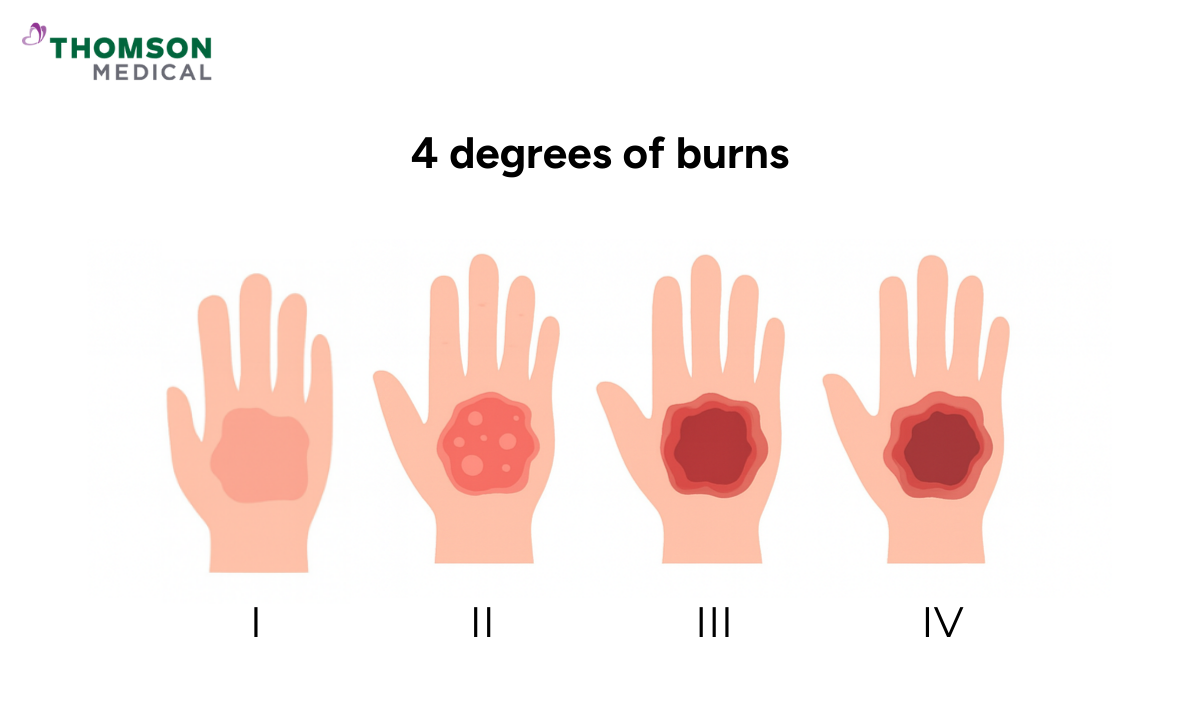
Burns are classified into different degrees based on how deeply they penetrate the skin. Therefore, knowing which type you're suffering with can help you decide whether home care is sufficient or if you need to seek medical care. Understanding what different burns look like can help you assess the situation more confidently.
First-degree burns (Superficial burns)
These are the mildest form of burns and only affect the outer layer of your skin.
When you look at a first-degree burn, you'll typically see an area that appears:
Bright red or pink:
The redness is uniform across the affected area
Slightly swollen:
The skin may look puffed up compared to surrounding areas
Dry with no blisters:
The surface remains intact without any fluid-filled bubbles
Similar to a sunburn:
It has that characteristic pink and warm appearance
When you touch it gently, the area will feel tender and warm, and the redness will temporarily turn white when pressed (this is called blanching). You might notice the skin starting to peel after a day or two, much like sunburnt skin does.
Second-degree burns (Partial thickness burns)
These burns go deeper, affecting both the outer layer and the layer beneath.
When examining a second-degree burn, you'll notice:
Blistered skin:
You'll see fluid-filled bubbles of various sizes on or around the burn
Very red or blotchy appearance:
The colouring may be uneven, with areas of deep red mixed with lighter pink
Wet or weeping surface:
The area may look moist or shiny, especially if blisters have burst
Patchy white areas:
Some parts of the burn may appear whitish where the damage is deeper
Significant swelling:
The area around the burn will be noticeably puffy
The blisters may be intact or broken, and you might see clear or slightly yellow fluid. The surrounding skin often looks angry and inflamed. Unlike first-degree burns, the area will be extremely painful and sensitive to touch or air exposure.
Third-degree burns (Full-thickness burns)
These are more serious burns, damaging all layers of skin and potentially affecting underlying tissues.
A third-degree burn has a distinctly different appearance:
White, waxy appearance:
The skin may look pale and leathery
Charred or blackened areas:
Some parts may appear dark brown or black
Dry, stiff texture:
The skin looks rigid rather than flexible
Sunken or raised:
The burn area may be depressed below the surrounding skin or raised and tight
Mixed colours:
You might see a patchwork of white, brown, red, and black
The area may feel numb or you might only feel discomfort around the edges where there's less severe burning. You may also be able to see deeper tissues like fat or muscle beneath the damaged skin.
If you suspect a third-degree burn, seek emergency medical care immediately. These burns always require professional treatment and may need specialised wound care or surgery.
Fourth-degree burns
Fourth-degree burns are the most severe and life-threatening type of burn injury, extending through all layers of skin and into underlying structures.
When you see a fourth-degree burn, you'll notice:
Blackened or deeply charred appearance:
The area looks severely burnt, often completely black
Loss of sensation:
Complete numbness in the affected area due to destroyed nerves
Visible exposure of deeper structures:
You may see tendons, muscles, or even bone beneath the damaged tissue
Hard, leathery texture:
The area feels stiff and non-flexible
No blanching:
The skin doesn't change colour when pressed
Possible white or brown colouring:
In some cases, the burn appears very pale or dark brown rather than black
These burns often result from prolonged exposure to flames, electrical injuries, or immersion in extremely hot liquids. The affected area will have no feeling, and the damage is so extensive that natural healing isn't possible without medical intervention.
Fourth-degree burns are medical emergencies that require immediate hospital care. If you or someone else has sustained this type of burn, call 995 for an ambulance straight away. These injuries need urgent treatment in a specialised burns unit and will require surgery, skin grafts, and extensive rehabilitation.

Immediate first aid: What to do right now
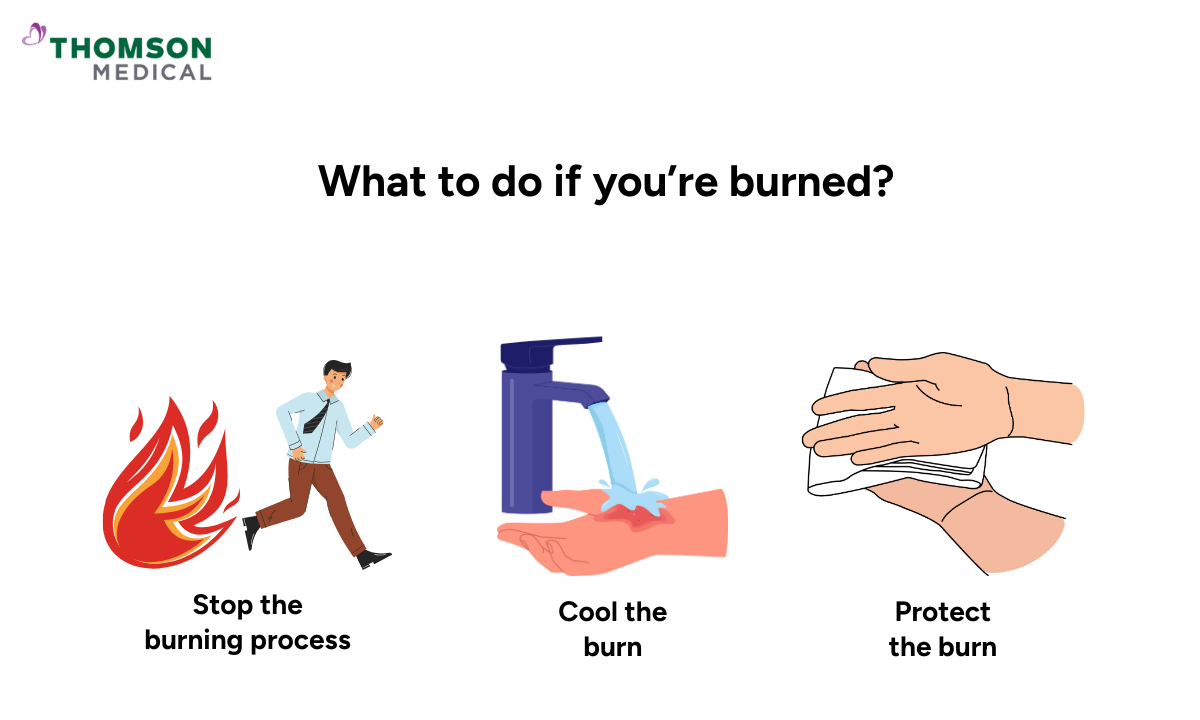
Acting quickly and correctly can make a significant difference to your healing and comfort. If you've just experienced a burn or scald, follow these steps immediately.
Step 1: Stop the burning process
The first priority is to remove yourself or the injured person from the heat source.
This might mean:
Moving away from flames or hot surfaces
Taking off any clothing or jewellery near the burn (unless it's stuck to the skin)
Removing any chemical substances if the burn was caused by a chemical
Getting away from the source prevents the burn from becoming more severe. Act calmly but quickly to protect yourself from further injury.
Step 2: Cool the burn
Run cool (not cold) water over the burn for at least 20 minutes.
This helps to:
Stop the burning process from going deeper into your skin
Reduce swelling and inflammation
Provide immediate pain relief
Prevent further tissue damage
Never use ice, ice water, or very cold water, as this can cause more damage to the already injured tissue. If you can't access running water, a cool, damp cloth can help temporarily until you can properly cool the burn.
Step 3: Protect the burn
Once you've cooled the area for 20 minutes, gently pat it dry with a clean cloth.
After patting it dry, you should:
Cover the burn loosely with cling film or a clean, non-fluffy cloth
Keep the area clean and protected from dirt or bacteria
Avoid using cotton wool or fluffy materials that can stick to the wound
Don't apply creams, butter, oils, or any home remedies
Proper covering helps prevent infection and protects the sensitive damaged skin. If you're in pain, you may take over-the-counter pain relief such as paracetamol or ibuprofen, following the dosage instructions on the packet.
When to seek urgent care
While many minor burns can heal at home, some situations require professional medical attention, like urgent care.
You should visit an Urgent Care Centre (UCC) if:
The burn is larger than the palm of your hand:
Larger burns have a higher risk of infection and complications
The burn is on your face, hands, feet, joints, or genitals:
Burns in these areas can affect function and need specialist care
The burn is deep:
If you can see white or charred tissue, or if the area is numb
There are blisters covering a large area:
Extensive blistering requires medical management
The burn goes all the way around a limb:
Circular burns can affect circulation
You're unsure about the severity:
It's always better to be safe and get professional assessment
The burn was caused by chemicals or electricity:
These types of burns often cause internal damage not visible on the surface
You should also seek care if the burn becomes infected after a few days. Signs of infection include increasing pain, redness spreading beyond the burn, pus, fever, or swelling.
What to expect at a UCC
When you arrive at a UCC, the doctors will assess your burn carefully and provide the appropriate treatment.
The healthcare team will:
Evaluate the size, depth, and location of your burn
Clean the wound gently and thoroughly
Apply appropriate dressings to promote healing
Provide pain relief if needed
Advise you on wound care at home
Arrange follow-up care if necessary
If your burn requires specialist care, they'll guide you through the next steps and coordinate your referral.
Our urgent care specialists
Loading...
Caring for burns at home
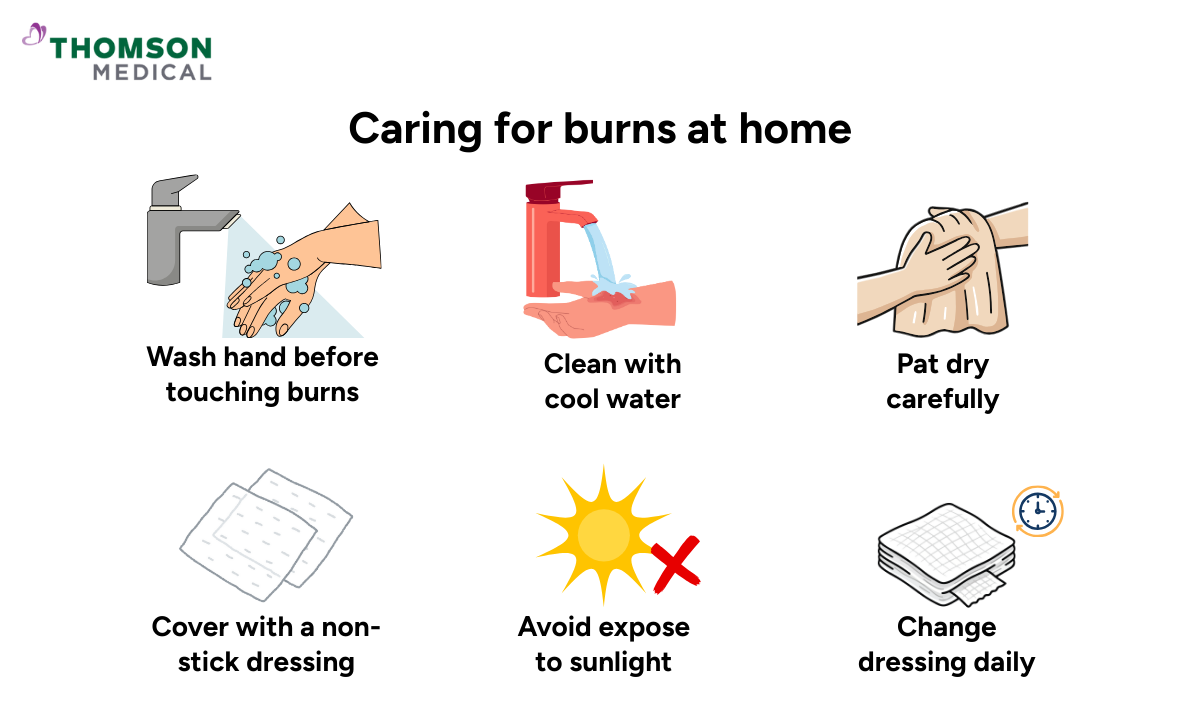
If your burn is minor and doesn't require urgent care, proper home care can support comfortable healing. Here's how to look after your burn in the days following the injury.
Daily wound care
Clean the burn gently once or twice daily:
Wash your hands thoroughly before touching the burn
Clean the area with mild soap and cool water
Pat dry carefully with a clean towel
Apply a thin layer of antibiotic ointment if advised
Cover with a clean, non-stick dressing
Change the dressing daily or if it becomes wet or dirty
Keep the burn clean and protected to prevent infection. If you notice any signs of infection, such as increased redness, pus, worsening pain, or fever, you should seek medical attention promptly.
Managing pain and discomfort
Burns can be painful, especially in the first few days.
You can help manage discomfort by:
Taking over-the-counter pain relief as directed
Keeping the burn elevated if possible to reduce swelling
Wearing loose clothing that won't rub against the burn
Avoiding exposing the burn to direct sunlight
Your pain should gradually improve over several days. If pain worsens or doesn't improve, this may indicate a problem that needs medical attention.
Preventing burns and scalds
Many of us carry a quiet worry about accidents happening at home, especially when children are involved. While we can't prevent every mishap, simple, thoughtful precautions woven into your daily routine can significantly reduce the risk of burn injuries and give you better peace of mind.
In the kitchen
The kitchen is the heart of many homes, but it's also where burns and scalds happen most frequently. Between preparing meals, managing little ones underfoot, and juggling multiple tasks, it's easy for accidents to occur.
Here are some gentle reminders that can help protect you and your family:
Turn pot handles inwards on the hob:
A small adjustment that prevents curious hands or accidental bumps from causing spills
Use oven gloves when handling hot dishes and pans:
Your hands deserve protection, even when you're rushing
Keep hot drinks away from table edges:
One knock is all it takes; moving them back just a few inches can make all the difference
Be extra careful when cooking with hot oil:
Hot oil splashes can cause serious burns; take your time and keep children at a safe distance
Supervise children closely around cooking areas:
We know it's not always easy when you're trying to cook, but those extra eyes matter
Test food temperature before serving, especially for children:
Their sensitive skin burns more easily than yours
Taking just a few extra seconds to be mindful of hot surfaces and liquids can prevent painful accidents. These safety habits can simply become a natural part of your cooking rhythm.
Around the home
Burns can happen in any room, not just the kitchen, and we understand that it’s hard to watch everything at once.
These additional precautions can create an extra layer of protection for everyone you care about:
Test bathwater temperature with your elbow before getting in:
It's more sensitive than your hand and gives you a truer sense of temperature
Keep hot drinks and foods out of children's reach:
Even when you just need a moment to sit down, placing that cup a bit further back protects little ones
Use guards around fireplaces and heaters:
Creating a physical barrier means less worry during colder months
Store matches and lighters safely away from children:
Out of sight, out of reach, out of mind
Check electrical appliances and cords regularly:
Frayed cords and faulty appliances can cause burns; replacing them is an act of care for your family
Creating a burn-safe environment is about small, manageable changes that fit into your life, and each step you take is very meaningful. It gives you peace of mind and protects everyone in your household, allowing you all to feel safer and more comfortable at home.
FAQ
What is the best treatment for scalds and burns?
The most important step is to cool the burn under running cool (not cold) water for 20 minutes, as this stops the burning process and reduces damage. After cooling, gently pat dry and cover with a clean, non-stick dressing or cling film.
Should I put ice on a burn?
You might want fast relief, but ice can actually make things worse. Use cool (not cold) running water for 20 minutes instead. Ice can cause further damage to your already injured skin and may lead to frostbite on the delicate burnt tissue.
When should I pop a blister from a burn?
It's natural to want to pop a burn blister, but try to resist. Blisters are your body's way of protecting the healing skin underneath, and popping them increases your risk of infection. If a blister breaks on its own, gently clean the area and cover it with a clean dressing.
Can I use butter, toothpaste, or other home remedies on my burn?
While many believe in these traditional remedies, they can actually trap heat in the skin and increase the risk of infection. Stick to cool water, clean dressings, and, if needed, a thin layer of antibiotic ointment recommended by a healthcare professional.
Will my burn leave a scar?
It depends on the depth and size of the burn. First-degree burns typically don't scar, whilst second-degree burns may leave some marking, especially if they become infected. Proper wound care, keeping the area moisturised after healing, and protecting it from the sun can all help minimise scarring. A healthcare professional can advise you on the best approach for your specific burn.
How do I know if my burn is infected?
Watch for these signs:
Increasing pain after the first few days
Redness spreading beyond the burn area
Pus or cloudy fluid
Swelling that's getting worse
Fever
If you notice any of these, you should seek medical attention promptly to help prevent complications.
The information is intended for general guidance only and should not be considered medical advice. For personalised recommendations and advice based on your unique situation, please consult a specialist at Thomson Medical. Request an appointment with Thomson Medical today.
For more information, contact us:
Thomson Medical 24-Hour Urgent Care Centre (Novena)
- Call: 6350 8812
Notice:
The range of services, vaccinations, and tests may vary. Please contact us directly to enquire about the current availability.
Request an Appointment