

Learning about ovarian cysts can bring up questions, especially if they seem to appear more than once within your family. It is completely natural to wonder whether this is something you might inherit or need to monitor closely.
In most cases, ovarian cysts can be a common issue at different stages of life. Gaining clarity about hereditary risk, along with when to seek medical advice, can help you approach your ovarian health with greater confidence and peace of mind.
What is an ovarian cyst?
An ovarian cyst is a fluid-filled sac that forms on or inside one of your ovaries. Your ovaries normally release an egg each month, and during this process, small cysts can naturally form and disappear.
Most of the time, ovarian cysts:
Are benign (harmless)
Cause no symptoms
Go away on their own
The cysts are very common – many women have one at some point without even realising it. If your doctor finds a cyst during your routine check-up, they will monitor it with ultrasounds to make sure it doesn’t cause any concerns.
Types of ovarian cysts
Not all ovarian cysts are the same. There are actually different types, which may all behave a bit differently. Knowing the types you have helps you watch for warning signs or unusual changes and seek help when needed.
The most common types are functional cysts. They form naturally during your menstrual cycle. These are:
Follicular cysts:
These form when an egg doesn’t release properly during ovulation.
Corpus luteum cysts:
They develop after your ovary releases an egg.
Other benign cysts, which are less common, include:
Dermoid cysts:
These cysts contain tissue like hair or fat.
Endometriomas:
These are linked to endometriosis, a condition where tissue similar to your lining grows outside your uterus.
Cystadenomas:
They develop from the tissue on the surface of your ovary.
You might wonder if there are any cancerous ovarian cysts. While they exist, this type of cyst is quite rare, especially if you’re young.
If you've just found out you have a cyst, it's completely normal to feel a bit anxious. Your doctor can help identify exactly what type of cyst you have and whether it needs any attention or medical care.
Can ovarian cysts be hereditary?
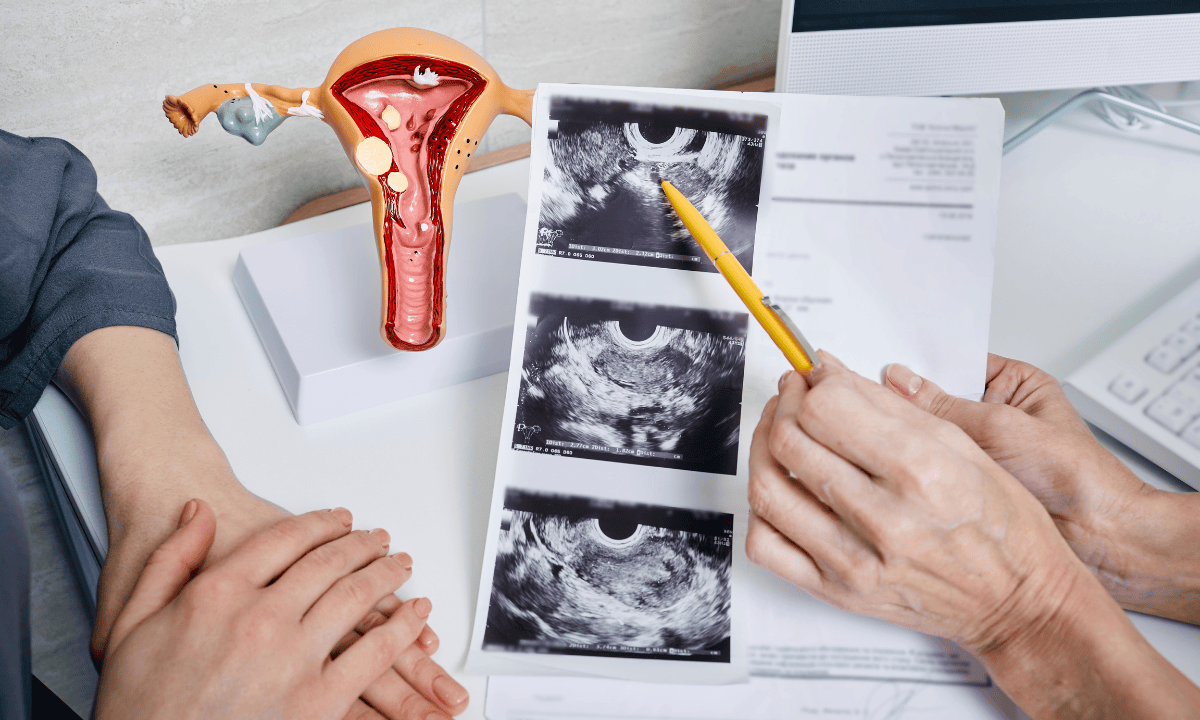
If someone in your family has had ovarian cysts, it's natural to wonder if you'll develop them too. Fortunately, most ovarian cysts don’t run in families.
However, while the cysts themselves aren’t usually inherited, some conditions that can lead to cysts may have a genetic component.
These conditions are:
So if your mother or sister has PCOS or endometriosis, you may have a higher chance of developing cysts. But it’s not a guarantee. Many factors influence whether cysts develop, such as your hormones, lifestyle, age, and overall health, and a family history is just one of them.
If you have a family history of PCOS or endometriosis and you're concerned about your own risk, schedule an appointment with Thomson Medical to discuss your family history and create a personalised care plan.
Our gynaecologic oncology specialist
Loading...
Common causes of ovarian cysts
Ovarian cysts often form as a natural part of being a woman.
The most common causes include:
Normal hormonal changes
Puberty or menstrual cycles
Pregnancy
PCOS
Endometriosis
It’s important to know that many cysts form without a clear cause at all. This doesn’t mean something’s wrong with you – it’s just a natural part of your body. If you’re concerned, your doctor can help you find out what might be causing your cyst and monitor it to make sure it won’t affect your health.
Who is most likely to get an ovarian cyst?
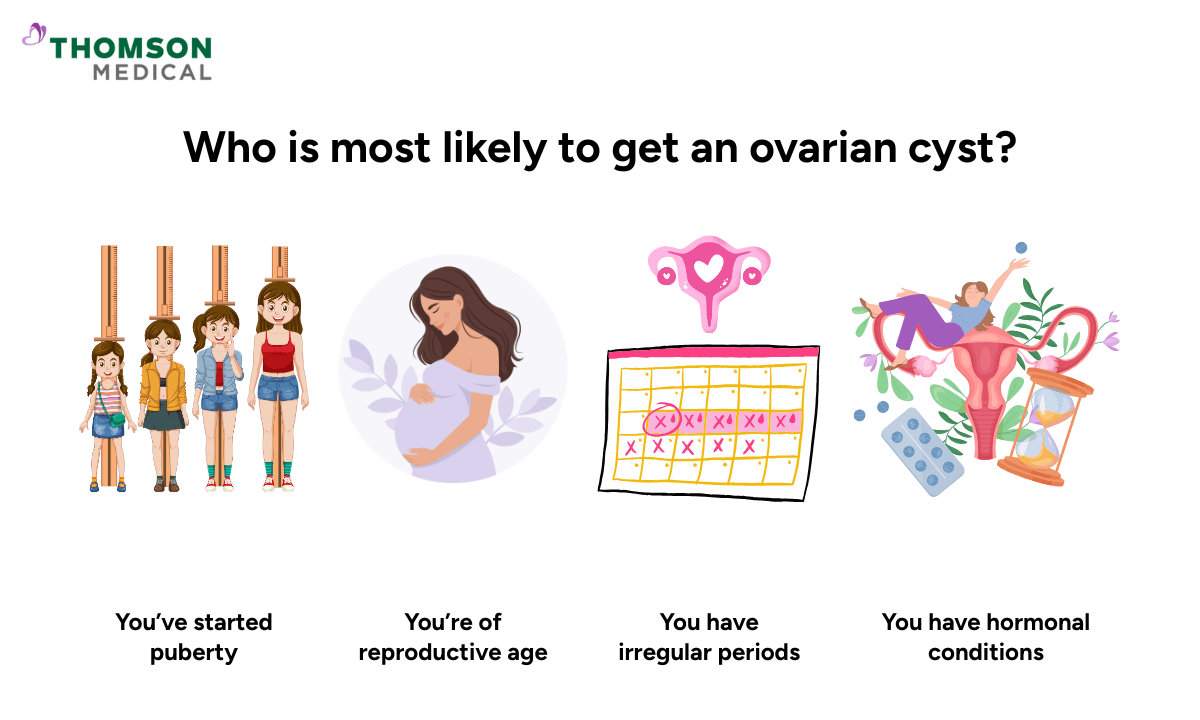
Ovarian cysts are very common, and they can happen to almost anyone with ovaries.
You’re more likely to develop ovarian cysts if you:
Have started puberty
Are of reproductive age
Have irregular periods
Have hormonal conditions like PCOS
In fact, ovarian cysts can happen at almost any age. Many women will have at least one during their lifetime, often without knowing it.
Are ovarian cysts dangerous?
This may be one of your biggest concerns when hearing that you have ovarian cysts. Fortunately, most ovarian cysts aren’t dangerous.
The vast majority of cysts are benign. They will shrink and disappear on their own within a few months.
However, there are some uncommon complications your doctor will watch for, such as:
Cyst rupture: when a cyst breaks open
Ovarian torsion: when an ovary twists
Persistent pain: if a cyst causes ongoing discomfort
Your doctor may recommend monitoring cysts if they are large, cause symptoms, or don’t go away over time. Don't panic – it doesn't mean these cysts are serious. Regular check-ups with ultrasounds are simply a precaution to ensure everything stays on track. They allow your doctor to catch changes early and step in before anything becomes a concern.
If you've been diagnosed with an ovarian cyst or are experiencing symptoms, schedule an appointment with Thomson Medical to get the personalised care and support you deserve.
FAQ
Are you born with ovarian cysts?
Usually, no. Most ovarian cysts develop after puberty begins as part of your normal ovulation. It’s possible to have cysts present at birth, but this is very rare.
What is the most common age for ovarian cysts?
Ovarian cysts are most common during your:
Teen years (when menstruation starts)
Young adulthood
Reproductive years (usually into your 40s)
They are much less common after menopause, when your ovaries stop releasing eggs.
Do ovarian cysts mean fertility issues?
No. Most ovarian cysts don’t affect your fertility. Many women with ovarian cysts have a baby naturally without any issues.
Certain conditions, such as PCOS or endometriosis, may make conception a bit harder, but many people with these conditions still get pregnant successfully.
Will I get ovarian cysts if my mother has them?
Not necessarily. While some underlying conditions (PCOS or endometriosis) can have an inherited component, most cysts happen randomly.
Do healthy people get ovarian cysts?
Yes. Many healthy people develop cysts as part of their normal menstrual cycle. In fact, you might have had a cyst at some point and never even known about it. Having an ovarian cyst doesn't mean you're unhealthy; most of them are harmless and resolve naturally.
What are the warning signs of ovarian cysts?
Many ovarian cysts cause no symptoms. However, there are some warning signs you can watch for:
Pelvic or lower abdominal pain
Bloating or pressure
Pain during activity
Period changes
If you experience sudden, severe pelvic pain, it’s best to check with your doctor right away. This could be a sign of a complication that needs more attention.
The information provided is intended for general guidance only and should not be considered medical advice. For personalised recommendations and advice based on your unique situation, please consult a specialist at Thomson Medical. Request an appointment with Thomson Medical today.
For more information, contact us:
Thomson Specialists (Women's Health)
Thomson Women's Clinic (TWC)
- Novena:
6592 6686 (Call), 8611 8986 (WA) - Bukit Batok:
6569 0668 (Call), 8686 3525 (WA) - Choa Chu Kang:
6893 1227 (Call), 8282 1796 (WA) - Jurong:
6262 8588 (Call), 6262 8588 (WA) - Katong (female doctor):
6970 2272 (Call), 8611 9020 (WA) - Punggol:
6243 6843 (Call), 8811 0328 (WA) - Sembawang: 6753 5228
- Sengkang: 6388 8125
- Serangoon (female doctor): 6382 3313
- Tampines: 6857 6266
- Tiong Bahru: 6276 1525
Notice
The range of services may vary between TWC/TS locations. Please contact your preferred branch directly to enquire about the current availability.
Request an Appointment