

If your bowel habits have shifted and you already know you have colorectal polyps, it's natural to wonder whether the two are connected.
Not all polyps cause digestive symptoms, but some do. And the difference often comes down to where the polyp sits and how large it has grown.
Knowing those factors can help you work out what your body is going through and when it's worth seeing a doctor.
What are colorectal polyps?
A colorectal polyp is a small growth that forms on the inner lining of the colon or rectum. Most are non-cancerous and cause no symptoms, which means many people are unaware they have one until it is found during a routine examination.
Polyps vary in size, shape, and location. These differences matter – in some cases, they can begin to affect how your bowel functions.
Can polyps cause constipation?
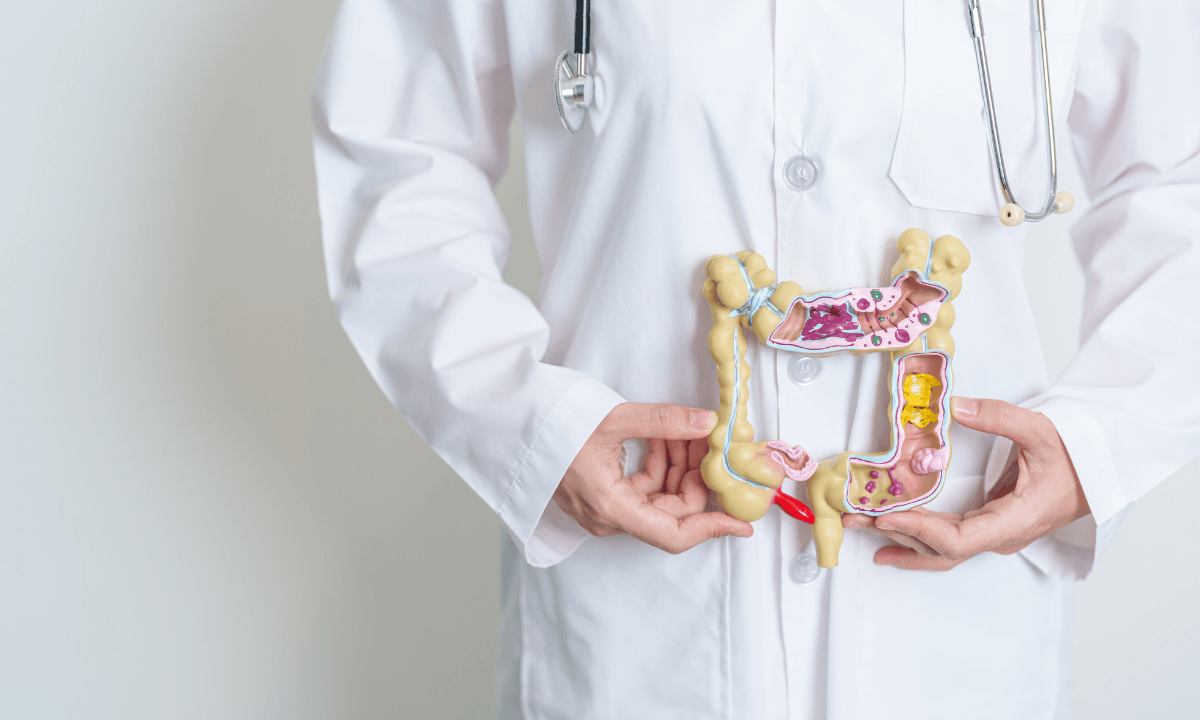
Polyps can sometimes cause constipation. When a polyp grows large enough or develops in a naturally narrower part of the bowel, it can partially obstruct the passage and make it harder for stool to move through comfortably. That said, many people with polyps experience no digestive changes at all.
Why some polyps affect your bowel more than others
A few key factors determine whether a colorectal polyp is likely to cause symptoms like constipation:
Size:
Polyps smaller than 1 cm rarely cause any disruption. Those 1 cm or larger are more likely to narrow the bowel passage and slow things down.
Location:
The lower left part of the colon and the rectum are naturally narrower, so a polyp here tends to have a bigger impact on how your bowel moves.
Shape:
Some polyps grow flat against the bowel wall, while others protrude on a small stalk into the bowel space. The ones that protrude are more likely to get in the way.
When size, location, and shape combine in a certain way, symptoms like constipation can follow. It's also worth knowing that symptoms tend to develop gradually, which is why changes in your bowel habits can be easy to overlook at first.
What constipation caused by polyps can feel like
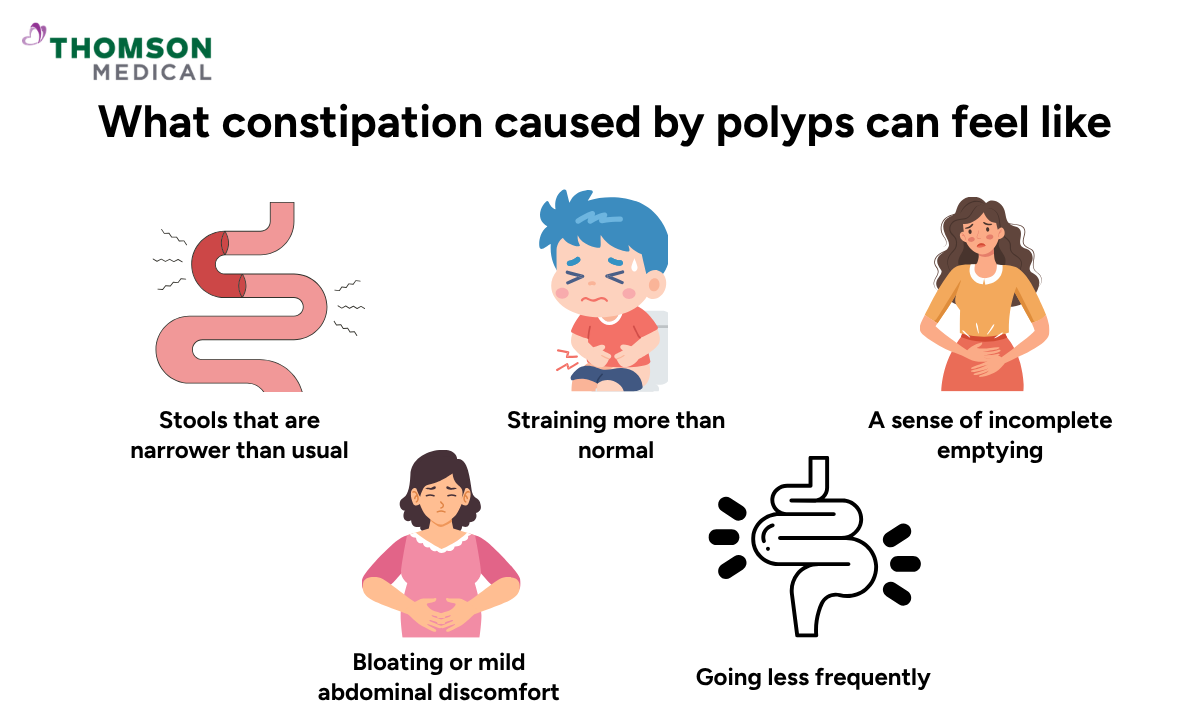
Constipation means different things to different people, so it helps to know what to look out for specifically.
If a polyp is affecting your bowel, you might notice:
Stools that are narrower than usual, sometimes described as ribbon-like or pencil-thin
Straining more than normal, even when you feel the urge to go
A sense of incomplete emptying, the feeling that something is still there after a bowel movement
Bloating or mild abdominal discomfort, particularly in the lower abdomen
Going less frequently than what's normal for you
One thing worth paying attention to is change. Polyp-related constipation tends to be a shift from your usual pattern, not something you've always experienced.
If you've been experiencing symptoms like these, especially if they represent a shift from what's normal for you, schedule an appointment with Thomson Medical. Our doctors can help determine whether a polyp or another underlying cause may be contributing to your discomfort.
When should you see a doctor?
Most bowel changes are worth a mention at your next doctor's visit.
But there are some signs that are better not to wait on:
Blood in your stool or on the toilet paper
A change in bowel habits lasting more than four weeks without an obvious cause
Unexplained weight loss
Persistent abdominal pain or cramping
A family history of colorectal polyps or colorectal cancer
You don't need to wait until symptoms feel severe. If something feels off or simply different from what's normal for you, trust that instinct and seek advice. Bowel symptoms can feel difficult to raise, but they're something doctors are very familiar with. There's no need to feel embarrassed about bringing them up.
Our gastrointestinal specialist in Singapore
Loading...
How polyps that cause constipation are diagnosed

If your doctor suspects a colorectal polyp may be behind your symptoms, they will usually recommend a closer look at the inside of your bowel. A colonoscopy is normally the first investigation your doctor will recommend.
A colonoscopy uses a thin, flexible tube with a small camera to examine the full length of your colon and rectum. It allows your doctor to spot any polyps, assess them, and in many cases, remove them during the same procedure. A sedative will be given beforehand, so most people find it more comfortable than they expected.
In some cases, a flexible sigmoidoscopy may be recommended instead, which is a shorter procedure that focuses on the lower part of your colon.
Before either procedure, you'll be asked to follow a bowel preparation plan to clear the colon. Your care team will guide you through what to expect.
How constipation from polyps is treated
Treatment usually addresses the polyp itself. And in many cases, you may find that your bowel symptoms ease once the cause is resolved.
Polypectomy
If a polyp is found during a colonoscopy, it can often be removed during the same procedure. This is called a polypectomy, and for many people, it's a routine and well-tolerated process. Once the polyp is removed, any bowel disruption it was causing should begin to settle.
Recovery after a polypectomy is generally quick, and many people return to their normal routine within a day or two. Your care team will be on hand to guide you through the process.
Monitoring
If a polyp is small and not causing significant symptoms, your doctor may suggest keeping an eye on it over time rather than removing it straight away. They will let you know how often you will need a follow-up check based on your individual situation.
Managing symptoms in the meantime
While awaiting or recovering from treatment, some simple measures can help ease constipation:
Drinking plenty of water throughout the day
Eating more fibre-rich foods such as vegetables, fruit, and wholegrains
Staying physically active where possible
Constipation has many causes, and colorectal polyps are just one of them. But knowing the connection exists and what to look out for puts you in a much better position to understand what your body is telling you.
If you're unsure whether your symptoms warrant further investigation, schedule an appointment with Thomson Medical. Our doctors can assess your situation and recommend an appropriate approach.
FAQ
Can colon polyps make it harder to pass stool?
Yes, they can. When a polyp grows in a narrow section of the colon or becomes large enough to partially reduce the bowel passage, it can slow the movement of stool and make it more difficult to pass.
Do polyps cause constipation even when they are small?
In most cases, small polyps don't cause any symptoms at all. Constipation is more commonly associated with larger polyps or those positioned in a particularly narrow part of the bowel.
Do polyps change the shape or size of your stool?
They can. Some people with polyps notice stools that appear narrower or ribbon-like and, in some cases, shorter than usual. This can happen when a polyp partially narrows the bowel passage that stool passes through.
Can polyps cause constipation without any pain?
Yes. Constipation from polyps doesn't always come with pain. Some people simply notice a change in bowel frequency or consistency without any discomfort, which is one reason bowel changes can go unnoticed for a while.
Will removing a polyp improve constipation symptoms?
In many cases, yes. If a polyp was contributing to bowel disruption, removing it can help your bowel return to its normal pattern. That said, recovery varies from person to person, and your doctor will give you a clearer picture based on your situation.
What bowel symptoms can polyps cause besides constipation?
Depending on their size and location, polyps may also cause diarrhoea, a feeling of incomplete emptying, narrow stools, rectal bleeding, or an alternating pattern of constipation and loose stools. Many polyps, however, cause no symptoms at all.
The information provided is intended for general guidance only and should not be considered medical advice. For personalised recommendations based on your medical conditions, request an appointment with Thomson Medical.
For more information, contact us:
Thomson Medical Concierge
- 8.30am - 5.30pm
- WhatsApp: 9147 2051
Need help finding the right specialist or booking for a group?
Our Medical Concierge is here to help you. Simply fill in our form, and we'll check and connect you with the right specialist promptly.
Notice:
The range of services may vary between Thomson clinic locations. Please contact your preferred branch directly to enquire about the current availability.
Get In Touch