

You're about to feed your baby, or maybe you're in the shower, when your hand brushes your breast – and you feel it. A small, hard lump that's sore to touch. Right away, you're wondering if it's a clogged duct and whether you did something wrong.
Take a deep breath. Clogged milk ducts are one of the most common breastfeeding experiences, especially in those first few months. While it can feel uncomfortable and a bit alarming, this is your body doing its job – and with simple home care, most clogged ducts clear within a day or two.
What is a clogged milk duct?
A clogged milk duct (also called a blocked duct) happens when milk doesn't drain well from part of your breast and builds up inside a milk duct. This can create a small, tender lump or firm spot that might feel sore or warm.
What to do when you found a clogged milk duct
When you first find a clogged duct, you might want to fix it before it turns into mastitis or something worse. That makes total sense, especially if you've heard stories about breast infections.
But try to take a breath and focus on one thing: keep the milk moving. A clogged duct doesn't always mean that there's something dangerous stuck inside you. In most cases, it's simply milk that hasn't drained properly yet. Once the milk starts flowing again, the blockage usually clears on its own.
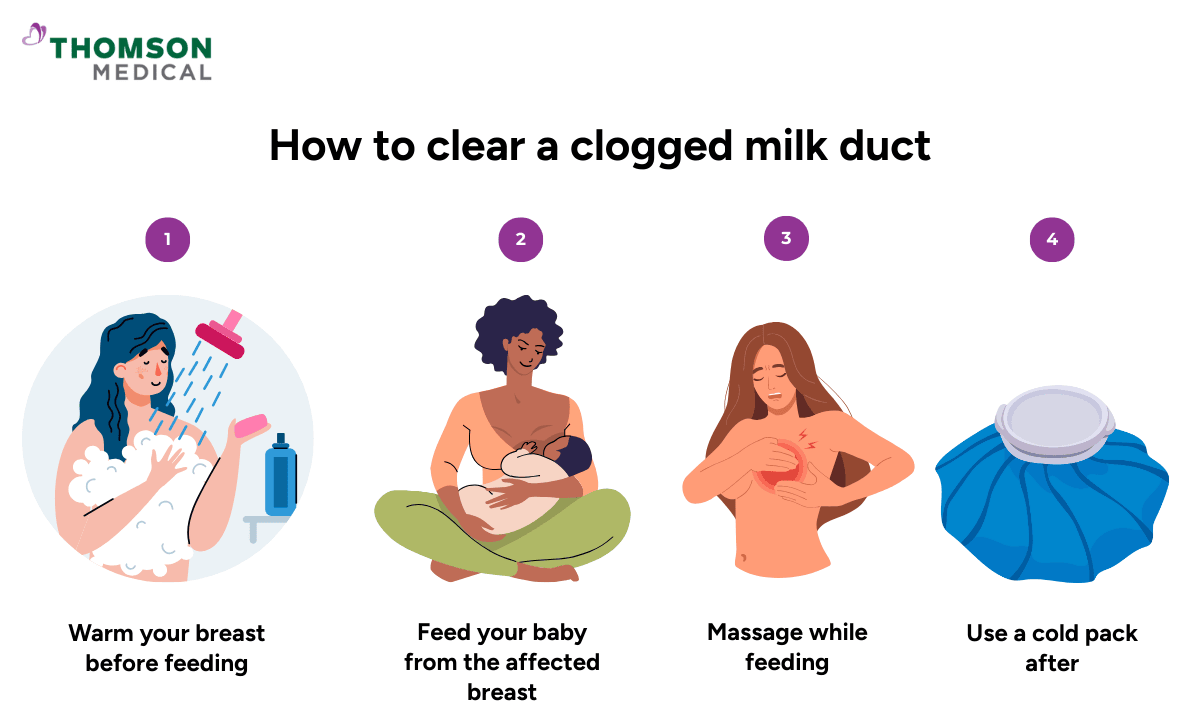
Here's what you can do to clear a blocked duct:
Feed your baby from the affected breast:
Even if it's earlier than usual, feeding now helps more than waiting – milk that sits there gets thicker and builds up more pressure.
Warm your breast before feeding:
Take a hot shower or put a warm towel on for a few minutes.
The heat helps trigger your let-down and gets the milk flowing easier.
Massage while feeding:
While your baby's feeding, put your fingers behind the firm spot and slowly stroke toward your nipple.
Use an ice pack after:
If the area feels swollen or sore, put ice or cold packs on for 10-15 minutes to bring down the swelling and help you feel better.
Feeding with a blocked duct can hurt more than normal, and one feed probably won't make the lump go away completely. That doesn't mean you're doing it wrong or that it's not working. Most clogs break up gradually over a few feeds, not all at once.
If it's still sore after the next feed, go easy on yourself and keep at it. Each feed is moving a bit more milk and releasing a bit more pressure. You're already doing the right thing.
If you don’t want to handle a clogged duct alone, our lactation consultants are here to support you. They can assess your latch, help relieve the blockage safely, and guide you step by step so feeding feels more comfortable while protecting your milk supply. Request an appointment with Thomson ParentCraft Centre today.
Our ParentCraft trainers
Loading...
Additional techniques to clear the blockage
Consistent feeding and massage are your main tools for clearing a blockage. These additional techniques can complement what you're already doing and help milk flow more freely.
Switch up your breastfeeding positions
Position matters more than you'd think. Your baby's chin is where the suction is strongest, so if you can point their chin toward the lump, it'll help drain that spot better.
Sometimes just changing the angle, such as the football hold, side-lying, or leaning back, gets the milk flowing in ways that surprise you.
Try dangle nursing
Some mothers find this one helpful. You lean forward over your baby, so your breast hangs down, and gravity does some of the work. It feels weird at first, but many mothers say it works surprisingly well for stubborn spots.
Hand expression
In the early weeks, your baby might not have strong enough suction yet to fully clear a tough spot. That's where hand expressing can really help.
You use your fingers to press your breast tissue toward your nipple and squeeze a bit of milk out. If you're not sure how to do it without it hurting, a lactation consultant can walk you through it. Once you get the hang of it, it's a handy trick to have.
What to avoid with a clogged milk duct
When you're uncomfortable, it's tempting to try everything at once. However, certain approaches can actually make blockages more stubborn.
Here's what not to do with a clogged duct:
Aggressive massage:
Digging into the lump can irritate your breast tissue and cause more swelling, which makes it harder to clear.
Skipping feeds:
Skipping feeds lets milk build up and adds more pressure
Tight bras:
Tight bras can press on your ducts and trap the milk.
Trying to completely empty your breasts:
It can accidentally tell your body to make even more milk, which leads to more fullness and more clogs down the line.
The key thing to remember is that your breast does better with gentle, steady care than being forced.
How to tell if the clogged duct is clearing

You'll probably find yourself checking that same spot over and over throughout the day, pressing on it and wondering if it feels any smaller, softer, or better than it did before.
Most clogged ducts start to get better within the first day, and a lot of them clear up completely within 24 to 48 hours.
You may notice:
The lump feels softer or less sore
Your breast feels lighter and more comfortable
Your milk flows easier
Your baby swallows more steadily
These changes might seem small, but they're usually the first signs that the milk is moving better and the clogged duct is breaking up.
When to call your doctor
Many mothers quietly worry that a clogged milk duct might turn into mastitis or that they'll miss the warning signs and end up needing antibiotics or having to stop breastfeeding. The good news is that most clogs don't turn into infections, and knowing what to look for can help you feel less panicked about whether to handle it at home or get help.
If you feel generally well and only have a tender lump, you can usually continue managing at home.
However, it’s best to call your doctor if you have:
Fever
Body aches
Chills
Spreading redness
Worsening pain
These are signs of inflammation or infection that might need treatment.
Getting help early doesn't mean you've failed or that you have to stop breastfeeding. Actually, getting support quickly usually helps you heal faster and continue feeding more comfortably.
What causes clogged milk ducts?
After things settle down, it’s completely natural to wonder why this happened and how you can keep it from happening again.
Why milk ducts get clogged
Most clogged ducts happen during short periods of incomplete drainage, like when:
You skip a feed because your baby slept longer than usual
You miss a pump session because you're too tired
Your baby prefers one breast and the other one doesn't get emptied as often
You wear a bra that's too tight
You have cracked nipples (which can sometimes lead to clogged milk ducts)
The good news is that a few simple habits can make clogged ducts way less likely and keep you more comfortable overall.
Simple habits to help prevent clogged milk ducts from returning

A few adjustments to your daily routine can help keep your ducts flowing smoothly:
Feed regularly before your breasts get full
Wear comfortable and supportive bras that aren't tight
Make sure the latch feels deep and doesn't hurt
Switch up your feeding positions so all the ducts get emptied
Pay attention to any tender spots before they turn into hard lumps
A blocked duct can feel overwhelming when you're already managing so much, but it's a common experience that usually responds well to gentle care. With consistent feeding and the right techniques, most blockages clear within 24-48 hours.
Monitor how your breast feels over the next day or two – gradual softening and reduced tenderness are signs things are improving. If symptoms persist beyond 48 hours or you notice worsening pain or fever, your doctor or a lactation consultant can offer practical support.
If you’d feel more comfortable having someone guide you, our lactation consultants at Thomson ParentCraft Centre can support you either at the clinic or in the comfort of your home. They will assess your latch, help relieve blockages, and walk you step by step toward more comfortable, confident breastfeeding. Request an appointment whenever you need.
FAQ
Do lecithin supplements unclog milk ducts?
Lecithin may help reduce milk thickness and make clogs less likely to recur, but it doesn’t instantly clear an existing blockage. Think of it as prevention support rather than a quick fix.
Can a cracked nipple lead to a clogged duct?
Pain from a cracked nipple may make you shorten or avoid feeds, which can lead to poor drainage and increase the risk of a clog.
Can pumping help relieve a clogged duct?
Pumping can help if your baby isn’t feeding well or you need extra drainage, but it’s not always better than nursing. Many mothers find a combination of feeding, hand expression, and gentle compression works best.
How do I unclog a milk duct fast?
The fastest way to clear a clog may include:
Frequent feeding or pumping
Gentle warmth before feeds
Light massage during feeding
Consistent drainage over several sessions
Should I use heat or ice for a clogged duct?
It’s best to use warmth before feeding to encourage milk flow and cold after feeding to reduce swelling and discomfort.
What’s the difference between a clogged duct and mastitis?
A clogged duct usually causes a tender lump, but you still feel well overall. Mastitis often comes with fever, body aches, fatigue, and spreading redness and may need medical treatment.
The information provided is intended for general guidance only and should not be considered medical advice. For personalised recommendations based on your medical conditions, request an appointment with Thomson Medical.
For more information, contact us:
Thomson ParentCraft Centre
Thomson Breast Centre
Request an Appointment