

After an embryo transfer in IVF (in vitro fertilisation), sudden occurrences of constipation could raise concern, especially whether it could affect your chances of a pregnancy. After the embryo transfer, it's normal to feel this kind of discomfort while waiting for your scheduled pregnancy test.
Knowing what causes constipation after an IVF embryo transfer, whether it could affect your outcome, and how to ease the discomfort may help you manage this period with less worry.
Is constipation after IVF transfer common?

Constipation is common during an IVF cycle, especially after an embryo transfer. Because hormonal shifts and several medications from the procedure could slow the movement of stools through the bowel.
Constipation happens when stool moves too slowly through the large intestine. This may lead to fewer bowel movements and stools that are hard, dry, or difficult to pass. When constipated, you might also feel like you have not completely emptied your bowels or find yourself straining hard when you go to the toilet.
What causes constipation after an IVF transfer?
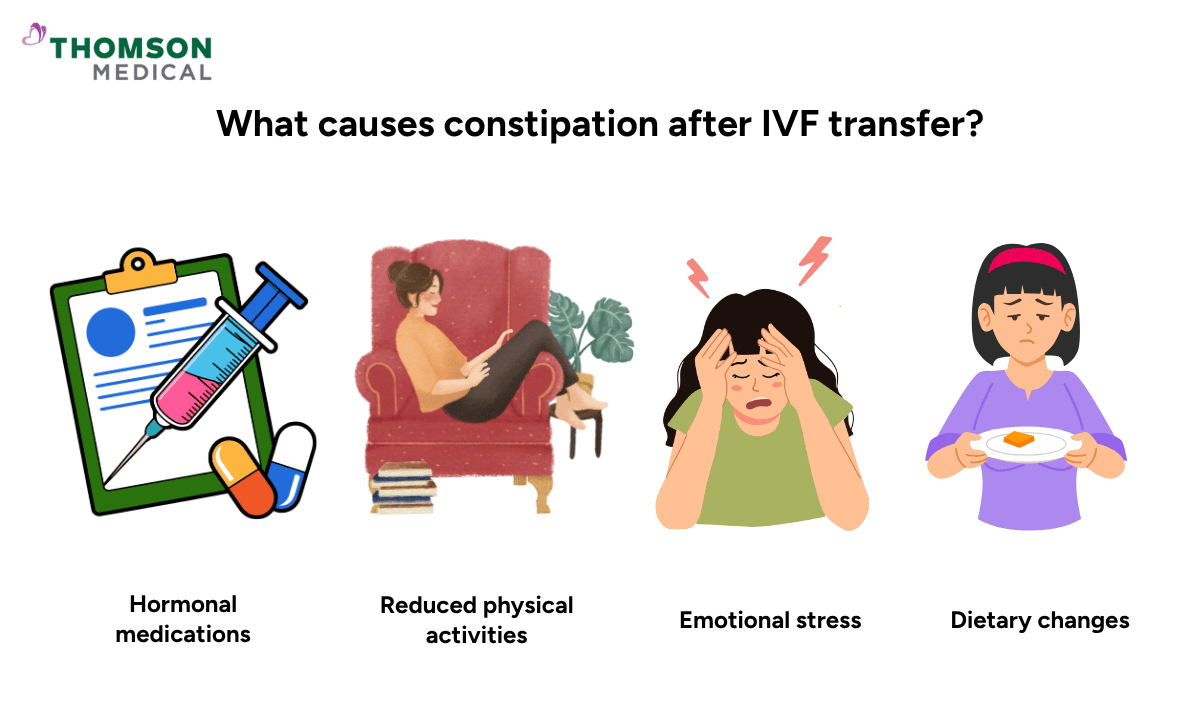
Although the embryo transfer itself does not usually cause constipation, changes in hormone levels and hormonal medications used during an IVF cycle may contribute to it. Changes to your usual routine during the two-week wait – the waiting period between the embryo transfer and your scheduled pregnancy test – may also make your bowel movements less frequent or harder to pass.
Here’s how these factors may contribute to constipation after the embryo transfer.
Hormonal medications
After an embryo transfer, doctors often prescribe progesterone to support your hormonal levels and help prepare your uterine lining for embryo implantation.
Besides altering your progesterone levels, this hormone could relax the muscles in your digestive system, which reduces the contractions that move stool through your bowel. This slower movement allows the bowel to absorb more water from the stool and make you constipated.
Reduced physical activity
Some women become less active after an embryo transfer because they may worry that being physically active will affect implantation. Reduced physical activities may contribute to constipation because they slow down your bowel movement and make stools harder to pass.
Emotional stress
The two-week wait after an embryo transfer may feel stressful since you are waiting to take a pregnancy test and find out whether the embryo transfer has resulted in a pregnancy. These emotional aspects could affect communication between your brain and gut, which may alter your bowel functions.
Dietary changes
During an IVF cycle, women may eat or drink differently from usual because they experience treatment-related symptoms, such as nausea and bloating, or changes to their routine. If these dietary changes make you eat less fibre or drink fewer fluids, you may become constipated.
If constipation after IVF transfer has negatively affected your daily activities, speak with a doctor to carefully assess your condition. Request a consultation with Thomson Medical.
Could constipation affect IVF outcomes?
It is understandable that you may worry whether constipation after embryo transfer could affect your IVF outcomes. However, constipation after an embryo transfer is generally considered unlikely to affect the outcome of your IVF treatment. Although it may be uncomfortable, constipation is not known to interfere with embryo implantation or the hormone levels that support early pregnancy.
How long does constipation usually last?
Constipation after an embryo transfer is usually temporary, there is no set timeline, and it varies from one person to another. The constipation may last for a few days or keep continuing for a week.
If you take progesterone supplements, the effect of higher progesterone levels on your bowel may cause the constipation to last longer. Additionally, if you become pregnant after the embryo transfer, constipation may continue or recur because pregnancy hormones could slow your bowel movements.
Our fertility doctors in Singapore
Loading...
How you could help relieve constipation after an IVF transfer
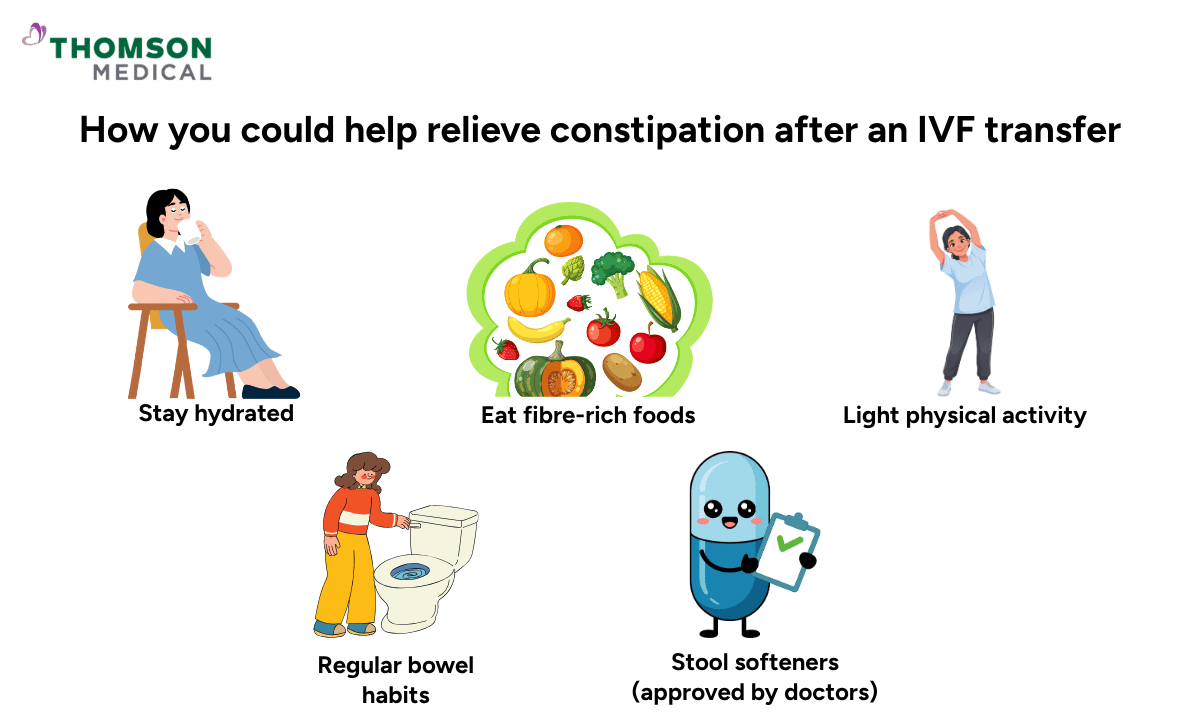
You could help relieve constipation after an IVF transfer by making some simple changes to your daily routine and taking care of yourself.
Stay hydrated:
Drink at least 8-10 glasses of water per day to soften stool and support digestion.
Eat fibre-rich foods:
Get your recommended daily fibre intake with fibre-rich foods like whole grains, fruits, vegetables, and legumes. They help your stool hold water, which makes it softer and easier to pass.
Light physical activity:
Light activities such as walking, yoga, or stretching might help your digestion and keep your bowels working properly.
Create regular bowel habits:
Try to use the toilet at the same time each day to help you develop regular bowel habits.
Go as soon as you feel the urge to have a bowel movement, rather than holding it in, as delaying it could make the stools harder to pass.
Take stool softeners (if approved by a doctor):
Some gentle over-the-counter stool softeners may be safe for you, but always get your doctor’s approval because some over-the-counter options are not safe during early pregnancy or may affect hormone absorption.
If constipation does not improve with these approaches, request a consultation with Thomson Medical. A doctor could review your symptoms, identify possible causes, and recommend constipation treatment that is appropriate after an embryo transfer.
What should you avoid if you’re constipated after an IVF transfer?
After an IVF transfer, it is best to avoid starting any constipation remedy to avoid complications. These remedies include:
Herbal remedies and “detox” teas, because some may have limited safety information or interact with IVF medicines.
Unapproved laxatives or supplements, as they may interact with other medicines or may cause side effects such as cramps, diarrhoea, or dehydration.
High doses of laxatives, since taking more than the recommended dose may cause excessive laxative effects.
Combining constipation treatments, because they could lead to an excessive laxative effect.
If you want to treat constipation after an IVF embryo transfer, always consult your doctor before taking any medication.
When should you seek medical help
Constipation after an embryo transfer usually goes away on its own. However, if you experience any of the following symptoms, it is best to seek medical help:
Your constipation lasts more than a week.
You experience severe abdominal pain or swelling.
You start to vomit.
You cannot pass gas.
You have signs of ovarian hyperstimulation syndrome (OHSS), such as rapid weight gain, significant bloating, decreased urination, nausea that does not ease, or shortness of breath.
Your doctor could check for other causes, recommend safe medication, or change your progesterone dosage if needed.
FAQ
Is constipation a sign of implantation?
Constipation is not a reliable sign of implantation. It can happen because of IVF-related factors that can slow bowel movements during the two-week wait. Since these factors can affect people regardless of whether implantation occurs, constipation cannot confirm implantation.
Will straining when pooping after embryo transfer affect implantation?
Straining during a bowel movement after an embryo transfer is not known to affect implantation.
During the embryo transfer, the doctor transfers the embryo into your womb, and it may implant in your uterine lining. Meanwhile, stool passes through the bowel, which is a separate location from your womb. Therefore, you cannot “push out” the embryo when you pass stool.
Can I drink coffee to help with constipation during the two-week wait?
Yes, you can drink coffee, with water intake alongside it, to help with the constipation. Coffee can stimulate the bowel and may help pass stool in some people, but it should not be your main way of managing constipation.
However, it is best to limit your total caffeine intake to no more than 200 mg a day. This is the recommended daily limit for caffeine during pregnancy, as pregnancy may occur after the embryo transfer.
Does lying in bed after an embryo transfer make the constipation worse?
Spending a lot of time in bed after an embryo transfer may contribute to worsening the constipation because it reduces your physical movement and slows the passage of stool through your bowel.
The information provided is intended for general guidance only and should not be considered medical advice. For personalised advice based on your unique conditions, schedule an appointment with Thomson Medical.
For more information, contact us:
Thomson Fertility Centre
- Paragon: 6252 7766
- Novena: 6399 3758, 8811 0358 (WA)
Dr Tan Heng Hao
Obstetrics & Gynaecology (O&G)
Thomson Fertility Singapore (Novena)
English
Great Eastern, Prudential x TMC
