

When you experience cramps after your in vitro fertilisation (IVF) embryo transfer, you may assume that the cycle has failed. However, in most cases cramping is normal, and knowing the reasons behind it may help ease your worries.
Is cramping after an IVF embryo transfer normal?
Mild cramping after an embryo transfer is common and doesn’t mean something has gone wrong. At this stage, hormonal shifts and the transfer procedure may trigger mild sensations in your uterus (womb).
However, mild cramping is not a reliable indicator of whether the transfer has been successful. Some women experience cramping and go on to have a healthy pregnancy, while others experience no cramping and carry to term.
Common causes of cramps after IVF embryo transfer
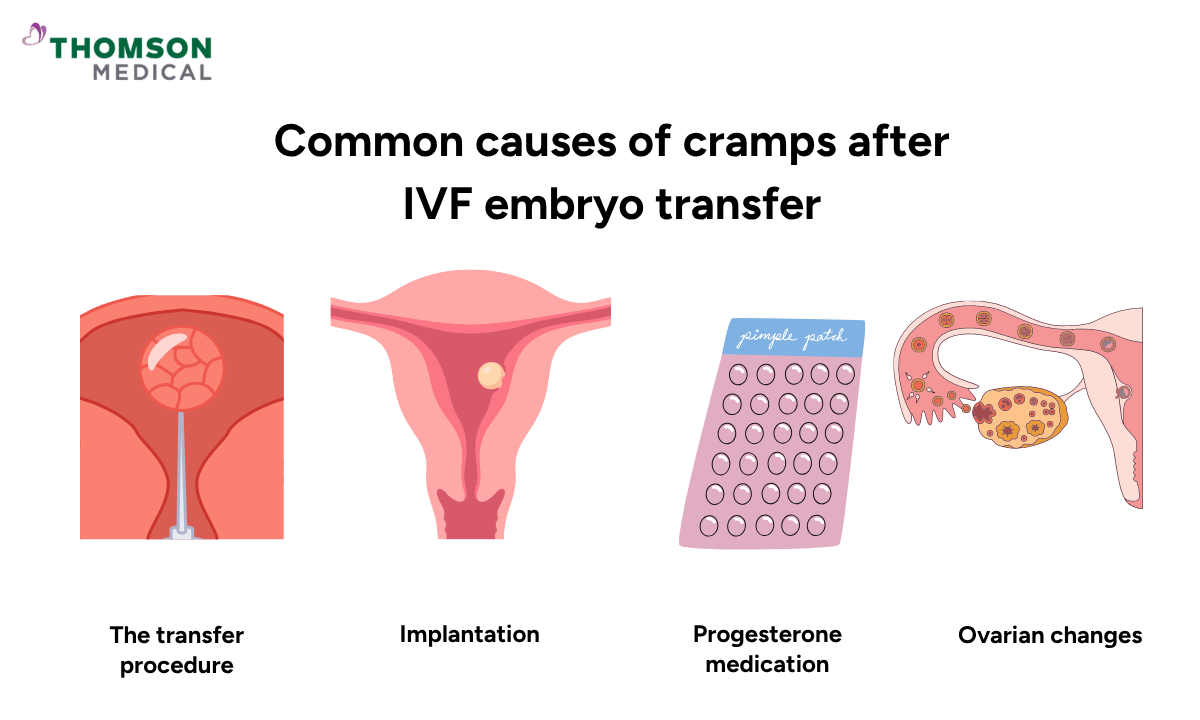
If you experience cramping after an embryo transfer, there are several possible causes, which include:
The transfer procedure
During the procedure, a thin tube called a catheter is passed through your cervix (the lower, narrow end of the womb) and into your uterus. This may cause temporary irritation to your uterus, which you may feel as mild cramping or a dull ache that usually subsides within a day or two.
Implantation
Once the embryo begins to attach to the lining of your uterus, some women notice light twinges or a mild pulling sensation in the lower abdomen. Increased blood flow to the uterine lining during implantation could also contribute to mild discomfort.
Progesterone medication
Most IVF cycles involve progesterone support after the transfer, whether through pessaries (small tablets inserted into the vagina) or injections. Your hormone levels might shift as a result, which may lead to bloating, cramping, and a feeling of discomfort. These are side effects of the medication, not an indication that something is wrong.
Ovarian changes
Your ovaries may still be slightly enlarged after egg retrieval. This may cause a feeling of heaviness or a dull ache in your lower abdomen that may persist for a day or two after your transfer.
If you had a frozen embryo transfer, your ovaries are likely to be less affected since egg retrieval would have taken place in an earlier cycle.
Natural uterine activity
Your uterus contracts gently all the time, even without you noticing. Hormonal changes during this stage of your cycle could heighten your sensitivity to these sensations, making even normal activity feel more noticeable than usual.
If you experience cramping after an IVF embryo transfer and are wondering whether it is related to implantation, the medication you are taking, or normal uterine activity, consulting a doctor may help you understand what causes the cramp. Request an appointment with Thomson Medical.
Our fertility doctors in Singapore
Loading...
When does cramping occur, and what does it mean?
The timing of cramping could sometimes indicate its likely cause, though it cannot confirm the reason with certainty. As a general guide:
Days 0 to 2 are most likely related to the transfer procedure itself
Days 3 to 7 may be linked to embryo implantation
Cramping at any point during the two-week wait, the period between your embryo transfer and your pregnancy test, is often related to progesterone medication
For most women, cramps last anywhere from a few hours to a few days. They tend to be irregular rather than constant, and you may notice them more in the evening, after periods of activity or without an obvious trigger.
How to relieve cramps after embryo transfer
If you’re experiencing cramping after your embryo transfer, these steps might help ease the discomfort without affecting your treatment:
Get plenty of rest and avoid strenuous activities such as heavy lifting
Stay hydrated by drinking plenty of water throughout the day
Applying a warm compress onto your lower abdomen to help to ease the discomfort
Take a short, light walk or other gentle exercise
Only use pain relief that your doctor has approved. Avoid ibuprofen and other anti-inflammatory painkillers unless your fertility clinic has specifically confirmed they are safe to use after transfer
When to see your doctor
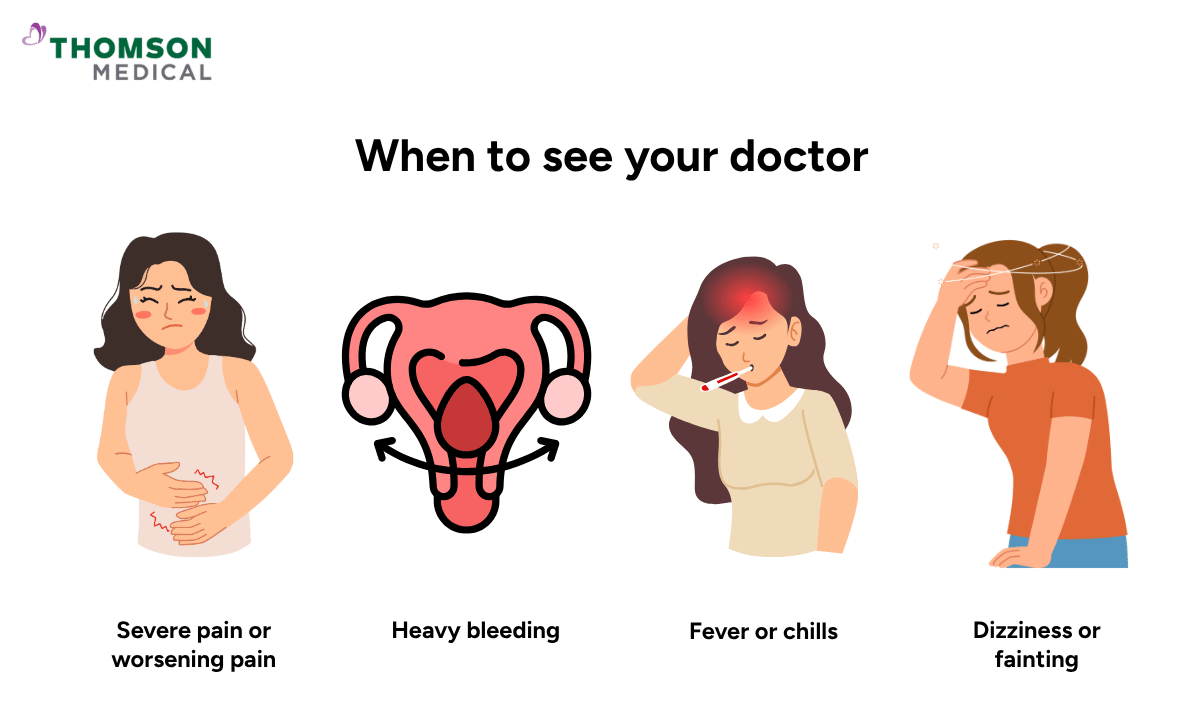
Mild cramping after embryo transfer is expected and is not usually a cause for concern. However, some symptoms do need prompt attention. Contact your doctor if you notice:
Severe pain or worsening pain
Sharp pain on one side of your abdomen
Heavy bleeding
Fever or chills
Dizziness or fainting
These symptoms are uncommon but require prompt attention, as they could occasionally indicate a complication such as an infection or, in rare cases, an ectopic pregnancy.
If you have concerns about cramping, bleeding, or other symptoms after an embryo transfer, request an appointment with Thomson Medical. A fertility specialist may be able to perform an early assessment and identify any issues that may require further medical attention.
FAQ
What does implantation cramping feel like in IVF?
Implantation cramping is usually described as mild pulling, tingling, twinges, or light cramps similar to period pain in the lower abdomen and is typically subtle and passes quickly.
Are cramps after embryo transfer a good sign?
Not necessarily, as cramping can happen in both successful and unsuccessful IVF cycles. It’s a common feeling after embryo transfer and cannot reliably tell you whether implantation has taken place.
How long do implantation cramps last after IVF?
If implantation cramps occur, they usually last from a few hours to a few days. Many women do not experience any cramping and still have a successful pregnancy.
Does cramping mean the embryo is growing?
Not necessarily, as early embryo development does not always cause symptoms you can feel. The only reliable way to confirm a pregnancy is progressing is through a blood test that measures the pregnancy hormone hCG, along with ultrasound monitoring.
When are implantation cramps the worst?
If implantation cramps occur, they are most often noticed around the time the embryo attaches to the lining of your uterus, usually 5 to 7 days after embryo transfer. Severe or worsening pain is not a normal sign of implantation, so it’s worth discussing with your doctor.
When should I worry about cramping after embryo transfer?
Mild cramping is common after embryo transfer. However, contact your fertility clinic promptly if you notice severe pain, worsening symptoms, heavy bleeding, or fever.
The information provided is intended for general guidance only and should not be considered medical advice. For personalised recommendations and tailored advice based on your unique conditions, request an appointment with Thomson Medical.
For more information, contact us:
Thomson Fertility Centre
- Paragon: 6252 7766
- Novena: 6399 3758, 8811 0358 (WA)