

Are you considering dentures as a tooth replacement option? Would they work as well as natural teeth? Would they be comfortable to wear every day? These are all valid concerns because you are not just looking for a replacement for your missing teeth, but also to restore your quality of life.
Learning about the different types of dentures available, when you might need them, and what to expect can help you make an informed decision about your dental health.
What is a denture?
Dentures are removable appliances with artificial teeth that replace missing teeth and the tissues around them. They help to restore the form, function, and aesthetics of your teeth. If you have lost your natural teeth due to dental decay, gum disease, an accident, or any other cause, these custom-made teeth replacements can be a good choice for you.
What are the types of dentures?
There are different types of dentures, and your dentist will suggest the right one for your situation. The main types include:
Partial denture
A partial denture is used to replace single or multiple missing teeth. It uses both your remaining natural teeth and gum tissues for support.
Complete denture
A complete denture is ideal if you have lost all the natural teeth in one jaw. It only requires support from the soft tissues in your mouth.
Overdenture
An overdenture is designed to fit over your remaining natural teeth or dental implants. Unlike a conventional denture, which rests directly on your gums, an overdenture connects to your existing teeth or implants to give extra support and stability.
Overdentures are a more secure and comfortable option if you have some remaining natural teeth or have had a dental implant.
Your dentist will guide you through these options and help you choose the best fit for your needs.
Types of materials for dentures
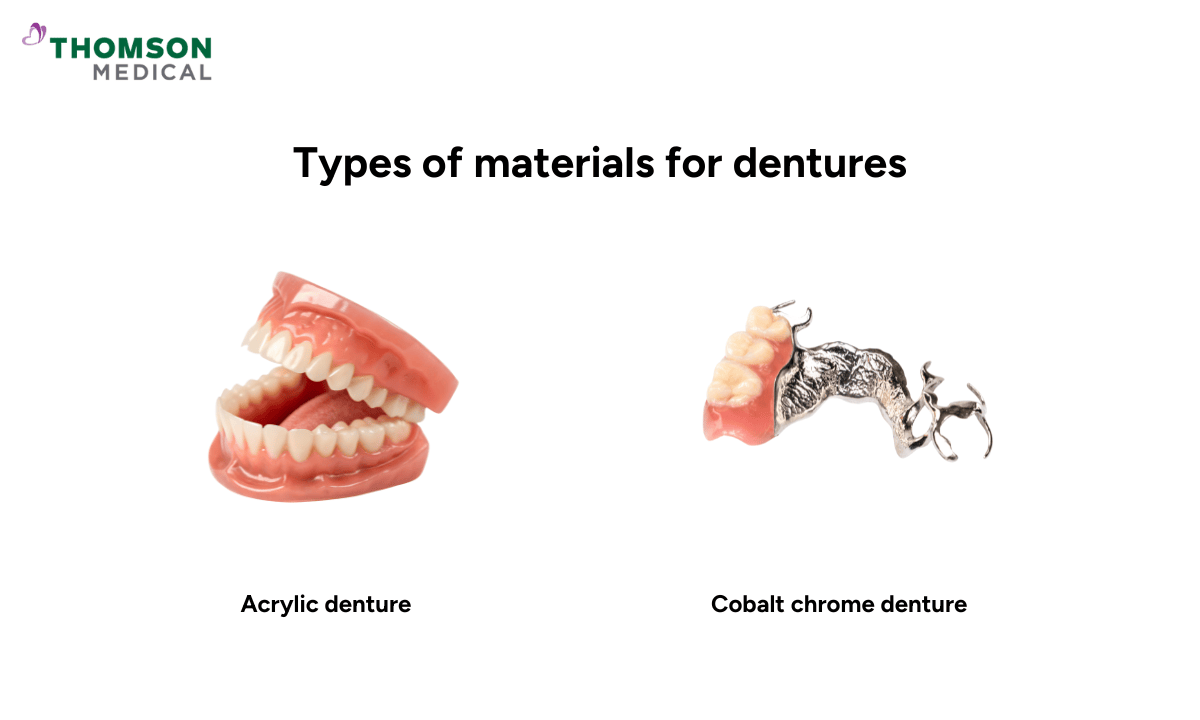
Dentures can be made from different materials, and each has its own benefits. The two main materials are:
Acrylic denture
An acrylic denture has replacement teeth set in pink or gum-coloured acrylic plastic resin. This type of denture is usually a bit thicker than cobalt chrome dentures and covers more of your tissue.
Advantages:
Easy to add teeth and make changes
Looks more natural than cobalt chrome
Allows saliva to spread evenly on the denture's surface, creating a seal that keeps it in place
Disadvantages:
Weaker material than cobalt chrome
Can break more easily
Thicker and bulkier, as it covers more tissue
May warp over time
Picks up stains and plaque easily
Cobalt chrome denture
This type of partial denture has a framework made from metal alloys such as cobalt and chromium. The false teeth will be attached to the framework with acrylic. They are thinner, lighter, and much stronger than acrylic dentures but have higher costs.
Advantages:
Stronger and more resistant, especially for heavy use
Thinner and less bulky – a great option if you have gagging issues
Resists stains better
Disadvantages:
- Higher costs
- Doesn’t look as natural
- May tarnish and corrode over time
- Difficult to add replacement teeth if you lose more natural teeth later
Once you know the pros and cons of these materials, you can make a better decision about your denture. However, if you are still unsure, our dentists at Thomson Dental Centre can provide more details to help you choose the material that works best for your needs.
What are the benefits of dentures?
Dentures offer many benefits, not just for your oral health but also for the quality of your life. They can help improve:
Chewing:
Missing teeth can make it difficult to bite and chew properly, but dentures restore this function so you can enjoy food comfortably.
Speech:
Missing teeth can affect the way air flows through your mouth, which impacts how you speak. Dentures help restore clear speech patterns, making it easier for you to pronounce words and communicate with confidence.
Aesthetics:
Dentures fill the gaps left by missing teeth, giving you a natural-looking smile. This can help you feel more confident about your appearance.
Support for facial muscles:
When teeth are missing, your facial muscles can sag and lose support. Dentures provide support to these muscles, helping to maintain the natural contours of your face and preventing a sunken appearance.
Improved self-esteem:
Dentures can have a positive impact on your self-esteem and confidence by restoring your ability to smile, speak, and eat without hesitation. Feeling comfortable and confident with your teeth can enhance your overall well-being.
If you're considering dentures but don't know where to start, schedule an appointment with Thomson Medical. Our dentists will assess your situation, answer all your questions, and help you find the right approach for your needs.
Our dental specialists in Singapore
Loading...
How are dentures made?
You can visit a dental clinic to have a denture made. The dental fabrication process usually takes about 4-6 visits, and here’s what you can expect:
Primary impression:
During your first appointment, your dentist will examine your mouth and take impressions of your teeth. These impressions create a dental cast of your teeth and gums that your dentist may use to make a new denture for you.
Secondary impression:
The dentist will prepare your teeth based on your denture design. Using the dental cast from the first impression, a personalised impression tray is made to take a more accurate imprint of your teeth and the surrounding soft tissues. This step ensures your denture fits as precisely as possible.
Bite registration:
This step records how your upper and lower teeth meet in their natural biting position.
Try-in stage:
At this stage, a preliminary set of dentures is made from wax. This gives you a chance to "try on" your new dentures and see how they look before they're finalised. Your dentist will check the colour, shape, and fit, as well as how well you can chew and speak with them.
Issue stage:
Your finished denture is inserted in your mouth, and your dentist will make necessary adjustments until you feel comfortable wearing it.
Review stage:
This appointment ensures that your oral tissues are not being damaged and that your dentures are working well.
If you experience discomfort or notice any soreness while wearing your new denture, don't hesitate to inform your dentist. They can make adjustments to ensure a better fit.
Tips for new denture wearers
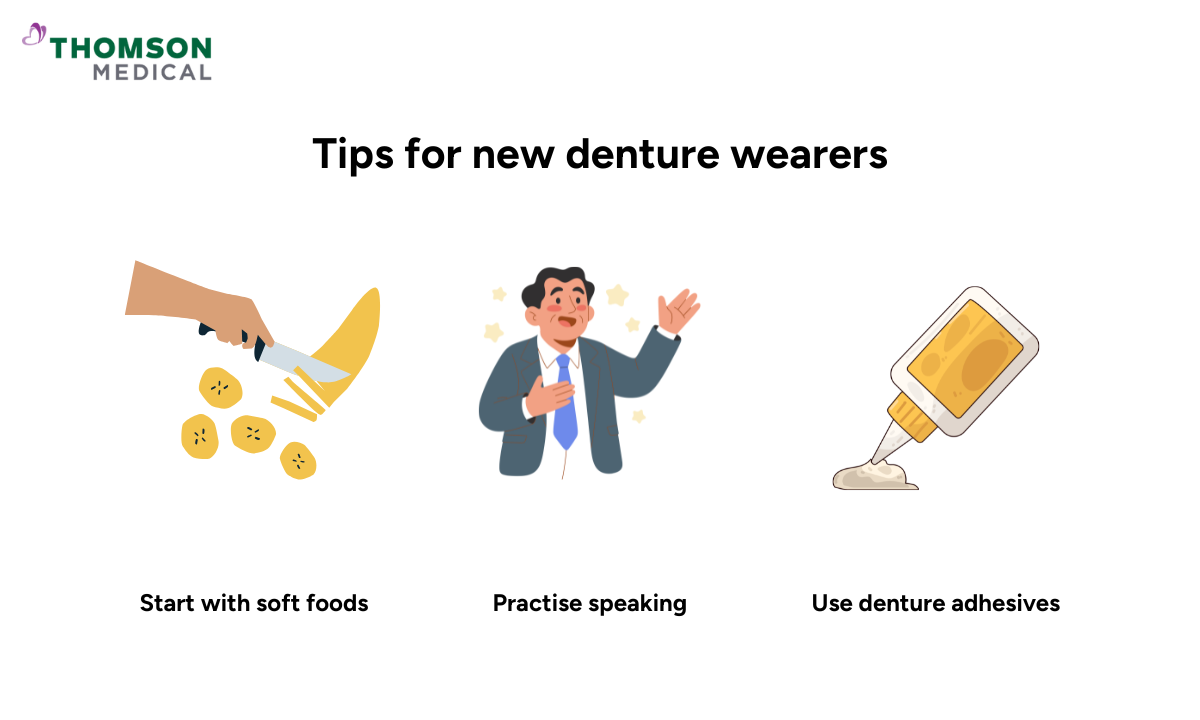
You might need some time to get used to your new denture. Here are some simple tips you can follow when you’ve first started wearing dentures:
Start with soft foods:
During the first few days, it’s best to stick to soft foods. You can cut food into smaller, bite-sized portions to make it easier to chew.
Practise speaking:
Reading aloud can help you overcome speech difficulties, as your tongue and mouth muscles need to adjust to the new dentures.
Use denture adhesives:
During this adjustment period, you can consider using denture adhesives. It can provide more stability and comfort as you get used to wearing dentures.
If you experience pain, stop using the denture temporarily and visit your dentist as soon as possible.
How to care for your dentures?
Taking good care of your dentures will help them last longer and keep your mouth healthy. Here’s what you should do:
Clean your dentures daily:
Rinse your dentures after every meal to remove food particles.
Use a soft-bristle toothbrush or a denture brush to clean them every day. Avoid using a regular toothbrush, as it can be too rough and damage the denture material.
Use a mild soap or denture cleanser that your dentist suggests. Don’t use regular toothpaste, as it can be too abrasive.
Avoid wearing your denture overnight:
Take out your dentures before going to bed to allow your gums to rest.
Soak your dentures overnight in a denture-cleaning solution or water. This keeps them from drying out and losing their shape.
Handle with care:
Handle your dentures with care to avoid dropping them.
When handling them, place a towel or a basin of water in the sink to lower the risk of breakage in case they slip from your hands.
Avoid hot water:
Use lukewarm water instead of hot or boiling water to clean or soak your dentures, because it may cause warping.
Care for your natural teeth:
If you have partial dentures and still have some natural teeth, continue to brush and floss your natural teeth as your dentist suggests.
Check for damage:
Inspect your dentures for any signs of damage, such as cracks, chips, or broken clasps. If you notice any issues, consult your dentist for repairs.
Use gentle cleaning products:
Avoid using abrasive cleaners or harsh chemicals, as they can damage your dentures. Stick to products recommended by your dentist.
Be mindful of your diet:
It’s best to stay away from hard or sticky foods that could damage or dislodge your dentures.
Store them properly:
When you're not wearing your dentures, keep them in water or a denture-cleaning solution. Don’t let them dry out, as this can change their shape.
Regular dental visits are also important to ensure your dentures fit well and allow your dentist to address any changes that make you feel uncomfortable.
If you need guidance on denture hygiene or want to ensure they're fitting properly, schedule an appointment with Thomson Medical. Our dentists can assess your dentures and provide advice on keeping them in great condition.
FAQ
Do I need to remove dentures at night?
Yes, you should take off your dentures at night so your gums can relax. Leaving dentures in your mouth can affect your saliva flow and lead to a fungal infection called denture stomatitis.
Can I eat normally with dentures?
Yes, you can. Once you get used to your dentures, you can eat a variety of foods with confidence. However, it’s best to avoid hard foods for optimal denture care.
How long does it take to get used to dentures?
You usually need a few weeks to adjust to your new dentures, though the duration might be different for each person.
Who is suitable for dentures?
Generally, anyone with missing teeth can wear dentures. However, every situation is different, and your dentist will evaluate your condition to determine if dentures are the right option for you.
How long do dentures last?
With proper care, dentures can last for many years. Regular dental check-ups and good oral hygiene are key to long-term success.
What’s the difference between dentures and dental implants?
Dentures are removable and rest on your gums, while dental implants are permanently fixed into your jawbone. Dentures are more affordable and don’t require surgery, but implants are more stable.
Your dentist will weigh the pros and cons of each option to help you decide which choice is best for your needs and your budget.
The information provided is intended for general guidance only and should not be considered medical advice. For personalised recommendations and tailored advice based on your unique situation, please consult a specialist at Thomson Medical. Schedule an appointment with Thomson Medical today.
Dr Charlotte Goh
Dentistry
Thomson Dental Centre (Novena Specialist Center)
English
AIA Dental PPO, Alliance MediNet, IHP, Inova Care and 2 others
