
.png%3Fbranch%3Dprod&w=3840&q=75)
You've just had your laser treatment for pigmentation, and now you're looking in the mirror wondering: is this normal?
That slightly flushed appearance, the way your skin feels a little different – these moments of uncertainty are something nearly everyone experiences after treatment. What you're seeing is simply your skin beginning its natural healing journey. Knowing what to expect can make all the difference in how confident you feel during the recovery process.
What happens to your skin immediately after laser treatment
.png?branch=production)
In those first hours and days after laser treatment, you'll notice your skin going through some visible changes. What you're seeing is completely normal – it's simply your skin responding to the laser's work and beginning its natural renewal. You'll likely catch sight of:
A warm, flushed appearance
Your skin might look pink or red, rather like a mild sunburn, with some puffiness around treated areas.
This tends to be most noticeable within the first 24 hours and gradually settles over the next few days.
Your pigmentation might look more prominent:
This can feel surprising at first, but it actually means the treatment is working.
The laser energy has drawn the pigment to the surface, where your skin can naturally shed it away. What seems darker now is preparing to fade.
A bit of extra sensitivity:
Your skin may feel more tender than usual, with some light tingling when you touch it. The sensitivity usually improves within a few days.
These reactions are all part of your body's natural healing process, so try not to worry. Your skin is simply doing its job to reveal clearer skin underneath.
Your recovery timeline: What to expect week by week
Everyone's skin type heals at its own pace. These are the typical stages to look for in your skin recovery:
In the first 24 to 48 hours:
Redness and puffiness will be most noticeable during this time.
Keep your skin clean and gently moisturised. This early stage is when good skincare habits play the most important role.
From days 3 to 7:
You'll start to see real improvement now. Your skin may flake or peel as darkened spots begin to lift away naturally.
It's important not to pick at any flaking areas, as tempting as it might be.
From week 2 onwards:
Most of the visible healing will be complete by now. You'll notice your complexion starting to look clearer.
Over the next 4 to 8 weeks:
Your skin continues improving beneath the surface as it renews itself.
This is when you'll see your full results gradually emerge. The wait is worth it.
Remember, skin healing isn't always linear. If anything concerns you during the recovery process, please don't hesitate to reach out to your doctor.
How to care for your skin during recovery
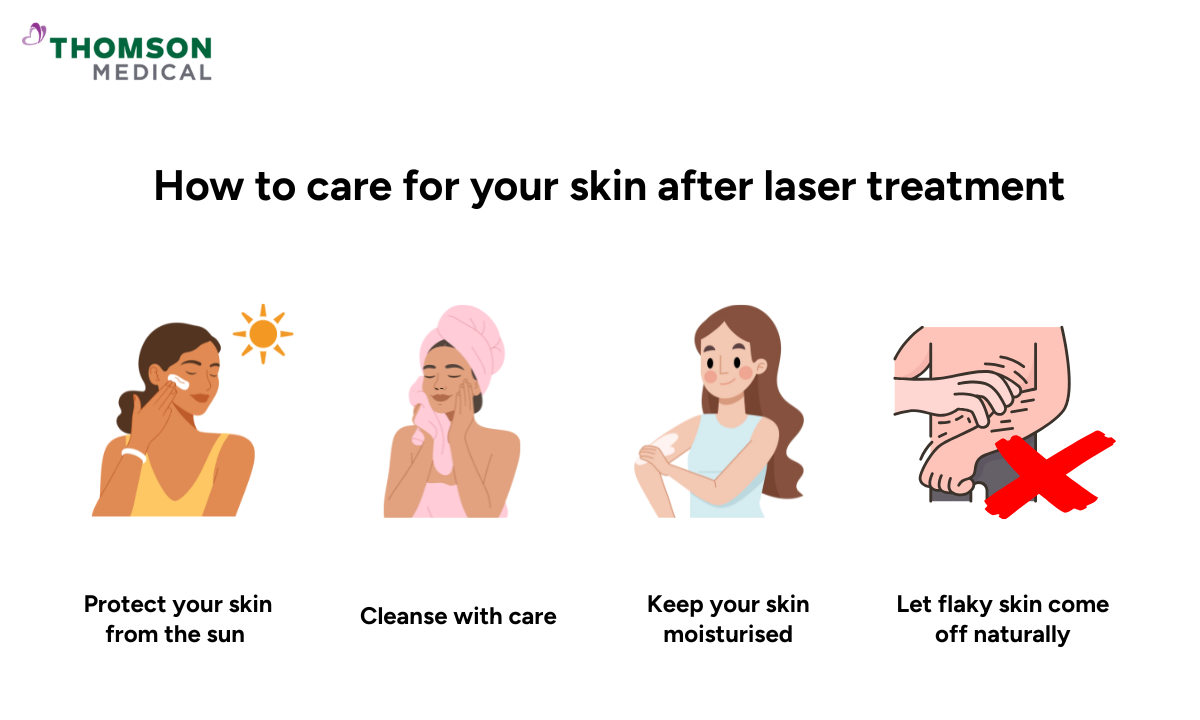
During the healing process, taking proper care of your skin can really help support your healing. These simple steps can impact how well your skin recovers.
Protect yourself from the sun
Your skin will be more sensitive to sunlight post-treatment care, so it's best to stay indoors for the first few days if you can. When you do need to go out, wear a wide-brimmed hat or bring an umbrella along, and look for shaded spots. Don't forget to apply sunscreen or sun protection even when you're indoors – UV rays can still reach your skin through windows.
Cleanse with care
Keeping the treated area clean matters, but being gentle is just as important. A mild, fragrance-free cleanser will help remove dirt and oils without causing any irritation. If you're not sure which products would work well for your skin right now, have a chat with your skin specialist, as they can point you towards options that support healing.
Keep your skin well moisturised
This is one of the most helpful things you can do during recovery. Moisturising regularly keeps your skin comfortable, supports the healing process, and creates a protective barrier. Your doctor can suggest what might work best for you, whether that's something with hyaluronic acid, vitamin E, or aloe vera.
Let flaky skin come off naturally
It's perfectly normal to notice some flaking or light crusting as your skin heals. We know it can be tempting to help it along, but try to let it shed on its own. The flaky bits are actually doing an important job – protecting the fresh, new skin that's forming underneath.
Following these steps gives your skin the support it needs right now. Recovery does take a little time, but you're taking good care of yourself, and that makes all the difference.
If you're unsure which skincare products are safe for your healing skin, schedule an appointment with Thomson Specialist Skin Centre. Our specialists can recommend the right products for your skin type and ensure optimal healing.
When you can start wearing makeup again
We understand you might want to cover any redness, but your skin will benefit from a little breathing space first. Most doctors suggest waiting at least 24 to 48 hours before applying makeup, giving your skin a chance to begin healing. This short break really does help.
After those first two days, you can usually start using mineral-based or non-comedogenic makeup if your skin is feeling more comfortable. Make sure your brushes are clean and apply everything gently. If you're not quite sure whether it's the right time yet, it's always fine to check in with your doctor first.
When to contact your doctor after laser treatment
Some redness and tenderness are part of the normal healing process, but there are times when it's important to get in touch with your doctor. Look out for these signs:
Severe discomfort:
Mild tenderness is expected, but if you're experiencing intense pain or it's getting worse rather than better, let your doctor know. They can help make sure everything is healing as it should.
Signs of infection:
Keep an eye out for increasing redness, warmth, any discharge, or an unusual smell from the treated area.
Symptoms that linger:
If redness or swelling hasn't started improving after about a week, or if it seems to be getting worse, it's worth having your doctor take a look.
Unexpected reactions:
Things like larger blisters, unexpected changes to your skin, or signs of an allergic reaction, such as persistent itching or a rash, should be checked.
Don't hesitate to reach out if something doesn't feel right. Your doctor is there to support you, and it's always better to ask than to worry.
If you're experiencing any warning signs or feel something isn't quite right with your recovery, schedule an appointment with Thomson Specialist Skin Centre. Our doctors are here to address complications and ensure your skin heals safely.
Our skin pigmentation specialists
Loading...
FAQ
How long should I avoid sun exposure after laser treatment for pigmentation?
You should avoid direct sun exposure for at least 2 to 4 weeks after treatment. Your skin will be more sensitive to UV rays and sun damage during this time, which can lead to hyperpigmentation or other complications. Always wear sunscreen with SPF 30 or SPF 50 when you go outside, even on cloudy days.
When can I wash my face after laser pigmentation treatment?
You can gently wash your face 24 hours after treatment using lukewarm water and a mild, fragrance-free cleanser. Pat your skin dry with a clean towel – don't rub. Your doctor will give you specific instructions based on your treatment plan.
Is it normal for my skin to get darker after laser treatment for pigmentation?
Yes, this is completely normal and actually a sign the treatment plan is working. The laser wavelengths bring pigment to the surface, making spots look darker temporarily. These darkened areas will flake off naturally within 1 to 2 weeks after your skin renewal.
Can I exercise after laser treatment for pigmentation?
It's best to avoid strenuous exercise for 24 to 48 hours after treatment. Sweating can irritate your sensitive skin and increase the risk of infection. Stick to light activities during the first few days, then gradually return to your normal routine.
What products should I avoid after laser pigmentation removal?
After your pigmentation removal, avoid products with retinoids, glycollic acid, salicylic acid, benzoyl peroxide, or vitamin C for at least 1 to 2 weeks. These ingredients can irritate your healing skin. Also skip exfoliating scrubs, harsh cleansers, and fragranced products in your post-laser treatment skin care routine until your doctor says it's safe.
Can I use vitamin C serum after laser treatment for pigmentation?
Wait at least 1 to 2 weeks before using vitamin C serum, as it can be too harsh for freshly treated skin. Once your skin has healed and your doctor gives the go-ahead, you can gradually reintroduce it into your routine.
The information provided is intended for general guidance only and should not be considered medical advice. For personalised recommendations based on your condition, schedule an appointment at Thomson Specialist Skin Centre.
Dr Tan Hiok Hee
Dermatology (Skin)
Thomson Specialist Skin Centre (Novena Specialist Center)
English, Mandarin
.png%3Fbranch%3Dprod&w=640&q=75)