

You may have heard that getting pregnant while diabetic may often be challenging. While diabetes may cause challenges for fertility and conception, it does not mean pregnancy is out of reach. You could consider fertility treatments like in vitro fertilisation (IVF) if you have diabetes, though the preparation and monitoring may differ from standard treatment cycles.
Does diabetes affect fertility?

Type 1 or Type 2 diabetes may affect fertility in both women and men. It is more likely to affect fertility for individuals with prolonged or poorly controlled diabetes. This may happen because high blood sugar levels and insulin resistance could lead to hormonal imbalance that affects ovulation and sperm production.
Effect in men with diabetes
Diabetes may be associated with several fertility issues in men, such as:
Reduced sperm quality:
Sperm quality may be affected in people with diabetes, as sperm may not be able to move effectively to reach the egg.
The condition has also been associated with sperm DNA damage – which may reduce the chance of fertilisation.
Erectile or ejaculation problems:
Sexual functions may be affected by diabetes, which makes it more difficult to get or maintain an erection for penetration during intercourse.
A reduced sexual drive may also occur and could be linked to factors such as low testosterone levels, fatigue, stress, or low mood.
Problems with ejaculation could also happen, such as retrograde ejaculation, which is when semen travels backwards into the bladder instead of leaving through the penis.
Hormonal and testicular effects:
Long-term high blood glucose may affect blood vessels, nerves, and hormone regulation. This may be associated with lower testosterone levels and problems with sperm production or development.
Effect in women with diabetes
Diabetes may affect fertility in women with diabetes in several ways, including:
Irregular or absent periods:
Menstrual cycles may become longer, irregular, or absent when diabetes disrupts the hormone levels involved in ovulation.
Ovulation issues:
Hormonal changes in people with diabetes may also affect ovulation, causing it to occur irregularly or stop altogether. They may also affect how eggs develop and mature.
Reduced chance of conception:
Difficulty with ovulation could make it harder to conceive. Changes in the womb and its lining may also affect embryo implantation.
A shorter reproductive window:
Women who experienced type 1 diabetes before puberty may have their first period later in life and reach menopause earlier. This shorter timeline may reduce the number of years a woman is able to conceive.
Is IVF suitable for people with diabetes?

People with diabetes might be able to undergo IVF if they have an issue with fertility. A doctor may recommend IVF if:
The fallopian tubes are blocked or severely damaged.
There is significant male-factor infertility.
Ovulation problems have not responded to other treatments.
Previous fertility treatments have not resulted in pregnancy.
There is another diagnosed fertility condition that makes IVF the most appropriate option.
Could diabetes affect your IVF outcome?
Diabetes may affect IVF outcomes, especially when the diabetes is not well-controlled or when it occurs alongside insulin resistance, polyendocrine metabolic ovarian syndrome (PMOS), or other health conditions.
However, doctors could help to review and manage these issues before the IVF treatment starts. When diabetes is well-controlled before treatment, it is less likely to affect the treatment process, though individual outcomes may vary.
Whether IVF is the appropriate option depends on several factors other than diabetes alone. If you have been trying to conceive and want to understand whether diabetes or other health conditions may be playing a role, a fertility assessment could help clarify your situation. Schedule a consultation with a specialist at Thomson Fertility Singapore.
Our fertility doctors in Singapore
Loading...
What are the risks of IVF for people with diabetes?
For people with diabetes, the main concerns around IVF risks relate to blood sugar management before and during pregnancy, as well as pregnancy complications. The IVF treatment itself is not automatically unsafe for people with diabetes.
That being said, people with diabetes may need closer monitoring during IVF and early pregnancy. This is because:
High blood sugar around conception could increase the risk of miscarriage and may affect the baby's health conditions that develop before birth.
Pregnancy may worsen existing diabetes-related complications, such as eye or kidney disease.
However, not all people with diabetes will face the same risks. There are other factors that may affect pregnancy risk, including:
Existing complications
Age
Weight
PMOS (formerly known as polycystic ovarian syndrome or PCOS)
Whether one or more embryos are transferred during IVF
What to prepare before IVF when you have diabetes
Before starting the IVF treatment, it is best to consult with a fertility specialist to identify and manage factors that may affect your IVF treatment and pregnancy. These preparations include:
Manage your blood sugar levels:
Your doctor could help you keep your blood sugar levels within the range recommended for pregnancy.
This is important because high blood sugar before and during pregnancy may increase some IVF risks.
Review your medicines:
Your doctor could review all your medicines, including insulin, diabetes tablets, prescription medicines, over-the-counter products, and herbal supplements.
This is because some medicines may not be suitable when you are trying to conceive or during pregnancy.
Check for diabetes-related complications:
You may need eye screening, kidney tests, and a blood pressure check. These tests help identify any diabetes-related health problems that pregnancy could worsen.
Assess other health conditions:
Your doctor may also assess conditions such as PMOS, thyroid disease, high blood pressure, kidney disease, or mental health concerns. This helps them plan your IVF treatment and the care you may need.
Support your overall health:
It is best to have a balanced diet, regular physical activity, and other healthy lifestyle habits to support your overall and reproductive health before this fertility treatment.
If you are unsure where to start in your IVF preparation, speaking with a fertility specialist could help you plan the steps that apply to your condition. Schedule a consultation with a specialist at Thomson Fertility Singapore.
How to manage blood sugar levels during IVF?
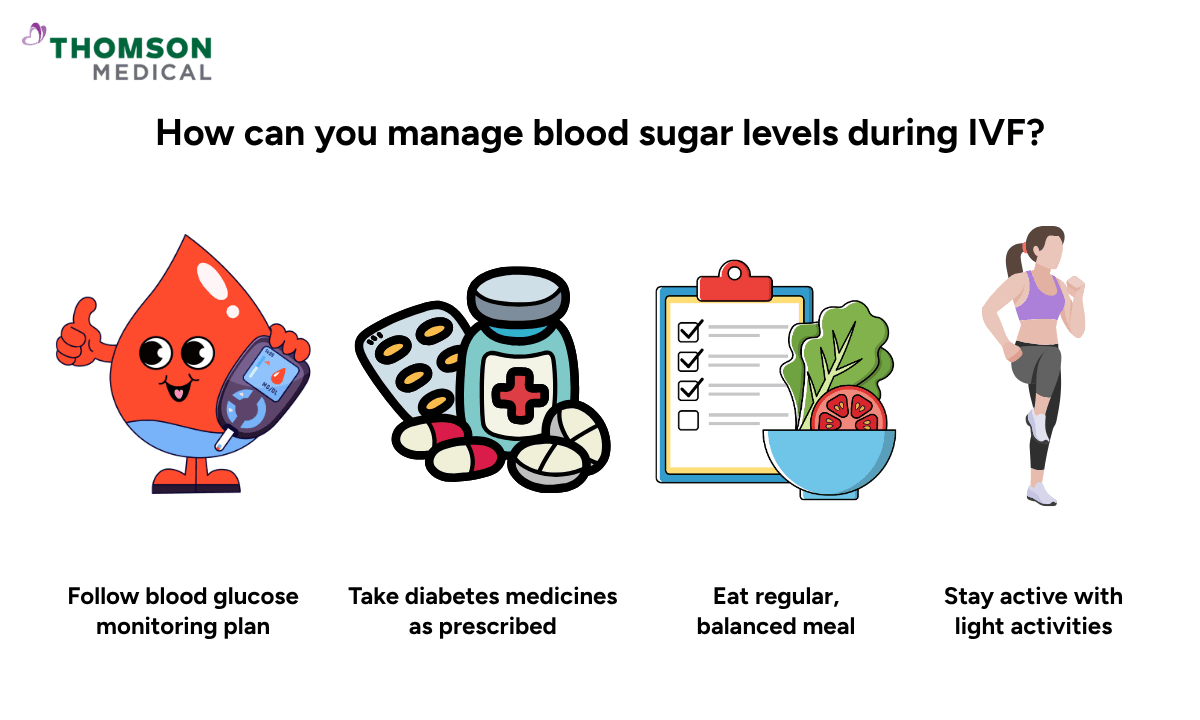
During IVF, your doctor could help to monitor your blood glucose levels, part of your overall care. Other than that, there are a few ways you could help manage blood sugar levels, including:
Follow your blood glucose monitoring plan:
Your doctor may advise how often to check your blood glucose levels and what to do if your results are high or low.
Take your diabetes medicines as prescribed:
Continue taking insulin or other diabetes medicines as your doctor advises. Do not stop or change your medicines without medical advice.
Eat regular, balanced meals:
Regular meals could help prevent large changes in blood glucose levels. It is best to follow a meal plan that includes fibre-rich carbohydrates, vegetables, and protein.
Stay active with light activities:
Light activities, such as walking, may support blood glucose management and overall health.
FAQ
Can poorly controlled diabetes affect embryo development?
During IVF, poorly controlled diabetes may affect egg quality and development before they are collected. As a result, this may influence early embryo development, although the effect can vary from women to women.
Is it safe to use insulin pumps during IVF?
You can usually continue using your insulin pump during IVF if approved by your doctor. This is because an insulin pump provides a steady background supply of insulin and can help you manage your blood glucose during the treatment.
Do you need to avoid sugar completely during IVF if you have diabetes?
You do not need to avoid all sugar completely during IVF. However, foods and drinks high in added sugar can raise your blood glucose quickly, so you should limit them and follow the meal plan advised by your doctor.
Why do blood sugar levels spike during IVF even without dietary changes?
During IVF, some people may notice higher blood glucose readings even when their diet has not changed. This may be caused by other factors, including hormonal changes, stress, changes in sleep or routine, and some prescribed medicines.
The information provided is intended for general guidance only and should not be considered medical advice. For personalised advice based on your conditions, schedule a consultation with Thomson Medical.
For more information, contact us:
Thomson Fertility Centre
- Paragon: 6252 7766
- Novena: 6399 3758, 8811 0358 (WA)