

Experiencing diarrhea can be uncomfortable and disruptive, especially when it interferes with your daily routine. It’s natural to wonder what’s causing it, how long it might last, and whether it’s something you should be concerned about. These questions can feel even more pressing if you are pregnant, caring for a young child, or looking after an older family member.
The reassuring news is that most cases of diarrhea are short-lived and improve within a few days with simple care at home. Still, there are times when medical advice is important. This guide will help you understand what may be happening in your body, recognise warning signs that need attention, and know how to care for yourself or your loved ones with confidence.
What is diarrhea?
Diarrhea happens when you pass loose, watery stools more frequently than usual, typically three or more times in a day. Your bowel movements might feel urgent. You may also experience cramping or discomfort along with them.
There are different types of diarrhea, depending on how long it lasts.
The most common types include:
Acute diarrhea:
This usually lasts just a few days to a week. It’s often caused by a stomach bug or mild food poisoning. Most cases clear up on their own without any treatment.
Persistent diarrhea:
This is when you experience diarrhea for two to four weeks. If your symptoms last this long, it’s worth checking in with your doctor.
Chronic diarrhea:
This type lasts longer than four weeks. It usually signals an ongoing digestive condition that needs medical attention.
Diarrhea is very common – most people experience it at some point. While it’s usually nothing to worry about, understanding the different types can help you know when to reach out for support.
Common causes of diarrhea
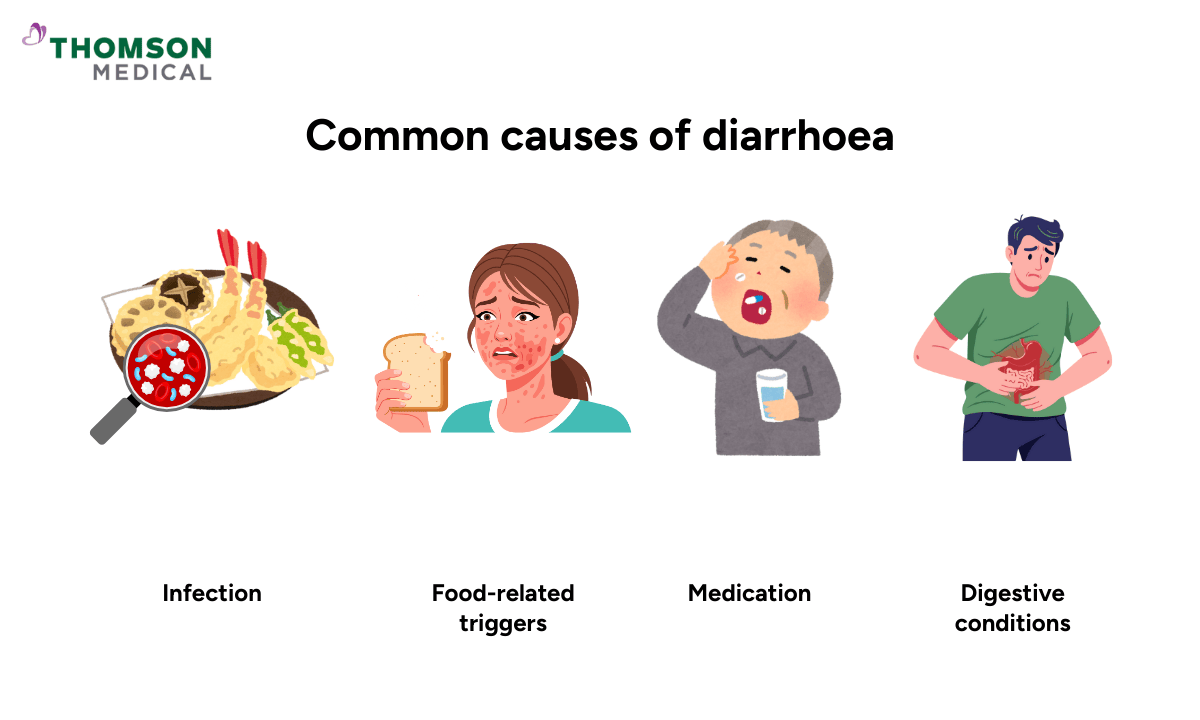
Dealing with diarrhea can feel uncomfortable and stressful. Learning what might be causing it can help you feel more in control and better prepared to handle what’s happening.
There can be many possible causes. However, in most cases, they tend to fall into just a few common categories.
Infection:
One of the most common causes of diarrhea is infection. These can include:
Viral infections, such as norovirus (also called stomach flu), spread through close contact or contaminated surfaces.
Bacterial infections from food poisoning, such as E. coli.
Parasitic infections, which you might pick up from contaminated water when travelling.
Food-related triggers:
This can happen if your body has trouble processing certain foods, such as dairy (lactose intolerance) or fruit sugars (fructose intolerance). Having food allergies or eating spoilt food can also upset your digestive system.
Medication:
Medication sometimes comes with digestive side effects. Antibiotics are a common cause of diarrhea because they can disrupt the natural balance of bacteria in your gut.
Digestive conditions:
Certain conditions may cause recurring or chronic diarrhea. These include Irritable Bowel Syndrome (IBS), which affects how your gut functions, and Inflammatory Bowel Disease (IBD), including Crohn’s disease and ulcerative colitis.
Knowing what's behind your symptoms is the first step towards finding relief. However, if you’re unsure what’s causing this condition, checking in with your doctor may give you the answer you need. They can help find out the cause and recommend the right treatment, whether that's simple home care approaches or medical support, to help you feel better.
Gastroenterology specialist in Singapore
Loading...
Symptoms and warning signs
Diarrhea often shows up with other symptoms. Noting these accompanying symptoms can help you better understand what’s happening in your body.
When you have diarrhea, you may also experience:
Abdominal cramping and pain
Bloating and gas
Nausea or general feelings of being unwell
Urgent need to use the bathroom
Loss of appetite or difficulty eating normally
Most cases of diarrhea will resolve within a few days with rest and proper hydration. However, there are some warning signs that indicate something more concerning.
Don’t hesitate to reach out to your doctor or the Urgent Care Centre (UCC) if you notice any of these symptoms:
Mucus or blood in your stool
Black or tarry stools
High fever above 38.5°C (101.3°F)
Severe abdominal or rectal pain
Signs of dehydration, such as extreme thirst, dry mouth, and little or no urination
Dizziness or feeling lightheaded
diarrhea that lasts more than three days without improvement
Unexplained weight loss
Dehydration is the most common complication of diarrhea. It happens because diarrhea causes your body to lose fluids faster than you can replace them. When you're also vomiting, this fluid loss accelerates even more. Without enough fluids, you might experience dizziness, confusion, rapid heartbeat, or even kidney problems.
If you’re concerned about dehydration or any of the warning signs, reach out to your doctor promptly. Getting the right care early can help you recover faster and prevent any complications.

Who is more vulnerable to diarrhea?
Diarrhea affects everyone in different ways. However, there are certain groups that need extra attention and care.
Children
It’s natural to feel worried when your child has diarrhea. Children, especially babies and toddlers, can become dehydrated much more quickly than adults because their small bodies lose fluids faster.
Your child might be dehydrated if they have these signs:
Fewer wet nappies than usual (for babies)
No tears when crying
Dry mouth and tongue
Sunken eyes or soft spot on the head (in infants)
Unusual sleepiness or irritability
Skin that doesn't bounce back when gently pinched
Your child can’t always tell you how they’re feeling, so it’s important to pay close attention to these warning signs. If your little one has diarrhea lasting more than 24 hours, refuses to drink fluids, or shows signs of dehydration, checking with your doctor is the right move to make.
Pregnant women
Experiencing diarrhea during pregnancy can feel especially concerning. It’s understandable to wonder what this means for you and your baby.
Most of the time, hormonal shifts, prenatal vitamins, and changes in your diet are the main causes of your digestive upset. Fortunately, occasional diarrhea during pregnancy is usually harmless.
However, it’s important to seek medical advice if you’re experiencing:
Persistent diarrhea
Severe cramping
Signs of dehydration, such as extreme thirst, dizziness, and dark urine
These symptoms need prompt attention to keep both you and your baby safe. Your doctor can recommend treatment options and ensure everything is progressing well with your pregnancy.
Elderly adults
As you get older, your body’s ability to signal thirst decreases. This means dehydration can happen more quickly if you have diarrhea.
Medications are also an important factor. Many can either cause diarrhea or make its effects more serious.
For this reason, if you experience diarrhea, staying hydrated becomes even more important. You should contact your doctor sooner rather than later, especially if diarrhea is accompanied by dizziness or weakness. Your doctor can help decide whether any medications need adjusting and ensure you’re recovering safely.
Home care: What you can do right now

While waiting for diarrhea to pass, there are several practical steps you can take to feel more comfortable and support your body’s recovery.
You can try:
Staying hydrated:
This is your top priority. Diarrhea causes you to lose not just water but also important minerals called electrolytes.
Drink clear fluids throughout the day, such as water, clear broths, or herbal tea. It’s best to avoid alcohol and sugary or caffeinated drinks, as they can make diarrhea worse.
Adjusting your diet:
It’s important to give your digestive system a break. When you feel ready to eat, start with bland or easy-to-digest foods such as bananas, plain white rice, and boiled potatoes.
Resting as much as possible:
Your body needs energy to recover. So if you feel unwell, don’t push yourself to maintain a normal routine.
These gentle approaches can make a real difference in how you feel while you recover. You'll likely notice improvement within a few days as your body heals. If you're worried about anything or not feeling better, reaching out to your doctor is always the right choice. They understand how uncomfortable and worrying the condition can be, and they're here to help you feel better as quickly as possible.
Urgent care centre specialist
Loading...

FAQ
How many bowel movements a day are considered diarrhea?
Generally, passing loose, watery stools three or more times a day is considered diarrhea.
What should I eat if I have diarrhea?
Start with bland, low-fibre foods that are gentle on your digestive system. The "BRAT" diet, which includes bananas, rice, applesauce, and toast, is a good starting point.
You can also include plain crackers, boiled potatoes, plain cooked chicken, and clear soups. These foods are easier to digest and less likely to irritate your sensitive stomach.
When you start feeling better, you can add other foods back into your diet, one at a time.
How long does diarrhea usually last?
Most cases of acute diarrhea caused by infections or food-related issues clear up within three to seven days.
However, if your diarrhea persists for more than three days, or if it's severe, it's time to check in with your doctor.
What foods make diarrhea worse?
Some types of foods can irritate your digestive system and prolong diarrhea. It's best to avoid:
Dairy products (especially if you're lactose intolerant)
Fatty or greasy foods
Spicy foods
Caffeine
Alcohol
Artificial sweeteners
Raw vegetables and fruits (except bananas and applesauce) can also be harder to digest when your stomach is upset. High-fibre foods like beans and whole grains, while normally healthy, might be too much for your system to handle during this time.
Is it better to stop diarrhea or let it run?
This depends on what's causing your diarrhea.
In many cases, diarrhea is your body's way of flushing out harmful bacteria or viruses, so letting it run its course can actually help you recover faster.
However, if diarrhea is disrupting your life or putting you at risk for dehydration, your doctor might recommend medication to slow it down.
Can stress or anxiety cause diarrhea?
Yes, stress and anxiety can trigger diarrhea. This is because your gut and brain are closely connected through what's called the gut-brain axis, so when you're feeling anxious or stressed, your digestive system often reacts.
You might notice diarrhea before important events, during stressful periods at work, or when dealing with emotional challenges.
The information provided is intended for general guidance only and should not be considered medical advice. For personalised recommendations based on your medical conditions, request an appointment with Thomson Medical.
For more information, contact us:
Thomson Medical 24-Hour Urgent Care Centre (Novena)
- Call: 6350 8812
Notice:
The range of services, vaccinations, and tests may vary. Please contact us directly to enquire about the current availability.
Request an Appointment