

If your doctor has mentioned both the words “polyp” and “tumour”, it’s understandable to wonder whether they mean the same thing. They do not, and the distinction between the two could change how you understand your diagnosis entirely.
Both involve abnormal growths, but their behaviour, risk level, and treatment paths can differ quite significantly. Knowing the difference between a tumour and a polyp gives you a clearer picture of what your body is dealing with and what to expect from here.
What is a polyp?
A "polyp" is a small growth that projects from the lining of an organ, such as the colon, uterus, stomach, or nose. Most polyps are benign (non-cancerous) and cause no symptoms.
Many people discover they have one during a routine scan. A polyp is not cancer, and finding one early simply means your doctor can keep a close eye on it before anything changes.
What is a tumour?
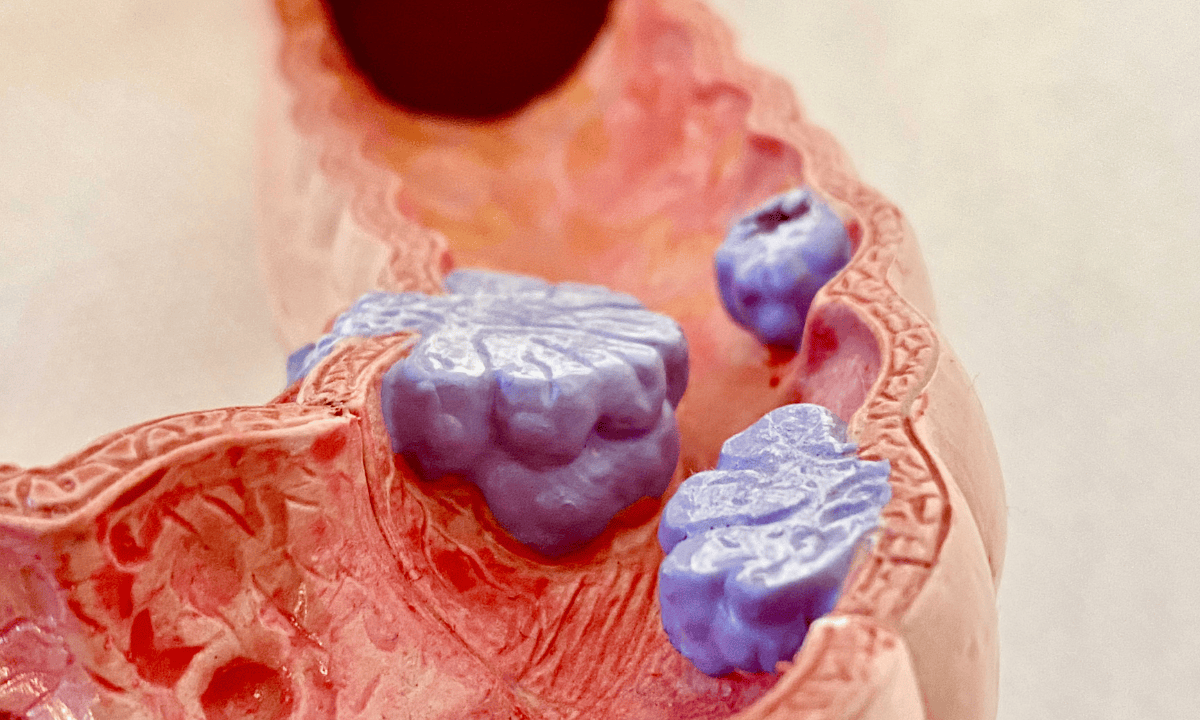
A tumour is a mass of tissue that forms when cells grow and multiply in an abnormal way. Like polyps, tumours can appear in many parts of the body and can be either benign (non-cancerous) or malignant (cancerous).
A benign tumour stays in one place and is unlikely to spread. A malignant tumour, however, can invade nearby tissue or travel to other parts of your body.
What is the difference between a tumour and a polyp?
The two terms are sometimes used interchangeably, but they describe different types of growths with different implications for your health.
Here's how they compare:
Polyp | Tumour | |
What it is | A small growth on the lining of an organ | A mass of abnormal tissue |
Cancerous? | Usually not | Can be benign or malignant |
Does it spread? | Rarely | Malignant tumours can spread to other organs |
How it is found | Often during routine screening | Imaging scan, biopsy, or physical examination |
What happens next | Monitored or removed | Surgery, radiotherapy, chemotherapy, or monitoring – depending on type |
The key difference is their behaviour. A polyp tends to stay small and localised. A malignant tumour can grow and spread. That said, in some cases a polyp can slowly develop into a tumour over time.
Can a polyp turn into a tumour?
If you have been told you have a polyp, it does not mean you will definitely develop cancer. Most polyps remain harmless throughout a person's life. A small number, however, can slowly change over time if left undetected – which is why your doctor may recommend removing it early, even if it looks benign.
How long does it take for a polyp to become cancerous?
The process is generally slow. Most polyps that do become cancerous take around 10 to 15 years to do so. This long timeframe is why regular screening programmes are effective – they catch polyps during the benign stage, well before cancer develops.
What causes polyps to become cancerous?
Not all polyps carry the same risk. Several factors influence whether a polyp is likely to remain harmless or develop into something more serious over time.
The main risk factors include:
Size:
Larger polyps carry a higher risk than smaller ones.
Type:
Some polyp types, such as adenomas, are more likely to become cancerous than others.
Number:
Having multiple polyps increases your overall risk.
Family history:
If a close relative has had colorectal cancer or polyps, your risk may be higher.
Lifestyle factors:
Smoking, a diet high in processed meat, low physical activity, and obesity have all been linked to a higher risk.
Having one or more of these factors does not mean a polyp will become cancerous. It simply means your doctor may want to monitor you more closely or recommend removal sooner.
If you have a polyp or a family history of colorectal cancer and are unsure about your next steps, schedule an appointment with Thomson Medical. Our doctors can assess your risk and advise on whether closer monitoring or early removal is right for you.
What are the symptoms of a cancerous polyp?
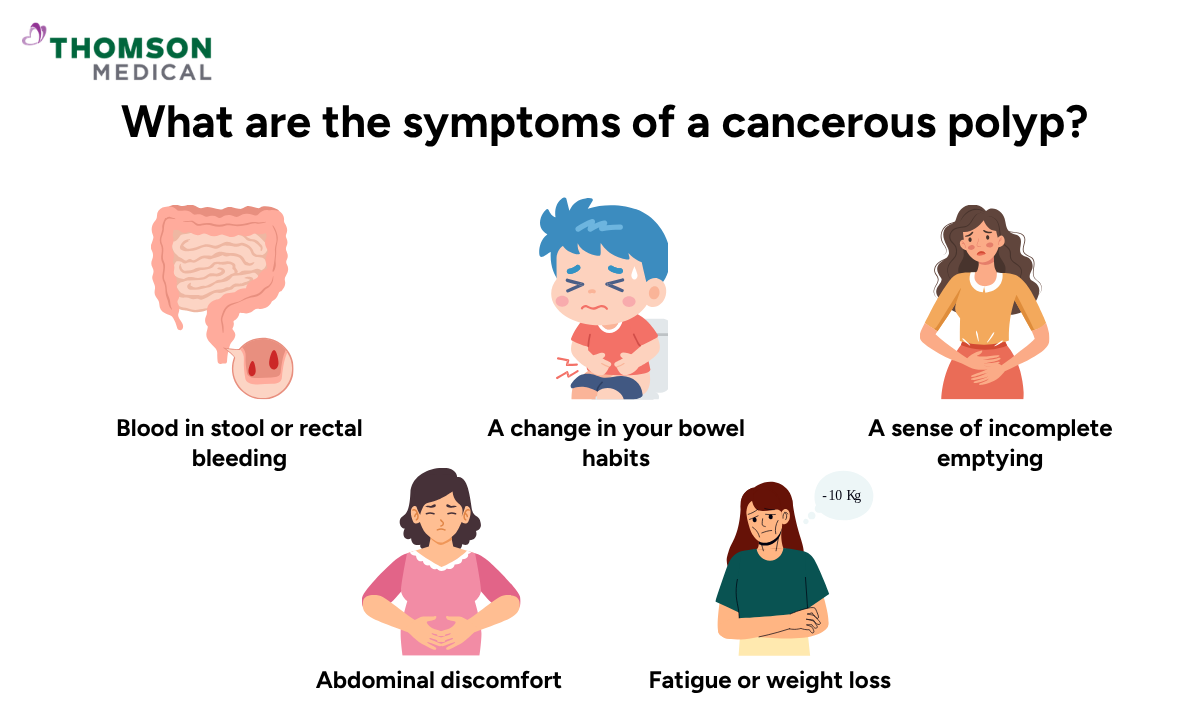
Most polyps cause no symptoms. When symptoms do appear, they are frequently related to the polyp's size or location rather than cancer itself.
You should speak with a doctor if you notice:
Blood in your stool or rectal bleeding, which may appear as bright red blood or cause your stool to look dark or tarry
A change in your bowel habits, such as persistent diarrhoea, constipation, or narrow stools
Abdominal pain, cramping, or bloating that does not go away
A feeling that your bowel has not fully emptied
Unexplained fatigue or weight loss
These symptoms can have many causes and do not necessarily indicate cancer. But if something feels different or has persisted for more than a few weeks, it is always worth getting checked.
Our gastrointestinal specialist in Singapore
Loading...
How are tumours and polyps diagnosed?

Both polyps and tumours are often found before they cause any noticeable symptoms. The diagnostic process depends on the type of growth suspected, but in most cases it involves a combination of physical examination, imaging, and laboratory tests.
How are polyps diagnosed?
Polyps are most commonly detected through a colonoscopy, where a doctor uses a thin, flexible camera to examine the lining of your colon. The procedure is performed under light sedation and usually takes 30 to 60 minutes. If a polyp is found, your doctor can often remove it during the same session.
Other tools used to investigate polyps include:
Blood tests, which may flag anaemia or other markers worth investigating
Stool tests, which can detect trace amounts of blood not visible to the naked eye
How are tumours diagnosed?
Your doctor may arrange a CT scan or MRI scan to assess the tumour’s size and position and whether it has spread. A biopsy, where a small tissue sample is examined, is usually needed to confirm whether it is benign or malignant.
Whatever your results show, your doctor will explain what they mean and guide you on next steps.
Finding a polyp can feel unsettling, but for most people it is simply something to discuss and monitor with their doctor, not a cause for alarm. The fact that it has been found means you already have the information you need to take the next step, whatever that looks like for you.
If you are unsure what your diagnosis means or would like a clearer picture of what comes next, schedule an appointment with Thomson Medical. Our doctors can walk you through your results and recommend a suitable approach for your situation.
FAQ
Do all polyps need to be removed?
Not always. Your doctor will assess the size, type, and location of the polyp before recommending next steps. Some are removed immediately during a colonoscopy, while others may simply be monitored over time.
Can a polyp be benign?
Yes, and most are. A benign polyp is non-cancerous and does not spread. Your doctor will usually confirm this through a biopsy after removal.
Do polyps always cause symptoms?
No. Most polyps cause no symptoms at all, which is why they are often discovered during routine screening rather than because something felt wrong.
Does a cancerous polyp mean I have colon cancer?
Not necessarily. A cancerous polyp means abnormal cells have been found in that growth, but it does not always mean cancer has spread beyond it. Your doctor will carry out further tests to understand the full picture.
How often should I get screened if I've had polyps before?
This depends on the type, size, and number of polyps found. Your doctor will recommend a personalised screening schedule based on your individual situation.
What is the treatment for a precancerous or cancerous polyp?
In many cases, removing the polyp during a colonoscopy is sufficient. If further treatment is needed, your doctor will discuss the options with you based on what was found.
The information provided is intended for general guidance only and should not be considered medical advice. For personalised recommendations based on your medical conditions, request an appointment with Thomson Medical.
For more information, contact us:
Thomson Medical Concierge
- 8.30am - 5.30pm
- WhatsApp: 9147 2051
Need help finding the right specialist or booking for a group?
Our Medical Concierge is here to help you. Simply fill in our form, and we'll check and connect you with the right specialist promptly.
Notice:
The range of services may vary between Thomson clinic locations. Please contact your preferred branch directly to enquire about the current availability.
Get In Touch