

Ear pain that lingers for days or arrives suddenly alongside a fever or ear discharge can be worrying – especially when it involves a young child. It is natural to wonder whether something more serious is going on or whether waiting it out is safe.
Most cases of ear pain are not dangerous and settle with the right care. But some symptoms do need prompt attention, and knowing which ones can help you feel more confident about the next step. Understanding what is likely behind the discomfort and when to see a doctor can bring you a little peace of mind.
Why does your ear hurt?
Ear pain can come on suddenly in the middle of the night or creep up gradually over a few days – and whether it is a sharp sting, a dull throb, or a feeling of pressure that will not shift, it tends to demand your attention.
The reason ear pain feels so disruptive is simple: your ear is richly supplied with nerves. That same sensitivity that makes your hearing so precise also makes the ear quick to register discomfort – sometimes from a problem inside the ear and sometimes from somewhere else entirely, like your jaw, teeth, or throat.
Common causes of ear pain
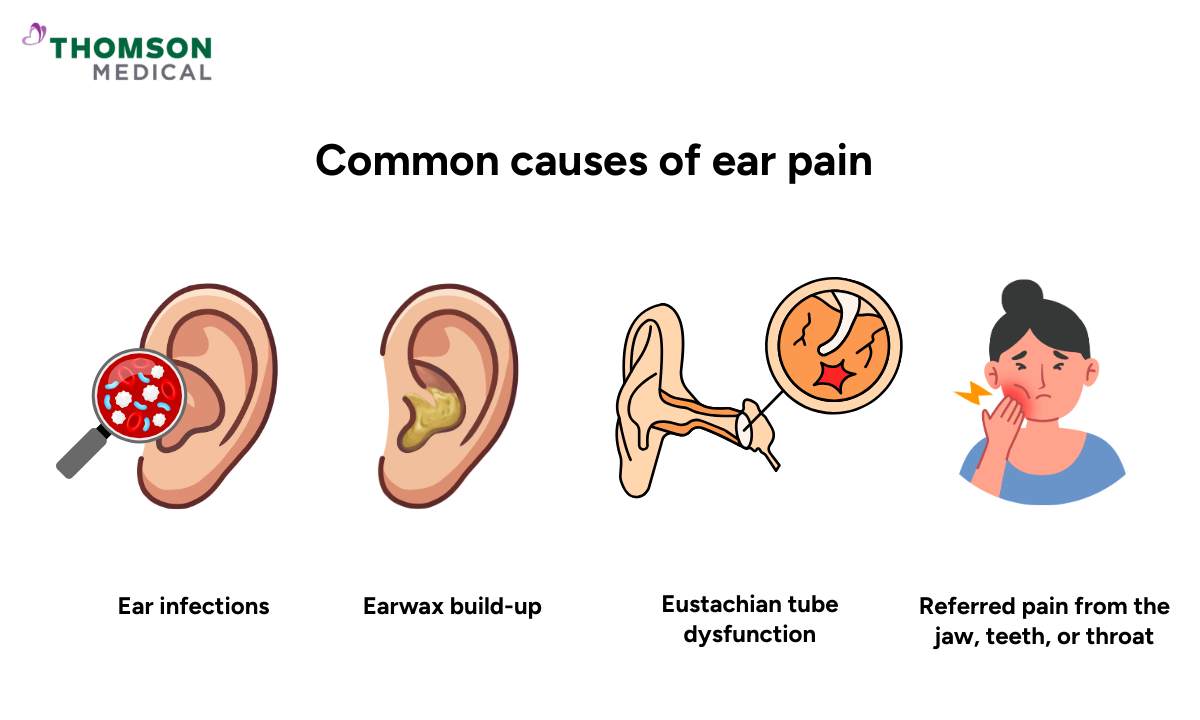
Ear pain can stem from several different sources. Some causes sit directly within the ear, while others originate nearby and send discomfort your way. Knowing what is behind your symptoms can make it easier for you to find the right relief.
Ear infections
Ear infections are one of the most frequent causes of ear pain, particularly in young children. They occur when bacteria or viruses inflame the middle ear – the space just behind your eardrum – often following a cold or blocked nose.
You might notice a sharp or throbbing pain, a feeling of fullness, or muffled hearing. In children, look out for tugging at the ear, unusual fussiness, or trouble sleeping. Many mild cases settle on their own with time and rest, though young children may sometimes need extra support from a doctor.
Earwax build-up
Earwax plays a natural protective role – it traps dust and debris before they can travel deeper.
But when it accumulates or becomes impacted, it can press against the ear canal and cause pain, a blocked sensation, or muffled hearing. It is more common than you may realise – and often made worse by cotton buds, which tend to push wax deeper rather than remove it.
Softening ear drops are usually the first step, and a doctor can safely clear any stubborn blockage if needed.
Eustachian tube dysfunction
The Eustachian tube is a tiny passage that links your middle ear to the back of your throat. It helps balance pressure in your ear and drain away any fluid that builds up. When it gets blocked or swollen – usually due to a cold, allergies, or sinus congestion – pressure builds inside the ear, causing pain or that familiar "stuffed up" feeling.
You might also notice a popping or crackling sound when you swallow or the urge to make your ear pop. Symptoms often settle once the congestion clears, though some people need a little extra help to get there.
Referred pain from the jaw, teeth, or throat
Sometimes ear pain has nothing to do with the ear itself. The nerves that run through your ear also pass through your jaw, teeth, and throat, meaning pain from any of these areas can travel and feel like it is coming from deep inside your ear.
A dental issue, jaw tension, tonsillitis (the inflammation of the tonsils), or a sore throat can all cause this kind of discomfort. If your ear seems fine on the outside but the ache lingers, it is worth thinking about whether something nearby might be the real culprit.
Ear pain does not always fit neatly into one category, and sometimes more than one thing is going on at once. If you are unsure what is behind your discomfort, a doctor can help piece it together and point you in the right direction.
Our ENT specialist
Loading...
Ear pain in children vs. adults
Ear pain can affect anyone, but it does not always look or feel the same depending on age. Recognising the differences can help you respond with more confidence, especially when a young child cannot quite tell you what is wrong.
Ear pain in children

Children, particularly those under five, are more prone to ear infections than adults. This is partly because their Eustachian tubes are shorter and more horizontal, making it easier for fluid and bacteria to reach the middle ear.
Young children cannot always describe what they are feeling. Instead of saying their ear hurts, they might show it in other ways, such as:
Pulling or tugging at one or both ears
Becoming unusually clingy or irritable
Difficulty sleeping or settling
A mild fever or reduced appetite
Seeming generally "off" without an obvious reason
Older children are usually better at pointing to the pain, which makes it easier to act quickly. When in doubt, it is always worth getting a child's ear checked, as ear infections in young children can sometimes need treatment to prevent complications.
Ear pain in adults
Adults are less likely to get middle ear infections, but ear pain is still fairly common. It is more likely to stem from earwax build-up, Eustachian tube dysfunction, or referred pain from the jaw, teeth, or throat.
Many people describe their ear pain as pain that worsens when chewing or discomfort that came on after a flight or a bad cold. If your ear pain persists for more than a few days or comes with hearing loss, it is worth seeing a doctor.
If your child is showing signs of ear discomfort but cannot tell you what is wrong, or if your own ear pain has been lingering longer than expected, schedule an appointment with Thomson Medical. Our doctors can examine what is going on and point you in the right direction.
How to relieve ear pain at home
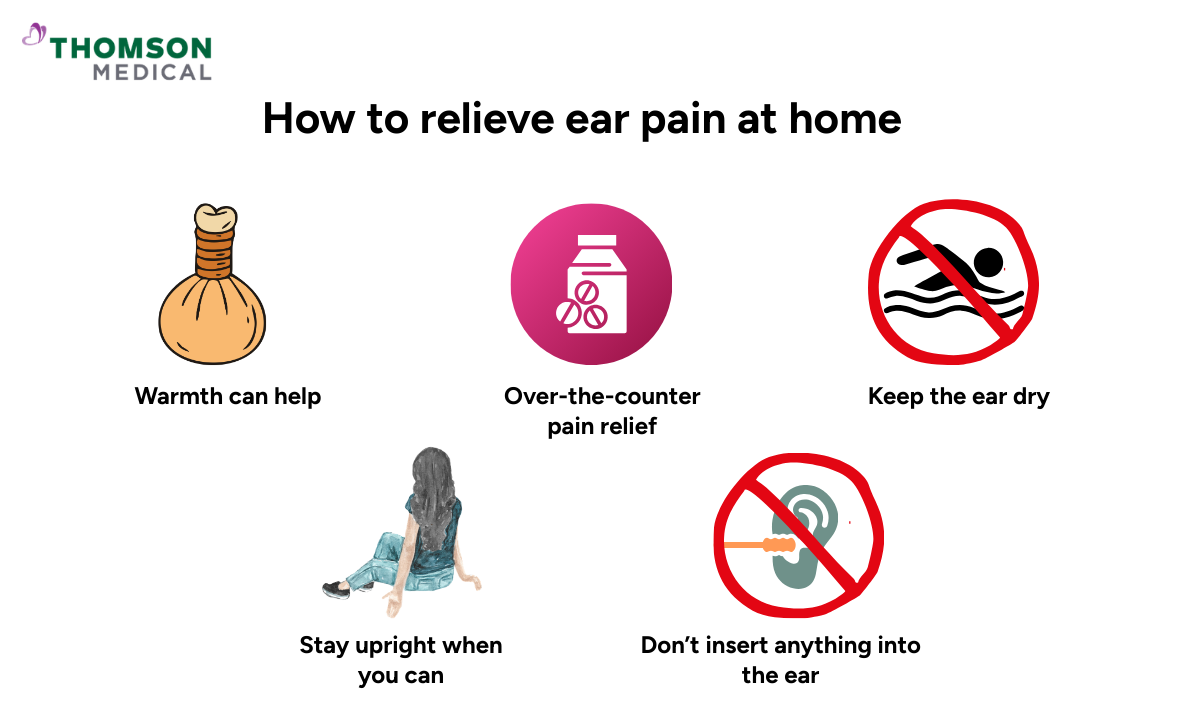
Not all ear pain needs an immediate visit to the doctor.
For mild discomfort, there are a few simple things you can do at home to ease the pain while your body heals:
Warmth can help:
A warm compress or a hot water bottle held gently against the ear can soothe aching and reduce that uncomfortable feeling of pressure.
Do this for 10 to 15 minutes at a time as needed.
Over-the-counter pain relief:
Paracetamol or ibuprofen can help manage pain and reduce inflammation.
Always follow the recommended dosage, and use the appropriate formulation for children.
Keep the ear dry:
Moisture can aggravate irritation, especially if your ear canal is already inflamed.
Try to avoid swimming and be gentle when showering.
Stay upright when you can:
Lying flat can increase pressure in the middle ear.
Propping yourself up slightly, especially when sleeping, may make things more comfortable.
Do not insert anything into the ear:
Cotton buds, fingers, or any other object can push wax deeper or damage the delicate lining of the ear canal.
These measures can offer real relief for mild cases, but they are not a substitute for medical care if symptoms are severe, worsening, or lasting more than a couple of days.
When to see a doctor for ear pain
While most ear pain settles on its own within a few days, there are times when it is important to get things checked rather than waiting it out.
See a doctor if you or your child experiences any of the following:
Ear pain that lasts more than two to three days without improvement
A high fever alongside ear pain, particularly in young children
Discharge or fluid coming from the ear
Sudden or significant hearing loss
A feeling of dizziness or loss of balance
Severe or rapidly worsening pain
Ear pain after a head injury
Swelling, redness, or tenderness around or behind the ear
For young children, it is always better to err on the side of caution. Babies under six months with any sign of ear discomfort should be seen by a doctor promptly.
If your ear pain keeps coming back, or you have noticed it alongside jaw pain, difficulty swallowing, or a lump in the neck, it is worth getting it looked at – even if the pain itself feels manageable. These are the kinds of symptoms that are always better checked early, and a doctor can help put your mind at rest.
If your ear pain keeps coming back or comes with other symptoms you are not sure about, schedule an appointment with Thomson Medical. Our doctors can assess what is going on and recommend an approach suited to your situation.
FAQ
What does it mean if my ear pain comes with hearing loss?
Hearing loss alongside ear pain can point to fluid in the middle ear, an earwax blockage, or an infection. In most cases it is temporary and resolves once the cause is treated. Sudden or significant hearing loss, however, should always be assessed by a doctor promptly.
Can a sore throat or toothache cause ear pain?
Yes. The nerves serving your ear also run through your jaw and throat, so pain from a toothache, dental abscess, or tonsillitis can register as ear pain. If both appeared around the same time, the two are likely connected.
Is it safe to use ear drops without seeing a doctor first?
Softening drops for earwax are generally safe to use at home. However, if you suspect a perforated eardrum, have had ear surgery, or are unsure what is causing your pain, check with a doctor first. Using the wrong product on a damaged ear can make things worse.
How do I know if my child's ear pain needs medical attention?
See a doctor if your child has a fever alongside ear pain, seems in significant discomfort, or is not improving after a day or two. Babies under six months with any sign of ear pain should always be seen promptly.
What will the doctor do when I come in for ear pain?
Your doctor will ask about your symptoms and look inside your ear using a small instrument called an otoscope to check the ear canal and eardrum.
Depending on what they find, they may recommend ear drops, medication, or a gentle procedure to clear any blockage. Most people find the appointments are quick and straightforward.
Can flying or swimming cause ear pain?
Yes, both can. Cabin pressure changes during a flight can cause discomfort or a blocked sensation in the middle ear. Swimming can allow water into the ear canal, leading to irritation or infection. Swallowing or yawning during take-off and landing, and wearing earplugs while swimming, can both help.
The information is intended for general guidance only and should not be considered medical advice. For personalised recommendations and advice based on your unique situation, please consult a specialist at Thomson Medical. Request an appointment with Thomson Medical today.
For more information, contact us:
Thomson Medical Concierge
- 8.30am - 5.30pm
- WhatsApp: 9147 2051
Need help finding the right specialist or booking for a group?
Our Medical Concierge is here to help you. Simply fill in our form, and we'll check and connect you with the right specialist promptly.
Notice:
The range of services may vary between Thomson clinic locations. Please contact your preferred branch directly to enquire about the current availability.
Get In Touch