
.png%3Fbranch%3Dprod&w=3840&q=75)
That nagging pain in your upper abdomen has been coming and going, and part of you wonders whether it's something you should be worried about – especially when it keeps coming back after meals or catches you off guard in the middle of the day. It's completely natural to feel unsettled when you can't quite figure out what's causing it.
In many cases, epigastric pain is a manageable symptom related to digestive health, and most underlying causes require professional evaluation to determine the effective management plan.
Knowing what's behind the discomfort, which symptoms are worth monitoring, and when to see a doctor can make all the difference between anxious guessing and feeling in control of your health.
What is epigastric pain?
.png?branch=production)
Epigastric pain is discomfort felt in the upper central part of your abdomen. This is the area located beneath your rib cage, specifically just below your breastbone and above your navel. This region sits close to several important organs, including your stomach, lower oesophagus, pancreas, and parts of your liver and gallbladder.
Because so many organs share this space, epigastric pain can have a range of causes. The discomfort itself may feel different based on the underlying cause. Some people notice a dull, heavy sensation after eating, while others experience a sharper or burning pain that comes and goes.
What causes epigastric pain?
Epigastric pain is usually a sign that something else is going on in your digestive system or nearby organs. The causes can range from common, everyday issues to conditions that require medical attention.
Acid reflux and GERD
Acid reflux occurs when stomach acid flows back up into your oesophagus – the tube that carries food from your mouth to your stomach – causing a burning sensation in your upper abdomen or chest.
When this happens regularly, it may be diagnosed as gastro-oesophageal reflux disease (GERD). Large meals, certain foods, and lying down shortly after eating can all make symptoms worse.
Gastritis and stomach ulcers
Gastritis is inflammation of your stomach lining, commonly caused by a bacterial infection (Helicobacter pylori), prolonged use of pain relief medications, or excessive alcohol. If the lining becomes further damaged, ulcers may develop.
Both conditions tend to cause a gnawing or burning discomfort, which can be more noticeable on an empty stomach.
Indigestion (dyspepsia)
Indigestion is one of the most common causes of upper abdominal discomfort. It may feel like bloating, fullness, or general unease – often after eating too quickly, having a rich meal, or during periods of stress. While usually harmless, having persistent indigestion is worth discussing with your doctor.
Hiatal hernia
A hiatal hernia occurs when part of your stomach pushes up through your diaphragm into the chest cavity, causing heartburn, pressure, and discomfort after meals. Many people live with one without realising it, though symptoms can become more noticeable over time.
Pancreatitis
Your pancreas sits just behind your stomach, and when it becomes inflamed, it can cause sudden, sharp pain in the upper abdomen that may spread to your back. Symptoms often worsen after eating, particularly with fatty foods, and may be accompanied by nausea or vomiting. Pancreatitis always warrants prompt medical evaluation.
Gallbladder disease
The gallbladder helps your body digest fats, and when it becomes inflamed or develops gallstones, it can cause sudden pain in your upper abdomen – often after a fatty meal. The discomfort may also radiate towards the right shoulder or back. If you notice this pattern recurring, it's worth speaking with a doctor.
Heart-related causes
Not all epigastric pain originates from the digestive system. In some cases, upper abdominal discomfort can be associated with your heart – particularly during a heart attack, where pain may be felt in your abdomen rather than, or alongside, your chest. This is especially relevant for women, who may experience more subtle cardiac symptoms.
Identifying the underlying cause of epigastric pain is essential for determining the appropriate treatment and preventing complications.
If your symptoms are persistent, worsening, or simply worrying you, speaking with a doctor is always a reasonable next step.
If you've been experiencing recurring upper abdominal pain and aren't sure what's causing it, schedule an appointment with Thomson Medical. Our specialists can help pinpoint the cause and recommend the right treatment for you.
Symptoms that come with epigastric pain
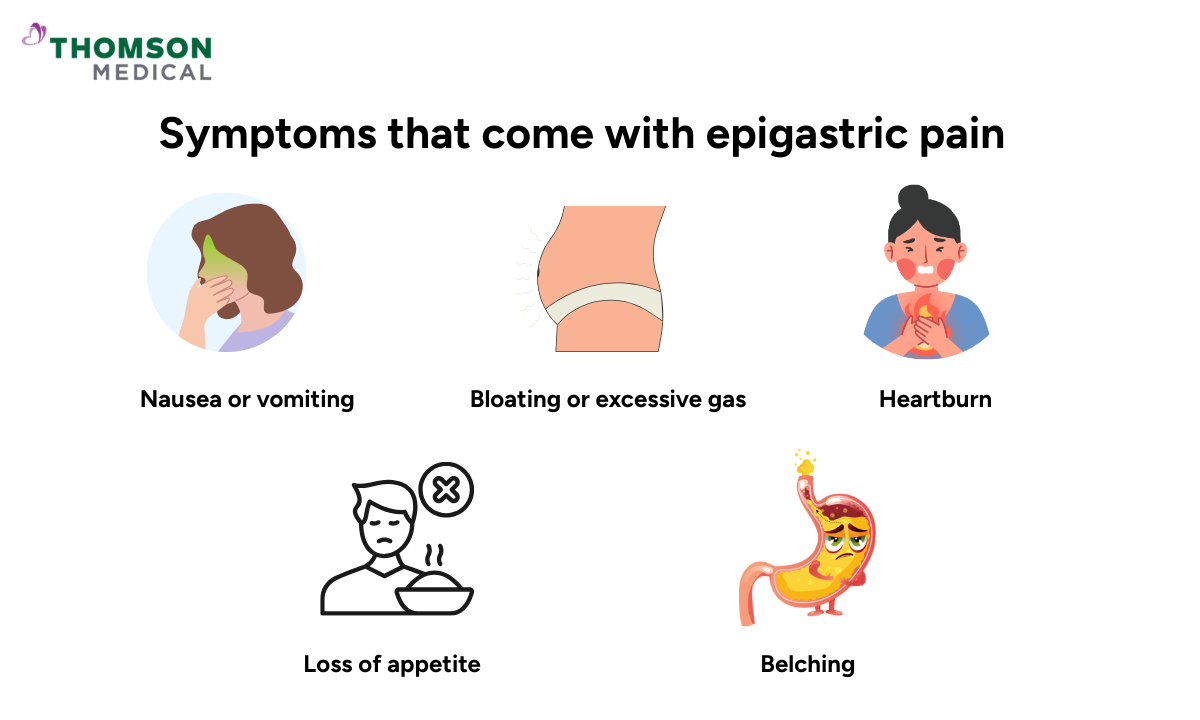
Epigastric pain rarely occurs in isolation. Depending on the underlying cause, you may experience other symptoms that help indicate what is triggering the discomfort.
Common symptoms that may accompany epigastric pain include:
Nausea or vomiting, particularly with gastritis, pancreatitis, or acid reflux
Bloating or excessive gas, often linked to indigestion or digestive conditions
Heartburn, a burning sensation rising from the stomach towards the chest or throat
Loss of appetite, as you may find eating feels uncomfortable or unappealing
Belching, common with acid reflux and indigestion
A feeling of fullness even after eating only a small amount
These symptoms on their own are not always cause for alarm. However, if they are persistent, worsening, or significantly affecting your daily life, it's worth getting them checked out.
When to see a doctor for epigastric pain
Occasional discomfort – such as after a heavy meal – is very common and usually settles on its own. However, some symptoms shouldn't be ignored.
You should see a doctor if your epigastric pain has one of these signs:
It has persisted for more than a few days without improvement
It keeps coming back, even if it eases on its own
It is interfering with your ability to eat, sleep, or go about your day
It is accompanied by unexplained weight loss or loss of appetite
It comes with difficulty swallowing
You should seek urgent medical attention if you experience:
Sudden, severe pain that comes on quickly and does not ease
Vomiting blood or passing dark, tarry stools
Pain radiating to your back, jaw, or left arm
Shortness of breath, sweating, or dizziness alongside upper abdominal pain
These urgent symptoms may indicate a serious condition affecting your heart or other vital organs and should not be waited out.
Our specialists
Loading...
How is epigastric pain diagnosed?
Diagnosis begins with a medical consultation. Your doctor will ask about your symptoms, how long they have been present, what triggers or relieves them, and whether you have any related symptoms. You may also be asked about your diet, medications, and medical history.
Depending on what your doctor suspects, they may recommend one or more of the following tests:
Blood tests to check for infection, inflammation, or signs of liver, pancreatic, or gallbladder involvement
Stool tests or breath tests to detect a Helicobacter pylori infection, which is a common cause of gastritis and ulcers
Endoscopy, which involves a thin, flexible camera gently passed down your throat to examine the oesophagus and stomach lining directly
Ultrasound to get a clearer view of your gallbladder, liver, and pancreas
Electrocardiogram (ECG) if there is any concern about a heart-related cause
Not everyone will need all of these tests. Your doctor will guide you towards the appropriate next steps based on your individual symptoms and medical history.
If you are experiencing ongoing or unexplained upper abdominal pain, schedule an appointment with Thomson Medical. Our doctors will assess your symptoms and recommend the appropriate tests so you can get a clear answer and the right treatment.
Common treatment approaches for epigastric pain
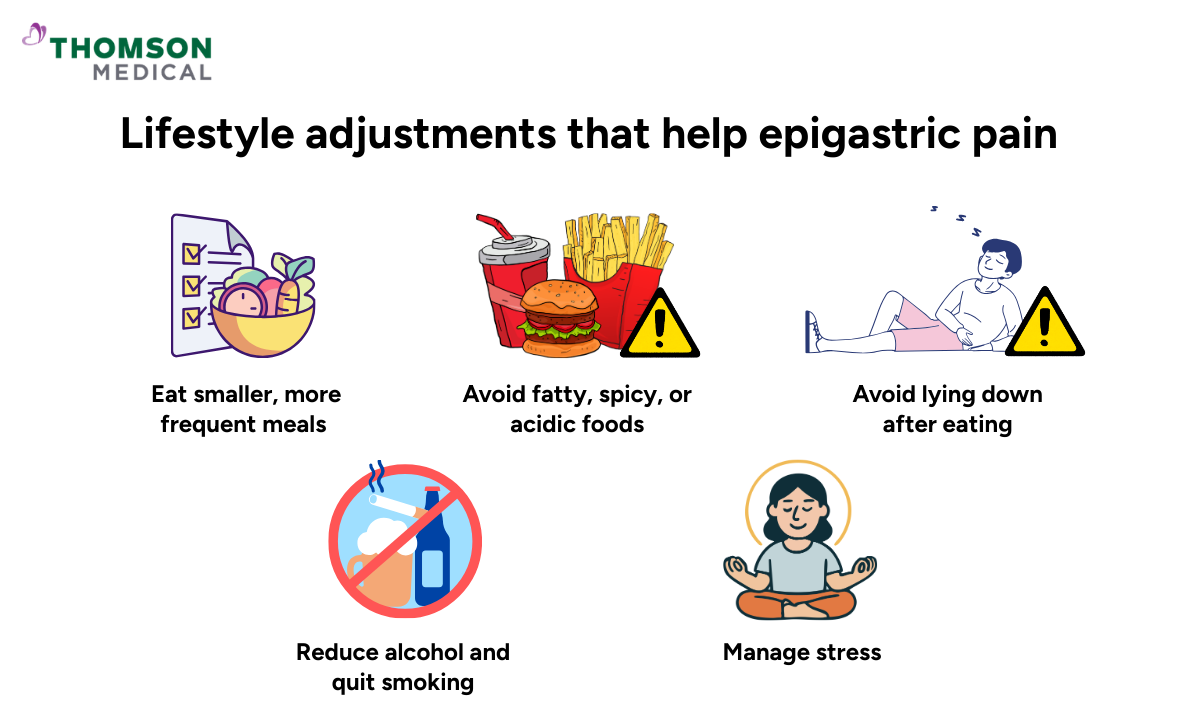
Treatment for epigastric pain depends on the underlying cause – and in many cases, a combination of medication and lifestyle adjustments is enough to bring meaningful relief.
Small changes to your daily habits can make a meaningful difference, particularly for digestive causes, including:
Eating smaller, more frequent meals rather than large ones
Avoiding foods that tend to trigger symptoms, such as fatty, spicy, or acidic foods
Not lying down immediately after eating
Reducing alcohol intake and quitting smoking if applicable
Managing stress, which can have a surprising impact on digestive health
For conditions such as gallstones or a hiatal hernia, a minimally invasive procedure or surgery may be recommended to address the root cause. Your doctor will walk you through all available options and help you find the right path forward.
FAQ
What is the most common cause of epigastric pain?
Indigestion (dyspepsia) and acid reflux are the most frequent culprits, often triggered by eating too quickly, fatty foods, or excess stomach acid.
Is epigastric pain the same as heartburn?
Not exactly. Heartburn is a burning sensation that rises up from your chest, while epigastric pain is more localised to the upper abdomen. That said, acid reflux and GERD can cause both at the same time.
When should I go to the emergency room for epigastric pain?
Seek urgent medical attention if your pain is sudden, severe, or worsening, or if it is accompanied by vomiting blood, black stools, chest pain, difficulty breathing, or dizziness.
Can stress cause epigastric pain?
Yes. Stress and anxiety can increase stomach acid production and disrupt normal digestion, leading to pain, bloating, or discomfort in the upper abdomen.
Does epigastric pain go away on its own?
Mild cases caused by indigestion or overeating often ease on their own within a few hours. However, recurring or persistent pain should always be evaluated by a doctor.
What foods trigger epigastric pain?
Common triggers include spicy, fatty or fried foods, alcohol, caffeine, citrus, and carbonated drinks. Eating large meals or lying down right after eating can also make symptoms worse.
The information provided is intended for general guidance only and should not be considered medical advice. For personalised recommendations based on your medical conditions, request an appointment with Thomson Medical.
For more information, contact us:
Thomson Medical Concierge
- 8.30am - 5.30pm
- WhatsApp: 9147 2051
Need help finding the right specialist or booking for a group?
Our Medical Concierge is here to help you. Simply fill in our form, and we'll check and connect you with the right specialist promptly.
Notice:
The range of services may vary between Thomson clinic locations. Please contact your preferred branch directly to enquire about the current availability.
Get In Touch