

It's 2 a.m., and your child feels burning hot. You've checked their temperature three times, placed a cool cloth on their forehead, and now you're lying awake wondering whether to wait until morning or head to the emergency department.
Fever in children can feel worrying, especially when your child is uncomfortable and restless. The uncertainty of not knowing whether this is something that will resolve on its own or needs urgent attention can leave you feeling helpless.
Most childhood fevers are caused by common viral infections that resolve within a few days. However, knowing what's normal, what warning signs to watch for, and when to seek help can give you the confidence you need while caring for your child with a fever.
What is a fever in a child?
Your child's body is remarkably clever. When it detects harmful bacteria or viruses, it turns up the hypothalamus (your child’s internal thermostat). This higher temperature makes it harder for germs to survive and helps the body's defences work better.
A healthy body temperature is usually around 37°C. In children, a fever is generally considered a temperature above 38°C when measured rectally orabove 37.5°C when taken from the armpit. This rise in temperature is a sign that your child’s immune system is working to fight off an infection.
How to tell if your child has a fever
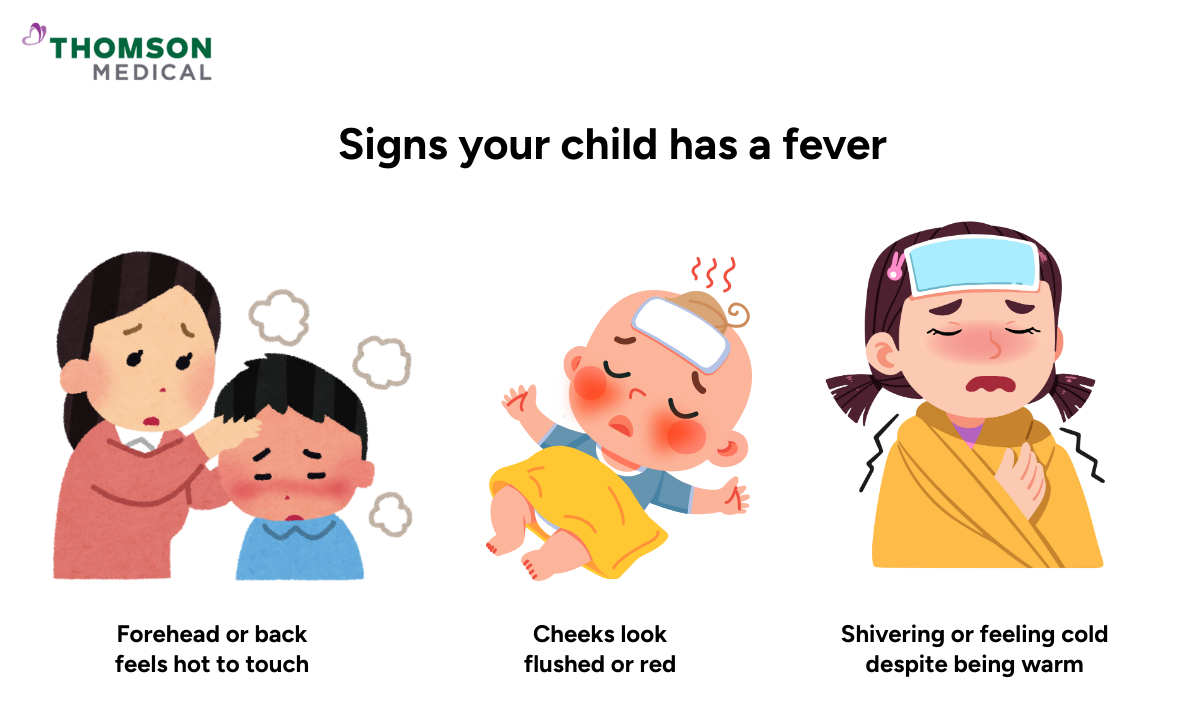
The fever signs help you monitor how your child is coping. A child who's still playing and drinking despite a fever is usually less concerning than one who's tired and refusing fluids, even with a lower temperature.
You might notice several signs that suggest your child has a fever:
Their forehead or back may feel hot when you touch them
Their cheeks might look flushed or redder than usual
They may start shivering or complaining of feeling cold, even though they feel warm to you
The fever itself may make your child feel uncomfortable.
You might see other changes too:
Sweating more than normal
Seeming unusually tired or sleeping much more than usual
Looking paler than normal
Becoming more irritable or crying more easily
Eating and drinking less than usual
Your child may also have other symptoms linked to the cause of the fever, such as a runny nose, cough, sore throat or tummy ache. These can appear before the fever peaks, so you might notice that they’re not acting like their usual self even before you check their temperature.
Our paediatricians in Singapore
Loading...
How to measure your child's temperature
Once you've noticed the fever signs, taking an accurate temperature reading confirms whether your child has a fever. Using the right thermometer makes checking your child's temperature easier and more accurate.
Choosing the right method:
Age | Method | Why |
Under 4 weeks | Armpit or rectal thermometer |
|
Over 4 weeks | Armpit or ear thermometer |
|
Any age | Rectal thermometer |
|
Whichever method you choose, take the temperature at the same site each time (always armpit or always ear) because readings can vary by up to 0.5°C between sites, which can cause confusion when you're trying to track patterns.
What causes fever in children
Recognising what causes fever helps you know what to expect and whether specific treatment might be needed. Most childhood fevers come from common infections that your child's body can handle on its own.
Common causes include:
Viral infections:
Common colds, tummy bugs like gastroenteritis, and infections like dengue fever all fall into this category.
These infections get better with rest and comfort care alone, without needing antibiotics or specific treatment.
Bacterial infections:
Ear infections, chest infections such as pneumonia, and urine infections need antibiotic treatment to clear.
Your doctor can tell the difference through examination and sometimes blood or urine tests.
Vaccination reactions:
Vaccinations can trigger a mild fever as your child's immune system responds to the vaccine.
This is normal and shows the body is building protection.
Your doctor can examine your child and ask about symptoms to pinpoint the likely cause, which helps determine the right approach to treat your child.
If you’re unsure why your child has a fever or want professional guidance on care, request an appointment with Thomson Medical. Our paediatricians can assess your child, identify the cause, and recommend safe, effective steps to manage their symptoms at home.
How long will the fever last?
Most fevers resolve on their own within three to five days. The fever is part of the healing process, not something that needs to be eliminated immediately.
If the fever persists beyond three days or gets higher despite treatment, your doctor needs to investigate further. Fevers lasting longer than three days may indicate bacterial infection or other conditions needing different treatment.
What is the treatment for fever in children?
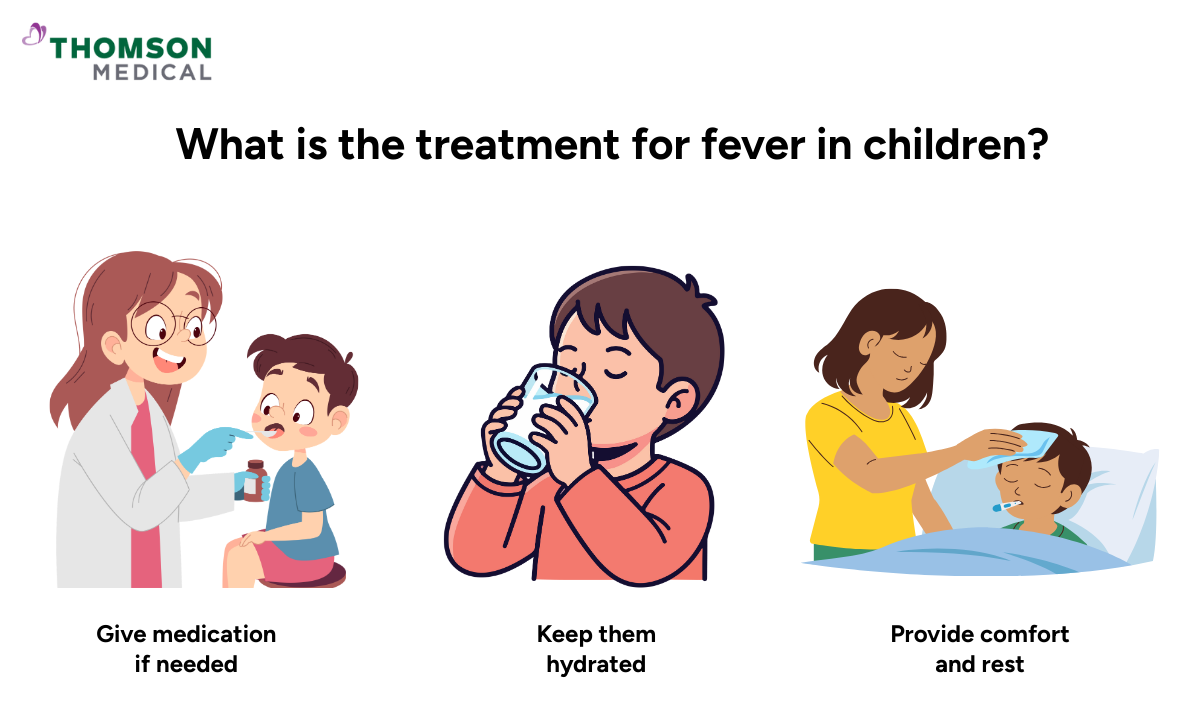
Seeing a high number on the thermometer can be worrying, but the number itself isn’t the main concern. Fever is a sign the body is fighting infection, so focus on keeping your child comfortable, rather than trying to bring the temperature back to normal.
Give medication if needed
For babies under three months old, always speak to your doctor before giving any medication. Young babies need special attention because a fever at this age can signal serious infections.
If your child is over three months old and seems uncomfortable:
Paracetamol:
It can be given from three months old. This comes in liquid, tablet, or suppository form.
Ibuprofen:
This medicine can be given from three months old (if your child weighs over 5 kg).
Your doctor might suggest this if the fever is higher or if paracetamol alone isn't helping.
A child who is sleeping does not need to be woken for medication. Sleep matters more for recovery. Give medicine when they wake naturally if they still seem uncomfortable.
Keep them hydrated
Fever increases fluid loss, which is why your child needs more to drink than usual. Dehydration happens quickly with fever, so frequent small sips work better than large amounts at once.
You can help your child stay hydrated by:
Offering water, diluted juice, oral rehydration solutions, or clear broths
Watching for wet nappies in young children or regular toilet trips in older children. Less frequent urination means they need more fluids.
Giving ice lollies made from diluted juice can work for children who refuse drinks
Even mild dehydration can make your child feel worse, so keeping up fluids helps them recover more comfortably.
Provide comfort and rest
Good home care makes a real difference in how your child feels while their body fights the infection.
Creating a comfortable environment helps your child rest while their body fights infection:
Dress them in light and comfortable clothing
Keep their room at a comfortable temperature (around 18°C to 20°C)
You can offer a lukewarm bath or sponge if they find it soothing, but stop if they start shivering
Allow plenty of rest because extra sleep helps the body fight infection
You don't need to keep the room cold or use fans directly on your child. A comfortably cool room is enough.
Improvement doesn't always mean the fever disappears immediately. Your child might still have a mild temperature but be much brighter, playing, and drinking normally. That's recovery in progress.
If you’re unsure about how to manage your child’s fever, or if they seem unusually uncomfortable despite home care, request an appointment with Thomson Medical. Our paediatric team can guide you to help your child recover safely.
When to seek medical help urgently
While most fevers resolve naturally, certain warning signs mean your child needs immediate medical assessment, even if the fever seems mild.
Bring your child to see a doctor straight away if:
Your child is younger than 3 months old with any fever
The fever lasts more than 3 days
Your child shows severe symptoms such as difficulty breathing, a rash that doesn't fade when you press it, persistent vomiting, severe headache, stiff neck, or extreme drowsiness
Your child has a known medical condition or weakened immune system
These warning signs help distinguish common viral infections that resolve naturally from fever that needs urgent treatment. Most children with fever won't have these signs, but knowing what to watch for means you can act quickly if needed.
Fever in children usually resolves within three to five days. If you feel worried or uncertain at any point, contact your doctor. They can provide advice to help you confidently care for your child through their fever.

FAQ
What is a normal temperature for a child?
A normal body temperature for a child is around 37°C, although it can vary slightly during the day. In general, a fever is defined as a temperature above 38°C when measured rectally, or above 37.5°C when taken from the armpit.
Why is my child's fever higher at night?
Body temperature rises naturally in the evening as part of your body's normal rhythm. A mild high temperature during the day can spike at night, which is why many children feel worse at bedtime. This is normal and doesn't mean the illness is getting more serious.
What is a febrile seizure?
A febrile seizure happens when a child's body temperature rises quickly, causing their body to shake or jerk uncontrollably. Whilst frightening to watch, febrile seizures are usually harmless and don't cause lasting damage.
They're most common in children between six months and five years. If your child has a seizure, place them on their side and call for medical help.
Can teething cause a high fever?
Teething may cause a slight rise in temperature, but rarely above 38°C. If your child has a high temperature above this, it's more likely due to a viral infection than teething. Don't assume fever is just from teething without checking for other symptoms.
Should I wake my child to give fever medicine?
No, let your child sleep unless your doctor has specifically advised otherwise. Sleep helps the immune system fight infection. If your child is resting comfortably, that's more beneficial than waking them for medication.
What are signs of dehydration in a child with a fever?
Watch for a dry tongue, no tears when crying, fewer wet nappies or reduced urination, sunken eyes, or persistent sleepiness. These signs suggest dehydration and need medical attention. Keeping your child hydrated is one of the most important things you can do during a fever in children.
The information provided is intended for general guidance only and should not be considered medical advice. For personalised recommendations and tailored advice based on your unique situations, please consult a specialist at Thomson Medical. Request an appointment with Thomson Medical today.
For more information, contact us:
Thomson Paediatric Centre
- Thomson Medical Centre (TPC1), #03-06:
6258 3353 (Call) - Thomson Medical Centre (TPC4), #01-03:
6259 7667 (Call) - Jurong:
6665 1000 (Call) - Marine Parade:
6636 3808 (Call) - Punggol:
6341 6000 (Call) - Woodleigh:
8874 3970 (WhatsApp)
Thomson Medical 24-Hour Urgent Care Centre (Novena)
- Call: 6350 8812
Notice:
The range of services, vaccinations, and tests may vary. Please contact us directly to enquire about the current availability.
Request an Appointment