

A first-degree burn can happen quickly, whether from touching a hot surface, brief sun exposure, or contact with heated appliances. Even though these burns affect only the outer layer of skin, they can cause redness, tenderness, and discomfort that may leave you unsure about what to do next.
The good news is that many first-degree burns heal with simple home care. However, recognising signs that need medical assessment is important to ensure safe recovery.
Understanding how first-degree burns occur, what symptoms are typical, and when to seek medical advice can help you manage minor burns confidently while knowing when additional care may be helpful.
What is a first-degree burn?
A first-degree burn, also called a superficial burn, affects only the outermost layer of your skin (the epidermis).
Your skin has several layers that protect your body, and a first-degree burn damages just the top one. This is the mildest type of burn, and your skin can usually repair itself within a few days to a week.
Symptoms of a first-degree burn
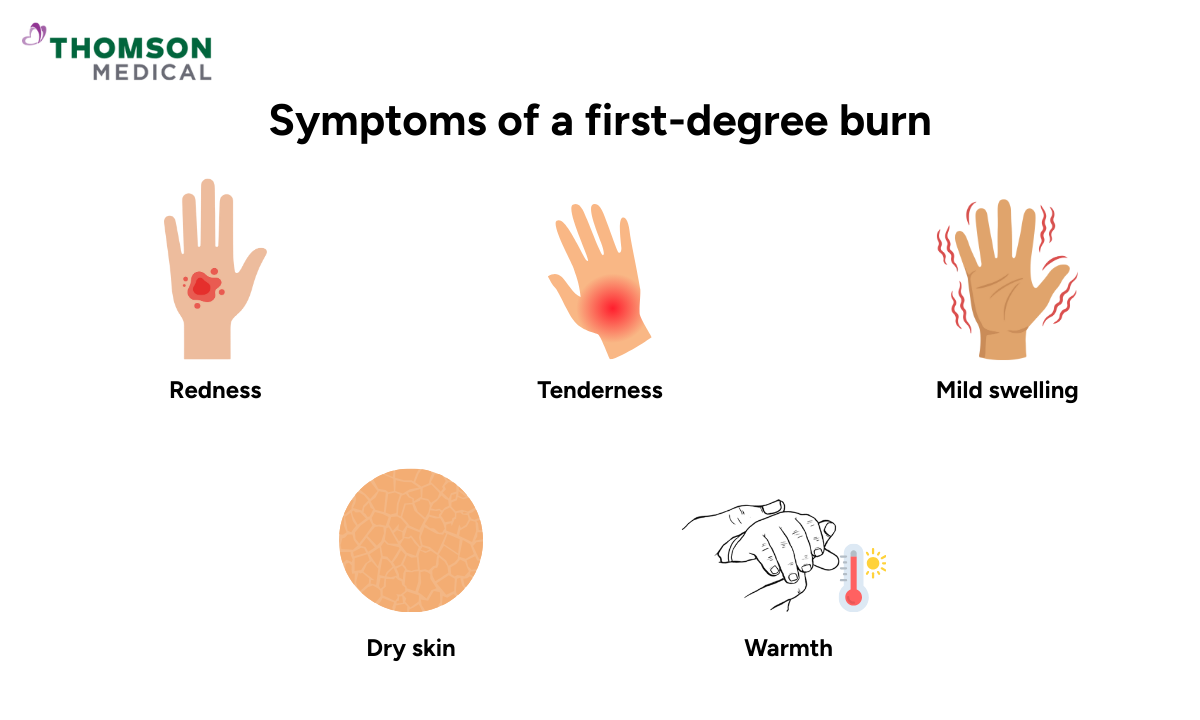
First-degree burns have several clear signs that you can recognise straight away.
You'll notice these symptoms at the burn site:
Redness:
The affected area will appear red or pink, similar to a sunburn
Pain or tenderness:
The area will feel sensitive to touch, and you may experience a stinging or burning sensation
Mild swelling:
The skin around the burn may puff up slightly as your body responds to the burn injury
Dry skin:
Unlike deeper burns, the skin remains dry without blisters or open wounds
Warmth:
The affected area may feel warm or hot to the touch
In fact, these symptoms are your body's natural response to the injury. Your skin is working to protect itself and start the healing process. The redness comes from increased blood flow to the area, bringing healing cells to help repair the tissue damage. The pain, while uncomfortable, is actually your body's way of telling you to protect the area while it heals.

Common causes of first-degree burns
First-degree burns can happen during everyday activities, often when you least expect them. Being aware of common causes can help you stay safe and respond quickly if a burn occurs.
You should be aware of:
Heat sources:
Briefly touching hot surfaces like cookers, irons, or hairdryers
Accidental contact with hot liquids like tea, coffee, or hot water
Steam from boiling pots or kettles
Sun exposure:
Spending extended time outdoors without adequate sun protection
Sunburn from UV rays, especially during peak hours (10am to 4pm)
Reflected sunlight from water, sand, or snow
Other common causes:
Friction burns from rubbing against rough surfaces
Brief contact with mild chemical irritants
Short exposure to very cold objects (sometimes called "cold burns")
Many of these situations happen in daily life, such as while you are cooking dinner, doing the ironing, or just simply enjoying a sunny day. However, being mindful of these common causes means you can often prevent burns or at least catch them early.
Preventing first-degree burns
Many first-degree burns are preventable with simple awareness and a few practical safety measures. Small changes to your daily routine can make a real difference.
In the kitchen
Turn pot handles towards the back of the cooker
Use oven mitts when handling hot items
Keep hot drinks away from the edge of tables and counters
Test food and drinks before giving them to children
Sun protection
Apply broad-spectrum sunscreen (SPF 30 or higher) before going outdoors
Reapply sunscreen every two hours and after swimming or sweating
Wear sun-protective clothing, hats, and sunglasses on sunny days
Seek shade during peak sun hours
Around the home
Check the temperature of bathwater before getting in
Keep electrical appliances away from water
Store matches and lighters safely out of children's reach
Be careful with hairdryers, straighteners, and other heated styling tools
Taking these precautions doesn't mean living in fear. It's about being mindful in everyday situations so you can go about your day with confidence and peace of mind.
How to care for a first-degree burn at home
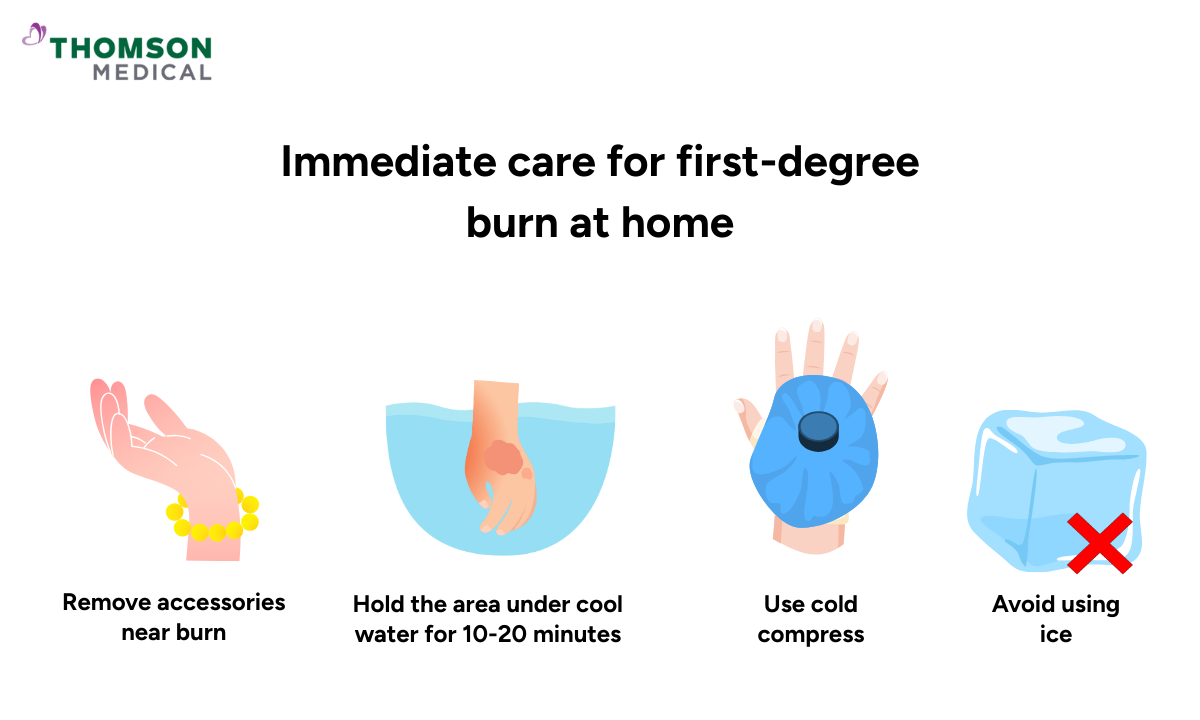
Most first-degree burns can be treated safely at home with a few simple steps. Acting quickly and providing gentle, prompt care can ease your discomfort and help your skin heal naturally.
Immediate care (First 10 to 20 minutes)
Start by cooling the burn as soon as possible. This helps reduce pain and limits damage to your skin.
Hold the affected area under cool (not cold) running water for 10-20 minutes
If running water isn't available, apply a clean, cool compress
Remove any jewellery, watches, or tight clothing near the burn before swelling starts
Avoid using ice, ice water, or very cold compresses, as these can damage your skin further
After initial cooling
Once you've cooled the burn, focus on keeping the area clean and protected.
Gently pat the area dry with a clean, soft towel
Apply a thin layer of aloe vera gel or a gentle moisturiser to soothe the skin
Cover the burn loosely with a sterile, non-stick gauze dressing if needed
Take over-the-counter pain relief if you're uncomfortable (always follow the packet instructions)
What you should avoid
It's natural to want to do everything you can to help the burn heal. However, some well-meaning remedies can actually slow recovery or increase the risk of infection.
Here’s what you should avoid:
Don't apply butter, oils, or home remedies like toothpaste, as these can trap heat and increase the risk of infection
Don't pop any small blisters that might form (though true first-degree burns rarely blister)
Don't use fluffy cotton wool directly on the burn, as fibres can stick to the wound
Avoid covering the burn too tightly, as air circulation helps healing
Your body is already working to repair the damage. That means these care steps simply create the right environment for healing to happen naturally and comfortably.
What to expect during healing
Understanding the healing process can help you know what's normal and what might need attention. First-degree burns typically heal in stages over 3-7 days.
Days 1-2: Immediate Response
Your skin will be red and tender. You may notice slight swelling. This is your body's natural inflammatory response, bringing healing cells to the area.
Days 3-5: Active Healing
The redness begins to fade. The area may feel itchy as new skin cells form. You might notice some peeling skin, and this is actually normal.
Days 6-7: Final Stages
The burn site returns to a more normal appearance. Some slight pinkness may remain for a week or two before fading completely. Your skin should feel comfortable again.
Throughout the healing process, keep the area clean and moisturised. You should always avoid scratching, even if it itches. If healing seems slower than expected or you notice any concerning changes, reach out to a healthcare professional for guidance.
Dealing with a first-degree burn can feel unsettling, especially when it happens unexpectedly. But knowing how to respond calmly and properly caring for the burn makes all the difference.
Your skin is remarkably resilient, and with the right care, most first-degree burns heal completely without lasting effects. Remember, small burns are a normal part of life, and treating them is usually straightforward.
Our urgent care specialists
Loading...
When to seek urgent care
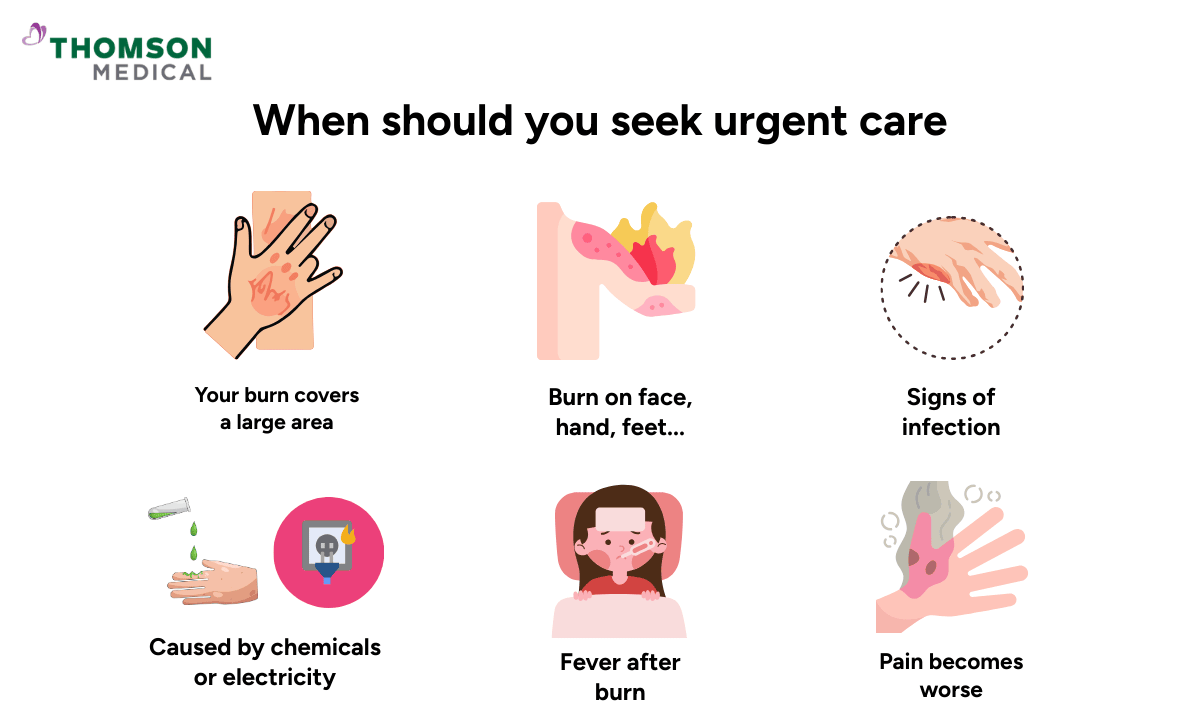
While most first-degree burns heal on their own, certain situations require professional medical attention. Knowing when to reach out ensures you get the right support when you need it.
You should seek urgent care if:
The burn covers a large area (bigger than your palm)
The burn is on your face, hands, feet, genitals, or over a joint
You notice signs of infection: increasing pain, redness spreading beyond the burn, pus, or red streaks
The burn was caused by chemicals or electrical sources (even if it looks minor)
You develop a fever or feel unwell after the burn
The pain becomes worse instead of better after a day or two
You have diabetes, a weakened immune system, or other health conditions that affect healing
Moreover, you should also see a doctor if:
The burn hasn't started to heal within 48 hours
You're unsure about the severity of the burn
You're pregnant or the burn affects a child or elderly person
If something doesn't feel right or you're worried about the burn, it's always appropriate to seek medical advice and urgent care. Support is always available and can check that everything is healing as it should.
FAQ
Can you put aloe vera on a first-degree burn?
Yes, you can. Pure aloe vera gel is gentle and soothing on first-degree burns.
After you've cooled the burn under running water and patted it dry, a thin layer of aloe vera can help ease discomfort and keep the skin moisturised. Just make sure it's pure aloe vera gel rather than a product with lots of added ingredients.
If you notice any stinging or irritation when you apply it, rinse it off gently and stick to plain cool water instead.
What does a first-degree burn look like?
A first-degree burn will appear red or pink, similar to a sunburn. The affected area might look slightly swollen and feel warm to the touch.
Unlike more serious burns, the skin stays intact because you won't see any blisters or broken skin. It will feel tender and sensitive, especially when you touch it or if clothing rubs against it. The redness is your body's way of sending extra blood to the area to help it heal.
Will a first-degree burn go away on its own?
Yes, it will. Your skin is remarkably good at repairing itself, and first-degree burns typically heal completely within 3 to 7 days without any lasting marks.
You might notice the top layer of skin peeling away as it heals and this is completely normal. The key is keeping the area clean, moisturised, and protected while your body does its work. If you're still seeing redness or feeling pain after a week, it's worth checking in with a doctor to make sure everything's healing as it should.
Should you cover a burn or let it breathe?
Both approaches can work, depending on where the burn is and what feels more comfortable for you.
If the burn is in an area that might rub against clothing or get dirty, covering it loosely with a clean, non-stick dressing can protect it while it heals.
If it's somewhere that won't get irritated, letting it breathe is fine too. The important thing is keeping it clean. Change any dressing daily or if it gets wet or dirty, and always wash your hands before touching the burn.
How long does it take for a first-degree burn to stop hurting?
Most people find that the worst of the pain eases within the first 24 to 48 hours.
You might still feel some tenderness for a few days after that, especially if something touches the area. Keeping the burn cool, moisturised, and protected can help with discomfort.
Over-the-counter pain relief like paracetamol or ibuprofen can also make you more comfortable during those first couple of days. If the pain gets worse instead of better, or if it's stopping you from sleeping or doing daily activities, reach out to a healthcare professional for support.
Can I still shower or wash if I have a first-degree burn?
Yes, you can shower and keep yourself clean. In fact, keeping the burn area clean is important for healing.
Use lukewarm water rather than hot, as heat can irritate the burn and increase discomfort. Gently pat the area dry with a clean towel afterwards rather than rubbing. If the burn is somewhere that soap might sting, you can rinse that area with just water.
After that, you can apply your moisturiser or aloe vera gel after drying. Staying clean helps prevent infection and supports your body's natural healing.
The information is intended for general guidance only and should not be considered medical advice. For personalised recommendations and advice based on your unique situation, please consult a specialist at Thomson Medical. Request an appointment with Thomson Medical today.
For more information, contact us:
Thomson Medical 24-Hour Urgent Care Centre (Novena)
- Call: 6350 8812
Notice:
The range of services, vaccinations, and tests may vary. Please contact us directly to enquire about the current availability.
Request an Appointment