

Groin pain can feel unsettling. It's an area where your abdomen, hip, and reproductive organs all come together, and it's not always easy to bring up with your doctor. You might be feeling a little embarrassed, worrying about needing surgery or that you'll have to give up a sport you love.
Here's what's worth knowing: most groin pain is not dangerous. But understanding what's behind it can give you clarity and peace of mind. Let's walk through the most common causes, the warning signs that need medical attention, and how to recover well.
What is groin pain?
Your groin is the area where your lower abdomen meets the top of your thigh.
It's a small space that contains:
Muscles and tendons
The hip joint
Nerves and blood vessels
Lymph nodes
The spermatic cord and testicles (in men)
Because so many structures sit close together, groin pain can come from several different sources and sometimes from nearby areas like your hip or lower back. While this can feel worrying, many causes of groin pain are manageable and can improve with the right treatment.
Common causes of groin pain
When groin pain starts, it's easy for your mind to go straight to worst-case scenarios, such as a hernia or serious injury. But in active adults, groin pain most often comes from muscles rather than something dangerous.
Muscle strains and sports injuries
If you play football, run, lift weights, or train intensely, this is the most likely cause. You may have strained your adductor muscles (a group of muscles along your inner thigh) or your hip flexors (a group of muscles that sit at the front of your upper thigh).
It tends to happen with:
Sudden direction changes
Sprinting
Kicking
Heavy lifting
You’ll usually notice pain during movement, especially when bringing your legs together or accelerating from a standing start.
The good news is that this type of injury often settles well with rest and a gradual return to activity.
Groin hernia
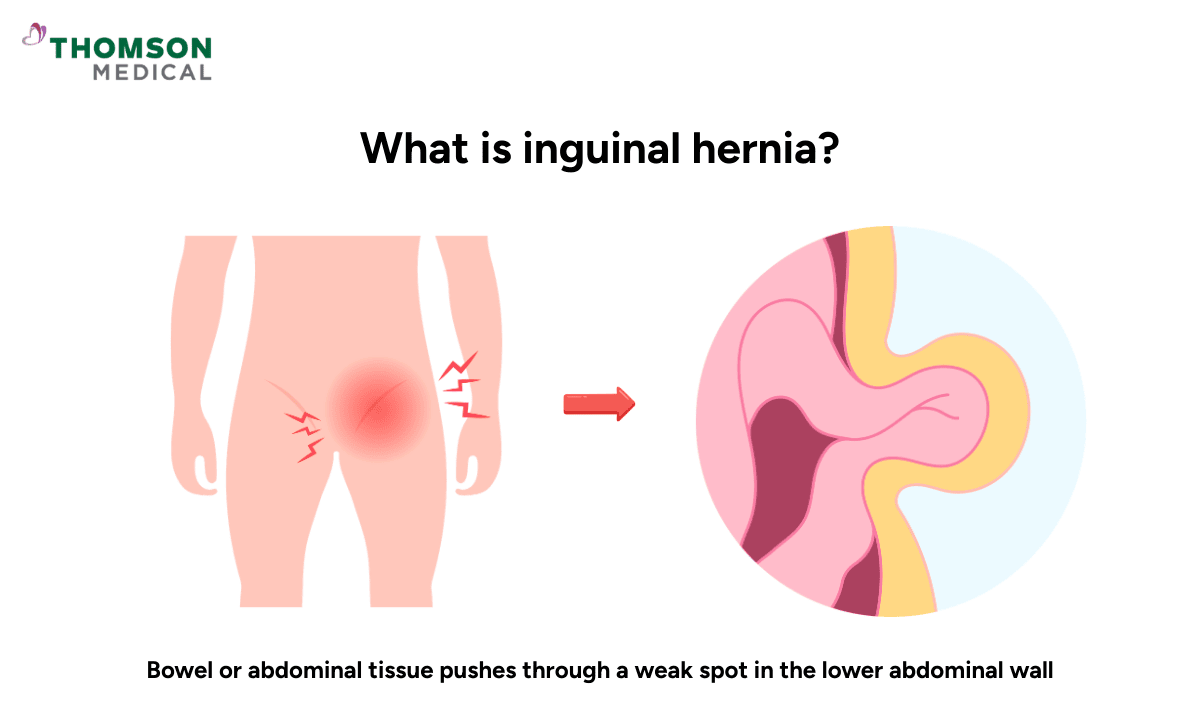
An inguinal hernia (the most common type of groin hernia) happens when part of your bowel or abdominal tissue pushes through a weak spot in the lower abdominal wall.
Your abdominal wall is designed to hold everything in place, but some are born with naturally weaker spots in the groin. Over time, repeated pressure inside the abdomen, such as heavy lifting, chronic coughing, constipation and straining, can gradually push tissue through that weak point.
You might notice:
A visible or felt bulge in the groin
A sense of heaviness or pressure
Discomfort that gets worse when you cough, bend, or lift something
Unlike a muscle strain, a hernia won't heal on its own. But that doesn't mean you're heading straight for the operating table. Many hernias are stable and can be assessed calmly, without any urgency.
If surgical treatment is recommended, your surgeon will take care to protect the spermatic cord and surrounding nerves. Most men return to normal daily activities, including exercise and intimacy, after a proper recovery.
Hip joint problems
Sometimes groin pain isn't coming from the groin at all – issues such as labral tears or hip impingement actually come from your hip joint. Runners, footballers, athletes, and people who spend long hours at a desk are all prone to these kinds of issues.
You may experience:
A deep, aching pain inside the groin
Sharp pain when twisting or pivoting
Discomfort when squatting or lunging
Pain after sitting for long periods
A clicking or catching sensation in the hip
Pain that doesn’t improve quickly with rest alone and usually comes back when you return to activity
Fortunately, many hip problems respond well to targeted physiotherapy, which focuses on building strength in the surrounding muscles and improving how the joint moves. Surgery is only considered when symptoms don't improve despite proper rehabilitation.
Referred pain from the lower back or abdomen
The nerves that carry sensation to your groin travel from your lower spine. So if those nerves become irritated – whether from a disc issue, joint stiffness, or tight muscles in the lower back – you may feel pain in the groin even though the root cause is somewhere else entirely. This is called referred pain.
It can show up as:
Groin pain combined with lower back stiffness
Pain that radiates down your thigh
Discomfort that changes when you bend forward or backward
Symptoms that worsen after prolonged sitting
Abdominal wall strains can also refer pain into the groin, especially if you’ve recently ramped up core training, done heavy lifting, or been through a spell of intense coughing.
Lymph node inflammation
Your groin contains several lymph nodes – small immune glands that help your body fight off infection. If you've recently had a skin infection on your leg, a cut or wound on your foot, or a viral illness, these nodes can temporarily swell and become tender.
It usually feels like a small, sore lump in the groin that's tender to touch, with mild swelling rather than any deep joint pain. In most cases, it settles on its own once the underlying infection clears.
Urological or reproductive causes
Because the groin sits so close to your urinary and reproductive organs, certain conditions in these systems can sometimes cause groin pain too.
In men:
Epididymitis:
It is the inflammation of the tissue near the testicle, usually treatable with medication.
Common symptoms include increasing testicular discomfort, mild swelling, urinary symptoms, and low-grade fever.
Kidney stones:
The pain of a kidney stone is often sharp and intense, comes in waves, and may be associated with nausea or urinary discomfort.
Testicular torsion:
Testicular torsion is rare but needs emergency attention.
You may experience sudden, severe testicular pain that does not improve with rest, swelling, and nausea.
In women:
Ovarian cysts:
Ovarian cyst pain is often one-sided and feels like a dull ache that lingers for days.
If a cyst ruptures, the pain can feel sudden and intense, sometimes described as a sharp sensation in the lower abdomen that radiates into the groin.
Ovulation-related pain (mittelschmerz):
Some women experience brief groin or lower abdominal pain around the middle of their menstrual cycle, when ovulation occurs.
Pelvic inflammatory conditions:
This type of pain often feels more diffuse or aching and may come with fever, unusual discharge, or general fatigue.
It's completely understandable to worry that groin pain in these areas might affect fertility or sexual function. The reassuring thing is that most urological and reproductive conditions are treatable and don't cause lasting problems when they're picked up and addressed early.
Not sure what’s really behind your groin pain symptoms?Request a consultation with specialists at Thomson Medical to help identify the source and guide you with a personalised plan for recovery.
Our urgent care specialist
Loading...
When groin pain needs medical advice
It's natural to hope groin pain will settle on its own, and often it does. But some symptoms are your body's way of saying it needs attention sooner rather than later.
Seek urgent care if you have:
Sudden, severe testicular pain
A painful groin bulge that becomes hard or cannot be pushed back in
Fever with swelling in the groin
Nausea or vomiting along with groin pain
Inability to stand, walk, or bear weight
These symptoms may indicate conditions that require urgent evaluation.
For non-urgent situations, consider seeing a doctor if:
The pain lasts more than 2–3 weeks
It keeps returning
It limits your work, exercise, or daily activities
You might feel a little awkward bringing up groin pain, but your doctor has these conversations regularly. They'll approach it professionally and without any judgement, with one aim: helping you understand what's going on and how to feel better.
How is groin pain diagnosed?
If you decide to get it checked out, you might be wondering what the appointment will involve. In most cases, it's more straightforward than you'd expect.
Your doctor will usually start with a careful history and physical examination, including:
Checking for hernias
Testing hip movement
Assessing muscle strength
Examining the testicles (in men)
If needed, imaging may include:
Ultrasound (especially for hernias or testicular concerns)
MRI scan (for muscle or hip injuries)
X-ray (for hip structure)
A thorough examination often points clearly in the right direction, and once you know what you're dealing with, the path forward tends to feel a lot less daunting.
How to relieve groin pain
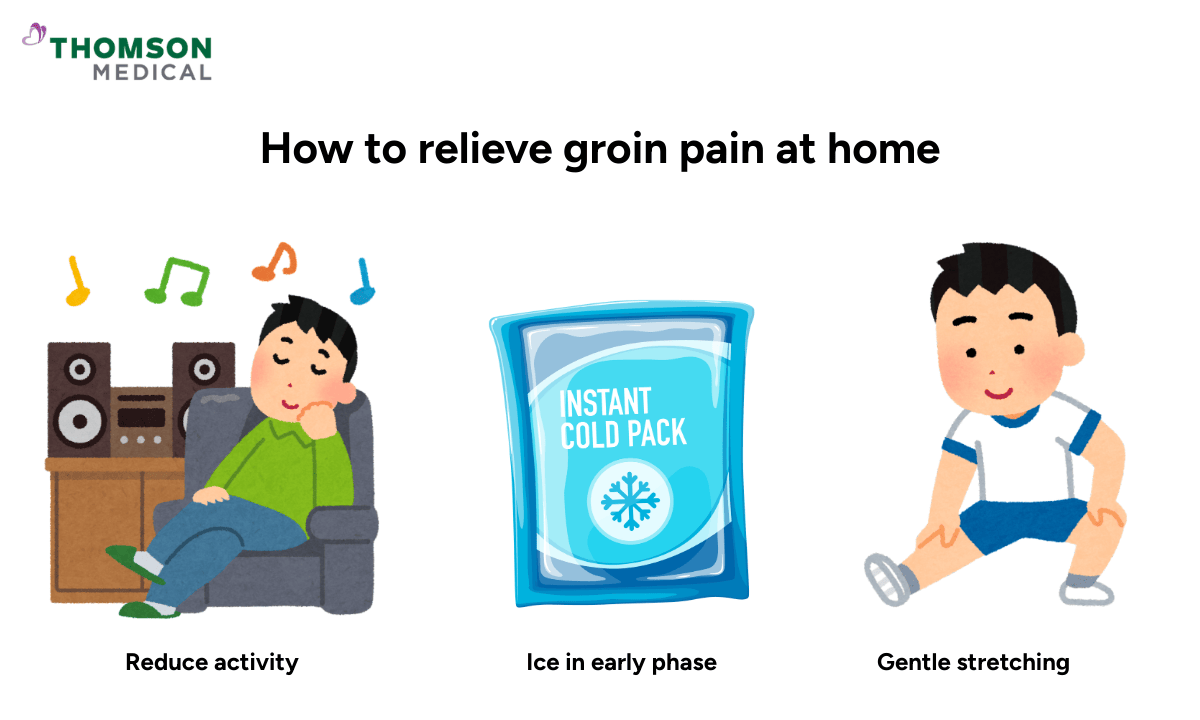
If your symptoms aren't severe or urgent, there are a few simple things you can try at home to ease discomfort while you keep an eye on how things progress.
Reduce activity
If the pain came on during or after exercise, it may be worth scaling back for a while.
Avoid sprinting, kicking, heavy lifting, or sudden twisting
Switch to low-impact activity like walking or gentle cycling (if comfortable)
Avoid pushing through sharp pain
Gentle movement within your comfort range generally helps more than stopping altogether.
Ice in the early phase
If the pain feels recent, inflamed, or tender to touch, applying ice can help settle things down. Wrap it in a cloth to protect your skin and apply it for 15 to 20 minutes at a time, two or three times a day in the first few days. It's particularly useful for muscle strains, as it helps calm early inflammation.
If the pain feels more like stiffness than inflammation, gentle heat may feel more comfortable after the first few days.
Gentle stretching
Once the sharpest pain has settled, gentle stretching of the hip and thigh can help release some of the tension building around the groin. It should feel like a mild pull. If a stretch noticeably increases your pain, ease off and reassess.
When medical treatment is needed
Home care works well for mild muscle strains and minor irritation, but if pain is persisting, getting worse, or starting to affect your daily life, it may be time to take things a step further.
Depending on the cause, treatment may include:
Physical therapy
Prescription medication
Image-guided injections (for certain hip conditions)
Hernia repair surgery (if diagnosed)
It helps to think of home care as your first step rather than your only option. If your body responds and things start to improve, that's a good sign. If they don't, getting medical advice simply moves you from uncertainty to having a clear plan, and that's always a better place to be.
If your groin pain isn’t settling, keeps coming back, or is starting to affect your work, sport, or peace of mind, it may be time to get it checked. Request an appointment with Thomson Medical today and take the next step toward recovering with confidence.
FAQ
How do you treat groin pain?
Treatment depends on the cause. Mild muscle strains often improve with rest, ice, gentle stretching, and a gradual return to activity, while persistent pain may require physical therapy, medication, or in some cases, surgery.
When should I be concerned about groin pain?
Seek medical advice if you have:
Sudden severe testicular pain
A painful groin bulge
Fever with swelling, nausea
Pain that lasts more than 2–3 weeks without improvement
What is the cause of a painful groin?
The most common cause is a muscle strain, especially in active adults. Other causes include hernias, hip joint problems, referred back pain, swollen lymph nodes, or urological conditions.
Is walking good for groin pain?
Gentle walking can be helpful if it doesn’t worsen your pain. Staying lightly active often supports recovery better than complete rest.
Will groin pain go away?
Many cases, especially muscle strains, improve within a few weeks. It’s best to see a doctor if you have worsening or chronic groin pain.
Can groin pain be cancerous?
Groin pain is rarely caused by cancer. Most cases are due to musculoskeletal or benign conditions, but persistent unexplained pain should be evaluated.
The information is intended for general guidance only and should not be considered medical advice. For personalised recommendations and advice based on your unique situation, please consult a specialist at Thomson Medical. Request an appointment with Thomson Medical today.
For more information, contact us:
Thomson Medical Concierge
- 8.30am - 5.30pm
- WhatsApp: 9147 2051
Need help finding the right specialist or booking for a group?
Our Medical Concierge is here to help you. Simply fill in our form, and we'll check and connect you with the right specialist promptly.
Notice:
The range of services may vary between Thomson clinic locations. Please contact your preferred branch directly to enquire about the current availability.
Get In Touch