

Are you uncertain about which hair removal method to choose? You're not alone. With so many options available – from traditional shaving to modern laser treatments – it's completely normal to feel a bit overwhelmed, especially when you want to avoid irritation and find what truly works for your unique skin.
The good news is that once you understand how different methods work and what suits your skin type, you can make choices that feel right and comfortable for you.
Why do people remove hair?
There's no single "right" reason to remove body hair and absolutely no obligation to remove it at all. Some people simply prefer the feeling of smooth skin, while others choose hair removal for cultural, religious, or personal confidence reasons. Athletes may opt for hair removal to enhance performance or definition.
What matters most is that your choice feels authentic to you and your lifestyle.
What should you know before starting?
Before trying any new hair removal method, it's worth taking a moment to understand what your skin actually needs. A few personal factors can make the difference between a comfortable experience and unnecessary irritation.
Hair type:
Fine hair behaves differently than coarse hair.
Darker hair works better with laser treatments because it has more melanin.
Hair growing in different directions needs extra attention during removal.
Skin sensitivity:
Sensitive or dry skin does better with gentler methods and extra moisture after treatment.
Oily or acne-prone skin needs products that won't clog pores.
Darker skin tones require careful consideration with light-based treatments to prevent pigmentation changes.
If you have eczema, psoriasis, or sensitive skin conditions, consulting a dermatologist before trying new methods can save you from discomfort and help you discover what methods work best for your skin.
Our dermatologist in Singapore
Loading...
What are the most popular hair removal methods?
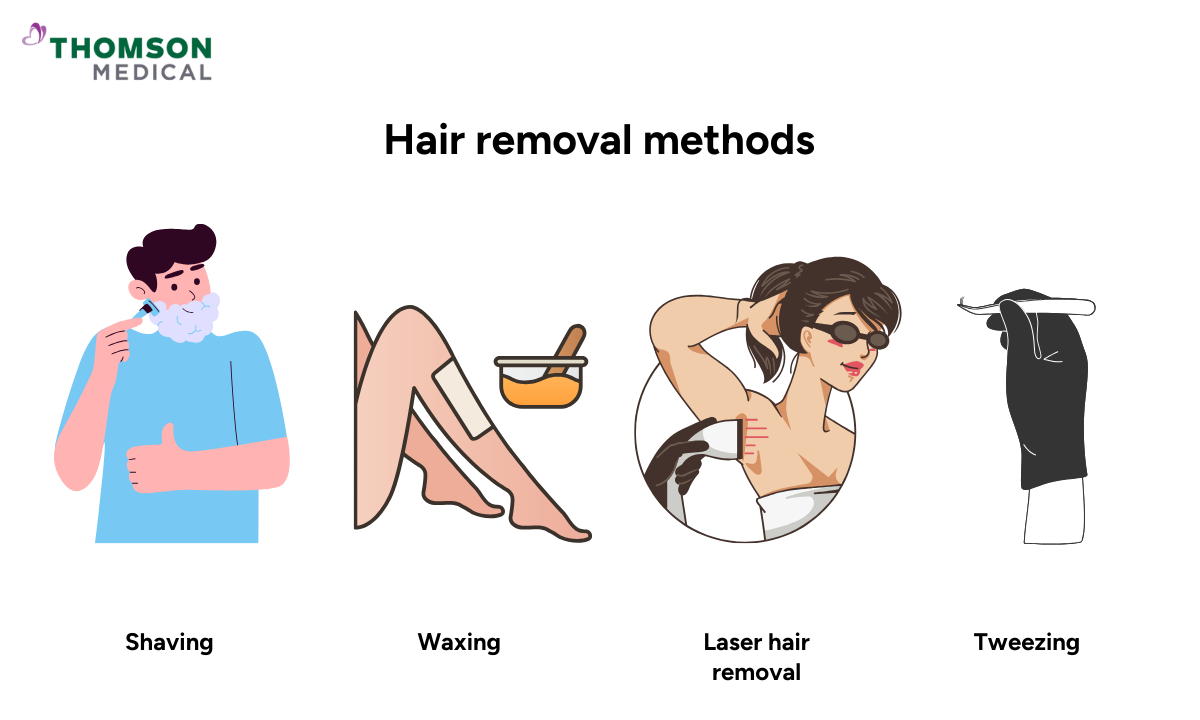
Every hair removal method comes with its characteristics. Understanding how they work helps you choose an approach that fits your routine, comfort level, and skin needs.
Shaving
Shaving is the most straightforward way to achieve smooth skin, cutting hair right at the surface. Results typically last 1–3 days, making it ideal for quick touch-ups or larger areas like your legs.
If you want the shave to feel extra smooth:
Soften your skin with warm water before you begin
Apply a gentle shaving cream or gel
Glide a clean, sharp razor in the direction of hair growth
Moisturise afterward to keep skin calm and comfortable
Hair grows back quickly, and you may occasionally experience razor burn or ingrown hairs. Using a fresh blade and paying attention to your technique can help minimise these concerns.
Waxing
Waxing removes hair from the root, leaving skin smooth for three to six weeks. The warm wax gently grips each hair, and when pulled away, it lifts hair straight from the follicle. You may feel a quick sensation, especially the first few times, but many find the longer-lasting results worth it.
A few things you’ll notice with waxing:
Hair should be about a quarter of an inch long for best results
Some redness or sensitivity is normal and usually settles within a day or two
Occasional ingrown hairs may occur but can be managed with gentle exfoliation
This method works particularly well if you prefer extended periods of smooth skin and don't mind brief, temporary discomfort.
IPL (Intense Pulsed Light)
Intense pulsed light (IPL) devices use broad-spectrum light to target hair follicles and slow regrowth. You'll start with weekly sessions, then move to maintenance every few weeks. Results build gradually over several months.
Before you try IPL, note that this method:
Is not effective on blonde, red, grey, or white hair
May not suit very dark skin tones
Requires patience as results develop over time
Offers convenience and long-term value for those who fit the profile
Laser hair removal
Laser treatment uses focused light energy to target and reduce hair follicles. It's an excellent choice if you're seeking lasting smoothness on larger areas, though it requires a greater initial investment.
Before starting the laser, here’s what to expect:
Sessions typically cost SGD 100–800, depending on the treatment area
Most people need six to eight sessions for optimal results
Works best on darker hair with lighter skin
May require occasional touch-ups for maintenance
Many find the lasting results worth the time and investment
Epilators
Epilators are handheld devices with rotating tweezers that remove multiple hairs simultaneously. Results last 2–4 weeks, similar to waxing, but you can use them at home whenever convenient.
If you want it to feel less intense:
Use on damp skin to reduce sensation
Results improve with regular use as your skin adapts
Ideal if you want waxing-like results without salon visits
Tweezing
Tweezing is perfect for shaping eyebrows or removing stray hairs. Simply pull each hair in its natural growth direction and keep your tweezers clean with rubbing alcohol.
This method works really well for small areas and keeping facial hair tidy. It is simple and effective, though it can take a lot of time if you try to use it on larger areas.
Hair removal creams
Depilatory creams work by gently dissolving hair just below the skin's surface. Apply the cream, wait 5–10 minutes, then wipe away. Always perform a patch test first to ensure your skin tolerates the product well.
Just a couple of things to know:
Painless application
Results last slightly longer than shaving
A strong scent may be present
Can irritate sensitive skin if left on too long
Follow timing instructions carefully
Dermaplaning
This method uses a small surgical blade to gently remove dead skin cells and fine facial hair simultaneously. Your skin becomes smoother and better able to absorb skincare products. Avoid this method if you have active acne or inflamed skin.
If you’re unsure which hair removal method is best for your skin type and lifestyle, request an appointment with Thomson Medical. Our specialists can assess your skin, explain the pros and cons of each method, and recommend safe and effective options to achieve smooth, healthy skin.
Which method works best for different body areas?
Once you've chosen your preferred methods, you'll want to know where to use them. Different body areas have their own characteristics, so matching the right method to each spot helps you get better results with less irritation.
Legs
Your legs have relatively robust skin and are simple to access. Shaving works brilliantly for quick results, while waxing or epilating provides weeks of smoothness. Laser treatment is worth considering if frequent maintenance feels like a chore.
Underarms
This delicate area has hair growing in various directions. Shaving remains popular for its convenience, though laser treatment responds particularly well here since it's a small, focused area. Wait a few hours after any method before applying deodorant to avoid stinging.
Bikini area
Your bikini area has exceptionally delicate skin that deserves extra attention. Trimming is the safest option, especially with trimmers designed for sensitive areas. For more thorough removal, professional waxing or laser treatments are generally safer than DIY approaches.
It’s best to avoid hair removal creams here, as the skin is too sensitive. After any treatment, wearing clean, breathable cotton underwear can help prevent irritation and keep your skin comfortable.
Interestingly, many dermatologists actually recommend keeping some hair or just trimming rather than complete removal, as pubic hair serves protective functions for sensitive skin in this area.
Face
Facial skin requires particularly gentle treatment. Tweezing works well for eyebrow shaping, and threading is excellent for upper lips and precise lines. Dermaplanes beautifully remove peach fuzz while refreshing your skin's surface. For coarser facial hair, laser treatment can offer longer-lasting results.
Avoid using body hair removal cream on your face because facial skin is more delicate. Remember to always apply sunscreen after any facial hair removal treatment.
Chest and back
These are common areas for male grooming. Trimming offers the easiest maintenance, and waxing provides smooth, lasting results. Laser treatment offers long-term reduction but requires greater investment due to the larger surface area. For hard-to-reach areas like your back, professional help prevents frustration and missed spots.
How should you care for skin after hair removal?
Proper aftercare prevents irritation and helps you get the best possible results. Taking a few simple steps after hair removal helps your skin recover smoothly.
Immediately following your hair removal session, you should:
Apply gentle, fragrance-free moisturiser or aloe vera gel to soothe skin
Avoid hot water, saunas, steam rooms, and intense exercise for 24 hours after waxing or laser treatment
Skip deodorants, perfumes, or scented products on treated areas
Wear loose, breathable clothing to prevent friction
In the days and weeks following treatment:
Exfoliate gently 2–3 times weekly using a mild scrub or exfoliating glove
Keep skin moisturised daily with gentle, non-comedogenic lotion
Avoid picking at or scratching treated areas, even if they feel itchy as hair regrows
Use a warm compress and gentle exfoliation if ingrown hairs appear
When should you see a doctor?
Most minor reactions after hair removal settle on their own, but knowing when to reach out for professional help ensures that any potential issues get addressed quickly.
You should contact your dermatology if you experience any of the following:
Persistent redness, swelling, or pain that doesn't improve after a couple of days
Signs of infection like pus, increasing warmth, or red streaks spreading from the treated area
Severe ingrown hairs that become infected, deeply embedded, or don't resolve with home care
Any unexpected reactions to products or treatments, especially if they're getting worse
Your dermatologists constantly see these concerns, so there's no need to feel embarrassed about seeking help for hair removal issues. Getting treatment early prevents complications and gives you peace of mind.
If you notice persistent redness, pain, signs of infection, or any unexpected reactions after hair removal, request an appointment with Thomson Medical. Our dermatology specialists can assess your skin, provide prompt treatment, and guide you on safe hair removal practices to prevent future issues.
FAQ
Which method is the safest to remove pubic hair?
Trimming is the safest option. It shortens hair without cutting close to the skin, reducing the risk of cuts, irritation, and ingrown hairs. Use small scissors or a trimmer designed for sensitive areas. For more complete removal, professional waxing or laser hair removal are safer than DIY methods.
Can pubic hair be permanently removed?
Yes, though it depends on your chosen method. Temporary approaches like shaving, depilatory creams, trimming, and waxing need regular repetition. Laser hair removal significantly reduces growth long-term but may need occasional maintenance sessions.
What is the most effective hair removal method?
Laser hair removal offers the most effective long-term results. After six to eight sessions, most people experience significant, lasting hair reduction with finer, lighter regrowth. Although it requires initial time and financial investment, many find the lasting results more worthwhile than ongoing temporary methods.
How much does it cost to permanently remove hair?
Laser hair removal costs SGD 100–800 per session, depending on the treatment area. Most people need six to eight sessions for optimal results. Generally, smaller areas cost less than larger areas like legs or back. You might require occasional maintenance sessions to sustain results over time.
Why is hair still growing after 10 laser sessions?
Several factors could be involved. Laser only affects hair in the active growth phase (anagen phase), so not all follicles are treated simultaneously. Additionally, hormonal factors – especially conditions like polycystic ovary syndrome (PCOS) – can influence regrowth. Very fine, light, or grey hair may not absorb enough laser energy for effective treatment.
What type of hair should not be lasered?
Very light blonde, red, grey, or white hair lacks sufficient melanin for effective laser targeting. For these hair colours, consider electrolysis instead—it works for all hair colours. People with very dark skin tones need newer laser technologies like Nd:YAG lasers to safely avoid skin pigmentation issues. Always consult a qualified practitioner for assessment before treatment.
The information is intended for general guidance only and should not be considered medical advice. For personalised recommendations and advice based on your unique situation, please consult a specialist at Thomson Medical. Request an appointment with Thomson Medical today.
Reference:
Olsen, E. A. (1999). Methods of hair removal. Journal of the American Academy of Dermatology, 40(2), 143–155. https://doi.org/10.1016/s0190-9622(99)70181-7
Vaidya, T., Hohman, M. H., & D, D. K. (2023, July 25). Laser hair removal. StatPearls - NCBI Bookshelf. https://www.ncbi.nlm.nih.gov/books/NBK507861/
Dr Tan Hiok Hee
Dermatology (Skin)
Thomson Specialist Skin Centre (Novena Specialist Center)
English, Mandarin
.png%3Fbranch%3Dprod&w=640&q=75)