

When your child bumped their head, it's natural to feel worried. Whether it's a tumble from the playground, a knock during playtime, or an accidental fall at home, head injuries in children can feel frightening. The good news is that most head injuries in kids are mild and heal well with proper care and observation.
Still, it can be hard to know what to do at the moment. This guide will help you recognise when a head injury needs medical attention and give you practical advice on the next steps, so you can feel more confident caring for your child.
Understanding head injuries in kids
Children are naturally curious. They're learning to crawl, walk, run, climb, and jump, all while their sense of balance and coordination is still developing. Their heads are proportionally larger compared to their bodies, which means they're more top-heavy and prone to falls.
Add this to their fearless nature and eagerness to try new things, and you can see why tumbles happen so often during playtime, at the playground, or even just navigating around the home.
Toddlers are particularly vulnerable as they’re still figuring out how to walk and run. Their spatial awareness is still forming, so misjudging distances or tripping over their own feet is all part of the learning process.
Older children might get head knocks during sports, rough play with siblings, or those moments of childhood exuberance when excitement overtakes caution. Most head injuries in children are superficial, affecting only the scalp, which may swell or bruise but doesn't harm the brain underneath.
However, some head injuries require closer attention. Knowing the difference between a minor bump and a serious issue can help you feel more confident when caring for your child after a knock to the head.
Immediate warning signs to watch for
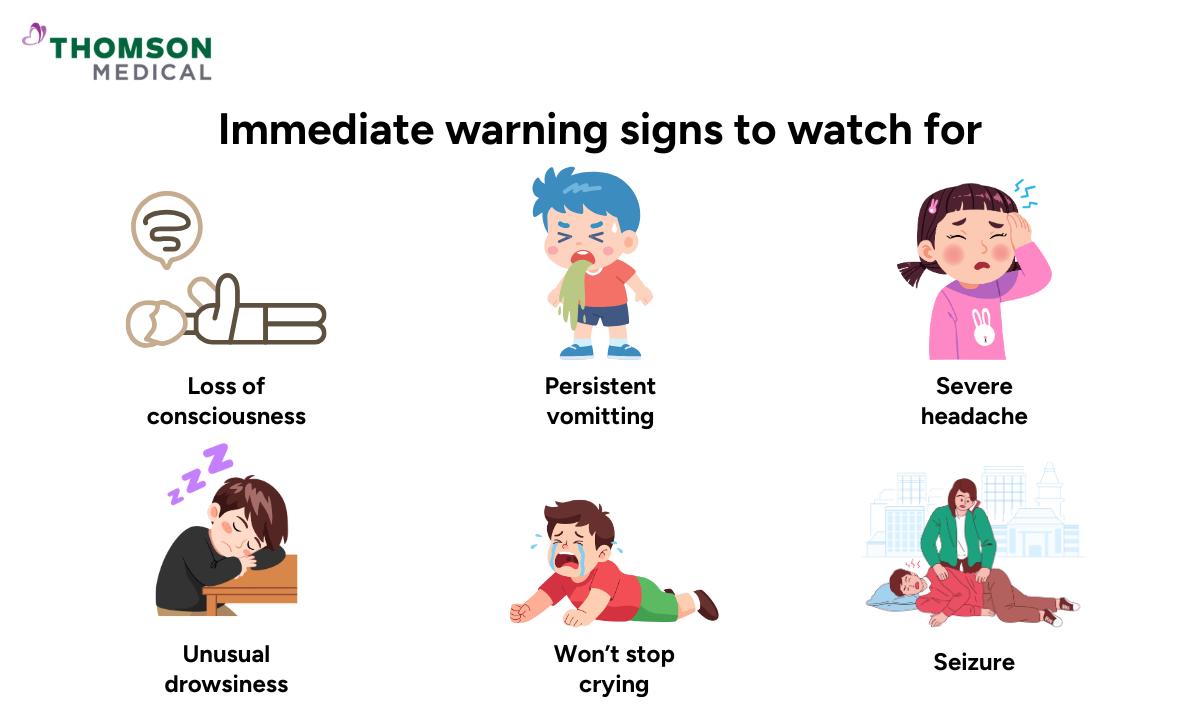
There are certain signs that tell us a head injury needs urgent medical attention.
If you notice any of these signs, please don't hesitate to bring your child for medical attention straight away:
Loss of consciousness, even for just a moment
Persistent vomiting (more than once or twice)
Severe or worsening headache that doesn't ease with rest
Unusual drowsiness or difficulty waking them up
Confusion, disorientation, or not recognizing people they know well
Slurred speech or difficulty getting their words out
Seizures or fits
Clear fluid, watery discharge or blood leaking from their nose or ears
Weakness or numbness in their arms or legs
Pupils that look different sizes
Crying that won't stop, no matter what you do (in babies and toddlers)
A soft spot that bulges outward (in babies)
Loss of balance or difficulty walking
If your child shows any of these signs, you should consider bringing them to the nearest emergency department straight away.
Signs that usually indicate a minor head injury
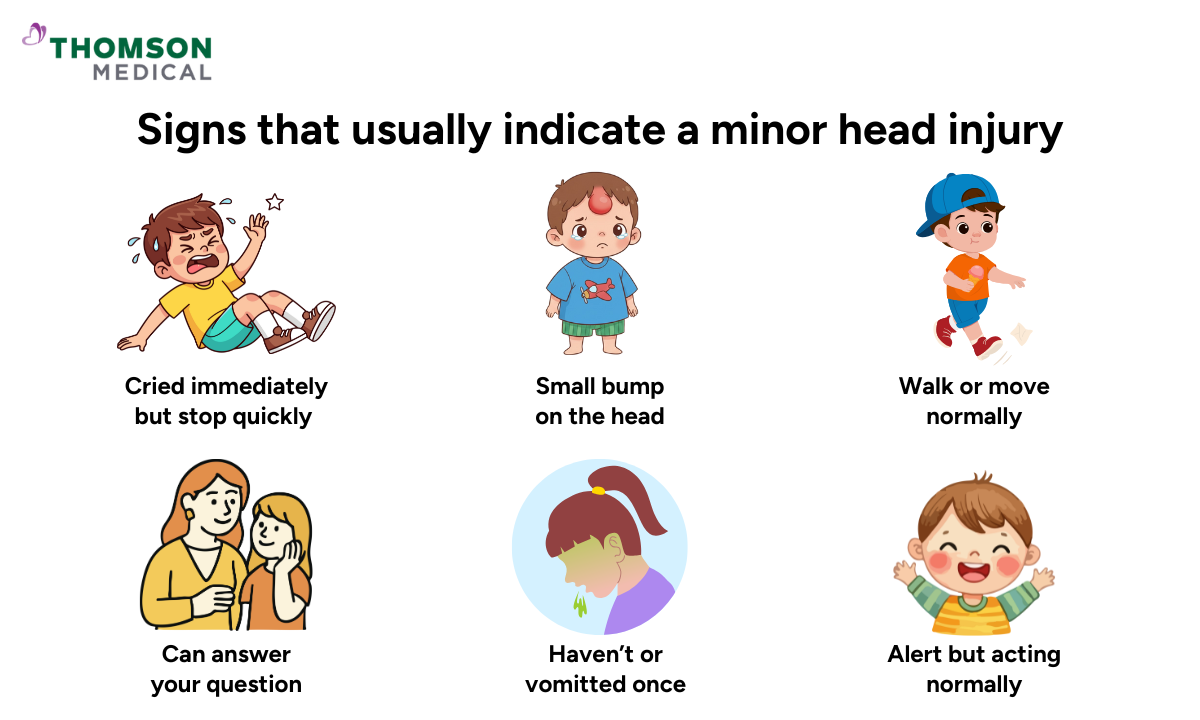
While it’s natural to be afraid of the worst-case scenario, most head bumps are simply minor injuries. It's still scary, but these signs suggest your child will be okay.
Your child likely has a minor head injury if they:
Cried immediately after the bump but settled down quite quickly
Have a small bump, bruise, or graze on their head
Seem alert and are acting like themselves after the initial upset
Can answer your questions appropriately for their age
Haven't vomited, or only vomited once right after the injury
Can walk and move around normally
Even with what seems like a minor bump, it's natural to feel worried in the hours and days that follow. Monitor your child for the next 24 to 48 hours, watching for any changes in their behaviour or alertness. Most children recover completely from minor falls, but if you notice any red flag symptoms or if your instinct tells you something isn't quite right, don't hesitate to seek medical assessment.
What to do immediately after a head injury?
In that first moment after your child hits their head, everything can feel overwhelming.
Here are a few simple steps that can help:
Step 1: Stay calm
Before you do anything else, take a deep breath. Your child is looking to you right now to know if they're okay. When you're calm – even if you're just pretending to be calm – it helps them feel safer.
Step 2: Check for immediate concerns
As you comfort them, gently look for any of the urgent warning signs that have been mentioned earlier. You don't need to panic-check everything at once, and just observe as you hold them. If you notice anything concerning, you should seek medical help straight away.
Step 3: Soothe the bump
If there's swelling or a bump forming, gently apply a cold compress or ice pack wrapped in a clean cloth to the area for 10 to 20 minutes. Your child might resist at first – that's normal. You can make it easier by holding them close, telling them a story, or letting them hold their favourite toy. Never put ice directly on their skin.
Step 4: Comfort and observe
Hold your child and let them cry if they need to. Cuddle them, rock them, and reassure them that you're here and they're going to be okay. While you're comforting them, pay attention to how they're behaving. Are they responding to you normally? Do they seem like themselves?
Step 5: Allow rest
Once they've settled, let them rest quietly, but try to keep them awake for the first hour or two so you can monitor their alertness. This doesn't mean you need to make them run around. Instead, just keep them gently engaged. Read together, watch something calm, or just sit close. After this initial period, they can sleep normally. A quick look to see they're behaving normally will help you rest too.
If at any point you feel uncertain, or if something just doesn't feel right, listen to that feeling. When it comes to your child's head, there's no such thing as being too careful. Your instinct to protect them is exactly what makes you a good parent.
Monitoring your child over the next 24 to 48 hours
Sometimes, symptoms don't show up straight away. Occasionally, signs of a more significant injury can develop gradually over the hours that follow.
This doesn't mean you need to hover anxiously or wake them every hour through the night, but it does mean paying attention to how they're doing as the day unfolds.
You should watch for:
Changes in behaviour (unusually irritable, sleepy, or confused)
Worsening headache
Repeated vomiting
Vision problems or sensitivity to light
Balance or coordination issues
Changes in sleep patterns (sleeping more than usual or difficulty waking)
Even when your child seems absolutely fine after the initial upset, it's still important to keep a watchful eye on them for at least the next 24 hours. Think of it as keeping them in your awareness rather than under surveillance.
When to visit a UCC
Sometimes, you just need someone with professional medical training to look at your child and tell you everything's going to be okay.
Therefore, it is recommended that you should bring your child to a UCC if:
You're unsure whether the injury is serious and need a professional assessment
Your child develops any concerning symptoms in the hours after the injury
The bump or swelling looks very large or appears in an unusual location
Your child fall from a dangerous height (like playground equipment, furniture, or stairs)
The injury was caused by a forceful blow rather than a simple bump
You're feeling worried and simply want the reassurance that comes from having them checked
Healthcare professionals can assess your child properly, provide any treatment needed, and give you clear, personalised advice on what to watch for once you're back home. More importantly, they can give you the peace of mind that comes from knowing you've done the right thing.
Our urgent care specialist
Loading...

FAQ
How to know if a child's head injury is serious?
Trust what you see and what your gut tells you. A head injury needs immediate medical attention if your child shows any of these signs:
Loss of consciousness, even briefly
Vomiting more than once or twice
Severe or worsening headache
Unusual drowsiness or trouble waking
Confusion or not recognising familiar people
Slurred speech
Seizures or fits
Clear fluid or blood from nose or ears
Weakness or numbness in limbs
Unequal pupil sizes
Won't stop crying (in babies and toddlers)
Bulging soft spot (in babies)
Loss of balance or difficulty walking
Should I let my child sleep after a head injury?
In the first hour or two after a head injury, it's helpful to keep your child awake so you can monitor their alertness and behaviour. After this initial period, it's safe to let them sleep. Check on them every few hours to ensure they're breathing normally and can be roused easily.
What is the first aid for a child's head injury?
You should always stay calm first. Your child takes cues from you. After that, you should:
Check for serious signs (loss of consciousness, persistent vomiting, severe headache, confusion, seizures). If present, seek emergency help.
Apply a cold compress wrapped in cloth to any bumps for 10-20 minutes.
Comfort them and observe closely for the next few hours.
Keep them awake for the first 1-2 hours, then they can rest normally.
Watch for changes over the next 24 hours.
What if my child vomits once or twice after hitting their head?
A single episode of vomiting shortly after a head injury can be normal, especially if your child is upset. However, if vomiting persists (more than twice) or occurs several hours after the injury, you should seek medical attention.
What is the most common head injury in children?
The most common head injury in children is a simple scalp injury like bumps, bruises, and surface grazes. The second most common is a mild concussion, which typically resolves with rest and monitoring. Both usually happen during normal childhood activities like falls, playground tumbles, or collisions during play. However, the vast majority heal well and completely.
The serious injuries you might worry about – such as skull fractures or bleeding inside the skull – are actually far less common.
How can I prevent head injuries for my children?
While bumps and falls are part of childhood, you can reduce the risk by:
Using appropriate safety equipment (helmets for cycling, skating, and scootering)
Supervising young children during play
Ensuring play areas are safe and age-appropriate
Using stair gates and window locks at home
Teaching older children about safety during sports
The information is intended for general guidance only and should not be considered medical advice. For personalised recommendations and advice based on your unique situation, please consult a specialist at Thomson Medical. Request an appointment with Thomson Medical today.
For more information, contact us:
Thomson Medical 24-Hour Urgent Care Centre (Novena)
- Call: 6350 8812
Notice:
The range of services, vaccinations, and tests may vary. Please contact us directly to enquire about the current availability.
Request an Appointment