

A soft bulge in your groin or near your belly button that becomes more noticeable when you cough, lift or strain is easy to mistake for a muscle strain. In adults, though, a bulge like this is often a hernia; an inguinal hernia when it sits in the groin, or an umbilical hernia when it’s at the belly button.
Unlike a strained muscle, a hernia in adults doesn’t close on its own. It may cause little to no pain at first, but it’s still worth having it examined by doctors.
What is a hernia?
A hernia occurs when tissue or an organ pushes through a weak spot in the surrounding muscle wall or connective tissue. This weakness may be present from birth or develop over time. Most hernias occur in the abdomen or groin area. Tissue such as fat or part of the bowel may push through the abdominal wall and move into an area where it does not normally sit.
While some hernias are easy to see from the outside, others develop inside the body and may not cause a visible lump. Though this condition is not necessarily harmful and may cause little or no discomfort, it should not be ignored.
What causes a hernia?
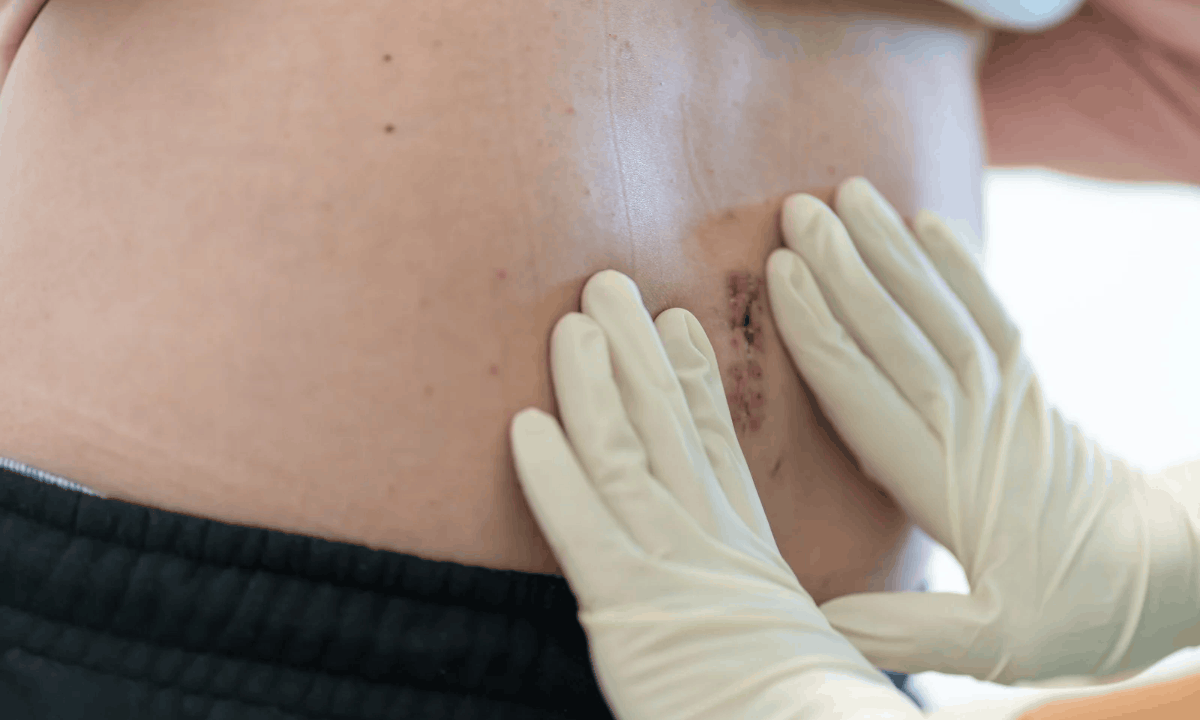
The main cause of most hernias is a weakness or opening in the muscle wall or connective tissue that normally holds internal organs in place. When pressure inside the body increases, the fatty tissue or part of an organ could push through that weak area and form a bulge.
There are several factors that may put extra pressure on the abdominal wall area and make a hernia more likely to develop. These include:
Repeated heavy lifting or physical strain
Persistent coughing or chronic cough
Persistent constipation and straining during bowel movements
Pregnancy
Obesity
Previous abdominal surgery
Age-related weakening of muscle wall and connective tissue
Conditions that increase intra-abdominal pressure
If you have been noticing a lump and are suspicious that it might be a hernia, consider a consultation with a doctor who could help to examine it. Schedule an appointment with Thomson Medical.
Our hernia specialists
Loading...
Types of hernia
Hernias may affect both men and women and are usually visible when laughing, coughing, or standing up from a chair. There are different types of hernia that could affect you:
Inguinal hernia
This is one of the most common hernias that people have. It forms in the groin, where the lower abdominal wall has a natural weak point called the inguinal canal. You may find this hernia by accident, such as while showering or pulling on a pair of trousers.
It tends to become more obvious when you stand, cough, or lift something heavy, then settles when you lie down. In men, inguinal hernias may even extend into the scrotum (testicle sac), causing swelling or making one side of the scrotum appear larger than the other.
Femoral hernia
A femoral hernia is a less common type of groin hernia that tends to affect women more than men, particularly older women. It usually occurs when fatty tissue or part of the bowel pushes through a weak area into the femoral canal, a narrow passage in the upper inner thigh, just below the groin crease.
The femoral canal is narrow and has firm borders. As a result, the tissue that enters this canal is more likely to become trapped (incarcerated hernia) or have its blood supply cut off (strangulated).
Umbilical hernia
An umbilical hernia forms at or just beside the belly button, where the abdominal wall has a natural weak spot that may be present from birth. Umbilical hernias may affect both babies and adults, but they develop for different reasons.
In babies, the opening in the abdominal wall may not close fully after the umbilical cord is cut. Therefore, a small amount of fat or bowel could push through the gap, causing a soft bulge at the belly button. Many umbilical hernias in babies close without treatment during the first few years of life.
Meanwhile, in adults, umbilical hernias usually develop at these periods:
After pregnancy
After gaining weight
After doing things that may raise pressure on your abdominal muscles, like a lingering cough, straining, or repeated heavy lifting
Hiatal hernia
A hiatal hernia, also known as a hiatus hernia, is the type that you may find by feeling it rather than seeing it. It occurs when part of the stomach slides up through the opening in the diaphragm and into the chest, which may not show a visible lump. Since it is usually unnoticeable, many people may live with one for years without knowing its presence.
Incisional hernia
An incisional hernia usually occurs after you have had abdominal surgery, and the surgical area never quite regains the strength of the original wall. This type of hernia forms when tissue pushes through that weaker section after surgery, sometimes months or even years after the surgery.
You may notice this type of hernia by checking for a bulge near the surgery scar that could be more obvious when you cough, stand, or strain.
Epigastric hernia
This type of hernia sits in the midline, between the breastbone and the belly button. It is often small, sometimes no bigger than a pea. Some people who have epigastric hernias may feel nothing at all. But if they could feel it, they may describe a dull ache or a sharp catch near the affected area.
What are the symptoms of a hernia?
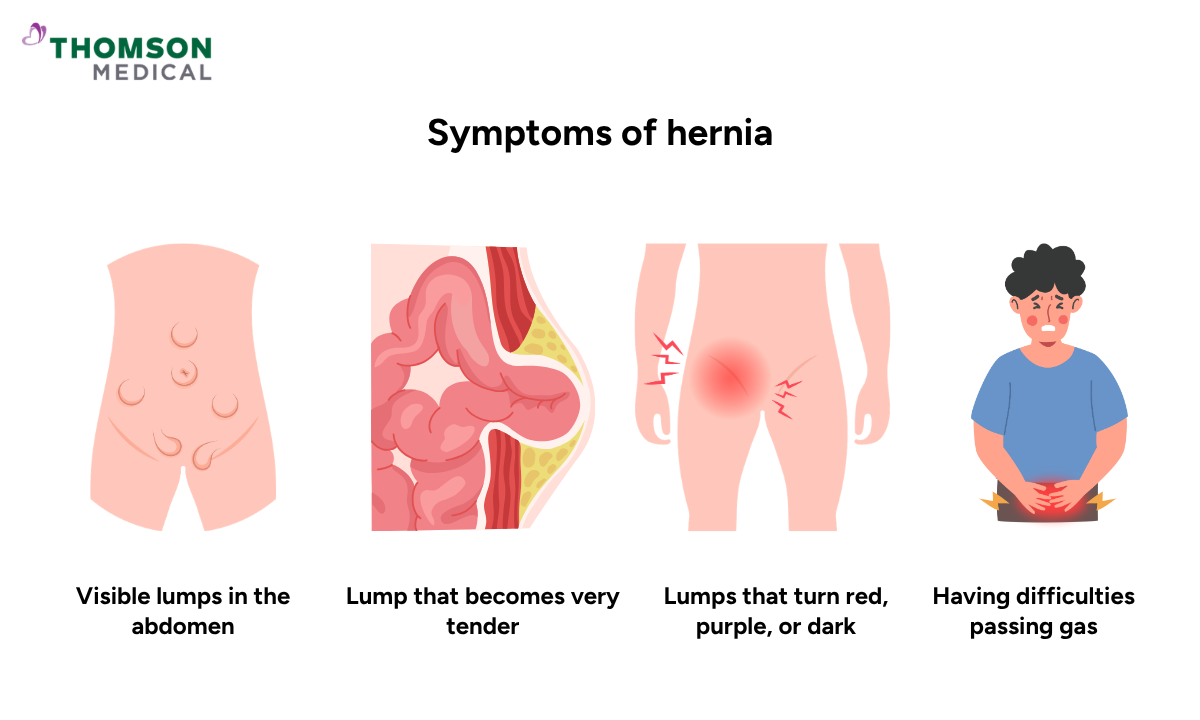
Some hernias may cause no symptoms and are found on routine examination. But you may experience some noticeable hernia symptoms, such as:
Visible lumps in the abdomen
A lump that becomes very tender
A lump that turns red, purple, or dark
Difficulties passing gas
It is recommended to see a doctor to assess whether the symptoms that you have are indicating a hernia.
When to see a doctor
See a doctor if you notice a new or persistent lump, swelling, or discomfort in your abdomen or groin. Seek urgent medical attention if the lump:
Becomes hard, very tender, or suddenly larger
Turns red, purple, or dark
Could not be pushed back in
Severe or worsening abdominal pain, nausea, vomiting, or difficulty passing stool or gas may also be signs of a serious complication and require urgent medical attention.
How is a hernia diagnosed?
Hernia diagnosis usually begins with a physical exam and a review of your medical history. Your doctor may ask you to stand, cough, or strain while they check for a bulge. In some cases, they may gently assess whether the hernia could move back into the abdomen.
If the diagnosis is unclear, the doctor may recommend imaging tests to assess the affected area. These imaging tests include:
Ultrasound:
Ultrasound is a medical imaging technique that uses sound waves to create images of the affected area.
Your doctor may recommend an abdominal ultrasound to assess the hernia, especially when the hernia is not obvious during a physical examination.
CT scan:
An abdominal CT scan is an imaging test that uses X-rays to create detailed images of the abdomen and may help identify a hernia and complications such as bowel obstruction.
Your doctor may consider an abdominal CT scan when the diagnosis is unclear on physical examination, when the hernia may be hidden or complex, or when they need to check for complications and plan treatment.
Magnetic resonance imaging (MRI):
An MRI is an imaging test that uses magnetic fields and radio waves to produce detailed images of soft tissues.
Your doctors may use an abdominal MRI scan when the diagnosis remains unclear after a physical examination or other imaging tests.
If you have noticed a lump in your abdomen that has become increasingly tender, consult a doctor, who could help check your condition and advise you on the next steps to take. Schedule an appointment with Thomson Medical.
What are the treatment options for a hernia?
Before recommending treatment, your doctor will consider the type and size of the hernia, your symptoms, and whether there are signs of complications. Some hernias could be monitored, while others may need hernia repair through surgical treatment to prevent symptoms from worsening or complications from developing. Treatment options may include:
Open surgery:
It is a traditional surgical treatment approach to treat a hernia through one incision made directly over or near the bulge.
After performing an open repair surgery, your surgeon then eases the tissue back into place and repairs the weakened area using stitches or surgical mesh material.
Laparoscopic surgery:
Doctors perform laparoscopic hernia repair by working through several small cuts, where a thin camera called a laparoscope is inserted into the abdominal cavity. Laparoscopic surgery is a keyhole surgery where your doctor may perform it as an outpatient procedure.
Robotic surgery:
In selected cases, robotic instruments may help your surgeon carry out a minimally invasive repair.
The appropriate type of surgery for you depends on the type of hernia, its location and size, your general health, whether you have had any operations before, and what your surgeon finds when they perform an examination.
Like any operation, hernia repair carries some risks. These may include:
Infection
Bleeding
Blood clots
Ongoing discomfort at the site
Recurring hernia
Supporting your recovery after treatment
If your doctor recommends hernia surgery, your recovery time will depend on the type of surgery you have and how your body responds to treatment.
You may generally support recovery by:
Keeping the surgical wound clean and following dressing instructions.
Taking prescribed pain relief as directed.
Staying gently active as your doctor advises.
Managing constipation to avoid excessive straining.
Seeking medical advice if you develop worsening pain, fever, wound discharge, or other concerning symptoms.
What could you do to help lower the risk of hernia?

There are several measures you could try to help reduce the risk of hernia. One of them is maintaining healthy lifestyle habits, which may help reduce the risk of hernia by reducing avoidable strain on the abdominal wall. You may try to:
Maintain a healthy weight
Stay physically active
Eat enough fibre and drink enough fluids
Seek treatment for a persistent cough
Avoid smoking
Use safe lifting techniques and avoid lifting loads that are too heavy for you
Additionally, as a hernia may return after surgery, you could help reduce your risk by:
Following your surgeon's recovery instructions
Gradually returning to strenuous exercise
Maintaining a healthy weight
Managing chronic cough and constipation
Avoiding smoking
Attending follow-up appointments
If you notice a new lump near a previous hernia repair site, see a doctor who could examine the area and advise on what's appropriate for your stage of recovery. Schedule an appointment with Thomson Medical.
FAQ
Can a hernia heal without surgery?
Most adult abdominal wall hernias do not close on their own, so you may need surgery to repair the defect. However, not every hernia needs immediate operation. For example, inguinal hernias in men with few or no symptoms are one example where monitoring may be appropriate.
What happens if a hernia is left untreated?
A hernia does not usually heal on its own, but if it’s left untreated, the bulge can grow or become more uncomfortable. In some cases, tissue or bowel can become trapped in the hernia and may block the bowels.
Rarely, an untreated hernia may become a strangulated hernia, which occurs when tissue or part of the bowel becomes trapped in a hernia and its blood supply is cut off. This condition is a medical emergency and may require immediate surgery.
Can you exercise if you have a hernia?
People with a hernia can remain physically active, but the appropriate level of exercise depends on the type and severity of the hernia.
Gentle activities may be more comfortable than exercises that cause pain or significant straining. It is recommended to avoid activities that make your symptoms worse and ask your doctor about exercises that are appropriate for you.
What sleeping position is comfortable if you have a hernia?
You may have a comfortable sleeping position by avoiding any position that causes pain or presses directly on the bulge.
For most groin or abdominal hernias, sleeping on your back with a pillow under your knees may feel most comfortable because it can reduce strain on the affected area. Meanwhile, if you have a hiatal hernia with acid reflux, it may be comfortable if you raise the head of your bed by 10-20 cm.
If you prefer sleeping on your side, try lying on the side away from the hernia and use pillows for additional support.
The information provided is intended for general guidance only and should not be considered medical advice. For personalised recommendations and tailored advice based on your unique conditions, schedule an appointment with Thomson Medical.
For more information, contact us:
Thomson Medical Concierge
- 8.30am - 5.30pm
- WhatsApp: 9147 2051
Need help finding the right specialist or booking for a group?
Our Medical Concierge is here to help you. Simply fill in our form, and we'll check and connect you with the right specialist promptly.
Notice:
The range of services may vary between Thomson clinic locations. Please contact your preferred branch directly to enquire about the current availability.
Get In Touch