

A small bulge near your child's belly button can be worrying to spot, especially when it seems to appear out of nowhere. In young children, this is often an umbilical hernia, one of the most common types of hernias in children.
So what is a hernia, why does it happen in children, and when should you bring your little one to see a doctor?
Could hernias happen to children?
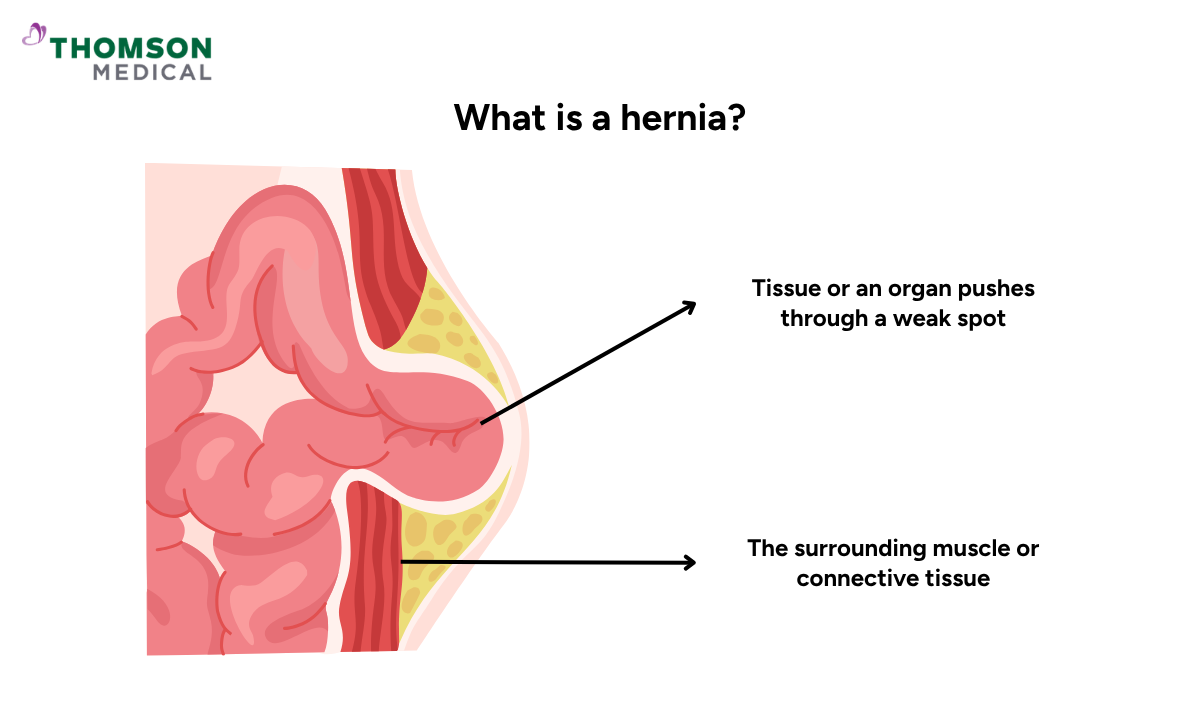
A hernia occurs when an organ or tissue pushes through a weak spot in the surrounding muscle or connective tissue. Most hernias occur in the abdomen or groin area, where tissue, such as fat or part of the bowel, may push through the abdominal wall and move into an area where it does not normally sit.
Hernias could occur in children because an opening in the abdominal wall does not close completely during pregnancy or soon after birth.
As the baby grows in the womb, certain natural openings in the abdominal wall, such as the opening at the belly button or a passage in the groin, are meant to close before or shortly after birth. If an opening does not close fully, it may leave a weak area, where fatty tissue or part of the bowel may push through and form a hernia.
Although childhood hernias are not usually harmful and may cause little or no discomfort, parents should not ignore any new or persistent lump and ensure it’s assessed by a paediatrician instead.
Symptoms parents should watch for
When your child has a hernia, parents may notice the following symptoms:
A soft lump near the belly button, which often becomes more obvious when your child cries, coughs, or strains when they are trying to sit up.
A swelling in the groin, which may extend down into the scrotum in boys, or show as a bulge near the labia (the outer lips of the vulva) in girls.
A lump that shrinks or disappears when your child is calm, lying down, or asleep.
Skin over the bulge that looks a little stretched or shiny.
In babies and toddlers who cannot yet describe how they feel, you may notice unusual fussiness or difficulty settling down. They may also pull their legs up towards their tummy.
When to see a doctor
See a paediatrician to examine your little one’s condition if you notice worsening symptoms or when the lump:
Becomes hard, tender, red, purple, or darker than usual
Does not go back in or disappear
Parents should also seek urgent medical attention if your child experiences severe or worsening pain, vomiting, a swollen abdomen, a fever, or appears unusually distressed, as these could be signs of a serious complication that requires urgent medical attention.
If you have been noticing a lump on your little one’s abdominal area and are worried that it might be a hernia, consider a consultation with a doctor who may help to examine it. Schedule an appointment with Thomson Medical.
Our paediatricians
Loading...
Types of hernias in children
Hernias could affect children from birth, although some may only become noticeable weeks, months, or years later. You may notice a lump becoming more obvious when your little one cries, coughs, strains, or is active, and the lump may become smaller or disappear when your child relaxes or lies down.
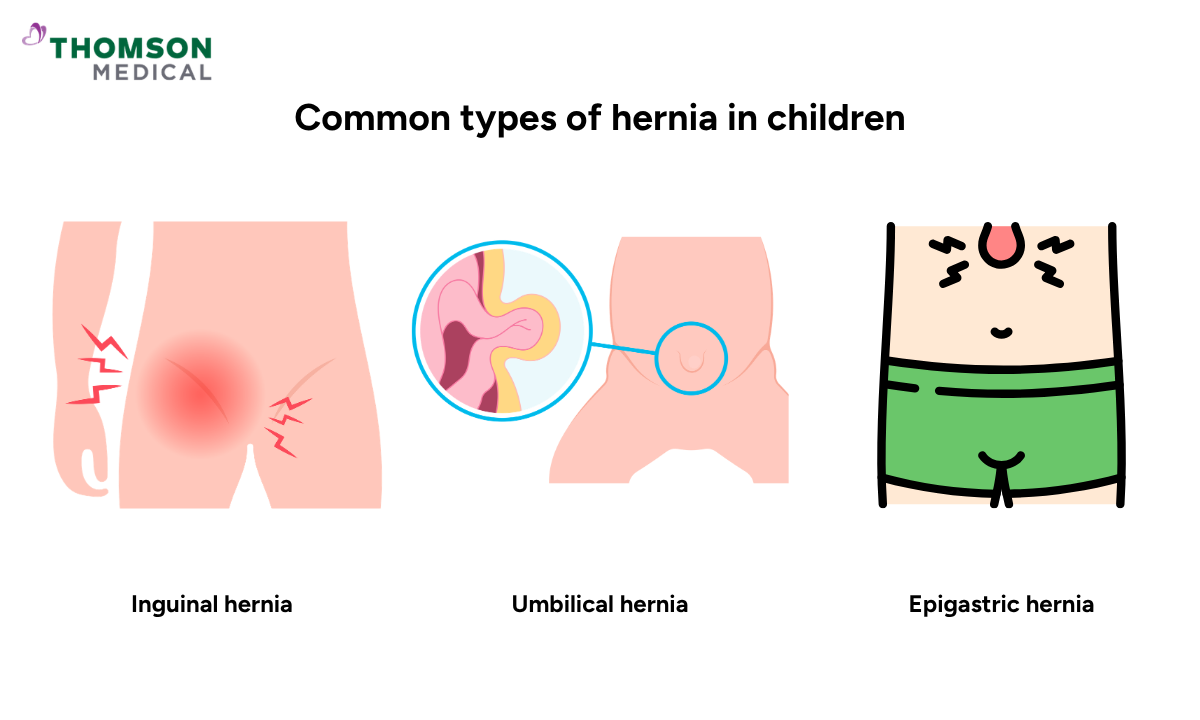
There are common types of hernia that may affect children, which include:
Inguinal hernia:
It occurs when fatty tissue or part of the bowel passes through an opening in a child's lower abdominal wall into the groin. It could cause a lump or swelling where the child’s abdomen meets their upper thigh.
In boys, the swelling may extend into the scrotum, while in girls, it may appear as a bulge near the labia.
Umbilical hernia:
It appears as a soft bulge at or near a child’s belly button. It occurs when the opening in the abdominal wall where their umbilical cord passed through does not close completely after birth.
Epigastric hernia:
It causes a small lump in the upper middle part of children’s tummies, between their breastbone and belly button. This hernia develops when there is a small gap in the tissue that joins the abdominal muscles, which may be present from birth.
Meanwhile, other types of hernia that may affect children are:
Femoral hernia: which occurs when tissue pushes through a weak area at the top of a child’s inner thigh, just below the groin.
Spigelian hernia: which happens in a weak area on the side of a child's abdominal wall. It often causes a lump or swelling that may come and go at the side of the lower tummy.
Incisional hernia: which could develop near the scar from a previous abdominal operation if the abdominal wall does not heal fully.
Hiatal hernia: this occurs when part of a child’s stomach moves through an opening in the diaphragm (the muscle between the chest and abdomen), leaving no visible lump.
Risk factors of hernia in children
Children may be more likely to develop a hernia if they have factors that affect the development or strength of the abdominal wall. These factors include:
Premature birth and low birth weight:
Babies born early are more likely to have inguinal or umbilical hernias because the abdominal wall and natural openings may not have finished developing or closing.
Family history of hernia:
A child may have a higher chance of developing a hernia if a family member has had one, possibly because of inherited differences in connective tissue or abdominal-wall development.
Conditions affecting connective tissue or development:
Certain genetic or medical conditions, including connective-tissue disorders and some chromosomal conditions, may increase risk because they could affect the strength or formation of body tissues.
Conditions that raise pressure in the abdomen:
Chronic cough, severe constipation, or illnesses that cause fluid to collect in the abdomen may make an existing weak area more noticeable. They do not usually create the opening that causes most childhood hernias.
Some types of hernia are also more common in boys, while other types more often affect girls.
How is a hernia in a child diagnosed?
When diagnosing hernias in children, doctors usually begin with a physical exam and a review of your little one’s medical history. They may also ask your child to stand, cough, or strain while checking for a bulge. In some cases, the doctor may gently assess whether the hernia could move back into their abdomen.
If the diagnosis is unclear, the doctor may recommend imaging tests to assess the affected area. These imaging tests may include:
Ultrasound:
Ultrasound is a medical imaging technique that uses sound waves to create images of the affected area.
Doctors may recommend an abdominal ultrasound to assess your child’s hernia, especially when the hernia is not obvious during a physical examination.
CT scan:
An abdominal CT scan is an imaging test that uses X-rays to create detailed images of the abdomen and may help identify a childhood hernia.
Doctors may consider an abdominal CT scan when the diagnosis is unclear on physical examination, when the childhood hernia may be hidden or complex, or when they need to check for complications and plan treatment.
Magnetic resonance imaging (MRI):
An MRI is an imaging test that uses magnetic fields and radio waves to produce detailed images of soft tissues.
Doctors may use an abdominal MRI scan when the diagnosis remains unclear after a physical examination or other imaging tests.
If you have noticed a lump in your child’s abdomen that has become increasingly tender, consult a doctor, who could help check your child’s condition and advise you on the next steps to take. Schedule an appointment with Thomson Medical.
What are the treatment options?
Before recommending treatment, the doctor may consider the type of hernia, your child’s age, symptoms, and whether there is a risk that tissue may become trapped.
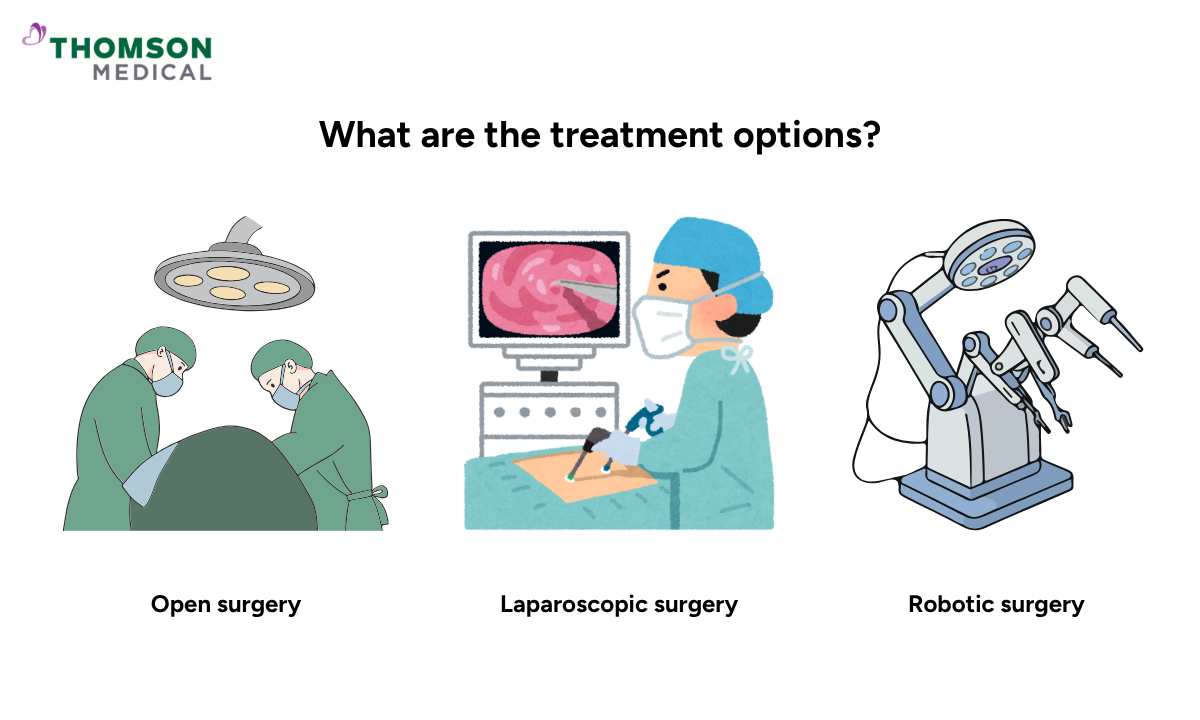
Some childhood hernias could be monitored, while others may need hernia repair surgery to prevent symptoms from worsening or complications from developing. The surgical repair options may include:
Open surgery:
It is a traditional approach to treat childhood hernias through one surgical incision made directly over or near the bulge.
The surgeon then eases the tissue back into place, then repairs the weakened area using stitches or surgical mesh.
Laparoscopic surgery:
Doctors perform laparoscopic hernia repair for children by working through several small cuts, where a thin camera called a laparoscope is inserted into the child’s abdominal cavity.
Robotic surgery:
In selected cases, robotic instruments may help surgeons carry out a minimally invasive repair for treating childhood hernias.
Additionally, your child may require urgent surgical repair if they have an incarcerated or strangulated hernia. This is a condition where tissue becomes trapped and, in some cases, loses its blood supply.
FAQ
Do hernias in children go away on their own?
Some types of hernia in children can go away on their own, such as umbilical hernias, which often close naturally as they grow. However, some other types may not go away on their own and require surgical repair because they involve openings in the abdominal wall that are unlikely to close naturally, such as inguinal and epigastric hernias.
Will my child need to be hospitalised following hernia surgery?
Children usually do not need to be hospitalised after a hernia repair because it is commonly performed as day surgery. Your child can usually go home once they are awake, comfortable, able to drink or feed, and not vomiting. But, if they feel unwell, have other medical conditions, or need emergency surgery, they may also need inpatient observation.
Meanwhile, if hernia surgery is performed for babies – especially premature babies – it may require a hospital stay to monitor their breathing after receiving general anaesthesia.
How long does it take a child to recover from hernia surgery?
After a hernia surgery, your little one may feel better within a few days after a hernia repair and can often return to nursery or their normal activities within about a week, depending on their comfort and their surgeon’s advice.
Can a hernia in children come back after surgery?
A hernia in children can return after surgery, but this is uncommon. However, the chance of hernia recurrence may be higher in children who have surgery during their first year, children with multiple medical conditions, or after an emergency repair for an incarcerated hernia.
The information provided is intended for general guidance only and should not be considered medical advice. For personalised advice based on your unique conditions, schedule an appointment with Thomson Medical.