
.png%3Fbranch%3Dprod&w=3840&q=75)
When your doctor recommends “hormone therapy”, it's normal to have plenty of questions. You may be wondering what treatment will involve, how your body might respond, and whether life will feel different. That uncertainty is completely understandable, and you do not need to have all the answers right away.
Hormone therapy for breast cancer is one of the most established and widely used treatments in women's cancer care, and most women find the experience more manageable than they'd first imagined.
Understanding how it works and what to expect can make the road ahead feel a little less daunting.
What is hormone therapy for breast cancer?
Some breast cancers are fuelled by the hormones oestrogen and progesterone – these are called hormone receptor-positive (HR+) breast cancers. If your cancer has been identified as HR+, hormone therapy is likely to be part of your treatment plan.
Hormone therapy works by either lowering hormone levels in your body or blocking hormones from reaching the cancer cells. This helps slow down or stop the cancer’s growth. Depending on what your doctor prescribes, you may take hormone therapy as a daily tablet or receive it as regular injections.
It’s worth knowing that hormone therapy is not the same as chemotherapy. Rather than destroying cells, it works by targeting the hormonal signals that help some cancers grow. This difference is important because it affects how the treatment works and what you may experience during therapy.
Who is hormone therapy recommended for?
Hormone therapy is used for breast cancers that are hormone receptor-positive (HR+). This is the most common type of breast cancer, meaning many women receive this treatment as part of their care.
Your doctor may recommend hormone therapy if you have:
Early-stage HR+ breast cancer, to reduce the risk of recurrence after breast surgery or radiation
Advanced or metastatic HR+ breast cancer, to help slow the cancer's growth
A higher risk of developing breast cancer, where it may be considered as a preventive measure
Your menopausal status also influences which type of hormone therapy is most appropriate for you, as the body produces oestrogen differently before and after menopause. Your doctor will take this into account when putting together your treatment plan.
Types of hormone therapy for breast cancer
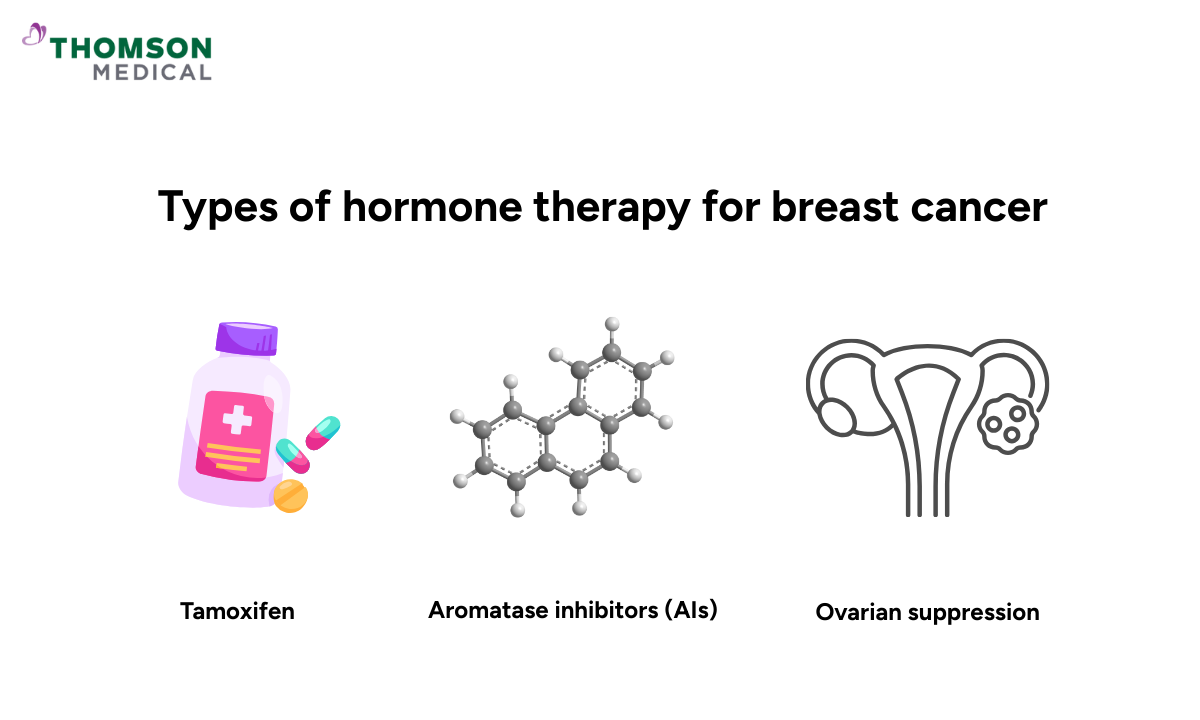
You may find yourself wondering which type of hormone therapy applies to your treatment. There are several options. Your doctor will recommend the suitable option based on your menopausal status, the stage of your cancer, and your overall health.
Tamoxifen
Tamoxifen has been used for decades and remains one of the most well-established hormone therapy options for breast cancer. It works by blocking oestrogen from attaching to cancer cells, which helps slow or stop the cancer’s growth.
One of its advantages is that it can be prescribed to both pre- and postmenopausal women, making it a widely applicable option across different stages of life.
What you should know about tamoxifen:
It’s taken as a daily oral tablet.
Doctors usually prescribe it for five to ten years.
This treatment is suitable for early-stage and advanced HR+ breast cancer.
It may also be used to reduce breast cancer risk in high-risk individuals.
Your doctor will be able to walk you through how tamoxifen fits into your specific treatment plan.
Aromatase inhibitors
Aromatase inhibitors (AIs) work differently from tamoxifen. Instead of blocking oestrogen receptors, they reduce the amount of oestrogen by blocking an enzyme called aromatase, which your body uses to make oestrogen.
AIs are usually prescribed for postmenopausal women, as your body's main source of oestrogen after menopause comes from this enzyme rather than your ovaries. The three most commonly used AIs are anastrozole, letrozole, and exemestane.
Some key details about how AIs are used:
They are taken as a daily oral tablet.
Doctors usually prescribe AIs for five to ten years.
They may be used after a course of tamoxifen as part of a longer treatment plan.
In some cases, AIs may be used in sequence with other hormone therapies as part of a longer-term plan.
Ovarian suppression
Before menopause, your ovaries are still the main source of oestrogen production. Ovarian suppression works by temporarily stopping your ovaries from producing oestrogen, bringing hormone levels down to postmenopausal levels.
It is usually given as a monthly or three-monthly injection and is often combined with tamoxifen or an AI. In some cases, surgical removal of the ovaries may be recommended as a more permanent option.
Whichever type of hormone therapy your doctor recommends, the decision will be guided by what is considered appropriate for your situation. If you have questions about why one option has been suggested over another, your care team will be able to help you understand your treatment plan better.
Our women's cancer specialist
Loading...
Side effects of hormone therapy for breast cancer
If side effects are weighing on your mind, you're not alone – it's one of the most common concerns women have when starting hormone therapy. Like most long-term treatments, it can cause several side effects, though not everyone experiences them in the same way and many are manageable with the right support.
Common side effects and how to manage them
Many of the common side effects are related to lower oestrogen levels in the body, similar to symptoms you might experience during menopause. They can feel uncomfortable at first, but there are practical ways to manage them.
Here are some common side effects and how to help:
Hot flushes and night sweats:
Wearing breathable clothing and keeping your bedroom cool can help.
Some women find that reducing triggers like caffeine, spicy food, and alcohol also makes a difference.
Vaginal dryness or discomfort:
A water-based lubricant or vaginal moisturiser can help ease this.
It’s also recommended to speak to your doctor about suitable options.
Mood changes or low mood:
Regular movement, adequate sleep, and talking to someone you trust can help.
Joint aches and stiffness:
Gentle, regular activity such as walking or swimming can help keep joints mobile.
Fatigue:
Pacing yourself and building rest into your day matters.
Light physical activity can also help improve energy levels over time.
Managing side effects well can make treatment more comfortable and easier to continue. Even small adjustments to your routine can meaningfully shift how you feel day to day.
Long-term side effects to be aware of
Because hormone therapy is taken over several years, there are some longer-term effects worth knowing about. They don't affect everyone, and being aware of them simply means you can take steps to look after your health along the way.
Depending on the type of hormone therapy you're on, long-term effects may include:
Bone thinning (osteoporosis):
AIs in particular can reduce bone density over time.
Your doctor may recommend regular bone density scans, calcium and vitamin D supplements, or weight-bearing exercise to help protect your bones.
Increased risk of blood clots:
This is more associated with tamoxifen.
Your doctor will discuss signs to watch out for, such as swelling or pain in the legs.
Changes to cholesterol levels:
Some hormone therapies can affect heart health over time – regular check-ups help keep this in check.
Uterine changes:
Tamoxifen can slightly increase the risk of changes to the uterine lining in some women.
This is uncommon, but your doctor will monitor you for this as part of your routine care.
Cognitive changes:
Some women report mild memory or concentration issues, sometimes called "brain fog".
This is usually temporary, but it's worth mentioning to your doctor if it affects your daily life.
It's natural to feel unsettled knowing about the side effects. However, none of these mean hormone therapy isn't the right choice for you – for many women, the benefits far outweigh the risks. Your care team will monitor you throughout your treatment to catch anything early.
If you're experiencing side effects that are affecting your daily life, or you're unsure whether what you're feeling is expected, schedule an appointment with Thomson Medical. Our doctors can assess your symptoms and recommend ways to manage them so that your treatment feels more comfortable.
Living well during hormone therapy for breast cancer
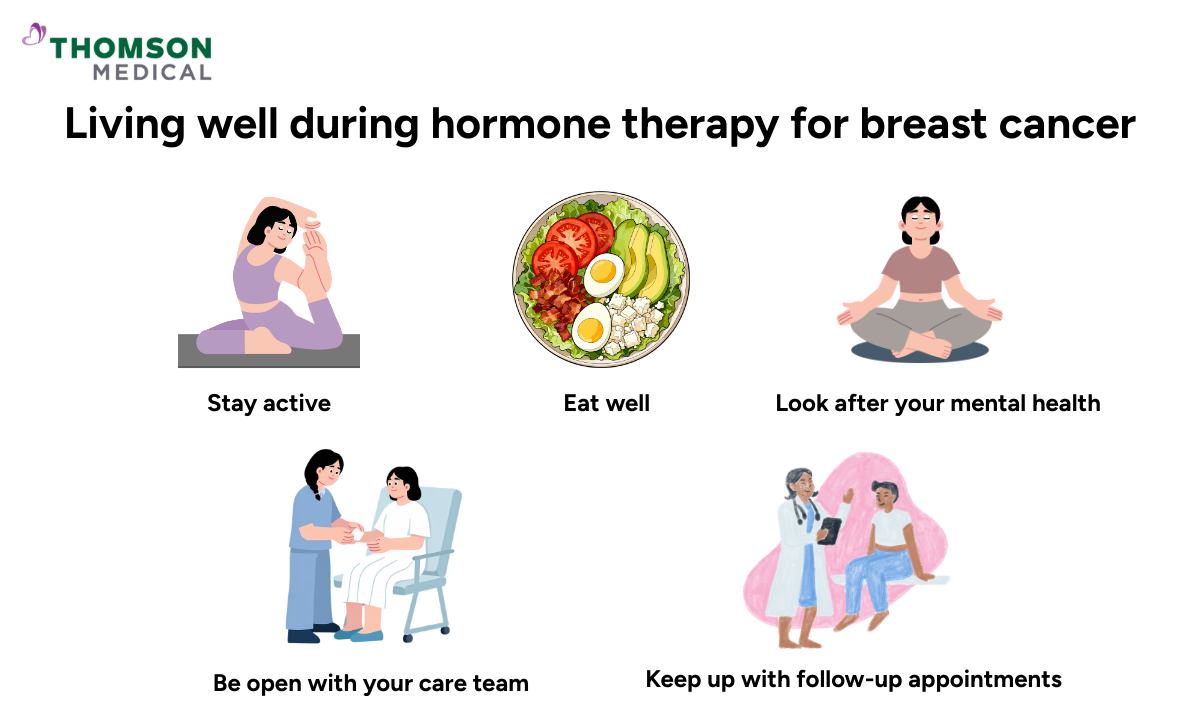
Being on hormone therapy for several years can feel like a big commitment, and it's normal to have days that feel harder than others. Small, consistent habits can make a real difference to how you feel – not just physically, but also emotionally.
Some ways to support your well-being during treatment include:
Staying active:
Regular movement, even gentle walking or yoga, can help with fatigue, mood changes, joint stiffness, and bone health.
Eating well:
A balanced diet rich in calcium and vitamin D is especially important for bone health.
Fruits, vegetables, whole grains, and lean protein all support your overall health during treatment.
Looking after your mental health:
It's normal to feel anxious or low at times – speaking to a counsellor or joining a support group can help you in these moments.
Keeping the conversation open with your care team:
If a side effect is affecting your quality of life, let them know.
Your doctor may be able to adjust your medication or suggest additional support.
Keeping up with follow-up appointments:
Regular check-ups allow your doctor to monitor your response to treatment and pick up on any changes early.
Taking care of yourself during this time isn't a luxury – it's part of your treatment. Many women find that with the right support and small adjustments along the way, life during hormone therapy becomes more manageable than they expected at the beginning.
If you're looking for guidance on how to care for yourself while on hormone therapy, schedule an appointment with Thomson Medical. Our team can work with you to build a care plan that supports your health throughout your treatment journey.
FAQ
What is the difference between hormone therapy and chemotherapy for breast cancer?
Chemotherapy destroys cancer cells throughout your body, while hormone therapy blocks or reduces the hormones that fuel certain breast cancers. They work differently and are sometimes used together.
Can hormone therapy cure breast cancer, or does it just reduce the risk of it coming back?
For early-stage breast cancer, it significantly reduces the risk of recurrence but isn't considered a cure on its own. For advanced breast cancer, it helps slow growth and manage symptoms.
Can I take HRT if I am already on hormone therapy for breast cancer?
Generally, no. HRT raises oestrogen levels, which can work against your treatment. Speak to your doctor about alternatives for managing menopausal symptoms.
Will hormone therapy for breast cancer trigger early menopause?
It can cause menopause-like symptoms, particularly in premenopausal women. If you're on ovarian suppression, periods may stop temporarily but can return after treatment ends.
Is weight gain a common side effect of hormone therapy for breast cancer?
Some women do notice weight changes. Staying active and eating well can help. Speak to your doctor or a dietician if this is a concern.
Can I get pregnant after completing hormone therapy for breast cancer?
It's possible for some women, but it requires careful planning. Since treatment normally lasts five to ten years, it's worth discussing fertility with your doctor early on.
The information provided is intended for general guidance only and should not be considered medical advice. For personalised recommendations based on your medical conditions, request an appointment with Thomson Medical.