

When a child experiences poor appetite, frequent tummy discomfort, or irregular digestion, it can leave parents feeling unsure about what’s normal and what needs attention. These concerns are common, especially during early growth and development.
In Traditional Chinese Medicine (TCM), a child’s digestive system is still maturing, which may make them more responsive to internal and external changes. Rather than focusing only on symptoms, TCM looks at overall balance and development. Understanding this approach can help parents support their child’s gut health in a gentle and holistic way.
What is gut health?
Your child’s gut health refers to the overall function and balance of their digestive system, from their stomach and bowels to the trillions of bacteria (gut microbiota) that live there. When it’s healthy and balanced, it helps your child digest food, absorb nutrients, and stay strong and energetic throughout the day.
Your child’s digestive system is still developing as they grow. This means their body is learning how to process different foods and support beneficial gut bacteria.
How does gut health impact children?
A healthy gut plays an important role in your child’s overall well-being. It helps to:
Support growth and development:
A healthy digestive system allows your child to absorb all the important nutrients from the food, which are needed for their growth and development.
Build a strong immune system:
When your child’s digestive tract is healthy, it helps their body fight off infections and common illnesses such as colds and flu.
Improve appetite and energy:
When your child’s gut is balanced, they tend to have a better appetite and more stable energy levels.
Prevent digestive discomfort:
Your child will be less likely to experience stomach aches, bloating, constipation, or diarrhoea.
If you notice your child is picking at their food or complaining about stomach pain, these may be signs that their digestive system isn't working well. In such cases, their gut health may need extra attention and support.
What causes digestive disorders in children?
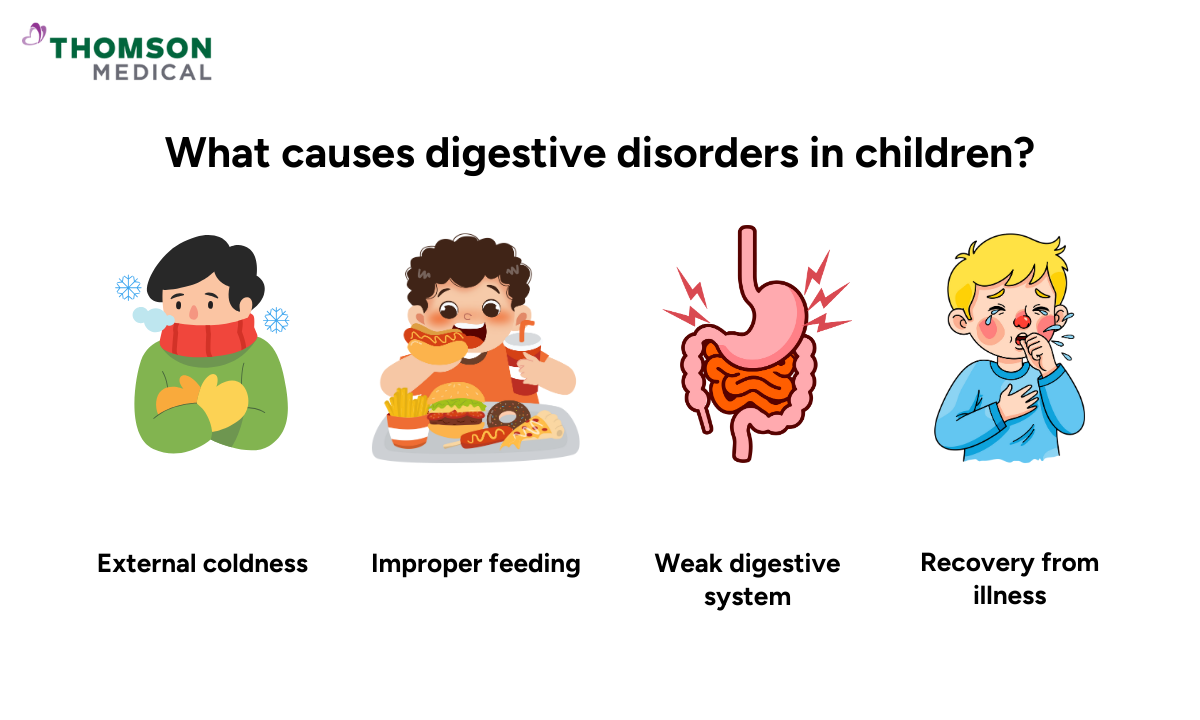
It’s completely normal to worry when your child experiences digestive issues, but knowing what causes these problems can help you find the right solutions for your child.
Common causes of digestive disorders in your child include:
External coldness:
When your child is exposed to cold environments or eats too much cold or raw food, such as ice cream, they may experience abdominal cramps, diarrhoea, and loss of appetite.
Improper feeding:
Eating too many fatty, oily, or processed foods can cause indigestion, which may lead to vomiting, bloating, or abdominal pain. Over time, this can weaken their digestive system and affect their appetite.
Weak digestive system:
A weak digestive system is common in young children, as their Spleen is not fully developed. This affects how they absorb nutrients and could manifest as poor appetite or diarrhoea.
Recovery from illness:
When your child is recovering from conditions such as a cough, fever, or the common cold, their digestive system may be weakened due to medication and the body’s effort to fight the illness.
If you have concerns about your child's digestive health or notice ongoing digestive symptoms, you can schedule an appointment with Thomson Chinese Medicine for further guidance.
Our TCM physicians
Loading...
How to improve gut health in children?
You don’t always need complicated or expensive solutions to support your child’s gut health. Simple and consistent changes in diet and daily habits can make a real difference.
Dietary changes
You can boost your child’s gut health by ensuring a nutritious diet with a variety of foods and encouraging them to eat in moderation. Try to avoid rich, fried, or oily foods because these can affect their digestion.
To encourage good eating habits, you can start with these tips:
Eat at regular hours
No snacks or sweets before meals
Have a healthy mix of protein, vegetables, and fibre-rich grains
Encourage them not to be picky about foods
Eat less raw, cold, fatty, or oily food
Avoid drinking too much before and after meals
Limit artificial sweeteners
Remember that meal times should be enjoyable and stress-free. Disciplining your child for not eating properly can cause distress and affect their appetite.
When your child is recovering from an illness, it’s advisable to feed them bland and easily digestible foods such as congee. It’s also recommended to avoid meat while they are unwell and for a short period after recovering from a fever.
Lifestyle habits
Together with a healthy diet, daily habits also play an important role in supporting your child’s digestive health. You can help your child build these habits:
Stay active:
Regular physical activity supports your child’s digestive health and helps prevent constipation. You can consult your doctor for guidance on activities that suit your child’s age and development.
Prioritise good sleep:
Sleep is when your child’s body repairs and rebuilds, including their digestive system. Having a consistent sleep schedule and getting enough sleep can support your child’s gut health and immune function.
Manage stress gently:
Just like adults, children can experience stress that affects their digestion. To help your child feel comfortable, create a calm home environment, maintain routines, and give them space to express their feelings.
When you help your child follow these steps consistently, you are likely to see improvements in their gut health over time.
Additional support
Paediatric tuina and Chinese herbal medicine can be helpful approaches to consider.
Paediatric tuina is a form of acupressure that stimulates specific points on your child's body. This gentle and non-invasive technique can help support your child’s digestive function.
Chinese herbal medicine may also be useful for your child’s digestive health. It eases some mild digestive issues in young children, thereby helping them to build a stronger digestive system. To explore these options, consult your doctor to determine if they’re suitable for your child.
When to see a physician
Most digestive issues in children can be managed with dietary and lifestyle changes, but there are times you may need professional support.
You should contact your doctor if your child experiences:
Persistent diarrhea or constipation lasting more than a few days
Frequent stomach pain or cramping
Ongoing poor appetite, even after you’ve changed the diet
Vomiting, especially if it’s frequent or recurring
Signs of malnutrition or poor growth
Bloating or excessive gas
Any digestive symptoms that worry you
If you are worried about your child’s health, your paediatrician is there to support both you and your child. They will assess your child’s condition and recommend the right approach to to help your child feel better.
If your child has ongoing digestive symptoms or discomfort, you can schedule an appointment with Thomson Chinese Medicine for further evaluation and support.
FAQ
How can you detox your child's gut?
You can naturally reset your child’s gut by removing foods that stress their digestion, such as cold, raw, and fatty foods, and by adding warm, easily digestible foods.
Along with this, make sure your child drinks enough water, exercises regularly, and gets enough sleep. These simple changes can help improve your child’s gut health.
What vitamins will help with gut issues for kids?
There are some nutrients that are especially important for your child, including:
- Probiotics:
- These are beneficial bacteria that support a healthy gut microbiome. You can find these in fermented foods, such as yoghurt, or in probiotic supplements.
- Fibre:
- Fibre is very helpful in preventing constipation. It can be found in vegetables, fruits, and whole grains.
- Zinc and vitamin A:
- They are found in foods like carrots, sweet potatoes, eggs, and lean meats.
- Omega-3 fatty acids:
- These support overall digestive health and help reduce inflammation. Fish is a great source, so try adding it to your child's diet.
These nutrients are available in common foods, so try to get them from food first before considering supplements. If your child has specific deficiencies or persistent issues, you can discuss this with your paediatrician.
What are common signs of poor gut health in children?
Poor gut health in children can show up in different ways. You may notice your child:
- Complaining about stomach aches
- Having inconsistent bathroom habits
- Feeling unusually tired or lack energy
- Have a poor appetite or be picky about food
- Getting sick more often than usual
- Having skin issues
- Becoming bloated after eating or complaining of gas
These can be signs that your child’s gut health needs your care and attention. However, most of these symptoms improve quickly once you make changes to their diet and lifestyle.
How to check a child's gut health?
You can check your child’s gut health by observing their daily signs. Signs of a healthy gut include:
- Regular, healthy bowel movements
- Good appetite
- Stable energy levels
- Clear skin
- Fewer infections
However, if your child complains of stomach pain, feels constantly tired, or gets sick frequently, their gut health may need support.
What are the 5 R's of gut health?
The 5 R's framework provides a simple, step-by-step approach that you can follow to improve your child's digestive health. It includes:
- Remove, or eliminate, foods that stress digestion
- Replace, by adding warm and nourishing foods
- Restore, by supporting healthy digestion with proper eating habits
- Rebalance by encouraging regular movement and sleep
- Reinoculate by adding probiotics through food or supplements
How do probiotics and prebiotics benefit children's digestive systems?
Probiotics are beneficial bacteria that live in your child's gut and support healthy digestion, nutrient absorption, and immune function.
Prebiotics (also called prebiotic fibre) are a type of fibre that feeds the good bacteria in your child's gut, helping them thrive.
Together, probiotics and prebiotics work as a team to create a healthy gut balance. Probiotics can be found in yoghurt and fermented foods, while prebiotics are in foods like bananas, garlic, and whole grains. Supplements can be an option, but be sure to consult your paediatrician first.
The information provided is intended for general guidance only and should not be considered medical advice. For personalised recommendations and advice based on your unique situation, schedule an appointment with Thomson Chinese Medicine today.
Physician Seah Ai Wei
Traditional Chinese Medicine
Thomson Chinese Medicine (TCM United Square) and 1 other
English, Mandarin
Alliance MediNet
