

If you're worried about making enough milk for your baby, you're not the only one. This is one of the most common concerns for new mothers, especially in the first few weeks when it's hard to tell how much your baby is getting.
The good news is that breast milk supply isn’t fixed and there are things you can do to help increase your supply. Let's explore what affects your milk supply and what you can do to support your body during this time.
Is your milk supply actually low?
Many mothers worry about whether their baby is getting enough milk. Perhaps your baby wants to feed very often, your breasts feel softer than before, or your little one seems fussier than expected. When you're still recovering from birth and getting used to life with a newborn, these experiences can feel understandably concerning.
But before trying to boost your milk production, it helps to consider whether your supply is actually low.
Signs that might indicate low milk supply include:
Your baby isn't gaining weight as expected
Fewer wet nappies than expected over a 24-hour period
Your baby seems hungry after most feeds
Common experiences that don't mean low supply include:
Softer breasts
Your baby wanting to feed often
Fussiness, especially in the evening
Not leaking breast milk
It’s important to remember that baby behaviour alone isn’t a reliable measure of milk supply. Growth, nappy output, and overall wellbeing are much better indicators.
And here's something important: if you do end up needing infant formula milk at any point, that doesn't take away from your breastfeeding experience. It's just another way of making sure your baby is fed and growing well. What really matters is that both of you are supported, well-fed, and cared for during this time.
How breast milk production works
Your body makes milk based on a supply-and-demand system. Each time milk is taken from your breast, whether by your baby nursing or by pumping, your body gets the signal to make more. That said, removing milk regularly is what keeps production going. When milk is removed frequently and effectively, milk-making hormones are stimulated and production increases.
Regular milk removal is key. When milk stays in the breast for long periods, your body receives the opposite message and may begin to slow production. This is why frequent feeds or pumping sessions are so important, especially in the early weeks.
Having a low milk supply doesn't automatically mean you have to stop breastfeeding. In many cases, with the right help and information, you can build up your supply and keep breastfeeding in whatever way suits you and your baby best.
How to increase milk supply naturally
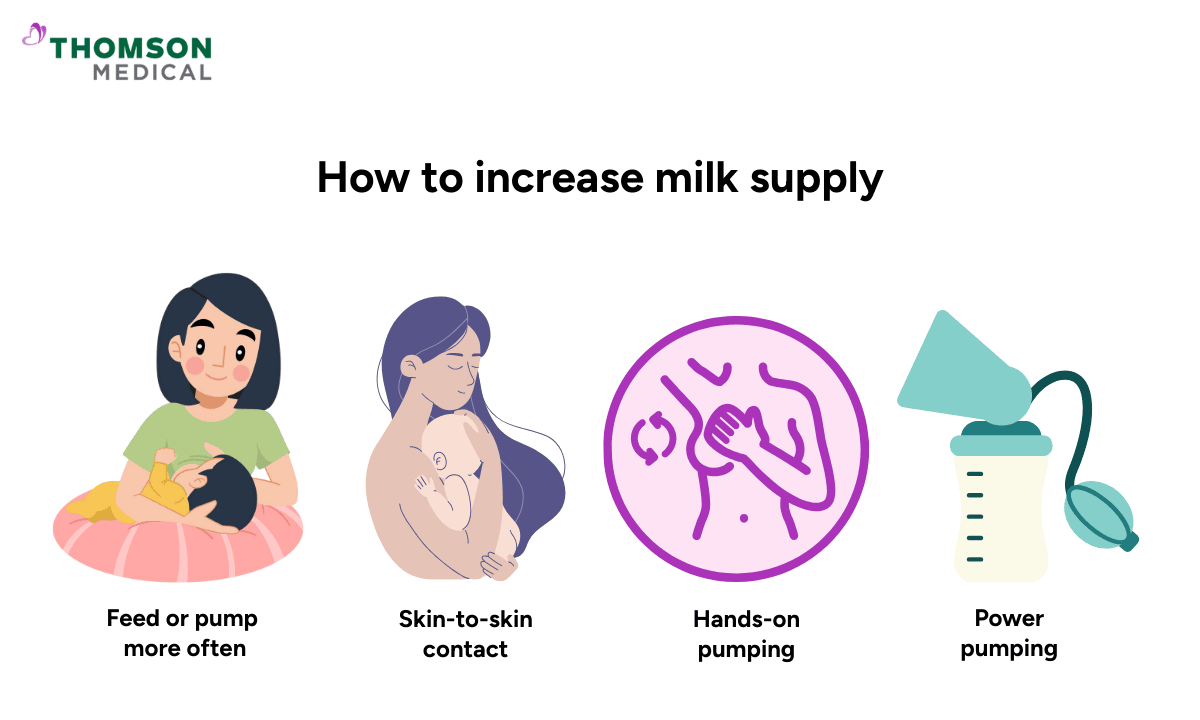
If you're looking for ways to boost your breast milk supply, you're probably also wondering whether they're safe for both you and your baby.
Here are some gentle methods that many mothers find helpful:
Feed or breast pump more often
With so many tips out there for increasing milk supply, it can be hard to know what actually works and where to start.
One of the best things you can do is adjust how often and how long your baby feeds. Feeding or pumping frequently helps trigger prolactin (the hormone that makes milk) and gets your milk flowing repeatedly throughout the day.
What to try:
Breastfeed or breast pump 8–12 times in 24 hours
Let your baby finish the first breast before switching sides
Offer both breasts at each feed when you can
These are safe and effective first steps that help many mothers boost their milk supply naturally.
Skin-to-skin contact
Holding your baby skin-to-skin is a lovely way to help with milk production.
It may help to:
Trigger oxytocin, the hormone that supports milk let-down
Make it easier to spot your baby's hunger cues
Feel calmer and more relaxed during feeds
How to do it:
Take off your baby's clothes (leave the nappy on)
Place your baby on your bare chest
Cover both of you with a light blanket
You can try skin-to-skin before or during feeds, or simply during quiet cuddle time. It's good for your milk supply and your emotional wellbeing too.
Hands-on pumping (breast massage while pumping)
Hands-on pumping is when you massage and gently squeeze your breasts while using a breast pump. It helps you get more milk out and can make pumping sessions feel better and less frustrating.
Try breast massage before you start pumping, then use gentle compressions during the session, especially when milk flow begins to slow.
Power pumping
Power pumping is a technique that mimics cluster feeding – those times when babies want to nurse frequently. When your body notices milk being removed often, it gets a stronger signal to make more.
Rather than trying to get lots of milk in one go, power pumping is about giving your breasts repeated signals throughout the session.
Here's a typical pumping routine:
Pump for 20 minutes
Rest for 10 minutes
Pump for 10 minutes
Rest for 10 minutes
Pump for another 10 minutes
The whole session takes about an hour. Most people do this once a day for a few days in a row.
Power pumping might help if:
Your baby is sleeping longer stretches and feeding less often
You're pumping exclusively and want to increase how much you get
Your supply has dropped after being sick, stressed, or having a change in routine
You want to build up a small stash in the freezer
Power pumping is safe for most mothers, but it can be exhausting. Make sure you're also getting enough rest, eating well, and looking after yourself overall.
If you’re unsure whether power pumping is right for you, you don’t have to decide alone. Our lactation consultants can help you understand your situation and suggest a plan that fits your body, your baby, and your routine. Request a consultation with Thomson ParentCraft Centre.
Lactation consultations
Loading...
Nutrition and lifestyle factors to boost milk supply

While feeding or pumping frequently is the most important factor in making milk, your body also needs looking after. What you eat, how much you rest, and how you handle stress can all affect how breastfeeding feels and how easily it fits into your daily life.
Eating well
Having regular, balanced meals gives your body the energy it needs to make milk and recover from childbirth. You don't need a special diet or strict rules to breastfeed successfully.
What helps:
Eat a variety of foods – carbs, protein, healthy fats, fruits, and vegetables
Eat in a way that feels doable and enjoyable for you
There's no magic food that will suddenly boost your breast milk supply. Traditional foods can be nourishing and comforting, but no particular diet has been shown to increase production on its own.
Staying hydrated
Drinking when you're thirsty is usually enough. Most breastfeeding mums need around 2–3 litres of fluids a day (about 8–12 glasses), but you don't need to force yourself to drink large amounts at once.
Good options include:
Water
Soups and broths
Herbal teas
Coffee and milk tea (in moderation)
Keeping a water bottle near you during feeds makes it easier to sip throughout the day.
Rest and recovery
Rest plays an important role in how you feel overall and may help with milk production too. After a good sleep, you might notice your breasts feel fuller – a sign that your body continues to make milk even while you rest.
Many mothers find it difficult to rest while caring for a newborn, especially in the early weeks after birth.
What might help:
Nap when your baby naps (even 20 minutes counts)
Share baby care with your partner or family when you can
Let non-essential tasks slide – housework can wait
Remember that looking after yourself is part of looking after your baby.
Managing stress
When you're stressed, your body releases hormones that can interfere with milk let-down, even when there's plenty of breast milk. That’s why you might feel as though your milk isn’t there when it actually is.
Things to try:
Take a few slow, deep breaths
Drop your shoulders
Give yourself a quiet minute before you feed or pump
Ask for help from your partner or family
Your body knows what it's doing. Trust yourself that you're doing more than enough.
Breastfeeding can be hard and unpredictable. But your care and effort matter so much more than measuring milk in millilitres. With support, many mothers see things improve over time. And even when things don’t go to plan, you're still taking great care of your baby.
If you’d like personalised support for your breastfeeding journey, request a consultation with our lactation consultant at Thomson ParentCraft Centre. We’re here to support you and your baby.
FAQ
How can I increase my milk supply fast?
Breastfeeding or pumping more often (about every 2–3 hours) is the most effective way. Most mothers notice changes within a few days.
What drinks increase breast milk?
There is no special drink that dramatically increases your milk volume. Water, soups, broths, and herbal teas can help you stay hydrated, which supports milk production.
Do soft breasts mean no milk?
Soft breasts are common and often mean your body has adjusted to your baby’s needs. They do not mean you have no milk.
What food to avoid when breastfeeding?
Most nursing mothers don’t need to avoid specific foods. Eat a balanced, nutrition-rich diet unless your baby shows clear reactions to certain foods.
Should I keep pumping if no milk is coming out?
Pumping still sends signals to your body to make more milk, even if little or no milk appears at first.
Will pumping every 2 hours increase milk supply?
Frequent pumping can help increase supply by stimulating milk production, especially when done consistently.
The information provided is intended for general guidance only and should not be considered medical advice. For personalised recommendations and tailored advice based on your unique situations, please consult a specialist at Thomson Medical. Request an appointment with Thomson Medical today.