

If you have noticed small brown patches appearing on your face, hands or shoulders, you may be wondering what they mean and whether you should be concerned. These marks, often called sun spots, are very common and tend to show up as we spend more years in the sun. Still, they can take you by surprise, especially if they seem to appear overnight.
Understanding what causes sun spots can help you feel more in control of your skin health. It can also guide you towards simple steps that can effectively treat them and protect your skin in the future.
What are sun spots?
Sun spots, also known as solar lentigines, age spots, or liver spots, are darkened areas of skin that develop after years of sun exposure. They're one of the most common concerns patients share with dermatologists.
The good news is they're completely harmless, simply a visible sign of your skin working hard to protect you from sun damage over the years.
Who gets sun spots?
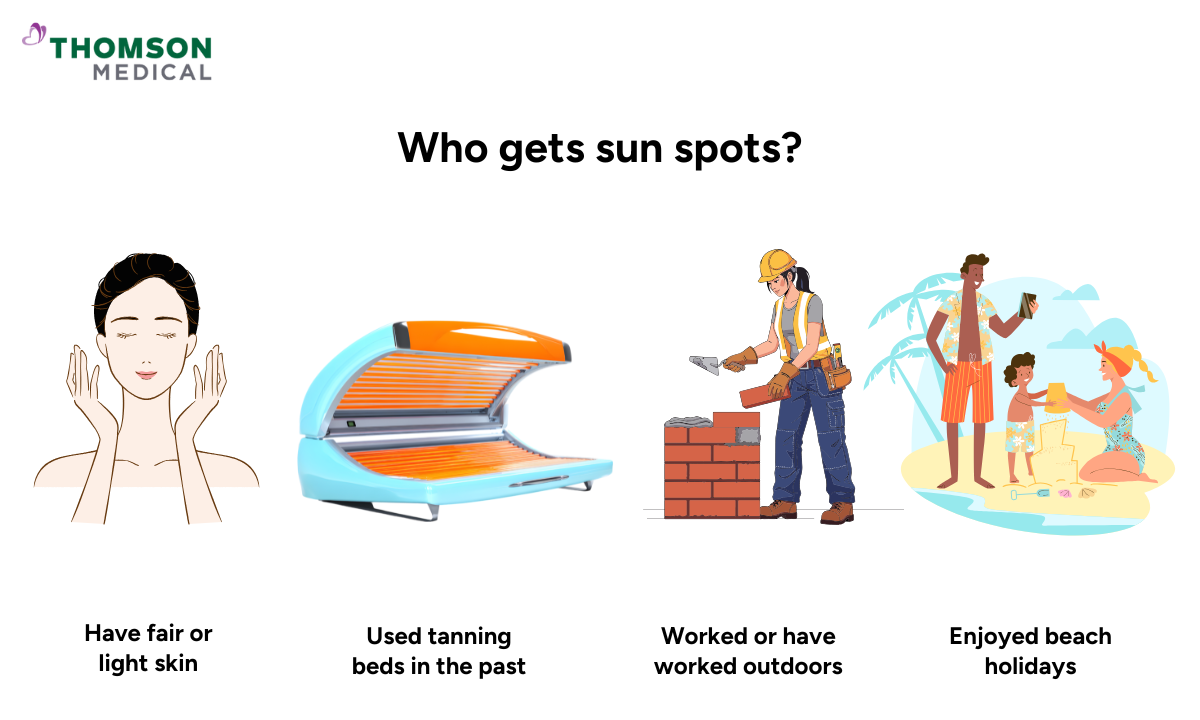
Sun spots typically begin appearing after age 40, though the timeline varies based on your individual sun exposure history. You may be more likely to notice them if you:
Have fair or light skin
Spent significant time outdoors without sun protection during your younger years
Used tanning beds in the past
Work or have worked in outdoor
Enjoyed beach holidays and outdoor activities throughout your life
These patches typically appear on areas that have seen the most sun over the years, like the backs of your hands, forearms, face, shoulders, and upper back.
Whether your sun spots developed from years working outdoors, weekend gardening, or those lovely family beach holidays, they're a natural part of how skin ages. Once you know what they are, you can think about how you want to approach them.
Our dermatologist in Singapore
Loading...
How to recognise sun spots?
Sun spots have specific characteristics that can help you understand what you're seeing on your skin:
Appearance: Flat, smooth patches with clearly defined edges
Colour: Usually tan to dark brown
Shape: Typically round or oval
Size: Can range from a few millimetres to over a centimetre across
Pattern: Often appear in groups or clusters on sun-exposed areas
It's natural to wonder about any changes you notice on your skin. Sun spots themselves are benign, meaning they're not cancerous and don't turn into skin cancer. Over time, some may develop a slightly raised, rougher texture (these are called seborrheic keratoses), but they remain harmless.
That said, it's always important to pay attention to your skin. If you notice any spots that are changing in appearance, growing, bleeding, or simply look different from your other sun spots, it's worth having them checked by a doctor.
If you notice new or changing sun spots, request an appointment with Thomson Medical. Our dermatologist can assess any spots you're concerned about and give you advice on caring for your skin based on your individual circumstances.
What treatments are available for sun spots?
Sun spots are harmless, but some people choose to explore treatment options for cosmetic reasons. If you're considering this, it's helpful to understand what's available. Dermatologists may discuss several approaches with patients, depending on individual circumstances.
Prescription topical treatments
These are applied at home as part of your skincare routine and work gradually over weeks to months. Different formulations work in different ways:
Hydroquinone reduces dark pigment and evens out skin tone
Tretinoin (vitamin A) helps skin renew faster and can prevent new spots
Kojic acid and glycolic acid gently lighten and exfoliate
Your dermatologist can explain which options might be suitable based on your skin type and the characteristics of your sun spots.
Laser treatments
These use focused light energy to target pigmented areas. The procedure typically involves one to two sessions, though this varies depending on individual factors. Some people experience temporary darkness in treated areas before they begin to fade, which is a normal part of the process.
Cryotherapy (freezing treatment)
This involves applying very cold liquid nitrogen to individual spots. The procedure causes the darkened cells to gradually peel away over time. It's a brief treatment that works for specific spots.
Chemical peels
These involve applying a solution that removes the outer layers of skin containing excess pigment. As your skin heals, newer skin develops in its place. Different strengths are available depending on individual needs.
Each approach has different considerations, and what works well for one person may not be the best fit for another. A dermatologist can help you understand these options in the context of your own skin, health history, and preferences, so you can make a decision that feels right for you.
What should I expect after treatment?
If you decide to proceed with treatment, your dermatologist will explain what to expect during your recovery. It's helpful to know that some temporary changes are a normal part of the healing process.
After certain dermatologic procedures, you may experience:
Mild redness and swelling in the treated area, similar to mild sunburn
Some crusting or scabbing that typically heals within a week or two
Gradual changes in the appearance of treated spots over several weeks
These effects are temporary, and your skin will gradually recover and reveal the improvements you’re hoping for. Most people find that any discomfort or changes are mild and temporary.
How to take care of your skin after treatment?
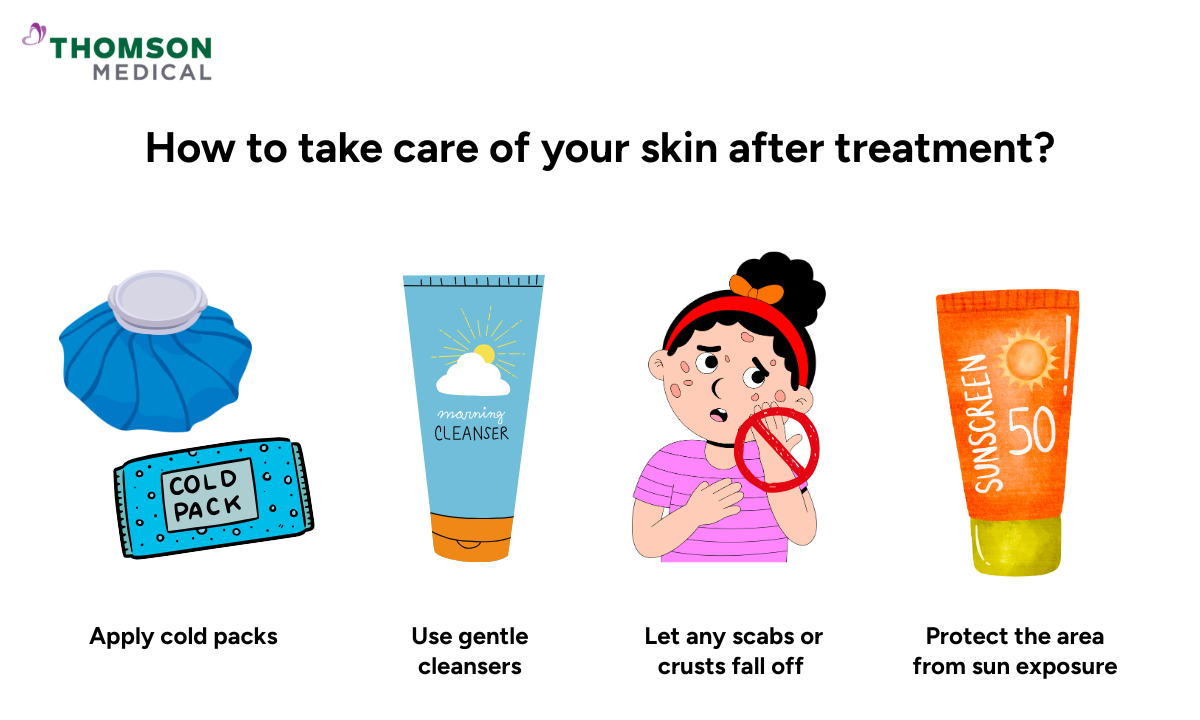
If you proceed with treatment, your dermatologist will give you with specific aftercare instructions tailored to your procedure and skin type, which typically include:
Apply cold packs during the first day or two to help reduce any swelling and make the area more comfortable
Use gentle cleansers and healing ointments on the treated area
Let any scabs or crusts fall off naturally rather than picking at them
Protect the area from sun exposure
Your dermatologist will explain what's normal during your recovery and when to get in touch if you have any questions. Following the aftercare guidance you receive helps support your skin's natural healing process.
Should I try home remedies for sun spots?
You may have come across various home remedies and DIY solutions online for sun spots. While it's tempting to try these approaches, they can sometimes irritate your skin or lead to unintended results, particularly as our skin becomes more sensitive with age.
If sun spots are a concern for you, speaking with a dermatologist can help you understand what's happening with your skin. A dermatologist can properly assess the spots you're seeing and help you understand the options available based on your individual skin type and health history.
How can I prevent new sun spots from forming?
Whether or not you've had treatment, protecting your skin from sun exposure is an important part of overall skin health. Sun protection can help reduce the likelihood of new sun spots developing and support your skin's wellbeing as you age.
Here are some practical ways to care for your skin:
Daily sun protection:
Apply a broad-spectrum sunscreen to exposed skin every day, not just during beach holidays.
Reapply every two hours when you're outdoors, especially if you're sweating or swimming.
Remember often-missed areas like your ears, neck, and the backs of your hands.
Protective clothing:
Wear protective clothing when spending time outdoors.
Wide-brimmed hats can protect your face, ears, and scalp.
Long sleeves can give you additional coverage during peak sun hours.
Timing your activities:
UV rays are typically strongest between 11am and 4pm.
When possible, plan outdoor activities for earlier or later in the day.
Indoor sun exposure:
UV rays can penetrate glass, so you may still get sun exposure through car and office windows.
UV-protective window film is an option if you spend significant time near windows.
Choosing sun protection products:
Physical sunscreens (containing zinc oxide or titanium dioxide) work by reflecting UV rays.
Chemical sunscreens work by absorbing UV energy.
Your dermatologist or pharmacist can help you understand which type might suit your skin.
These are general sun safety practices that benefit everyone, regardless of whether you have sun spots. If you have specific questions about protecting your skin, your doctor can advise you based on your individual circumstances.
If you want to protect your skin and prevent new sun spots from forming, request an appointment with Thomson Medical. Our specialists can recommend the right sunscreens, sun protection strategies, and skincare tips made for you to keep your skin healthy and maintain your treatment results.
When should I see a dermatologist about sun spots?
While sun spots are generally harmless, you may find it helpful to speak with a dermatologist if you have concerns about changes in your skin.
It may be worth scheduling an appointment if:
You notice spots that are growing or changing in appearance
You have spots that look different from your other sun spots
You're concerned about distinguishing sun spots from other types of skin changes
You'd like to understand more about your skin and the options available to you
A dermatologist can assess any spots you're concerned about and help you understand what you're seeing. They can also advise you on caring for your skin based on your individual skin type and history.
FAQ
Are sun spots dangerous?
No, sun spots themselves are not dangerous and don't turn into skin cancer. They're a harmless sign of sun exposure accumulated over time. That said, if you notice any new spots or ones that are changing in appearance, it's sensible to have them assessed by a dermatologist to ensure they're benign.
Can sun spots disappear on their own?
Sun spots typically don't fade on their own once they've formed. However, using sun protection consistently can help prevent them from darkening further. If you're concerned about existing sun spots, a dermatologist can discuss the options available to you.
How long does it take to see changes from treatment?
The timeframe varies depending on the type of treatment. Some approaches may show changes within a few weeks, while others work more gradually over several weeks to months. If you're considering treatment, your dermatologist can explain what to expect based on the specific approach that might be suitable for your skin.
Will sun spots return after treatment?
New sun spots can develop if your skin continues to be exposed to UV radiation without protection. This is why consistent daily broad-spectrum sunscreen is important for long-term skin health. New spots can also appear in different areas over time, as sun exposure is cumulative throughout your life.
Do sun spots only appear on older people?
While sun spots are most common in people over 40, younger individuals can develop them too, especially if they've had significant sun exposure, used tanning beds, or have fair skin. The spots reflect cumulative sun damage rather than age alone.
Is treatment painful?
Most treatments are quite tolerable. Laser therapy feels similar to a rubber band snap against the skin which is briefly uncomfortable but manageable for most people. Prescription creams are applied at home and don't cause pain. Your dermatologist can provide numbing cream if you're concerned about sensitivity.
The information is intended for general guidance only and should not be considered medical advice. For personalised recommendations and advice based on your unique situation, please consult a specialist at Thomson Medical. Request an appointment with Thomson Medical today.
Reference:
Merin, K. A., Shaji, M., & Kameswaran, R. (2022). A review on sun exposure and skin diseases. Indian Journal of Dermatology, 67(5), 625. https://doi.org/10.4103/ijd.ijd_1092_20
Dr Tan Hiok Hee
Dermatology (Skin)
Thomson Specialist Skin Centre (Novena Specialist Center)
English, Mandarin
.png%3Fbranch%3Dprod&w=640&q=75)