

You've tried everything – counting sheep, cutting caffeine, even those expensive sleep supplements – but you still lie awake at 3 am. What if the solution isn't about forcing your body to sleep but about restoring the balance that's keeping you awake?
Traditional Chinese Medicine approaches insomnia differently, and the way it works might surprise you.
What is insomnia?
Insomnia is the persistent difficulty falling asleep, staying asleep, or waking too early – leaving you exhausted despite spending hours in bed. Traditional Chinese Medicine (TCM) sees sleep as part of your body’s natural yin-yang rhythm. During the day, yang energy dominates, keeping us active, alert, and warm. As night falls, yin energy gradually takes over, allowing our body to slow down, cool, and rest.
When this natural shift does not happen smoothly, the balance between yin and yang is disturbed. Instead of settling into rest, the body remains overly active at night, making it difficult to fully relax and transition into sleep.
What causes insomnia in TCM?
Many everyday factors can disrupt the balance between yin and yang, including:
Dietary habits such as overeating, heavy meals, or frequent intake of caffeine and alcohol
Strong or prolonged emotions such as anger, grief, or excessive excitement
Physical or mental exhaustion from overwork, excessive exercise, or prolonged screen time
Prolonged illness or recovery periods
Age-related changes in your body
In TCM, these factors generate excess heat, deplete yin energy, or cause Qi stagnation – all of which keep your body in an active state when it should be resting.
Underlying issues of insomnia
Insomnia may also be a sign of a deeper internal imbalance. When left unaddressed, it can gradually affect your energy levels, emotional wellbeing, work performance, and overall quality of life.
Some underlying TCM patterns associated with insomnia include:
Liver fire (“heatiness”):
Liver fire is a state of excess internal heat, often linked to stress.
It may cause irritability, restlessness, headaches, or trouble falling asleep.
Liver and Gallbladder damp heat:
It is a build-up of heat and moisture in your body.
You may experience a heavy feeling, a bitter taste in the mouth, vivid dreams, or disturbed sleep.
Heart Qi deficiency:
Low energy affects your heart and mind.
It usually shows up as fatigue, anxiety, palpitations, or light, easily disrupted sleep.
Heart fire:
Excess heat may also influence your sleep.
Common signs include a racing mind, restlessness at night, vivid dreams, or night sweats.
Spleen Qi deficiency:
Insomnia is often linked to bloating, poor appetite, tiredness, and brain fog.
By addressing the root causes behind your sleep difficulties, TCM offers a supportive, holistic approach to improving sleep quality – one that works with your body, not against it.If sleepless nights have become a regular struggle, our qualified TCM physician can help identify your underlying pattern and guide a personalised treatment plan to support more restful nights and calmer days. Request an appointment today.
Our physicians
Loading...
How TCM treatments help improve sleep quality
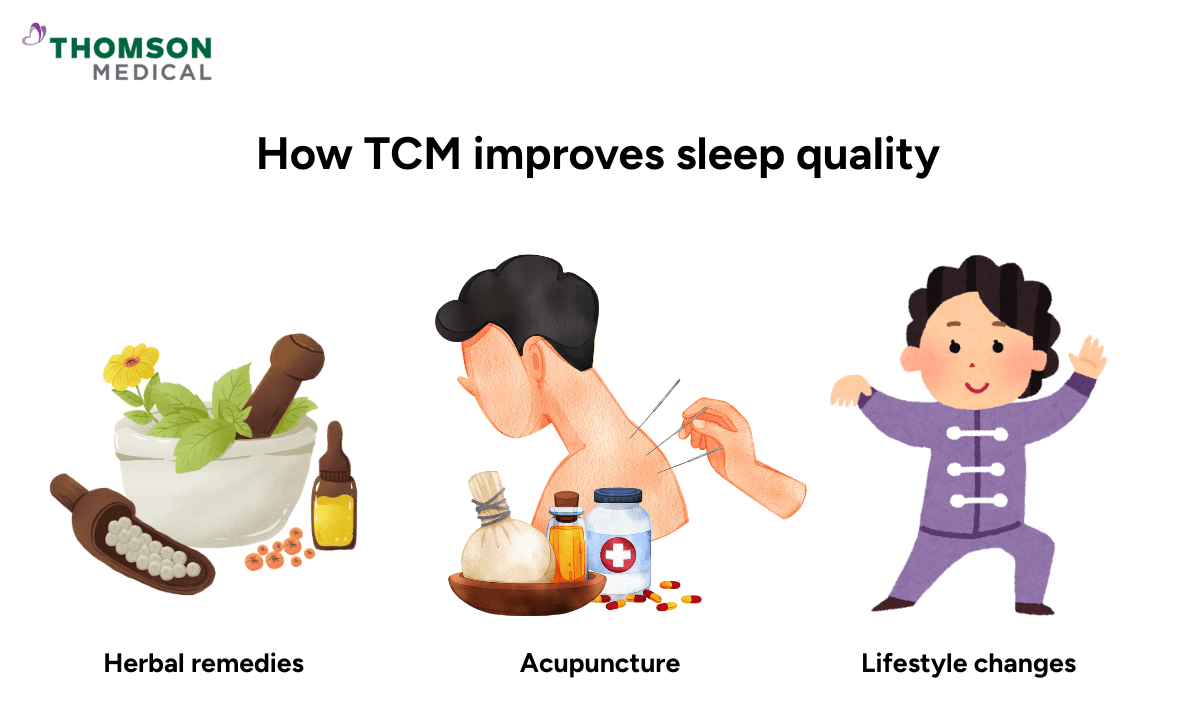
Rather than sedating the body, TCM treatments aim to calm your mind, nourish your body, and restore balance so that sleep can return naturally.
Herbal remedies
Herbal remedies are used to support sleep by addressing the underlying pattern behind insomnia. Chinese herbal formulas are carefully prescribed based on your individual constitution and sleep pattern, not just your symptoms.
Depending on the root causes, herbs may be used to:
Nourish Blood or Yin
Calm the Heart and ease mental restlessness
Clear excess internal heat
Support digestion, which is closely linked to sleep in TCM
Some people may also benefit from gentle dietary herbs or warm herbal teas as part of their daily routine. These ingredients and teas are traditionally used to help soothe your mind and support Qi balance:
Spinal date seed (酸枣仁)
Lily bud (百合)
Dried longan (龙眼肉)
Bo zi ren herb (柏子仁)
Chamomile (洋甘菊)
Albizia julibrissin flower (合欢花)
Rosebud (玫瑰花)
These formulas and herbs are often adjusted over time as sleep quality and overall health gradually improve.
Acupuncture
For insomnia, acupuncture is commonly used to help calm your mind and gently guide your body into a more restful state. Many people find that regular sessions may help to:
Ease anxiety and emotional tension
Quiet racing or overactive thoughts
Support deeper, more restorative sleep
By stimulating specific points on your body, acupuncture helps regulate the flow of Qi and Blood, allowing the nervous system to settle and the body’s natural sleep–wake rhythm to gradually rebalance. Rather than forcing sleep, it works by creating the right internal conditions for rest to occur naturally.
Depending on your individual pattern, your TCM physician may select points such as Nei Guan and Shen Men, which are traditionally used to calm the Heart, release internal heat, and soothe mental restlessness that can interfere with sleep.
Lifestyle habits help relieve insomnia
Alongside herbal remedies and acupuncture, simple lifestyle habits can support your body’s natural ability to rest and reset.
Create a gentle wind-down routine for better sleep:
Reduce screen time and mental stimulation before bed.
Exposure to bright lights from phones, computers, or TVs can suppress melatonin production, the hormone that signals your body it’s time to sleep.
Give your mind a chance to settle by dimming lights and avoiding intense mental or emotional activities at least 1 hour before bedtime.
Eat regular, balanced meals:
In TCM, a restless stomach can disturb the mind: “胃不和则卧不安”—when digestion is unsettled, sleep becomes uneasy.
Skipping meals or eating heavy meals late at night can also trigger acid reflux or bloating, interfering with natural sleep cycles.
Aim for timely, light dinners that are easy to digest.
Manage stress during the day:
High daytime stress raises cortisol levels, which can make it harder to fall asleep at night.
Gentle movement, breathing exercises, or mindfulness practices – such as Tai Chi or Ba Duan Jin or yoga – help release tension, regulate the nervous system, and prevent stress from accumulating.
Keep a consistent sleep schedule:
Going to bed and waking up at roughly the same time every day helps stabilise your circadian rhythm, allowing your body to release melatonin and regulate other hormones naturally.
Over time, your body learns to anticipate rest, making it easier to fall asleep and wake refreshed.
Remember that insomnia is not a sign that your body is failing you – it is a signal asking for attention, nourishment, and balance.
If you are ready to listen to that signal, our TCM physicians are here to help you understand its root cause and guide you towards more restful sleep. Request a consultation with Thomson Chinese Medicine today.
FAQ
Can TCM cure insomnia?
TCM does not aim to force sleep but works to address the underlying imbalances contributing to insomnia, which may help improve sleep quality over time.
How to find the root cause of insomnia in TCM?
A TCM physician identifies the root cause through a detailed consultation, including your sleep patterns, digestion, emotions, energy levels, tongue and pulse assessment.
How many acupuncture sessions are needed for insomnia?
The number of sessions varies from person to person, depending on your underlying pattern and how long insomnia has been present. Many people notice gradual improvements with regular treatment.
What is the strongest herb for insomnia?
There is no single strongest herb for insomnia. In TCM, herbs are prescribed as personalised formulas based on your individual pattern rather than used alone.
How did I naturally cure my insomnia?
Gentle changes in daily habits can make a meaningful difference. By caring for your diet, managing stress, and tending to your emotional wellbeing, you create a calmer foundation for rest. Supportive therapies such as acupuncture or herbal medicine can also guide your body back towards balance.
How successful is acupuncture for insomnia?
Many people find acupuncture helpful in calming the mind, reducing stress, and supporting more restful sleep, especially when used as part of a holistic treatment plan.
The information provided is intended for general guidance only and should not be considered medical advice. For personalised recommendations and advice based on your unique situation, please consult a specialist at Thomson Medical. Request an appointment with Thomson Medical today.
Physician Seah Ai Wei
Traditional Chinese Medicine
Thomson Chinese Medicine (TCM United Square) and 1 other
English, Mandarin
Alliance MediNet
