

If you have flat or inverted nipples, it is completely understandable to have concerns about breastfeeding. You may wonder whether your baby will be able to latch properly, whether feeding might feel uncomfortable, or whether breastfeeding will work for you.
Many mothers share these same worries. Having inverted nipples does not automatically mean breastfeeding will be difficult or impossible.
With the right guidance, support, and gentle techniques, many women with inverted nipples are able to breastfeed successfully. Learning what to expect and how to prepare can help you approach feeding with greater confidence and reassurance.
What are inverted nipples?
Flat or inverted nipples are a common variation that affects about 1 in 5 to 1 in 10 women. Instead of pointing outward, the nipple may lie flat against the breast or pull inward, especially when the breast is relaxed.
Some nipples:
Sit flat most of the time
Turn inward but come out with stimulation
Appear inverted only when the breast is full or swollen
There isn't something wrong with your body – it's just how you're shaped. And here's what matters most: your nipple shape doesn't decide whether you'll be able to breastfeed.
Can you breastfeed with inverted nipples?
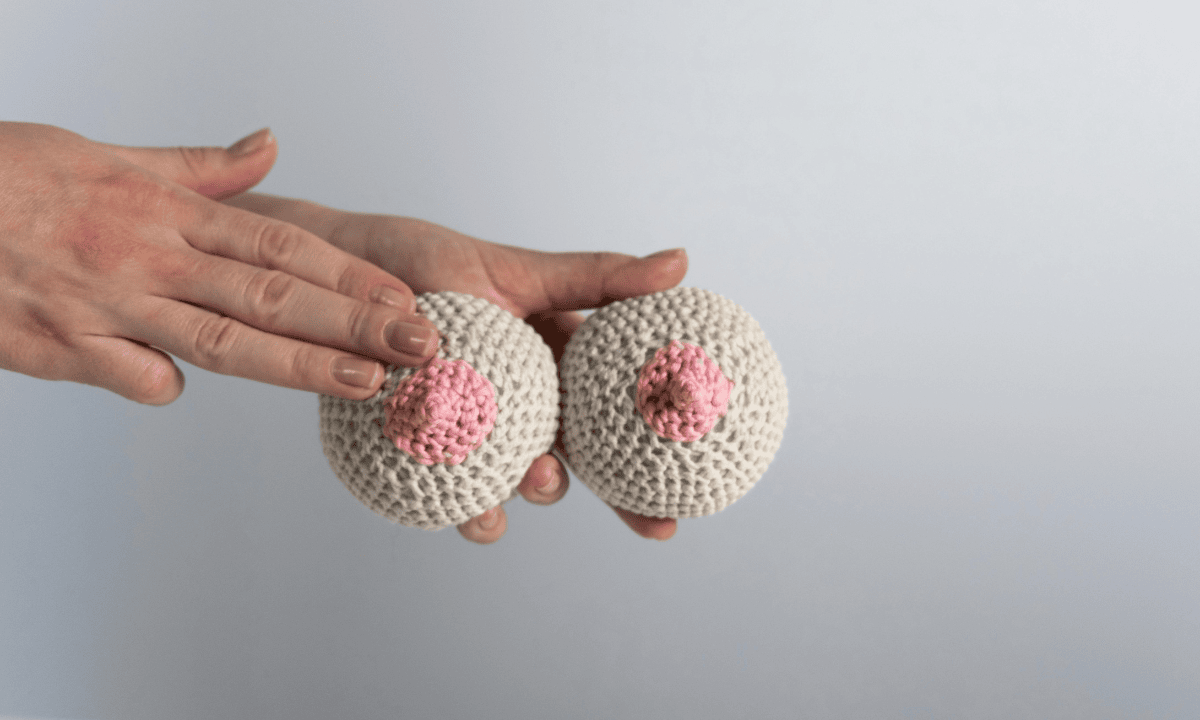
Having flat or inverted nipples may make the first days of breastfeeding feel more challenging. You might notice that your baby struggles to latch at first, that feeding feels inconsistent, or that your nipple seems to flatten just when your baby tries to feed.
These early difficulties can feel discouraging, especially when you’re already tired and emotional. But none of this means breastfeeding isn’t possible.
With time, gentle techniques, and the right support, many mothers with inverted nipples go on to breastfeed successfully. This may feel surprising, but here’s the reassuring truth: your baby breastfeeds from the breast, not just the nipple.
A good latch involves:
A large portion of the areola
The baby’s tongue and jaw compressing the milk ducts
Effective milk transfer, not nipple shape
Breastfeeding is a skill for both you and your baby. Even if the beginning feels hard, your body and your baby can learn together.
Do you need to prepare your nipples before birth?
If you’re in your pregnancy and you’ve realised you have inverted or flat nipples, it’s natural to start thinking ahead. You might be asking yourself whether there’s a way to help your nipples become less inverted so breastfeeding can go more smoothly for your baby.
For most mothers, you don't need to do anything special during pregnancy. Routine nipple stretching or pulling is usually not recommended, as it can cause discomfort, anxiety, or skin irritation without really helping.
Instead, gentle preparation focuses on:
Learning about breastfeeding positions
Understanding how latch works
Knowing where to get help early if you need it
If you have concerns during pregnancy, our lactation consultant can help assess your nipples and create a gentle breastfeeding plan that suits you and your baby. Request an appointment with Thomson ParentCraft Centre today.
Our ParentCraft trainers
Loading...
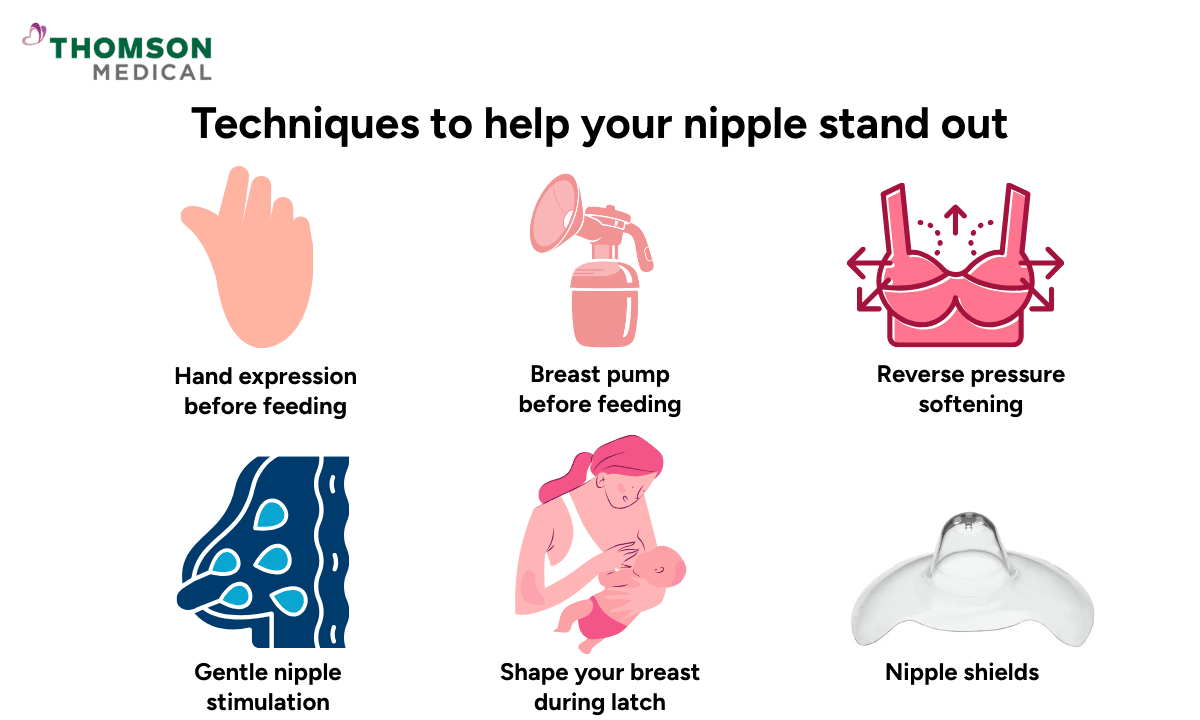
Techniques to help your nipple stand out
If your baby keeps trying but can’t seem to latch, cries in frustration, and leaves you feeling exhausted or close to giving up, you’re not alone. The early days of breastfeeding are hard for many mothers and babies, and inverted nipples can add a layer of difficulty.
The techniques below can help your nipple stand out and make latching easier, so feeding can feel calmer and more manageable for both of you.
Hand expression or breast pump before feeding
Before you bring your baby to the breast, it’s best to gently express a small amount of milk by hand or suction devices.
This can help by:
Softening the breast tissues so it’s easier for your baby to get a deep latch
Encouraging the nipple to protrude slightly
Reducing tension if your breasts feel very full
With your fingers, do a gentle breast massage and press the breast tissue toward your nipple to get a little milk to come out. You can also try using suction devices or an electric breast pump to help draw your nipple out.
If hand expressing feels new or awkward, a lactation nurse or lactation consultant can show you how to do it safely and comfortably.
Reverse pressure softening
In the early days, breast swelling can push the nipple inward, making latching harder.
Press gently and steadily around the areola with your fingertips for about 30–60 seconds. This pushes fluid away from your nipple, which can help it stick out just enough for your baby to latch more easily.
Reverse pressure softening technique is especially helpful to soften your engorged breasts.
Gentle nipple stimulation
Right before feeding, gently roll or stimulate your nipple using your fingers or a cold cloth.
This may help:
Trigger the nipple to evert temporarily
Give your baby a clearer target to latch onto
The effect doesn’t last long, but even a short window can be enough to get feeding started.
Shape and support your breast during latch
Sometimes it’s not about the nipple alone, but how the breast fits into your baby’s mouth.
You can:
Support your breast with your hand
Gently compress breast tissue into a shape that matches your baby’s mouth
Aim the nipple toward the roof of your baby’s mouth during latch
This can improve how deeply your baby latches, even if your nipple doesn’t protrude much.
Nipple shields
In some situations, a nipple shield can help your baby latch and stay on the breast.
A shield may be helpful if:
Your baby consistently struggles to latch
You feel pain or repeated frustration during feeds
While a nipple shield can be a helpful tool, it’s best seen as a temporary support. Gentle skin-to-skin time each day without the shield allows your baby opportunities to practise latching when ready.
Nipple shields are also best used with support from a lactation consultant to ensure your baby is getting enough milk and to plan for weaning off the shield when ready.
When breastfeeding feels frustrating, time-consuming, or even painful, it’s easy to question yourself. But struggling does not mean you’re failing – it simply means you and your baby are still learning, and it’s okay to take this one gentle step at a time.
When to seek extra support
Pain, stress, or discouragement can creep into breastfeeding, and you don’t have to face any of it by yourself. Lactation consultants can support you and help you navigate challenges and ease discomfort.
Consider seeking help from a lactation consultant if:
Your baby is not gaining weight well
Feeding is consistently painful
You feel overwhelmed or close to giving up
You’re unsure whether your baby is getting enough milk
You're worry about your milk supply
Early support from a lactation nurse or lactation consultant can help you and your baby find effective ways to latch despite inverted or flat nipples, while protecting your milk supply and helping you feel more confident and reassured.
If you’re finding breastfeeding challenging, it’s important to remember that this is a learnt process for both you and your baby. Many mothers and infants need time to develop a comfortable feeding pattern. With patience, practice, and the right support, breastfeeding often becomes more manageable and intuitive over time.
Our lactation consultants are here to help you work through challenges gently, without pressure or judgement. Request an appointment with Thomson ParentCraft Centre today.
FAQ
When should I worry about inverted nipples?
Inverted nipples are usually not a medical problem. You may want to seek advice if:
Breastfeeding is painful
Your baby struggles to latch despite support
You’re feeling overwhelmed
In these situations, speaking with an IBCLC lactation consultant (International Board Certified Lactation Consultant) can help you understand what’s happening and receive personalised guidance to make breastfeeding feel more manageable and reassuring.
How to fix an inverted nipple for breastfeeding?
There’s often no need to fix the nipple. Gentle techniques like hand expression, breast support during latch, or guided use of nipple shields can help breastfeeding work more smoothly.
Can I pump milk with inverted nipples?
Yes, most mothers with inverted nipples can pump milk effectively, and pumping may even help the nipple stand out temporarily.
Will breastfeeding with inverted nipples be painful?
Breastfeeding doesn’t have to be painful. Discomfort is often related to latch rather than nipple shape, and support can help reduce pain.
Do I need to see a lactation consultant if I have inverted nipples?
You don’t have to, but many mothers find early support helpful. A lactation nurse or lactation consultant can offer personalised guidance to make feeding more comfortable and less stressful while protecting your milk supply.
What is the Hoffman technique for inverted nipples?
The Hoffman technique is a hands-on approach where you gently stretch the tissue around your nipple using your thumbs. The goal is to help an inverted nipple stick out more easily.
Some women see temporary improvement, but it won't guarantee breastfeeding becomes easier. It’s best to discuss it with your lactation consultant before trying it.
The information provided is intended for general guidance only and should not be considered medical advice. For personalised recommendations based on your medical conditions, request an appointment with Thomson Medical.
Reference:
Rao, D. N., & Winters, R. (2023, July 4). Inverted nipple. StatPearls - NCBI Bookshelf. https://www.ncbi.nlm.nih.gov/books/NBK563190/#:~:text=An%20inverted%20nipple%20is%20a,be%20both%20congenital%20and%20acquired
For more information, contact us:
Thomson ParentCraft Centre
Thomson Breast Centre
Request an Appointment