

If you imagined breastfeeding would come naturally, the reality may surprise you. It's often harder than anyone tells you. Your nipples hurt. Your baby won't latch properly. You're exhausted and worried you're not making enough milk. Everyone else seems to have it figured out, and you're wondering what you're doing wrong.
Let's be honest: breastfeeding can be really hard. Not because you're doing it wrong, but because it’s a skill both you and your baby are learning from scratch. That's where lactation centres come in. Consultants will assess what's actually happening, identify the problem, and teach you techniques that work for your body and your baby.
Understanding what lactation centres offer, when to seek help, and what happens during your visit can help you feel more prepared.
What is lactation?
Lactation is how your body makes breast milk for your baby. It's a process that starts during pregnancy and continues throughout your breastfeeding journey.
Lactation works as a natural supply and demand system. It means your body will respond to how often and how well your baby feeds. When your baby feeds more, your body makes more. When your baby feeds less, your body makes less. It naturally adjusts to meet your baby’s needs.
That said, knowing how lactation works and actually getting it to work smoothly are two completely different things. It’s common to face difficulties along the way, especially if you’re new to it. Professional guidance won't make challenges disappear, but it can help you work through them with less frustration and more clarity.
When should you visit the lactation centre?

Many mothers assume lactation support is only for severe problems. It’s like when your nipples are cracked and bleeding, or when your baby has poor weight gain. The reality is actually quite different.
You can visit the lactation centre if you’re in any of these situations:
Before your baby arrives
Preparing during pregnancy can make the first few days after your baby's arrival so much easier. You’ll learn proper positioning, understand what to expect, and walk into motherhood feeling more confident.
In the first few days after birth
This is when the challenges show up. Your milk is just coming in. Your baby is learning to latch. Everything feels new and uncertain. Getting support early can ease your stress and help prevent small issues from becoming bigger ones.
When something feels off
If you feel hurt when breastfeeding or your baby seems unsatisfied after every feed, don’t hesitate to reach out. These concerns need professional attention.
Before returning to work
Transitioning to pumping while maintaining supply requires planning and technique. Your lactation consultant can help you get through this change without losing your mind or your milk.
The truth is, you don’t need to wait until something goes wrong. Even when breastfeeding feels manageable, learning and building confidence early can help you feel more prepared for whatever lies ahead in your parenthood journey.
What problems can lactation centres help with?
Breastfeeding comes naturally to your body, but the experience itself can still feel challenging. If you’re struggling or feeling unsure, it’s completely normal. Many mothers feel the same way.
That’s why seeking support at this stage can make a real difference. With the right guidance, you can better understand what’s happening and respond to challenges calmly.
So what can lactation centres help with? Here are the most common issues:
Latch difficulties and painful feeding
A good latch means comfortable feeding and effective milk transfer. If breastfeeding hurts throughout the session, something needs to be adjusted.
Your consultant will assess your baby’s positioning and mouth placement, then show you techniques to improve the latch.
Low milk supply
It’s one of the most common concerns new mothers have about breastfeeding. Your lactation consultant can help you figure out whether you have a low supply or any medical conditions.
Based on their findings, they will create a personalised plan to increase production if needed.
Oversupply and breast engorgement
Too much milk creates its own problems. Your breasts feel hard and painful. Your baby chokes and sputters during feeding because milk flows too fast.
Lactation centres offer specialised massage techniques to relieve engorgement. They also teach you how to manage oversupply through feeding strategies.
Pumping and returning to work
The transition back to work can bring so much anxiety. It’s natural to wonder how to maintain supply while away from your baby for eight to even ten hours.
Fortunately, these concerns can benefit from professional guidance. Your consultant can help you choose appropriate pumping equipment based on your budget and needs.
They also establish an effective pumping schedule that works with your actual job. Having a plan makes this transition less stressful.
Every breastfeeding journey is unique. While some move through it smoothly, others may encounter challenges along the way. Wherever you are on your journey, support is always within your reach.
If you're experiencing any of these breastfeeding challenges, schedule an appointment with Thomson ParentCraft Centre. Our lactation consultants will assess your specific situation, identify what's causing the difficulty, and create a personalised care plan for you.
Our ParentCraft trainers
Loading...
Lactation services in Singapore: What to expect
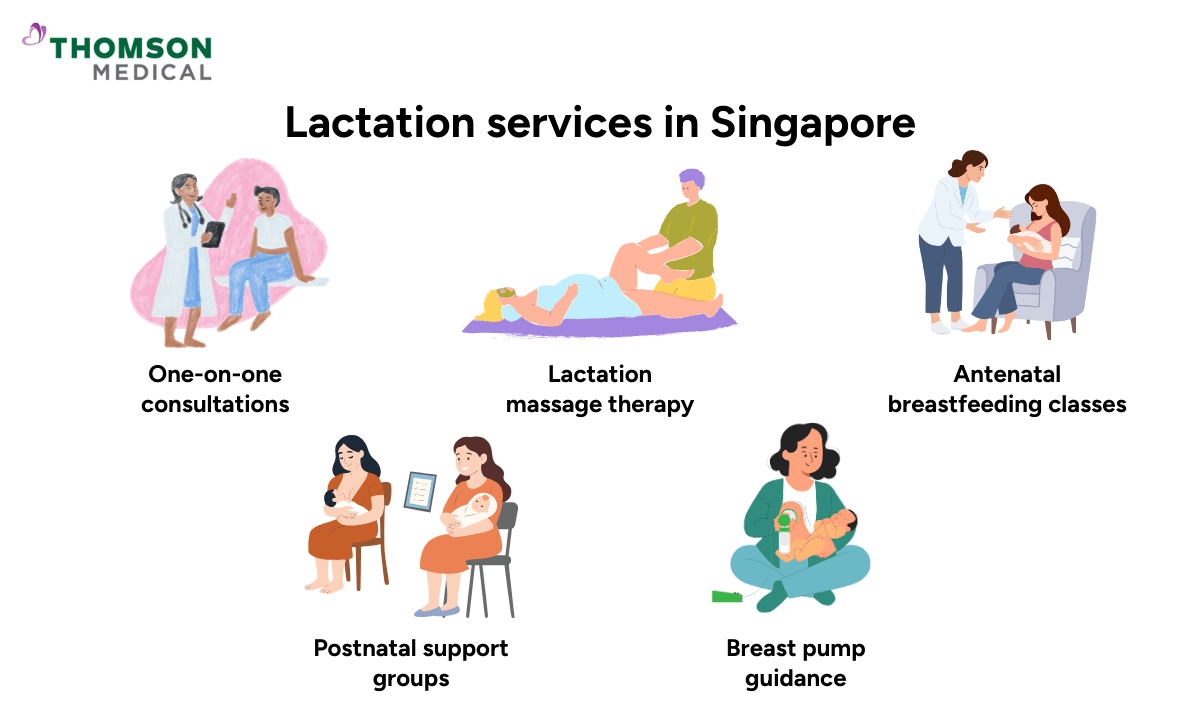
Lactation centres provide comprehensive support tailored to your specific needs. Whether you're preparing for your baby's arrival or navigating challenges along the way, these services are here to help you feel supported.
Their services may include:
One-on-one consultations:
During these sessions, a certified consultant reviews your breastfeeding experience and addresses your concerns with personalised guidance.
Lactation massage therapy:
This therapy can be especially helpful if you’re dealing with engorged breasts or blocked ducts or want to improve milk flow.
Antenatal breastfeeding classes:
You’ll learn proper positioning and the stages of milk production from colostrum to mature milk. You’ll know what to expect in those first days when your baby always seems hungry, and you wonder if something’s wrong.
Postnatal support groups:
These groups connect you with mothers facing similar challenges. You can get both professional guidance from lactation consultants and peer support from mothers who have been through it and understand your worries.
Breast pump guidance:
Choosing the right breast pump is more important than you may think, as not all pumps work the same way. Using the wrong equipment or incorrect techniques can make the process difficult unnecessarily.
Not like generic advice from the internet, you’re getting an expert assessment of your unique situation. If you’re unsure where to start or what’s right for you, don’t be afraid to reach out. Your lactation consultant will listen to your concerns, walk you through your options, and help you find what’s best for you.
What to expect during your first consultation
Seeking lactation support is a deeply personal step, and it's natural to feel uncertain about what your first appointment will involve, especially during a time when you may already feel overwhelmed. Knowing what’ll happen can ease your worries and help you better prepare for what might come next.
Here’s what you can expect for the first appointment:
Conversation:
Your consultant will talk with you about your concerns. It can be your baby’s feeding patterns or any discomfort you’re experiencing while breastfeeding. The details you share help them identify the root of the problem, not just surface symptoms.
Observation:
You’ll feed your baby while your consultant watches positioning, latch, and your baby’s sucking patterns. This might feel awkward, but it’s an essential part of understanding what’s happening during your feeds.
Your consultant can see things you can’t. It can be subtle issues with latch depth, tongue positioning, or whether your baby is actually transferring milk effectively or just comfort sucking.
Building a care plan:
Based on the observation, your consultant develops a personalised plan with clear action steps. This may include position changes, feeding techniques, or exercises for your baby if there are oral motor issues.
Your lactation consultants understand what you’re going through and all the challenges you’re facing. Far more than just a care plan, you’ll feel heard and supported.
Cost of lactation services in Singapore
Lactation services in Singapore usually cost between about SGD 170 and 260 per session for the first consultation. The price varies depending on the type and duration of service.
Follow-up sessions are usually cheaper, around SGD 155 to 180. Specialised services, such as lactation massage or tongue-tie assessment, may have different pricing structures. It's worth asking about costs when you book, so you know exactly what to expect.
Investing in professional lactation support can help you address challenges early and build confidence in your breastfeeding journey. Seeking help when you need it doesn’t mean you’ve failed. It simply means you care about your baby’s health and about your own well-being. Many mothers find that having expert guidance makes a meaningful difference to their experience.
If you're unsure which service is right for you or how to budget for lactation support, schedule an appointment with Thomson ParentCraft Centre. Our specialists will answer your questions and help you plan the support that fits your situation.
FAQ
Do I need a doctor's referral to visit a lactation centre in Singapore?
No. You can book an appointment directly with most lactation centres. Just call or book online.
Can my husband or partner attend the consultation with me?
Absolutely. Partners are welcome and often encouraged to attend.
Breastfeeding affects the whole family. Having your partner understand the challenges and techniques helps a lot at home. They can support you better when they know what you're trying to achieve and why certain things matter, like feeding on demand, or why you need help with other tasks while you're nursing constantly in the early weeks.
How many sessions will I need to resolve my breastfeeding issue?
This depends on what you're dealing with.
Some mothers see improvement after one consultation. Others benefit from several follow-up sessions for ongoing support, especially with complex issues such as tongue-tie.
Your lactation consultant will discuss realistic expectations based on your specific situation.
Do lactation centres in Singapore provide home visits?
Many lactation centres offer home visit services. This option is especially helpful for mothers recovering from difficult deliveries.
Home visits also allow your consultant to see your actual feeding environment, so they can provide practical suggestions tailored to your space.
What qualifications should I look for in a lactation consultant?
Look for lactation consultants with IBCLC certification. This credential represents the highest standard in lactation care.
Can I use Medisave or insurance for lactation services?
Medisave typically cannot be used for lactation consultation services.
However, some private insurance plans include coverage for lactation support. However, coverage varies between insurers and plans. Some cover initial consultations only. Others cover multiple sessions. Some don't cover it at all.
The information provided is intended for general guidance only and should not be considered medical advice. For personalised recommendations based on your medical conditions, request an appointment with Thomson Medical.
Reference:
Beloved Bumps Singapore. (2025, December 19). Singapore Lactation Consultant - Beloved Bumps. Beloved Bumps. https://belovedbumps.sg/lactation-support/
Lactation Consultant Singapore | Tender Loving Milk — Tender loving milk. (n.d.). Tender Loving Milk. https://tenderlovingmilk.com/book-consultation