

Your baby won't latch properly. Feeding is painful. You're worried about your milk supply. If any of this sounds familiar, know that it doesn't mean you're doing something wrong. It means you just need more support.
That's where lactation consultants come in. They’re trained to support breastfeeding and can gently guide you when you need it most. Whether you're dealing with specific challenges or simply want reassurance, a lactation consultant can make your breastfeeding journey smoother and more confident.
What is a lactation consultant?
A lactation consultant is a healthcare professional who specialises in breastfeeding support. They aren’t just someone who breastfed their own children. They have formal qualifications and professional training in this field.
Most qualified consultants have the International Board Certified Lactation Consultant (IBCLC) credential. This means they’ve completed extensive training and clinical hours and passed strict exams. They understand breast anatomy and milk production, how babies feed and develop feeding skills, and how to resolve common breastfeeding challenges.
While your obstetrician helped you through pregnancy and delivery, and your paediatrician monitors your baby's overall health, your lactation consultant focuses on making breastfeeding work for both of you and your baby.
They work alongside you to understand your circumstances and support you in reaching your breastfeeding goals.
What breastfeeding challenges can a lactation consultant help with?
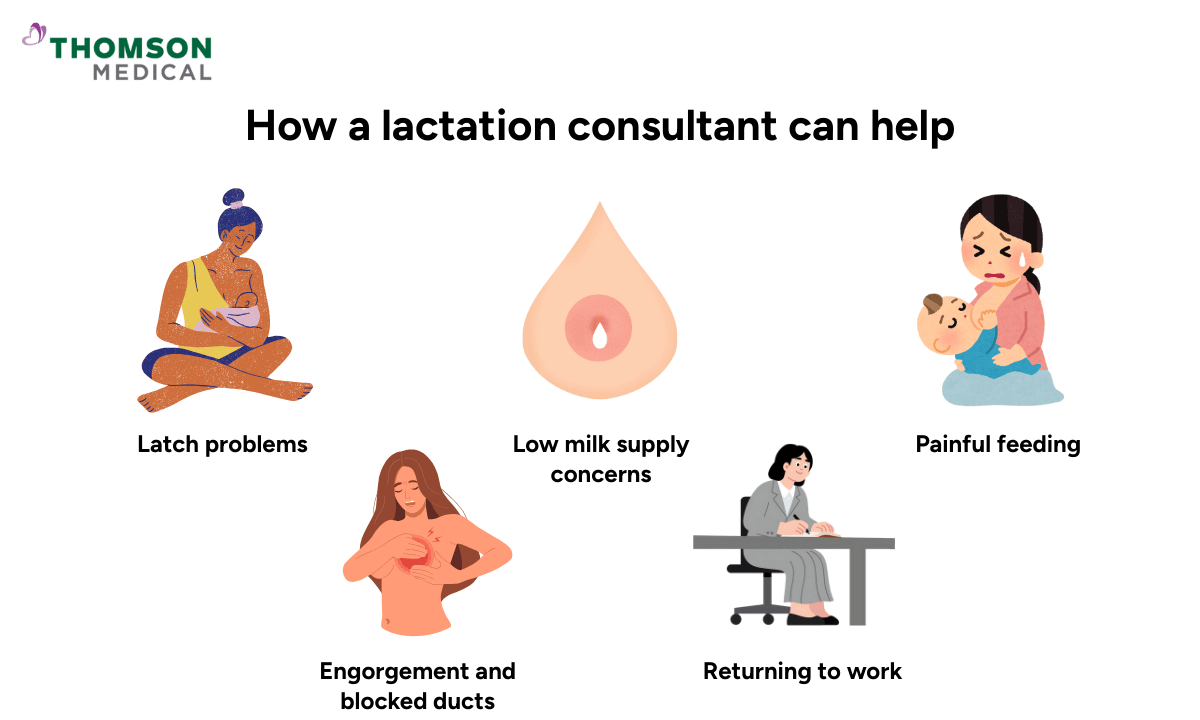
Breastfeeding doesn’t always come easily. Along the way, you may face challenges you never expected. That’s completely natural – many parents experience the same thing.
Still, you don’t have to figure it all out on your own. A lactation consultant will help you find what works best for you and your baby, so you can feel more confident as you move forward.
Latch problems
A good latch means your baby takes a good mouthful of breast tissue, not just the nipple. When the latch isn’t right, feeding can become uncomfortable or painful.
During a consultation, your lactation consultant will watch how your baby feeds. They’ll then adjust your positioning and suggest different holds. They’ll also help you understand what a proper latch should feel like. Sometimes, the fix is surprisingly simple. It’s just a small change in how you hold your baby or angle your breast.
Low milk supply concerns
Worrying about making enough milk is a common concern for many parents. The truth is, perceived low supply is often different from actual low supply. To check whether your baby is getting enough nutrition, your lactation consultant will assess their:
Weight gain
Diaper output
Feeding patterns
If your breast milk supply needs support, they’ll work with you on strategies to increase it. This may include more frequent feeding, pumping techniques, or addressing underlying issues.
Painful feeding
Breastfeeding usually feels comfortable once you and your baby find your flow. If it hurts, it’s a sign that something needs adjusting.
Pain during feeding can signal latching issues, tongue tie, thrush, blocked ducts, or positioning problems. Your lactation consultant can find the cause and guide you toward relief. They may:
Suggest different feeding positions
Check for anatomical issues
Refer you to other specialists
You don't have to push through the pain. With the right support, feeding can feel comfortable again.
Engorgement and blocked ducts
When your breasts feel hot, swollen, or hard as a rock, making it difficult for your baby to latch, you're likely experiencing engorgement. This condition can be quite uncomfortable.
If you experience breast engorgement or blocked ducts, your consultant will teach you techniques to:
Soften the breast before feeding
Apply the right kind of pressure
Prevent blocked ducts from turning into mastitis
They may also show you massage techniques, help you optimise feeding schedules, and advise when to use heat versus cold compresses.
Returning to work
You’re heading back to work, but you want to continue breastfeeding. Many questions may come to mind, such as:
How do I maintain my supply?
When should I pump?
How do I store milk properly?
Your concerns are understandable. Your lactation consultant will take time to understand your unique situation and offer practical advice that feels right for you. This support may include help with creating a pumping schedule or choosing suitable equipment for you and your baby.
If any of this sounds familiar, schedule an appointment with Thomson ParentCraft Centre. Our lactation specialists will work with you to find solutions that fit your unique situation.
Our ParentCraft trainers
Loading...
What to expect during your lactation consultation in Singapore
Feeling uncertain before your first appointment is completely natural. A lactation consultation is a calm, supportive space focused on you and your baby. Your consultant will gently listen to your concerns, talk through what’s been happening, and explain your options.
Your first consultation usually lasts 60-90 minutes, and here’s what you can expect:
Understanding your experience:
Your consultant will ask questions about your pregnancy, delivery, and breastfeeding experience so far to get a full picture of your journey.
Then they’ll observe your feeding session, paying attention to your baby’s positioning, your technique, how your baby sucks and swallows, and how your breasts respond.
You may feel a bit awkward at first when someone is watching you breastfeed. But remember, your consultant does this all day, every day. They’re professional, respectful, and here to help you.
Assessing your baby:
They’ll likely check your baby’s mouth for tongue tie or other anatomical issues.
Then they may weigh your baby before and after feeding to measure milk transfer.
After that, they may get back to assess your breast tissue and milk supply.
Providing hands-on guidance:
They’ll help you adjust positioning, demonstrate different holds, and work with you until feeding feels more comfortable.
You’ll receive a personalised feeding plan tailored to your specific situation, not generic advice.
Your consultant may also provide follow-up support. It can be a phone call to check in or another visit if needed. Knowing what to expect can help ease your worries so you feel more comfortable and confident every step of the way.
When should you see a lactation consultant in Singapore?

Seeking support from a lactation consultant doesn’t mean something is wrong. Even when you are just looking for reassurance, clarity, or a little extra support, reaching out is a positive step in your breastfeeding journey.
While every breastfeeding journey is different, there are certain moments when scheduling a consultation can be especially helpful, such as:
Before your baby arrives:
Prenatal consultations help you understand what to expect during the early days when breastfeeding is still new to you.
You'll learn about different positions and prepare for common challenges you may face.
During the first week at home:
This is when many mothers face difficulties. Your milk is coming in, your baby seems hungry all the time, and you’re exhausted – that’s completely understandable.
Seeking help at this time can help make it easier to get through these early challenges.
When something doesn’t feel right:
You may be new to breastfeeding, but you know when something’s off. Persistent pain, concerns about supply, and your baby won’t sleep after feeds. These are all reasons to seek help.
Before returning to work:
Rather than wait until your first day to figure out a pumping routine or build a milk stash, give yourself time to plan ahead.
When you’re ready to wean:
Your consultant can help guide you through gradual weaning in a way that’s comfortable for both you and your baby.
Addressing concerns early prevents small problems from becoming bigger ones. Discomfort during feeding becomes easier to resolve when you address it promptly. Questions about milk supply can be answered before your uncertainty grows.
How much does a lactation consultant cost in Singapore?
Lactation consultation fees in Singapore usually range from SGD 150 to 350 per session. The price can vary depending on some factors, including:
Location:
Home visits usually cost more than clinic appointments because of travel time and convenience.
Initial vs follow-up consultations:
Your first appointment is usually more expensive (SGD 200-350), because it’s longer and more comprehensive.
Your follow-up sessions, on the other hand, may cost SGD 150-250.
Consultation format:
Virtual consultations are becoming more common. They're also less expensive, usually SGD 100-200 per session.
This option works well for follow-up support or when you have specific questions that need more clarity.
It’s normal to wonder if this is worth the investment. Having someone who truly understands what you’re going through can help ease your pain, worry, and those moments of doubt.
With gentle, expert support, you can feel more confident in your breastfeeding journey. Also, you can find some calm as you get through one of the challenging phases of new motherhood.
Please note that these costs are based on 2026 rates and may vary over time.
If you're considering lactation support, schedule an appointment with Thomson ParentCraft Centre. Our consultants will discuss your concerns and explain how we can help you on your breastfeeding journey.
FAQ
How can I find a qualified lactation consultant in Singapore?
You can search the International Lactation Consultant Association directory, ask your obstetrician or paediatrician for referrals, or contact maternity hospitals directly.
Looking for the IBCLC credential ensures proper training and certification.
Is it worth seeing a lactation consultant?
Yes, especially if you're struggling with breastfeeding. Even if things are going well, a consultation can optimise your technique, prevent future problems, and give you confidence.
How much does a lactation consultant cost in Singapore?
A lactation consultation usually costs SGD 150-350 per session, with initial consultations often costing a little more. Home visits cost more than clinic appointments. Virtual consultations are typically less expensive at SGD 100-200.
Should I choose a home visit or a clinic consultation?
Both have advantages. Home visits are convenient when you're exhausted and overwhelmed by the thought of leaving the house with a newborn. Besides, your consultant can observe your actual feeding environment and give specific advice.
In clinic consultations, on the other hand, you’ll have access to equipment such as medical-grade scales for weighted feeds. They're also usually less expensive.
When should I book a lactation consultant – before or after birth?
Both, ideally. A prenatal consultation prepares you for what's ahead. An early postnatal consultation addresses real challenges as they arise.
If you can only choose one timing, consider booking a consultation for the first week after birth. This is when most mothers need support most urgently. But don't hesitate to reach out earlier if you want to feel prepared or later if challenges develop over time.
Are virtual lactation consultations effective?
For certain situations, yes. Virtual consultations work well for:
Follow-up support after an in-person session
Answering specific questions about pumping or schedules
Troubleshooting minor positioning issues
Providing encouragement and guidance
That said, they're less effective for initial assessments. Your consultant can't physically adjust positioning through a screen, and it's harder to assess latch quality online.
The information provided is intended for general guidance only and should not be considered medical advice. For personalised recommendations based on your medical conditions, request an appointment with Thomson Medical.
For more information, contact us:
Thomson ParentCraft Centre
Thomson Breast Centre
Request an Appointment