
.png%3Fbranch%3Dprod&w=3840&q=75)
You're exhausted from another night of feeds, and now your breast aches in a way that feels different from the usual tenderness. Many mothers experience this exact moment when mastitis develops – that unsettling feeling when your body seems to be working against you during an already demanding time.
It can feel frustrating to deal with breast pain and flu-like symptoms while you're already busy trying to care for your newborn. However, it happens to many breastfeeding mothers, even when they're doing everything right. With early recognition and gentle steps, most women find relief and can get back to breastfeeding comfortably within days.
What is mastitis?
.png?branch=production)
Mastitis is an inflammation of breast tissue that sometimes develops into an infection. It typically affects one breast, causing a painful, swollen area that feels warm to the touch.
Most cases occur during the first three months of breastfeeding, though it can happen at any stage.
While mastitis can make breastfeeding uncomfortable, most cases respond well to treatment and clear up within a week. Your milk remains safe for your baby, and continuing to breastfeed actually helps with your recovery.
What causes mastitis?
Mastitis usually happens when milk is not fully drained from the breast. When milk builds up, it can cause inflammation. Sometimes, bacteria can enter through a cracked or sore nipple and lead to infection.
Common causes include:
Incomplete breast emptying during feeds, which allows milk to build up
Infrequent or skipped feedings that lead to breast engorgement
Cracked or damaged nipples that create an entry point for bacteria
Tight-fitting bras or clothing that puts pressure on milk ducts
Sudden changes in your baby's feeding pattern
Mastitis can occur even when you are following good breastfeeding practices. If you notice early symptoms, seeking timely medical advice can help prevent the condition from worsening.
What are the symptoms of mastitis?
Mastitis symptoms often develop suddenly and may be associated with systemic symptoms such as fever and body aches.
The most common signs to watch out for include:
Breast tenderness or warmth in one specific area
Swelling or a hard lump in the breast
Redness, sometimes in a wedge-shaped pattern
A burning sensation during breastfeeding
Flu-like symptoms, such as fever (38°C or higher), chills, fatigue, and body aches
If symptoms are mild and caught early, they often improve with simple home care. However, if you develop a fever or your symptoms do not improve within 24 to 48 hours, antibiotics may be needed.
If you're experiencing early signs of mastitis, request a consultation with Thomson ParentCraft Centre. Our lactation consultants can assess your breastfeeding technique and provide personalised guidance to reduce your risk of mastitis.
How to manage mastitis at home
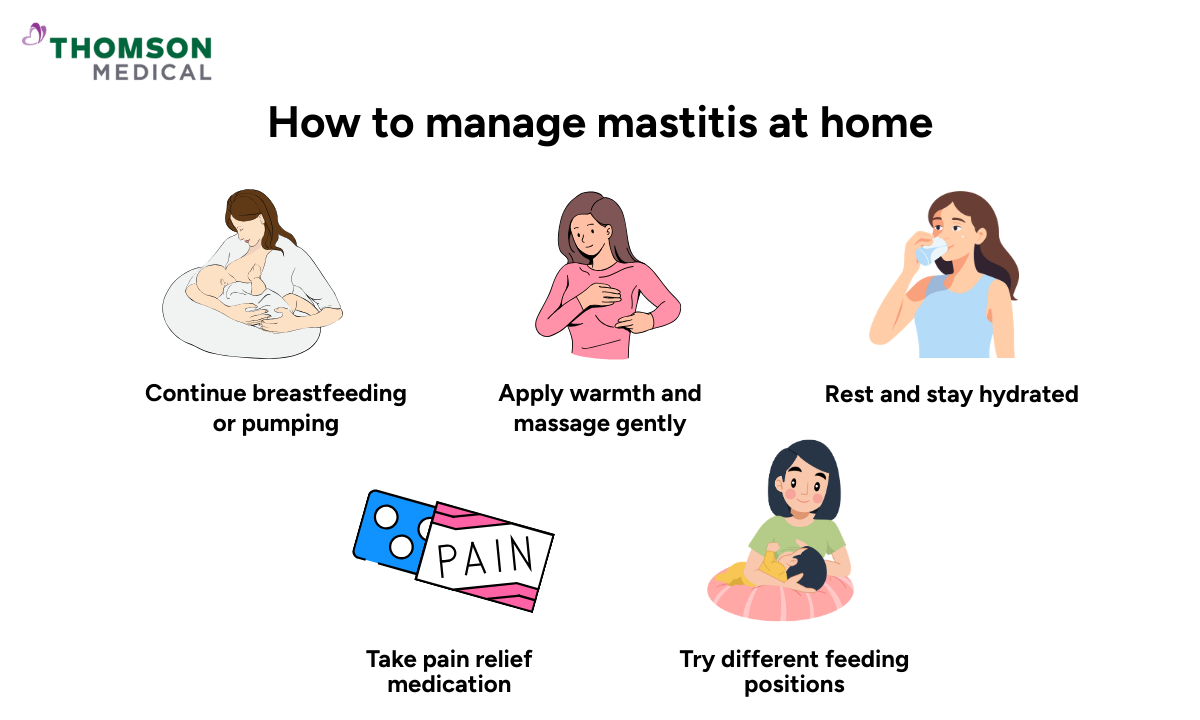
If you've caught mastitis early, you can do quite a bit at home to ease the discomfort and help your body heal. These gentle measures can make a real difference in how quickly you recover:
Continue breastfeeding or pumping:
While it may feel uncomfortable, emptying your breast regularly is one of the most effective ways to clear the blockage.
Your milk remains safe for your baby, even when you have mastitis.
Apply warmth and massage gently:
A warm compress or a warm shower before breastfeeding can help milk flow more easily.
Gently massage the tender area in a circular motion towards the nipple while feeding or pumping.
Rest and stay hydrated:
Try to rest as much as possible and drink plenty of water. This helps your body fight inflammation and recover.
Take pain relief medication:
Paracetamol or ibuprofen can help reduce fever and discomfort. Both are safe to take while breastfeeding.
Try different feeding positions:
Changing how you position your baby can help drain different areas of the breast more effectively.
These steps work best when you start them early. If you don't notice improvement within 12 to 24 hours, or if your symptoms worsen, reach out to your doctor for further guidance.
Our ParentCraft trainers
Loading...
When to see a doctor for mastitis
While home care can be helpful in the early stages, mastitis sometimes needs medical treatment to fully resolve.
Contact your doctor if you notice any of the following:
Your symptoms don't improve within 12 to 24 hours of home care
Your fever rises of 38.5°C or higher
You notice pus or blood in your breast milk
You see a crack or open sore on your nipple that looks infected
You feel severely unwell or notice red streaks spreading from the affected area
How to prevent mastitis
While mastitis can't always be prevented, there are gentle steps you can take to lower your risk and protect yourself during this breastfeeding journey, including:
Feed regularly and empty your breasts completely:
Try to avoid skipping feeds or going too long between sessions, as this helps prevent milk from building up.
Make sure your baby latches properly:
A good latch helps drain your breast effectively and prevents nipple damage.
If you're finding this challenging, a lactation consultant can offer personalised support.
Wear comfortable bras:
Choose bras that fit well without being tight, and avoid underwires that might put pressure on your breasts and restrict milk flow.
Care for cracked nipples early:
If you notice any soreness or cracks, address them promptly to prevent bacteria from entering.
If you're recovering from mastitis or want to prevent it from happening, request a consultation at Thomson ParentCraft Centre. Our lactation consultants can check your baby's latch and guide you with proper feeding techniques to keep your breastfeeding journey more comfortable and healthy.
FAQ
How long does mastitis last?
With proper treatment, most cases improve within 2 to 3 days. If you're taking antibiotics, you'll usually feel better within 24 to 48 hours, though you should complete the full course – usually 10 to 14 days. Without treatment, symptoms can persist or worsen.
Is mastitis contagious to my baby?
No. Mastitis is not contagious, and your breast milk remains safe for your baby even when you have an infection. You can continue breastfeeding throughout treatment.
Can I get mastitis if I'm not breastfeeding?
Yes, though it's less common. Non-lactational mastitis can occur due to nipple piercings, skin conditions like eczema, or bacterial infections. Postmenopausal women and those with diabetes are also at higher risk.
Can mastitis come back after treatment?
Yes. Some women experience recurrent mastitis, especially if underlying issues like poor latch or incomplete breast emptying aren't addressed. If you've had it before, focus on prevention strategies and seek help early if symptoms return.
What's the difference between mastitis and a clogged milk duct?
A clogged duct causes a tender lump in the breast but usually no fever or flu-like symptoms. Mastitis involves infection or inflammation, causing redness, warmth, fever, and feeling generally unwell. A clogged duct can sometimes progress to mastitis if not cleared.
Does mastitis affect my milk supply?
Mastitis can temporarily reduce milk supply in the affected breast, but it usually returns to normal after treatment. Continue feeding or pumping regularly to maintain your supply during recovery.
The information is intended for general guidance only and should not be considered medical advice. For personalised recommendations and advice based on your unique situation, please consult a specialist at Thomson Medical. Request an appointment with Thomson Medical today.
For more information, contact us:
Thomson ParentCraft Centre
Thomson Breast Centre
Request an Appointment