
.png%3Fbranch%3Dprod&w=3840&q=75)
Singapore's tropical climate means your skin is constantly exposed to the sun. This means that over time, moles and marks are naturally more likely to appear. However, not all moles are benign – even the ones that you've had for years may not be as harmless as you assume.
A mole check gives you clear answers. It's a straightforward assessment where a doctor can tell you what's normal for your skin, what's worth monitoring, and what might need attention – giving you informed answers and peace of mind.
What is a mole check and why do you need one?
A mole check is a simple examination that helps identify skin changes that may need attention. Your doctor will carefully assess your moles and other skin marks to ensure your skin health.
While skin cancer rates in Singapore are lower here than in Western countries, cases have been rising. The encouraging news is that treatment outcomes are usually positive when detected early.
Regular mole checks help you:
Detect skin changes early when they're most manageable
Monitor existing moles for changes over time
Identify which moles may need removal or biopsy
Find peace of mind about your skin health
If you have multiple moles, a family history of skin concerns, or frequently spend time outdoors, regular screenings become particularly important.
When should you get a mole check?
If you've noticed changes to existing moles or new ones that look different, it's worth having them looked at. There's no need to wait until something feels urgent – when it comes to your own body, listening to your instincts is always the right approach.
Understanding your moles: What's normal?
It helps to know what your skin is telling you. Most moles follow predictable patterns, and recognising these can make it easier to spot when something deserves a closer look.
Normal moles usually have these characteristics:
Have even colour (brown, tan, or pink)
Are round or oval with smooth, clear borders
Sit flat or slightly raised on the skin
Measure smaller than 6 mm (about a pencil eraser size)
Stay stable over time
What's important to understand is that an unusual-looking mole doesn't automatically mean something serious. Many are still completely harmless – but having an evaluation brings the clarity and reassurance that wondering alone can't provide.
The ABCDE rule for mole check
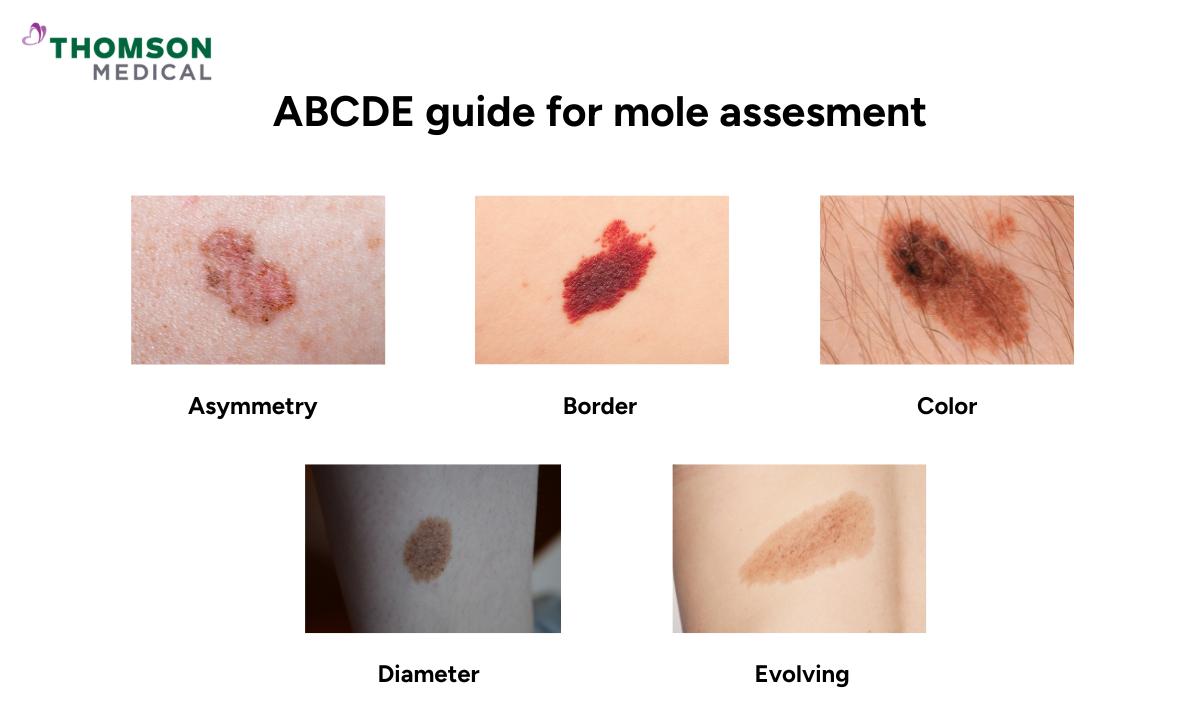
This gentle guide helps you notice what might need attention, without overthinking every small detail. Look out for these signs of your moles:
Asymmetry, where one half looks different from the other
Border, where edges appear irregular or blurred
Colour, involving multiple colours or uneven tones
Diameter, particularly spots larger than 6 mm (though smaller changes matter too)
Evolving, meaning any rapid changes in size, shape, colour, or how your mole feels
If you've noticed any of these signs, or if something simply doesn't feel right, that's reason enough to reach out. Your doctors will take the time to understand your concerns and help you work out what steps, if any, might be helpful for you.
Our skin specialists
Loading...
What happens during a mole check appointment?
.png?branch=production)
Walking into any medical appointment can feel a bit uncertain, especially if it's your first time. A mole check is straightforward, gentle, and completely painless – think of it as a conversation about your skin, with your doctor taking a careful look at what's there.
Dermoscopy examination
Your doctor will use a dermoscope, a handheld device with magnification and special lighting, to examine your moles more closely. This tool allows them to see details beneath the skin surface that aren't visible to the naked eye.
During dermoscopy, your doctor looks for specific patterns and structures that help distinguish between benign moles and those that need further attention. The examination is completely painless and takes just a few minutes per mole. If needed, your doctor may take photos to track changes over time during future visits.
Full body skin screening
Depending on your concerns and skin type, your doctor may suggest a full-body skin screening. This means examining your entire skin surface, including those tricky spots you can't easily see yourself. It's a thorough way to catch anything you might have missed and gives you complete reassurance about your skin health.
The whole appointment typically takes 15 to 30 minutes, depending on how many moles you have. You're in control throughout, and your doctor will make sure you feel at ease every step of the way.
If your doctor notices anything that needs further attention, they'll talk through it with you openly. Sometimes it's simply a matter of watching a mole over time, while in other cases, they might suggest a skin biopsy.
If you're feeling uncertain about your first mole check or want a thorough screening, book a consultation with Thomson Specialist Skin Centre. Our doctors will guide you through the process with care.
Mole removal procedures available in Singapore
If your doctor suggests removing a mole, there are several safe, effective methods available. The choice depends on your mole's size, location, and whether testing is needed.Surgical excision
Surgical excision means cutting out the entire mole along with a small margin of surrounding skin to ensure everything is removed cleanly. Your doctor will use local anaesthetic to numb the area first, so you won't feel any discomfort during the procedure.
This approach is usually recommended when a mole looks unusual or needs laboratory testing to check for abnormal cells. The removed tissue is examined under a microscope, giving you definitive answers. You'll have a small scar afterwards, though it usually fades over time.
Laser mole removal
Laser removal uses focused light energy to gently break down the pigment in the mole. This method works well for small, flat, benign moles and is often chosen for aesthetic reasons when a mole is bothersome but not concerning. The procedure is quick with minimal recovery time, so you can return to your routine fairly soon.
Because laser removal doesn't provide tissue for testing, it's only suitable for moles that are clearly harmless. Multiple sessions may be needed for complete removal, depending on the mole's depth and pigmentation.
Shave excision
Shave excision involves using a small blade to carefully shave off the mole at skin level. Local anaesthetic is applied first to keep you comfortable throughout. This method suits raised moles that sit above the skin surface.
It's quicker than surgical excision and typically leaves a less noticeable scar. The tissue sample may not be deep enough for thorough testing if there are concerns, so your doctor will only suggest this method when they're confident the mole is benign.
Your doctor will recommend the approach that's right for you, taking into account what matters most – whether that's thorough testing, minimal scarring, or addressing aesthetic concerns. Whatever you decide together, you'll feel supported and informed throughout.
If you're considering mole removal but are unsure which method is right for you, schedule a consultation with Thomson Specialist Skin Centre. Our specialists will assess your mole and recommend the most suitable approach for your needs.
FAQ
How often should I get a mole check in Singapore?
Most people should have a mole check once a year. If you have a family history of skin cancer, many moles, or fair skin, your doctor may recommend checks every 6 months. Those with previous skin cancer may need more frequent monitoring.
Can I remove a mole for cosmetic reasons?
Yes, you can remove moles for cosmetic reasons if they bother you or affect your confidence. Your doctor will first examine the mole to make sure it's benign before proceeding with removal. Laser removal or shave excision are common options for cosmetic mole removal.
How long does a mole check appointment take?
A standard mole check usually takes 15 to 30 minutes, depending on how many moles you have. If you're only checking one or two specific moles, the appointment may be shorter.
Is mole removal painful?
No, mole removal isn't painful. Your doctor will use local anaesthesia to numb the area before the procedure. You may feel slight pressure or tugging, but you shouldn't feel pain. After the anaesthesia wears off, you might experience mild discomfort for a day or two.
What's the difference between a GP and a dermatologist for mole checks?
A general practitioner (GP) can perform basic mole checks and remove simple moles. A dermatologist specialises in skin conditions and has advanced training in identifying skin cancers. For complex cases or suspicious moles, a dermatologist's expertise is recommended.
Can moles grow back after removal?
Moles can occasionally grow back if not all the cells were removed during the procedure. This is more common with shave excision or laser removal. If a mole returns, especially with changes in appearance, consult your doctor for re-evaluation.
The information provided is intended for general guidance only and should not be considered medical advice. For personalised recommendations and tailored advice based on your unique situation, please consult a specialist at Thomson Specialist Skin Centre. Schedule an appointment with Thomson Specialist Skin Centre today.
Dr Tan Hiok Hee
Dermatology (Skin)
Thomson Specialist Skin Centre (Novena Specialist Center)
English, Mandarin
.png%3Fbranch%3Dprod&w=640&q=75)