

Finding out you have nasal polyps can feel overwhelming, especially if you have been dealing with a constantly blocked nose, persistent congestion, or a reduced sense of smell. It is completely natural to wonder what to do next and how to approach treatment in Singapore.
The good news is that once you understand your options – including how treatment works and what it may cost – it often feels much more manageable.
What are nasal polyps?
Nasal polyps are soft, non-cancerous growths that develop on the lining of the nasal passages or sinuses. They are often associated with chronic inflammation, which can be linked to conditions such as allergies, asthma, or sinus infections.
Small nasal polyps may not cause noticeable symptoms. However, larger or multiple polyps can block the nasal passages, leading to symptoms such as nasal congestion, reduced sense of smell, facial pressure, or frequent sinus infections.
Do you need to treat nasal polyps?
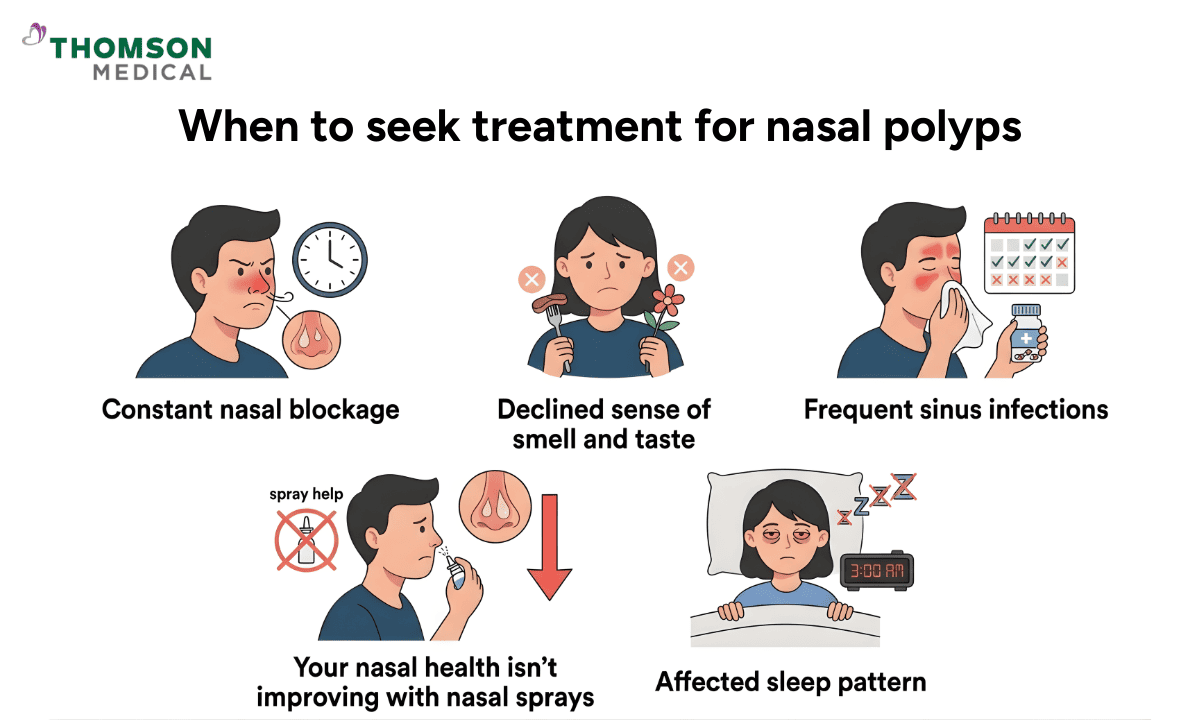
You may not always need treatment straight away. If the polyps are small and not causing symptoms, your doctor may suggest monitoring them over time.
However, treatment is usually recommended if:
You’re dealing with constant nasal blockage that makes it hard to breathe
Your sense of smell and taste has noticeably declined
You're experiencing frequent sinus infections or ongoing sinus discomfort that leaves you feeling unwell
Your nasal health isn’t improving with over-the-counter saline nasal sprays
Your sleep pattern is affected
On the other hand, if your polyps are small and not causing any symptoms, your Ear, Nose, and Throat (ENT) specialist will usually just keep an eye on them during routine check-ups to make sure they don’t grow or lead to any hidden issues.
Treatment options for nasal polyps in Singapore
Treatment for nasal polyps is usually approached in stages, starting with the least invasive options.
Medications (first-line treatment)
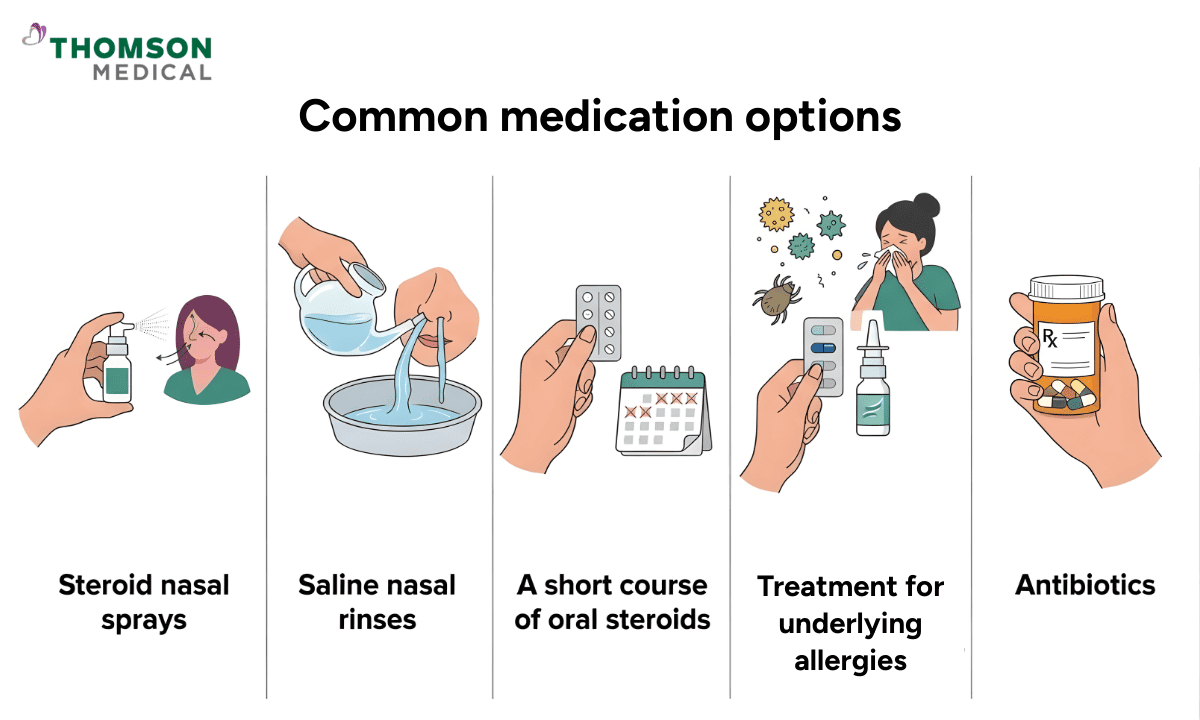
For many people, treatment begins with medication aimed at reducing inflammation and shrinking the polyps.
Common options include:
Steroid nasal sprays, used daily for long-term control
Saline nasal rinses to clear irritants and thick mucus
A short course of oral steroids during more severe flare-ups
Treatment for underlying allergies, such as antihistamines or allergy sprays
Antibiotics, used only when there is a confirmed bacterial sinus infection
With consistent use, many patients experience symptom relief without needing surgery.
Surgery (if medication fails)
If your symptoms continue despite medication, your doctor may suggest a procedure called endoscopic sinus surgery (ESS).
This is usually considered when:
Your symptoms do not improve even with regular, ongoing treatment
Your polyps keep coming back and start to affect your daily life
Your sense of smell is noticeably reduced
You experience frequent sinus infections
While surgery removes existing polyps, it does not prevent new ones from forming. For this reason, ongoing treatment with nasal sprays is still important after surgery to help keep your airways clear and manage the condition over time.
Our ENT specialist
Loading...
How much does nasal polyp treatment cost in Singapore?

Understanding the cost of treatment can help you plan your care with greater confidence. Costs can vary depending on where you choose to seek treatment.
Public hospitals (ENT clinics)
If you choose to receive care at a public hospital, costs can vary depending on your ward type and patient status.
For subsidised care (B2 or C-class wards):
Consultation fees usually range from SGD 40 to 80.
Medications are provided at a subsidised rate.
Surgery typically costs between SGD 2,000 and 4,500.
For private care in a public hospital (Class A ward):
Surgery usually ranges from SGD 6,000 to 10,000.
If you are a Singapore citizen or permanent resident, you may be able to use Medisave to help reduce your out-of-pocket costs for surgery.
Please note that the fees above are approximate estimates as of March 2026 and may vary between institutions or change over time.
Private hospitals and ENT clinics
Choosing a private clinic or hospital often means shorter waiting times and more flexibility in selecting your doctor.
Consultation fees usually range from SGD 120 to 250
Endoscopic sinus surgery typically costs between SGD 10,000 and 18,000 or more
The final cost depends on your surgeon, the hospital, and how complex the procedure is.
Many patients use their integrated shield plans (IPs) or corporate insurance to help cover these costs, so it is a good idea to check your coverage before making a decision.
Where to treat nasal polyps in Singapore
There are several options for managing nasal polyps in Singapore. The right choice often depends on your priorities, such as cost, waiting time, and continuity of care.
Type of healthcare facility | Examples | Key features and benefits |
Public hospitals | Singapore General Hospital (SGH), National University Hospital (NUH), Tan Tock Seng Hospital (TTSH) | Suitable If you are looking for subsidised care and want to maximise your Medisave use |
Private ENT clinics | Various specialised private clinics | Good choice if you prefer faster appointment times and the comfort of seeing the exact same specialist at every visit |
Private hospitals | Thomson Medical, Mount Elizabeth, Gleneagles | Offers higher convenience and premium facilities, though this comes at a higher overall cost. |
Taking a moment to think about what matters most to you, whether it is cost, waiting time, or continuity of care, can help you choose the setting that suits your recovery.

FAQ
What are the red flags for nasal polyps?
Seek prompt medical attention if you notice:
Blockage on only one side of the nose
Frequent or heavy nosebleeds
Facial pain, numbness, or swelling
Changes in vision
A rapidly growing mass
These are not typical and should be checked by a specialist.
What is the best treatment for nasal polyps?
There is no single approach that works for everyone. Most people start with steroid nasal sprays and saline rinses to control symptoms. Surgery is usually considered only if medication does not provide enough relief.
Is it worth removing nasal polyps?
It can be helpful if your symptoms are affecting your daily life, especially if you struggle to breathe, have lost your sense of smell, or deal with frequent infections. If symptoms are mild, surgery may not be needed.
Which doctor is best for nasal polyps?
You should see an ENT specialist, also known as an otolaryngologist, who is trained to treat conditions of the nose and sinuses.
Can I use Medisave for nasal polyp treatment?
Medisave can be used for the surgical part of your care, depending on the complexity of the procedure. However, routine consultations and medications are usually not covered. Your clinic can guide you through the claims process.
How many hours is a nasal polyp surgery?
Nasal polyp surgery usually takes 1 to 3 hours and is done under general anaesthesia. The expected recovery timeline is generally very manageable, as it is often a day procedure, although some patients may be advised to stay overnight for observation.
The information provided is intended for general guidance only and should not be considered medical advice. For personalised recommendations and tailored advice based on your unique situations, please consult a specialist at Thomson Medical.
For more information, contact us:
Thomson Medical Concierge
- 8.30am - 5.30pm
- WhatsApp: 9147 2051
Need help finding the right specialist or booking for a group?
Our Medical Concierge is here to help you. Simply fill in our form, and we'll check and connect you with the right specialist promptly.
Notice:
The range of services may vary between Thomson clinic locations. Please contact your preferred branch directly to enquire about the current availability.
Get In Touch