

Nipple pain can be uncomfortable and worrying, whether it occurs during breastfeeding, with clothing friction, or without an obvious cause. You may find yourself wondering if the discomfort is normal or a sign that something needs attention.
This symptom is common and can be linked to a range of causes, including latch difficulties, skin irritation, hormonal changes, or infection. In many cases, identifying the underlying reason helps guide effective relief and appropriate care.
Understanding possible causes, simple ways to ease discomfort, and signs that warrant medical assessment can help you feel more confident in managing nipple pain and seeking support when needed.
What is nipple pain?
Nipple pain is exactly what it sounds like: discomfort, tenderness, or outright pain in or around your nipples.
Everyone experiences it differently. Sometimes, it shows up as a dull ache that comes and goes. Other times, it’s sharp enough to make you look for answers. The pain may affect just one side or both. It can happen all the time or only when you touch the area.
The good news is that nipple pain doesn’t always mean something is wrong with your nipples. Sometimes, it’s simply how your body responds to changes. This can be your hormones shifting, your skin becoming more sensitive, or your body adjusting to breastfeeding as a new mum.
How common is it?
Having nipple pain can feel worrying, but the truth is this condition is very common, especially if you have just had a baby.
Your nipples are very sensitive. They respond to hormonal changes happening throughout your body. That’s why, even if you’re not breastfeeding, you may notice nipple tenderness before your periods, during pregnancy, or at certain points in your menstrual cycle.
Research shows that up to 90% of breastfeeding mothers experience some nipple discomfort in the first few weeks after delivery. The difference is in how long it lasts and how severe it gets. Some mothers feel better within days, while others need more time and support.
However, with the right care and small adjustments, most nipple pain eventually goes away without medical intervention.
Why do your nipples hurt?
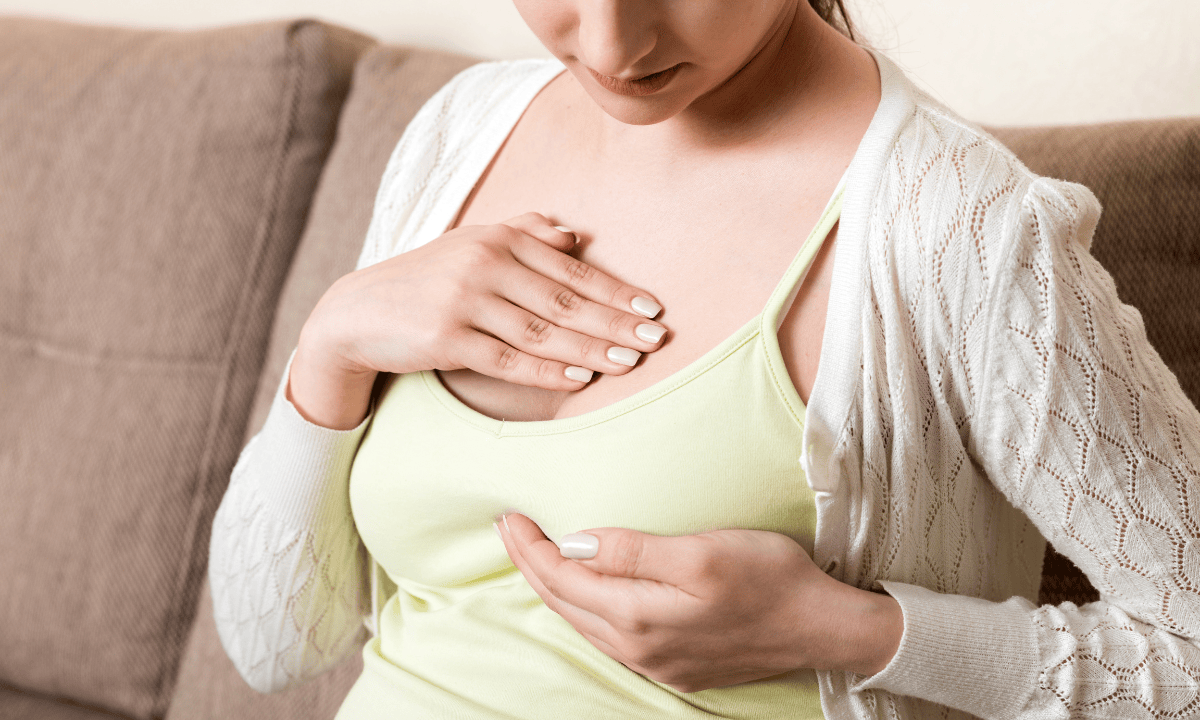
When you know what’s behind your discomfort, it becomes less mysterious and more manageable. You can take the right steps to ease the pain and move forward with clarity rather than worry.
Most nipple pain has a straightforward cause. Here are the most common:
Poor latch during breastfeeding
This is the most common reason if you’re a new mum. When your baby doesn’t latch correctly, they compress your nipple instead of drawing it gently back into their mouth. With all this friction and pressure, you can feel pain that builds with every feed. The pain may increase when your baby latches, or it may last throughout the entire feeding session.
If you’re experiencing this, don’t worry. Your lactation consultant can help you adjust your positioning and your baby’s latch. You may feel more comfortable after just one or two sessions of support.
Engorgement
When your breasts get overfull with milk, they become hard and swollen. Your nipples flatten out, which makes it harder for your baby to latch properly. It creates a frustrating cycle: engorgement makes latching difficult, poor latch creates more pain, and the pain makes you hesitant to feed frequently enough to relieve the engorgement.
Despite the discomfort, engorgement is very manageable. Your body is still learning your baby’s rhythm, and with the right care, this condition is just temporary.
Thrush (yeast infection)
This feels different from pain related to latch problems. You may experience burning or shooting pain that persists between feedings, not just during them. Your nipples may look shiny, pink, or flaky. You may also notice white patches in your baby’s mouth, too.
This may sound alarming, but thrush is actually very treatable. Once treatment starts, the pain usually improves within a few days.
Mastitis
When a milk duct becomes blocked or infected, you develop mastitis. The pain isn’t just in your nipple. Your entire breast may feel tender, warm, and heavy. You may also get flu-like symptoms such as fever, body aches, or exhaustion.
Mastitis needs prompt attention, but it’s highly manageable. If you think you may have mastitis, don’t hesitate to reach out to your doctor. Getting help early makes recovery much faster.
Hormonal fluctuation
Your menstrual cycle doesn’t just affect your uterus. In the days before it starts, your nipples might feel tender, along with other premenstrual symptoms. If you’re pregnant, those hormonal changes can make your nipples even more sensitive.
Friction and irritation
Sometimes, the reason is simpler. Maybe your sports bra is too tight, your shirt fabric is scratchy, or you go for a long run without proper support.
When fabric rubs against your nipples repeatedly, it causes irritation. Even though it’s not complicated, it still hurts and makes you feel uncomfortable.
Skin conditions
Eczema, contact dermatitis, or reactions to soaps and lotions can all affect your nipples, too. If your skin tends to be sensitive in other areas, your nipples may react the same way. Luckily, these conditions are treatable. Switching to gentler products or using a soothing cream often clears them up quickly.
Raynaud’s phenomenon of the nipple
Raynaud's phenomenon is a condition where blood vessels in your nipples spasm, especially in cold weather or right after breastfeeding. Your nipple may turn white, then blue, then red as blood flow returns. This condition is less common than other causes.
While it can be quite painful, once you know what’s happening, you can manage it effectively.
There are many possible causes for your nipple pain, and it's understandable to feel unsure which one is behind yours. Noticing when the pain happens, what makes it better or worse, and whether it's improving or persisting can give you and your doctor helpful clues.
Most nipple pain has a clear cause, and most causes respond well to treatment once you know what you're dealing with.
If you need help identifying what's causing your nipple pain, schedule an appointment with Thomson Breast Centre. Our specialists will assess your symptoms, find out the cause, and create a care plan tailored to your needs.
Our breast specialists in Singapore
Loading...
What can you do at home?
Dealing with nipple pain can be uncomfortable and frustrating, especially when you’re not sure what’s causing it or whether you need to see your doctor. If you’re wondering whether there’s anything you can do right now to ease the pain, the answer is yes. Many cases improve with simple care.
Here are some simple and effective steps you can try at home:
Fix the latch:
If you’re breastfeeding, this is your number one priority. Your baby should have a wide-open mouth with both lips flanged outward, taking in a good amount of breast tissue, not just the nipple. The nose should be close to or touching your breast. It may take practice at first. But when you do it right, your pain may improve within just a few days.
Try different positions:
Sometimes, changing how you hold your baby can make a difference. You can switch to a side-lying position or laid-back breastfeeding. These positions can all reduce pressure on your sore nipples.
Express a little milk first:
If you have engorged breasts, hand-expressing or using a breast pump can soften the areola (the darker circle around your nipple) and help your baby latch more easily.
Use warm compresses before feeding:
Warmth helps your milk flow and makes latching more comfortable. Using a warm and damp washcloth for 5-10 minutes before feeding can be very helpful.
Apply cold between feedings:
After nursing, cold can reduce swelling and ease the pain. Applying gel packs made for nursing for 10-15 minutes between feeds can be a good idea.
Let your nipples air dry:
After feeding, it’s best to give yourself a few minutes before covering up. Let your nipples dry naturally in the air. When moisture gets trapped, it can make pain worse and create conditions for infection.
Wear a comfortable bra:
A bra that’s too tight rubs and irritates. One that’s too loose doesn’t give you the support you need. A good nursing bra can make you feel comfortable all day.
These simple steps can be very effective, especially when your nipple pain is mild or related to hormones, friction, or early breastfeeding adjustments.
That said, if the pain isn’t improving after a few days, or if it’s getting worse, don’t wait. Some causes, such as infections, need professional support to resolve. Your doctor or a lactation consultant can figure out what’s happening and guide you toward the right treatment.
When to see a doctor
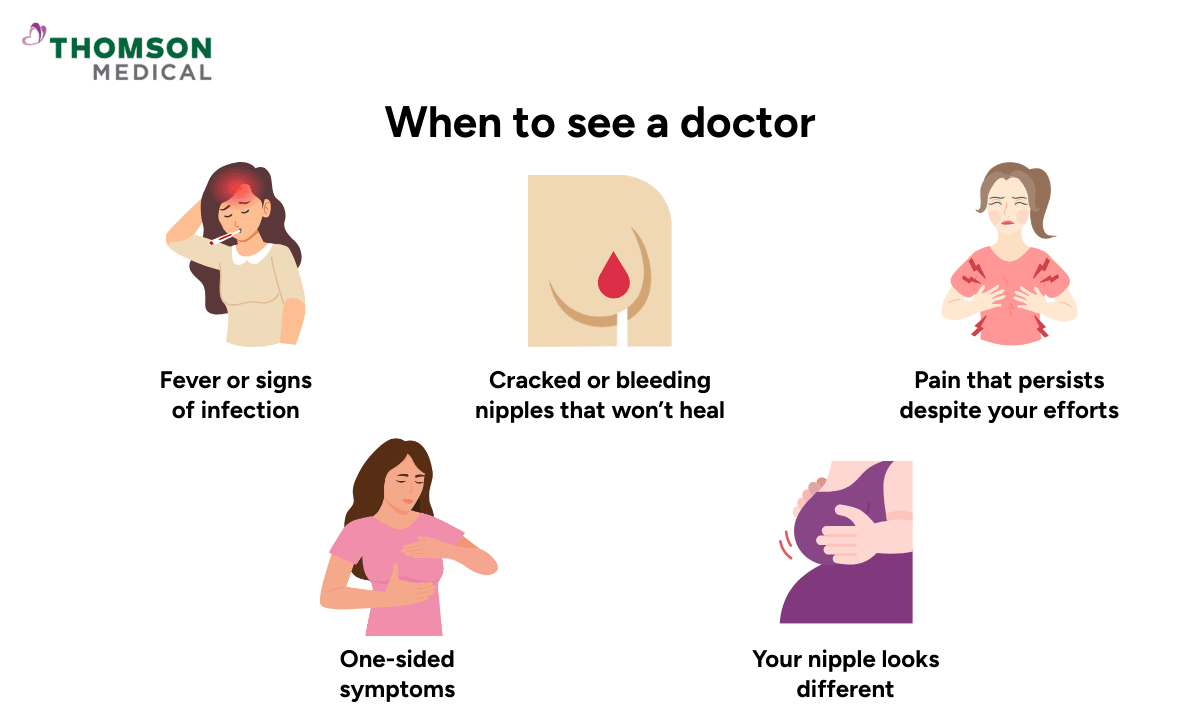
You don’t always need medical intervention to feel better. Still, there are some situations where you may need medical care. It doesn’t mean you’re doing anything wrong or failing at self-care. It just means your body needs a different kind of support.
It’s important to consult your doctor if you notice:
Fever or signs of infection:
If your temperature goes over 38°C, you notice redness spreading across your breast, the area feels warm to the touch, or there’s any discharge that looks like pus, schedule an appointment with your doctor early.
Bleeding or cracked nipples that won’t heal:
Small surface cracks usually improve with a better latch and home care. But if you have deep cracks or bleeding that continues, it’s best to get them checked.
Pain that persists despite your efforts:
You work on the latch and try home remedies, but the pain isn’t getting better after a week or two. That means something else is happening that needs a different approach.
One-sided symptoms:
If your pain is only in one breast, especially if you can feel a lump or see changes in the skin, check with your doctor for your peace of mind.
Your nipple looks different:
Scaling, persistent crusting, a rash that won’t clear, or colour changes that worry you are all worth getting checked.
Most nipple pain responds well to the right treatment. But you need the right diagnosis first. The sooner you get help, the sooner you’ll feel better. Your doctor will listen to your concerns, examine what's happening, and work with you to find the right solution.
Remember, seeking help is part of taking good care of yourself. It's a proactive step towards your comfort and well-being.
Treatment options
Once your doctor knows what’s causing your pain, they will help you create the right treatment plan for your situation.
Each condition requires different treatment approaches. Here’s what you can expect:
For latch issues:
Your doctor may refer you to a lactation consultant who can watch a feeding and give you hands-on guidance. Sometimes, just one session is enough to turn things around completely.
For thrush:
Both you and your baby need antifungal treatment. You’ll get a cream, and your baby will get oral drops. You’ll also need to sterilise anything that touches your baby’s mouth and your nipples to prevent reinfection. The pain usually improves within a few days of starting treatment.
For mastitis:
Your doctor will prescribe antibiotics, and you’ll need to keep breastfeeding or pumping frequently to help clear the blocked duct. Getting rest and staying hydrated are also important, as they help your body fight infection and heal faster.
For skin conditions:
Your doctor may prescribe a mild corticosteroid cream that's safe to use while breastfeeding or suggest gentle moisturisers for sensitive skin. Once your irritation clears, the pain usually goes with it.
For Raynaud’s phenomenon:
Your treatment will focus on keeping your nipples warm, such as using heat packs and avoiding sudden temperature changes. In more severe cases, your doctor may prescribe medication to improve circulation and reduce those painful spasms.
Nipple pain is common, but it's not something you should just accept or live with. Whether it's been a few days or a few weeks, whether it's mild discomfort or sharp pain, you deserve to feel better.
With the right care and treatment, most causes clear up completely. Your doctor will guide you through your options and help you get back to comfort as soon as possible.
If you're experiencing persistent nipple pain, you don't have to manage it alone. Schedule an appointment with Thomson Breast Centre. Our specialists will diagnose the cause, recommend the most effective treatment, and support you every step of the way toward relief.
FAQ
Is nipple pain a sign of breast cancer?
Breast cancer rarely presents as nipple pain alone. It usually involves a lump, skin changes that persist, or discharge from the nipple.
That said, if you notice any new symptoms that concern you, don’t hesitate to check with your doctor. If you’re breastfeeding, nipple pain is usually related to feeding mechanics or infection, not cancer.
How long does nipple pain from breastfeeding typically last?
Some initial tenderness in the first week is normal as your nipples adjust to nursing. This usually improves within 7-10 days.
If your pain continues beyond two weeks or gets worse instead of better, it’s important to consult your doctor for evaluation.
What's the difference between nipple pain and breast pain?
Nipple pain is localised to the nipple and areola (the darker circle around it). Breast pain, on the other hand, affects the deeper tissue in your breast. They can happen together, though. Mastitis, for instance, causes both breast tenderness and nipple soreness.
Why do my nipples hurt before my period?
Hormonal changes during your cycle cause breast tissue to retain fluid and swell slightly. That’s why your nipples, which are packed with nerve endings, are especially sensitive to these fluctuations. This usually peaks in the days before your period starts and resolves once menstruation begins.
Is nipple pain during breastfeeding normal?
Brief, mild discomfort in the very early days can be normal as your nipples adjust. But sharp, persistent pain is not normal. It signals that something needs changing, usually the latch. Breastfeeding shouldn't hurt once you and your baby have figured out the technique.
What does mastitis nipple pain feel like?
Mastitis usually brings deep, aching breast pain along with nipple soreness. The affected breast feels tender when touched, warm, and possibly red. You might also develop flu-like symptoms: fever, chills, body aches, and extreme tiredness. It usually comes on quickly, sometimes within hours.
The information provided is intended for general guidance only and should not be considered medical advice. For personalised recommendations based on your medical conditions, request an appointment with Thomson Medical.
Reference:
Buck, M. L., Amir, L. H., Cullinane, M., Donath, S. M., & Team, F. T. C. S. (2013). Nipple pain, damage, and vasospasm in the first 8 weeks postpartum. Breastfeeding Medicine, 9(2), 56–62. https://doi.org/10.1089/bfm.2013.0106