
.png%3Fbranch%3Dprod&w=3840&q=75)
Many mothers notice discomfort or pain when their baby first latches. You may find yourself feeling tense before each feed or wondering if breastfeeding is supposed to feel this way. If this sounds familiar, please know you are not alone. Nipple pain is a common challenge, especially in the early weeks of breastfeeding.
In many cases, nipple tenderness happens for a clear and treatable reason. Once you understand what may be causing the discomfort, small adjustments such as improving your baby’s latch or changing feeding positions can often make feeding feel more comfortable over time.
You do not have to struggle through the pain on your own. Seeking guidance is an important step towards finding relief and enjoying your feeding journey.
Why do nipples hurt when breastfeeding?
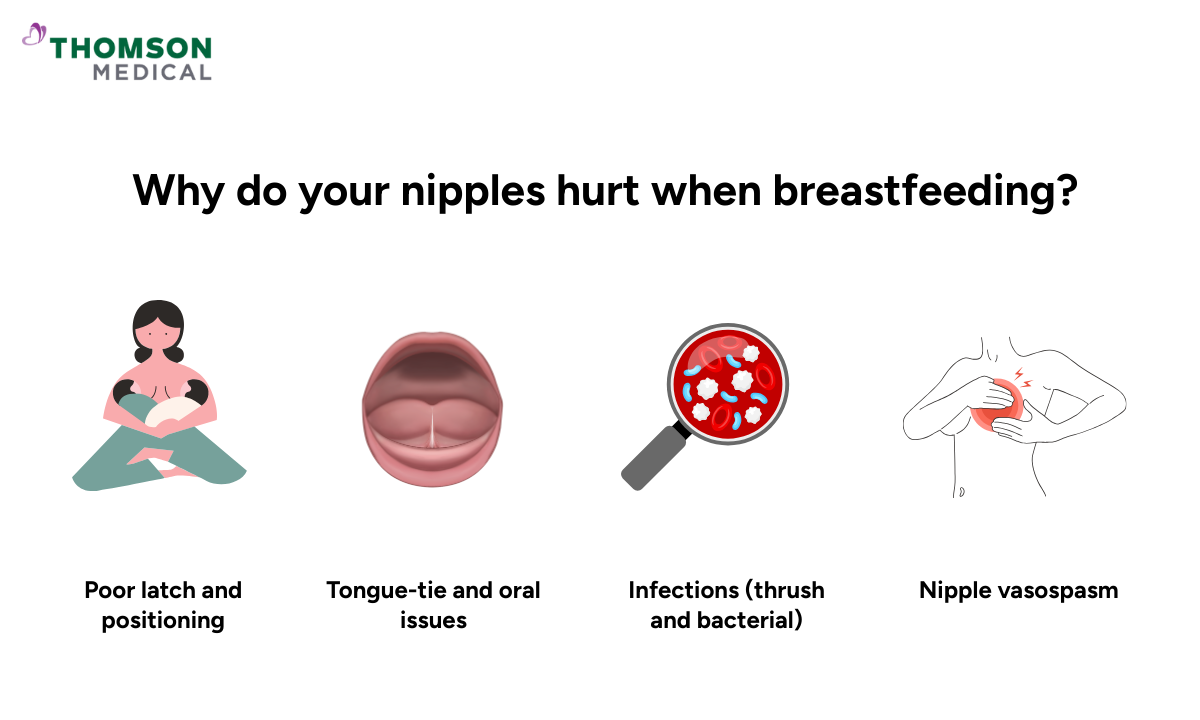
When you're experiencing nipple pain, it's natural to wonder what's causing it and whether something is wrong. The discomfort you're feeling usually points to something specific in the feeding process that needs adjustment.
Once you understand what's happening, you can take steps towards more comfortable feeding sessions.
Poor latch and positioning
Most nipple pain comes down to how your baby attaches to your breast. When your baby takes only the nipple rather than drawing in a good portion of the areola, it creates friction and pressure on delicate nipple tissue.
You might notice some of these signs if your baby's latch needs adjustment:
Your nipple looks flattened, creased, or misshapen after feeding
You hear clicking or smacking sounds while your baby feeds
The pain continues throughout the feed, not just during the initial latch
Feeding leaves you tensing up or dreading the next session
The good news is that latch difficulties can usually be corrected with some guidance and practice.
Tongue-tie and oral issues
Sometimes the challenge isn't about technique but about your baby's mouth structure. Tongue-tie (ankyloglossia) happens when the tissue connecting your baby's tongue to the floor of their mouth is shorter or tighter than usual, limiting tongue movement and making deep latching difficult.
While this might sound worrying, tongue-tie can be identified during a simple examination. Many babies feed perfectly well with a minor tongue-tie, so assessment focuses on whether it's actually causing problems.
Infections (thrush and bacterial)
If you've been breastfeeding comfortably for weeks and suddenly experience intense pain, an infection might be developing. Thrush creates a distinctive burning sensation that lingers between feeds, and your nipples might look shinier, feel itchy, or appear pink and flaky.
Bacterial infections can take hold when skin is already broken or cracked. You might notice the area becoming warmer, more swollen, or increasingly red.
Nipple vasospasm
When your nipples turn white after feeding, accompanied by sharp, burning pain, you may be experiencing vasospasm. This happens when tiny blood vessels in your nipple suddenly narrow, restricting blood flow.
Temperature changes often trigger vasospasm, which is why keeping your nipples warm immediately after feeding can help. If you're prone to cold hands and feet, you may be more susceptible.
Understanding what's behind your discomfort is the first step towards finding relief. Each of these causes has practical solutions, and with the right support, you can work towards pain-free breastfeeding.
If you're struggling with latch difficulties or persistent nipple pain, request an appointment with Thomson ParentCraft Centre. Our lactation consultants can assess your baby's latch in person, provide hands-on guidance, and help you achieve comfortable breastfeeding.
How to tell if your baby has a good latch
Getting the latch right can make your breastfeeding experience much more comfortable. While every mother and baby pair is unique, there are reliable signs that tell you when things are working well.
Signs of a good latch:
Your baby's mouth is wide open with lips flanged outward, like a fish
More areola is visible above your baby's top lip than below the bottom lip
Your baby's chin is pressed into your breast, with the nose slightly away
You hear rhythmic swallowing sounds without clicking or smacking
You feel tugging or pulling, but it shouldn't be painful
After feeding, your nipple looks round, not flattened or creased
If your nipple emerges looking compressed, pinched, or misshapen, or if you're experiencing persistent pain beyond the first few seconds, the latch likely needs adjustment. Sometimes small changes in positioning make all the difference.
A lactation consultant can observe a full feeding session and offer hands-on guidance tailored to you and your baby. Having someone watch and support you through the process often provides the clarity and confidence you need.
Treating sore nipples at home
.png?branch=production)
While you're working on improving your baby's latch and positioning, there are practical ways to ease the discomfort you're feeling right now. These gentle remedies can provide relief between feeds and support your nipples as they heal.
Immediate relief methods
When your nipples are sore, small acts of care can make a real difference:
Apply expressed breast milk to your nipples after each feed and let it air dry – breast milk has natural healing and antibacterial properties
Use warm compresses before feeding to encourage milk flow, and cool gel pads or damp cloths afterwards to reduce swelling
Let your nipples air dry whenever possible, as moisture can slow healing and increase infection risk
Wear a clean, soft cotton bra and avoid tight clothing that rubs against sore areas
Try different breastfeeding positions to reduce pressure on the most tender parts of your nipples
If the pain is severe, paracetamol or ibuprofen can help you manage the discomfort. Both are safe to use while breastfeeding and can ease pain during the healing process.
These simple steps won't fix an underlying latch issue, but they can give you some comfort while you're finding solutions that work for you and your baby.
Safe nipple creams and ointments
Some products are specifically designed to support healing while being safe for your baby during feeds.
Medical-grade lanolin cream creates a protective barrier over cracked or sore nipples, allowing them to heal without drying out. You don't need to wash it off before feeding, which makes it convenient when you're feeding frequently throughout the day and night.
Hydrogel pads offer cooling relief and keep the area moist, which can support faster healing. These pads can be worn between feeds and are reusable, making them a practical option for ongoing comfort.
If you're unsure which products are right for your situation, your doctor or lactation consultant can recommend options that suit your needs and won't interfere with breastfeeding.
Our ParentCraft trainers
Loading...
Best breastfeeding positions for nipple pain
Sometimes a change in position is all it takes to help your baby latch more deeply and reduce the pressure on sore nipples.
It's worth trying a few different approaches to find the most comfortable position for you both:
Laid-back or reclined position:
Lean back at a comfortable angle with your baby lying on your chest.
Gravity helps your baby latch deeply, and this position takes pressure off sore nipples while allowing your baby to self-attach naturally.
Rugby ball (or football) hold:
Tuck your baby under your arm on the same side you're feeding from, with their body along your side and feet pointing towards your back.
This gives you better control over your baby's head and allows you to see the latch clearly.
Side-lying position:
Lie on your side with your baby facing you.
This is particularly helpful for night feeds or when you need to rest, as it reduces pressure on tender areas without you having to sit up.
Cross-cradle hold:
Hold your baby across your body with the opposite arm from the breast you're using.
This gives you more control over your baby's head position and makes it easier to guide them to a deeper latch.
Whichever position you choose, bring your baby to your breast rather than leaning forward yourself. If one position causes pain, it's perfectly fine to try another – what works for one feed might be different the next time.
When to see a doctor or lactation consultant
.png?branch=production)
While most nipple pain improves with latch adjustments and home care, some situations benefit from professional support. There's no need to wait until things become unbearable – getting help when you need it is part of caring for yourself and your baby.
Consider seeing a doctor or lactation consultant if:
Your nipple pain persists beyond the first week despite trying different positions and latch techniques
You notice signs of infection, such as fever, increasing redness, warmth, or pus from cracked nipples
Your nipples are severely cracked and bleeding, or you experience burning pain between feeds
Your baby isn't gaining weight properly or seems frustrated during feeds
You suspect your baby may have tongue-tie or other oral issues affecting their ability to latch
Getting support early often prevents small problems from becoming larger ones. Your doctor can assess for infections or other medical concerns, while a lactation consultant can suggest specific adjustments for breastfeeding that might not be obvious on your own. Both can help you find a path forward that works for you and your baby.
If any of these concerns apply to you, schedule a consultation at Thomson ParentCraft Centre. Our specialists can identify the root cause of your nipple pain, provide personalised support, and ensure both you and your baby are on the right track.
FAQ
Is it normal for breastfeeding to hurt?
Some tenderness during the first few days is common as your nipples adjust. However, ongoing pain usually means the latch needs improvement and isn't something you should push through.
How long should nipple pain last when breastfeeding?
Initial tenderness often improves within 3-7 days as your nipples adapt. If pain persists beyond the first week or worsens, it's a sign something needs adjusting.
Can I continue breastfeeding with cracked or bleeding nipples?
Yes, you can continue breastfeeding if the pain is manageable. However, it's important to address the underlying cause quickly to prevent infection and allow healing.
What does thrush look like on nipples?
Thrush makes nipples appear shiny, flaky, or unusually pink. You may also experience burning pain that continues between feedings, and your baby might have white patches in their mouth.
Should I use nipple shields for sore nipples?
Nipple shields can provide temporary relief, but they should be used under guidance from a lactation consultant. They can sometimes reduce milk transfer if not fitted properly.
How do I know if my baby has tongue-tie?
Signs include difficulty latching, clicking sounds during feeding, and your baby's tongue appearing heart-shaped or unable to extend past their lower gum line. A doctor can confirm the diagnosis.
The information is intended for general guidance only and should not be considered medical advice. For personalised recommendations and advice based on your unique situation, please consult a specialist at Thomson Medical. Request an appointment with Thomson Medical today.
For more information, contact us:
Thomson ParentCraft Centre
Thomson Breast Centre
Request an Appointment