
_1440x810.png%3Fbranch%3Dprod&w=3840&q=75)
A missed period is often the first thing women associate with pregnancy, but when your cycle stops completely and a pregnancy test comes back negative, the cause runs deeper than stress alone. Amenorrhoea has several distinct causes, some of which need medical attention even if you are not trying to conceive.
Understanding what type you may be experiencing, and what is likely behind it, is the first step towards getting the right support.
What is amenorrhoea?
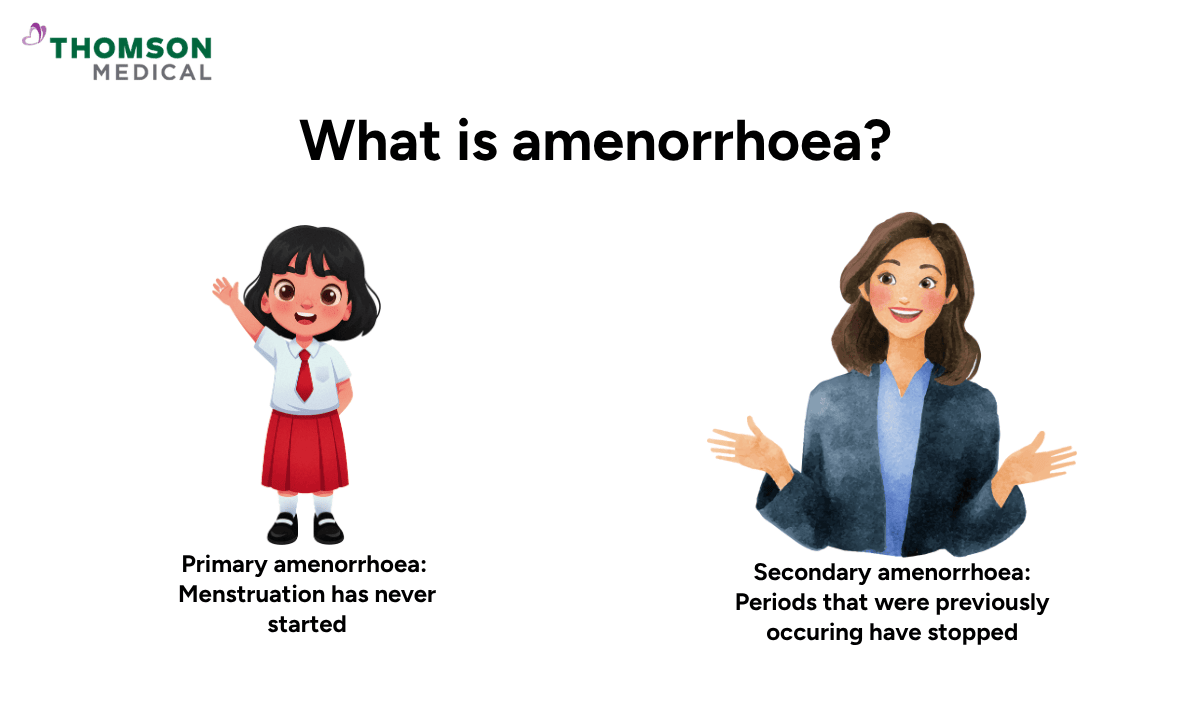
Amenorrhoea is the medical term for when menstrual periods are absent. It can affect women and girls of reproductive age – whether periods have never begun or whether they have stopped after previously occurring.
The condition has two forms, each with different causes and clinical criteria.
Primary amenorrhoea
Primary amenorrhoea describes a situation where menstruation has never started.
It is typically identified when a young woman has not had her first period by the age of 15, despite showing other normal signs of puberty such as breast development. If no signs of puberty are present by the age of 13, assessment is generally recommended sooner.
Secondary amenorrhoea
Secondary amenorrhoea is when periods that were previously occurring (whether regular or irregular) stop.
The usual clinical threshold is three consecutive missed periods in someone who previously had regular cycles or six months of absence in someone whose cycles were irregular. This is the more common of the two forms, and it can affect women across a wide range of ages and life stages.
What causes amenorrhoea?
Amenorrhoea has many possible causes, and these differ depending on whether it is primary or secondary.
Causes of primary amenorrhoea
Primary amenorrhoea is often linked to genetic or structural factors, including:
Chromosomal conditions such as Turner syndrome, which affects how the ovaries develop
Delayed puberty or growth
Structural differences in the reproductive tract — for example, an imperforate hymen (a membrane that blocks the vaginal opening, preventing menstrual flow from leaving the body) or vaginal agenesis (where the vagina has not fully formed)
Disorders of the hypothalamus or pituitary gland — the parts of the brain responsible for producing the hormones that trigger ovulation and menstruation
Causes of secondary amenorrhoea
Secondary amenorrhoea has a broader range of causes. The most common in women of reproductive age is pregnancy, so this is always worth confirming or ruling out first.
Other frequent causes include:
Stress:
Significant emotional or physical stress can disrupt the hormonal communication between the brain and the ovaries, temporarily halting ovulation and menstruation
Low body weight or significant weight loss:
Including changes related to eating disorders such as anorexia nervosa, where insufficient nutrition disrupts reproductive hormone levels
Excessive exercise:
When energy expenditure significantly outstrips intake (which can happen with intensive athletic training), the body may suppress the menstrual cycle as a response
Polycystic ovary syndrome (PCOS):
A common hormonal condition in which the ovaries produce elevated levels of androgens (male hormones), disrupting regular ovulation
Thyroid disorders:
Both an underactive thyroid (hypothyroidism) and an overactive thyroid (hyperthyroidism) can interfere with the menstrual cycle
High prolactin levels (hyperprolactinaemia):
Prolactin is the hormone responsible for breast milk production. Persistently elevated levels outside of pregnancy or breastfeeding can cause periods to stop
Primary ovarian insufficiency (POI):
When the ovaries reduce or stop functioning before the age of 40, oestrogen levels fall and menstruation may cease. This was previously referred to as premature ovarian failure
Hormonal contraception:
Some women experience a temporary absence of periods after stopping certain hormonal contraceptives, particularly injectable options. This usually resolves within a few months, though it varies
Intrauterine adhesions (Asherman syndrome):
Scar tissue that forms inside the uterus — sometimes following uterine surgery or certain procedures — can obstruct the normal shedding of the uterine lining
Cushing syndrome:
A condition caused by prolonged excess cortisol in the body, often due to long-term steroid use or a tumour affecting cortisol production
Other factors that may contribute to secondary amenorrhoea include a family history of early menopause or amenorrhoea, poor nutritional intake, and the presence of chronic illness.
When should I see a doctor about missed periods?

It is worth seeking advice from a doctor if any of the following applies to you.
For primary amenorrhoea:
You are 13 or older with no signs of puberty at all (no breast development, no pubic or underarm hair, and no growth spurt)
You are 15 or older and your period has not yet begun, even if puberty has otherwise progressed normally
Breast development began more than three years ago but your first period has not yet occurred
You experience cyclical pelvic pain each month but no bleeding – this can sometimes indicate a structural blockage preventing menstrual flow from leaving the body
For secondary amenorrhoea:
You previously had regular periods, but they have not occurred for three months or more
Your periods have always been irregular, but they have now been absent for six months or more
You are having fewer than nine periods a year, or your cycles are consistently longer than 38 days
You have noticed a new and persistent change in how often, how long, or how heavily your periods occur
These are guidelines, not absolute rules. If something about your menstrual cycle concerns you – even if a specific threshold has not been reached – it is reasonable to discuss it with your doctor or a gynaecologist. A consultation can provide reassurance or identify an issue before it becomes more complex.
Amenorrhoea is a condition with a wide range of causes, and identifying the reason behind it is the first step to getting appropriate support and treatment. If you have concerns about your menstrual cycle, request an appointment with Thomson Medical to speak with a healthcare provider who can give you guidance tailored to your situation.
Our gynaecologists in Singapore
Loading...
How is amenorrhoea diagnosed?
The aim of diagnosis is not simply to confirm that your periods are absent – it is to understand why. Your doctor will gather information across several areas, and the investigations recommended will depend on your individual circumstances.
Medical history and physical examination
Your doctor will ask about your menstrual history, including when periods started (or did not), how regular or irregular they have been, and when they last occurred. They will also ask about changes in weight, exercise habits, stress, current medications, and any relevant medical or family history.
A physical examination will typically assess signs of puberty and body mass index (BMI). In younger patients, the presence or absence of breast development and pubic or underarm hair is particularly informative – breast development signals that oestrogen is present, while the growth of axillary and pubic hair indicates that androgens are active. A pelvic examination may also be performed where appropriate.
A pregnancy test is usually carried out early in the assessment process.
Hormone and laboratory tests
Blood tests are used to measure levels of key reproductive and related hormones. These commonly include follicle-stimulating hormone (FSH), luteinising hormone (LH), prolactin, oestradiol, and thyroid function tests. The specific tests ordered will reflect what your doctor considers most likely given your history and findings on examination.
Imaging and specialist investigations
A pelvic ultrasound scan can help assess the structure of the uterus, ovaries, and surrounding pelvic organs – identifying abnormalities, confirming the presence or absence of expected anatomy, or supporting a diagnosis such as PCOS.
In some cases, magnetic resonance imaging (MRI) may be used to assess the hypothalamus or pituitary gland where a problem in these areas is suspected.
Where chromosomal causes are being considered (particularly in primary amenorrhoea) a karyotype test (a laboratory analysis of chromosomes) may be arranged.
If Asherman syndrome is a possibility, a procedure called hysteroscopy may be performed. A small camera is passed into the uterus to examine the cavity directly and, where adhesions are found, to treat them at the same time.
How is amenorrhoea treated?
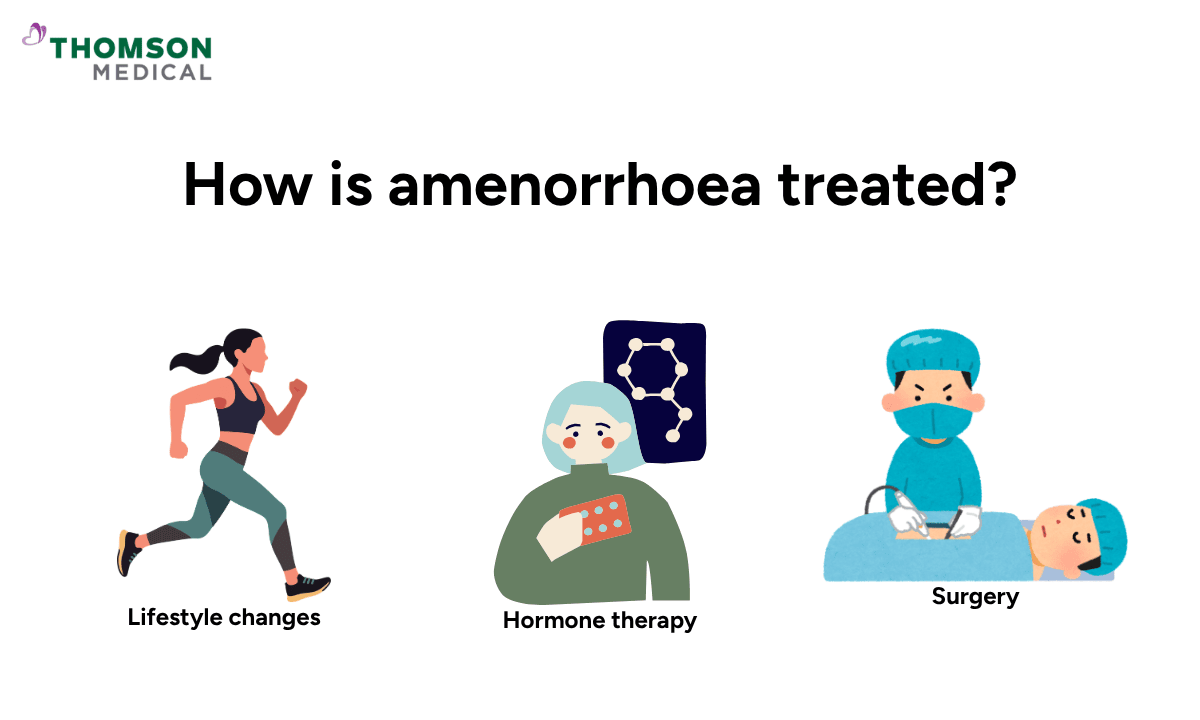
Treatment depends on the underlying cause. For most women, the goal is to address the root issue rather than to manage the absence of periods in isolation. As individual causes and circumstances vary, the most appropriate approach is best discussed with your doctor or gynaecologist.
Lifestyle changes
Where amenorrhoea is related to stress, low body weight, or excessive exercise, changes to daily habits can support recovery. This may involve working with a dietitian to restore nutritional intake, adjusting exercise intensity, or seeking psychological support – particularly where disordered eating is involved. In many cases, periods return once the body has sufficient energy and nutritional reserves to sustain a regular cycle.
Hormone therapy
When the underlying cause affects oestrogen levels (as in primary ovarian insufficiency), hormone replacement therapy (HRT) may be recommended to protect bone density and support overall health.
For elevated prolactin levels caused by a pituitary adenoma, medication known as 'dopamine agonists' is typically effective at bringing prolactin back within a normal range and, in many cases, restoring ovulation.
In adolescents with delayed puberty or persistent absence of ovulation, oestrogen-progestin therapy may be considered to support normal development.
Surgery
Surgery is not required in the majority of cases. It may, however, be appropriate for specific structural causes – such as correcting an imperforate hymen, removing a pituitary tumour, or treating intrauterine adhesions. If surgery is being considered, your doctor or specialist will explain what is involved, what risks are associated, and what recovery typically looks like.
Managing underlying conditions
Conditions such as PCOS, thyroid disorders, and Cushing syndrome each require their own management approach. Treating the underlying condition often leads to a return of regular periods over time, though this varies from person to person.
For women with PCOS alongside associated metabolic concerns (such as insulin resistance or elevated blood pressure), a combination of lifestyle changes and medication is often recommended. Regular follow-up with your doctor allows treatment to be monitored and adjusted as needed.
What are the possible complications of amenorrhoea?
When amenorrhoea persists without being assessed or addressed, the underlying cause may have effects beyond the menstrual cycle itself.
Potential complications depend on the cause and may include:
Reduced bone density:
Prolonged low oestrogen levels can affect bone strength over time, increasing the risk of fractures associated with osteoporosis
Difficulty conceiving:
Absent ovulation makes natural conception unlikely without intervention; however, fertility outcomes vary significantly depending on the underlying cause and how it is managed
Psychological effects:
Changes to the body and uncertainty about their cause can contribute to anxiety or low mood; conditions associated with amenorrhoea, such as eating disorders, may also carry their own psychological weight
Metabolic and cardiovascular implications:
Certain hormonal imbalances associated with amenorrhoea (for example, those seen in PCOS) may have broader effects on metabolic health if left unmanaged
Hormonal effects:
Elevated androgen levels may cause symptoms such as increased facial or body hair (hirsutism) or acne
Uterine lining changes:
In the absence of regular periods, the uterine lining may not shed as expected; over time, this can have implications for uterine health that are worth monitoring
Unexpected breast milk production (galactorrhoea):
Elevated prolactin levels can cause milk production outside of pregnancy or breastfeeding
Not all of these complications will affect every person with amenorrhoea. Many can be avoided or managed effectively when the underlying cause is identified and treated in good time.
Can amenorrhoea be prevented?

Primary amenorrhoea, which is often related to genetic or structural factors, is generally not preventable.
Secondary amenorrhoea, however, may sometimes be reduced in risk through attention to overall well-being:
Maintaining a balanced diet that supports hormonal health
Avoiding extreme or rapid weight loss
Keeping exercise intensity at a level that supports rather than suppresses your cycle
Finding ways to manage both physical and psychological stress
Attending regular health checks, which can help identify hormonal changes before they become persistent
These measures support the body's general reproductive health, though they cannot guarantee that amenorrhoea will not occur, particularly where the underlying cause is medical rather than lifestyle-related.
If your period has stopped, changed significantly, or never started as expected, it is worth speaking with a doctor. Schedule an appointment with Thomson Medical to get your individual circumstances assessed, arrange any relevant investigations, and discuss what the options look like for you.
FAQ
What is the difference between primary and secondary amenorrhoea?
Primary amenorrhoea means periods have never started by the expected age. Secondary amenorrhoea means periods that were previously present have since stopped. The two forms have different likely causes, though some underlying conditions (such as hormonal disorders) can contribute to either type.
Is it normal to miss a period if I am not pregnant?
Occasionally missing a period can happen for many reasons, including stress, illness, significant travel, or changes in routine. However, consistently absent or very infrequent periods are worth discussing with a doctor, as they may indicate an underlying hormonal or health issue that benefits from assessment.
Can stress really stop your period?
Yes, in some cases. Significant psychological or physical stress can disrupt the hormonal signals between the brain and the reproductive system – a pattern sometimes called ‘hypothalamic amenorrhoea’.
For many women, periods return once stress levels reduce, though the timeline varies. If your period has been absent for three months or more, it is worth seeking advice rather than waiting.
Will my period come back after amenorrhoea?
In many cases, yes. Especially when the underlying cause is identified and addressed. Periods often return once lifestyle factors are corrected or hormonal and medical conditions are treated.
The timeline cannot be predicted precisely and varies from person to person. Speaking with a doctor or gynaecologist will provide a clearer picture of what to expect given your specific situation.
Can amenorrhoea affect my fertility?
Amenorrhoea is often associated with absent or irregular ovulation, which can make natural conception more difficult.
Fertility outcomes, however, depend greatly on the underlying cause, how long the condition has been present, and how it is managed. If fertility is a concern, a gynaecologist or reproductive specialist can assess your situation and explain the options available to you.
Will I need surgery for amenorrhoea?
Surgery is not required in the majority of cases. It may be recommended for specific structural causes (such as an imperforate hymen, intrauterine adhesions, or a pituitary tumour), but most women with amenorrhoea are managed through lifestyle changes, medication, or hormone therapy.
The information provided is intended for general guidance only and should not be considered medical advice. For personalised recommendations and tailored advice based on your unique situations, please consult a specialist at Thomson Medical. Request an appointment with Thomson Medical today.
For more information, contact us:
Thomson Specialists (Women's Health)
Thomson Women's Clinic (TWC)
- Novena:
6592 6686 (Call), 8611 8986 (WA) - Bukit Batok:
6569 0668 (Call), 8686 3525 (WA) - Choa Chu Kang:
6893 1227 (Call), 8282 1796 (WA) Jurong:
6262 8588 (Call), 6262 8588 (WA)- Katong (female doctor):
6970 2272 (Call), 8611 9020 (WA) - Punggol:
6243 6843 (Call), 8811 0328 (WA) - Sembawang: 6753 5228
- Sengkang: 6388 8125
- Serangoon (female doctor): 6382 3313
- Tampines: 6857 6266
- Tiong Bahru: 6276 1525