

Learning that you have an ovarian cyst while pregnant or trying to conceive can naturally bring up worry and uncertainty.
You may find yourself asking questions such as "What does this mean for me and my baby?" or "Can I still have a healthy pregnancy?" These concerns are completely understandable, and many women share them.
The good news is that ovarian cysts are quite common during pregnancy, and most do not interfere with conception or affect a baby’s development. Understanding the possible risks, when your cysts may need monitoring, and how they are usually managed can help you feel more informed, reassured, and confident as you move through pregnancy.
What is an ovarian cyst?
Ovarian cysts are fluid-filled sacs that form on or inside your ovaries, often as a natural part of your menstrual cycle. They’re actually very common. In fact, many women develop them at some point during their reproductive years without even realising it.
Most of the time, ovarian cysts disappear on their own within a few weeks or months, without any treatment. Your body often resolves them naturally as your cycle progresses, and many women never experience any symptoms at all.
Can you get pregnant with an ovarian cyst?
Yes, most women with ovarian cysts can get pregnant and go on to have healthy pregnancies without any problems.
Many cysts are harmless. They don’t impact your ability to have a baby. However, some cysts, especially large or complex ones, may affect how your ovaries release eggs or influence your hormone balance. This can make conception a bit more challenging.
If your doctor detects a cyst before you become pregnant, they may suggest monitoring or treating it first. This helps improve your chances of conceiving and prepares you for a healthy pregnancy ahead.
Ovarian cysts during pregnancy
Knowing you have an ovarian cyst when you're pregnant can feel worrying, but this situation is actually more common than you might think. Many women with ovarian cysts can still go through their pregnancies without experiencing any problems.
Types of cysts common in pregnancy
During your pregnancy, you might develop different types of ovarian cysts.
The most common cysts are functional cysts, which include:
Follicular cysts:
They form when the follicle doesn’t release an egg properly during your menstrual cycle.
Corpus luteum cysts:
These cysts develop to support early pregnancy by producing the hormone progesterone.
There are also less common cysts:
Dermoid cysts:
These contain tissue, such as hair or skin.
Cystadenomas:
These fluid-filled cysts may appear on the surface of your ovary.
Most of these cysts are benign, but some of the rarer types may need monitoring or intervention depending on their size and symptoms. If you feel concerned, rest assured that your doctor will keep a close eye on them to make sure they don’t affect your pregnancy.
How cysts support early pregnancy
You might be surprised to learn that some ovarian cysts, especially the corpus luteum cyst, actually help your early pregnancy along.
This cyst produces progesterone, a hormone that’s essential for:
Maintaining the uterine lining where your baby will grow
Creating a supportive environment for your developing embryo
So if your doctor finds a corpus luteum cyst at your first ultrasound, you can feel reassured knowing this type of cyst can be beneficial for your early pregnancy.
If you’ve found out you have a cyst and want to know how it may be affecting your pregnancy, schedule an appointment with Thomson Medical. Our specialists will evaluate your condition and create a personalised monitoring plan to support your pregnancy journey.
Our gynaecologic oncology specialist
Loading...
Symptoms of ovarian cysts while pregnant
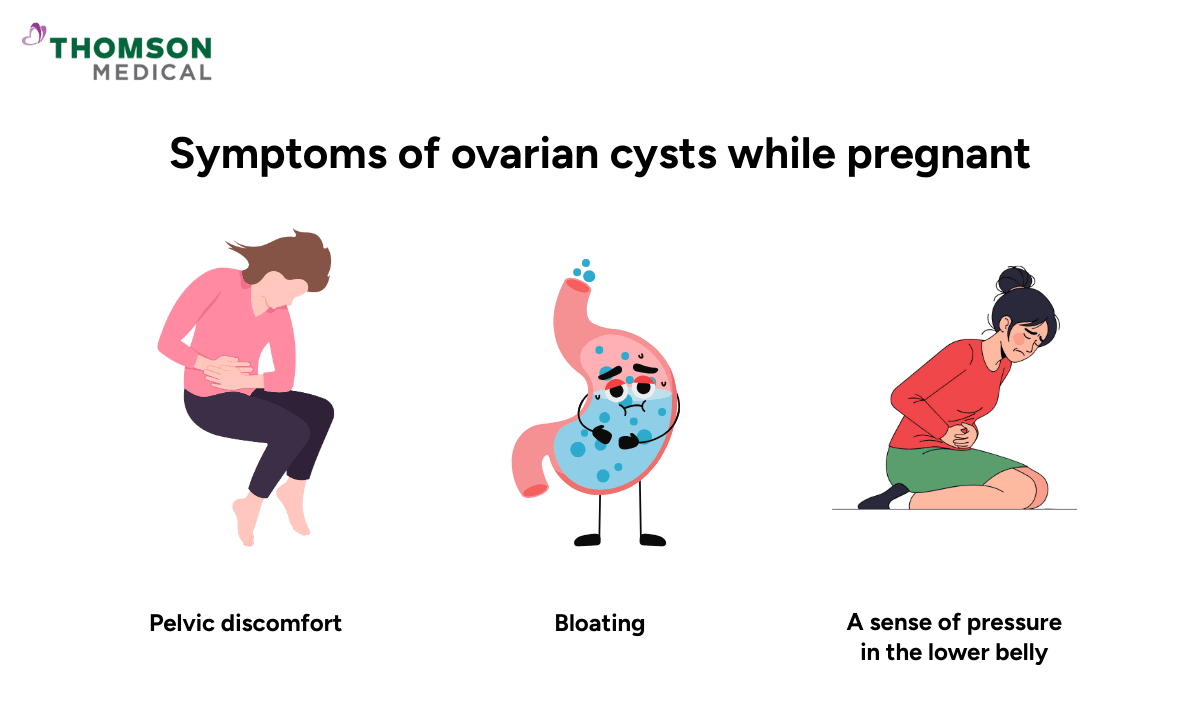
Most ovarian cysts during pregnancy don’t cause noticeable symptoms and are only discovered during your routine ultrasounds.
When symptoms do appear, they’re often mild and may include:
Pelvic or abdominal discomfort
Bloating
A sense of pressure in the lower belly
Larger cysts may cause more noticeable discomfort, but most of the time, these symptoms won’t affect your daily life much.
In rare cases, you may experience:
Sudden and severe abdominal pain
Nausea or vomiting
Dizziness or bleeding
These symptoms may indicate complications, such as torsion (twisting of the ovary) or rupture. Though these conditions are uncommon, they do require urgent care. If you're feeling any of these symptoms, reach out to your doctor right away. When you're pregnant, getting checked quickly is always the right choice to ensure both you and your baby can receive the care you need.
Can ovarian cysts affect the baby during pregnancy?
In most cases, ovarian cysts are harmless and don’t affect your baby’s development or your pregnancy journey.
While complications are uncommon, it's helpful to know what signs to watch for. In rare situations, a cyst may rupture (burst) or cause ovarian torsion, where the ovary twists on itself.
If you notice any of these symptoms, contact your doctor straight away:
Sudden and severe abdominal pain
Vaginal bleeding
Persistent nausea or vomiting
Dizziness or feeling faint
If complications happen, your doctor may recommend surgical intervention to prevent serious problems. It’s natural to feel concerned, but this procedure can protect both you and your baby. Your doctor will monitor you closely throughout your pregnancy to catch any issues early and keep you both safe.
Treatment for ovarian cyst during pregnancy
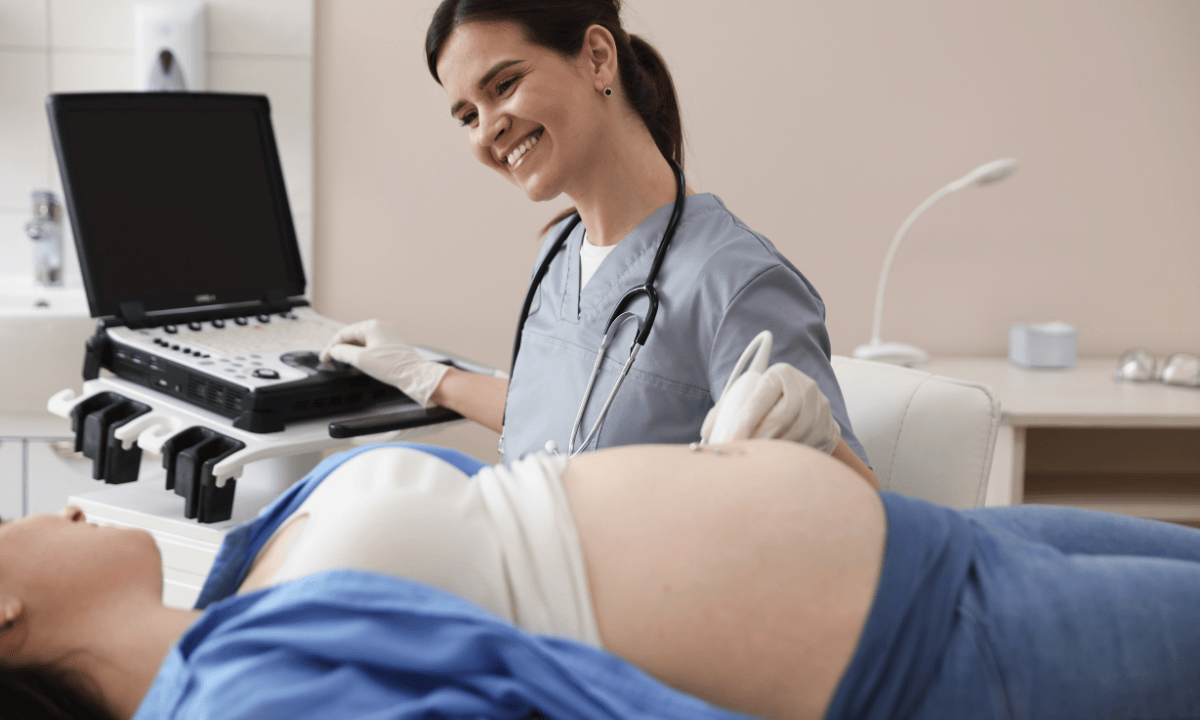
The treatment will depend on some factors, including the type of cyst you have, its size, and whether it’s causing symptoms or complications. Your doctor’s priority is always to protect you and your baby while addressing the cyst.
In most cases, cysts don’t need any treatment. Your doctor will simply monitor them through regular ultrasounds.
Your doctor may recommend surgery if the cyst causes severe pain, grows too large, or leads to complications. If surgery becomes necessary, they’ll usually schedule it during the second trimester of your pregnancy. This timing is chosen because it's the safest window for both you and your baby. Your pregnancy is well-established, and there's still comfortable space to work before the later stages.
Throughout any treatment, your doctor will explain each step clearly and answer all your questions. You'll be supported every step of the way, with care designed specifically around your needs and your baby's wellbeing.
If you’re concerned that ovarian cysts may affect your baby, schedule an appointment with Thomson Medical. Our specialists will provide monitoring and treatment options to protect both you and your baby.
FAQ
What does a cyst feel like in early pregnancy?
Most ovarian cysts during early pregnancy don’t cause noticeable symptoms and are often discovered incidentally on an ultrasound.
When symptoms do occur, they are usually mild, such as a dull ache or pressure in your lower abdomen, some bloating, or discomfort during movement or intercourse.
In rare cases, if a cyst twists or ruptures, it may cause sudden, sharp pain, which needs urgent medical attention.
Do ovarian cysts go away during pregnancy?
Many ovarian cysts, especially functional cysts such as corpus luteum cysts, shrink and disappear on their own as your pregnancy progresses.
By the second trimester, most cysts have resolved naturally without any treatment at all. Some of them may persist, and your doctor will keep track of them through regular ultrasounds to make sure they don’t cause any complications later in your pregnancy.
Can an ovarian cyst cause a miscarriage?
In most cases, ovarian cysts don’t cause miscarriage. In fact, functional cysts, such as the corpus luteum, actually help support early pregnancy by producing hormones.
Rarely, large cysts or complications like ovarian torsion or rupture can cause problems, but these are uncommon. Regular prenatal check-ups and monitoring help ensure any issues are detected early to protect both you and your baby.
How common are ovarian cysts during pregnancy?
Ovarian cysts are relatively common during pregnancy. Many women have them without even knowing, as they often don’t show any symptoms. Routine ultrasounds in the first few months of pregnancy often detect cysts that are otherwise harmless and temporary.
Can you have a normal delivery with an ovarian cyst?
Yes, in most cases, you can have a normal vaginal delivery with an ovarian cyst. A cyst doesn't always mean that a natural delivery is impossible.
In rare cases, if a cyst is very large or obstructs the birth canal, your doctor may suggest a caesarean section for your safety. Your doctor will monitor cysts throughout your pregnancy and work with you to plan the safest delivery method for you and your baby.
Can ovarian cysts be removed when pregnant?
Yes, ovarian cysts can sometimes be removed during pregnancy, but surgery is generally avoided unless it’s necessary.
If a cyst causes severe pain, grows too large, or leads to complications such as torsion or rupture, your doctor may recommend surgery. It is usually done in the second trimester, which is considered the safest time for you and your baby. The goal is always to address the cyst while minimising any risk to your pregnancy.
The information provided is intended for general guidance only and should not be considered medical advice. For personalised recommendations and advice based on your unique situation, please consult a specialist at Thomson Medical. Request an appointment with Thomson Medical today.
For more information, contact us:
Thomson Specialists (Women's Health)
Thomson Women's Clinic (TWC)
- Novena:
6592 6686 (Call), 8611 8986 (WA) - Bukit Batok:
6569 0668 (Call), 8686 3525 (WA) - Choa Chu Kang:
6893 1227 (Call), 8282 1796 (WA) - Jurong:
6262 8588 (Call), 6262 8588 (WA) - Katong (female doctor):
6970 2272 (Call), 8611 9020 (WA) - Punggol:
6243 6843 (Call), 8811 0328 (WA) - Sembawang: 6753 5228
- Sengkang: 6388 8125
- Serangoon (female doctor): 6382 3313
- Tampines: 6857 6266
- Tiong Bahru: 6276 1525
Notice
The range of services may vary between TWC/TS locations. Please contact your preferred branch directly to enquire about the current availability.
Request an Appointment