

If you've noticed pain around your rib cage, it's natural to wonder what's going on. It can feel worrying, as this area sits so close to your heart and lungs. The good news is that most rib cage pain is not serious. In many cases, it comes down to posture, a pulled muscle, or short-term inflammation rather than lung or heart conditions.
Knowing what's likely behind it can help you figure out whether to monitor it at home or seek medical advice.
What does rib cage pain feel like?
Each person may experience rib pain slightly differently. It might show up as:
A sharp, stabbing pain when you take a deep breath
A dull ache that lingers throughout the day
Tenderness when you press on a specific spot
Pain that worsens when you twist, stretch, cough, or laugh
Tightness that feels worse after sitting for long periods
The discomfort can appear on one side of your ribs or both, and it may be constant or come and go in waves.
How your rib cage pain feels is often the first clue about what's driving it. Understanding the common causes can help you make sense of what your body is telling you.
Why does your rib hurt?
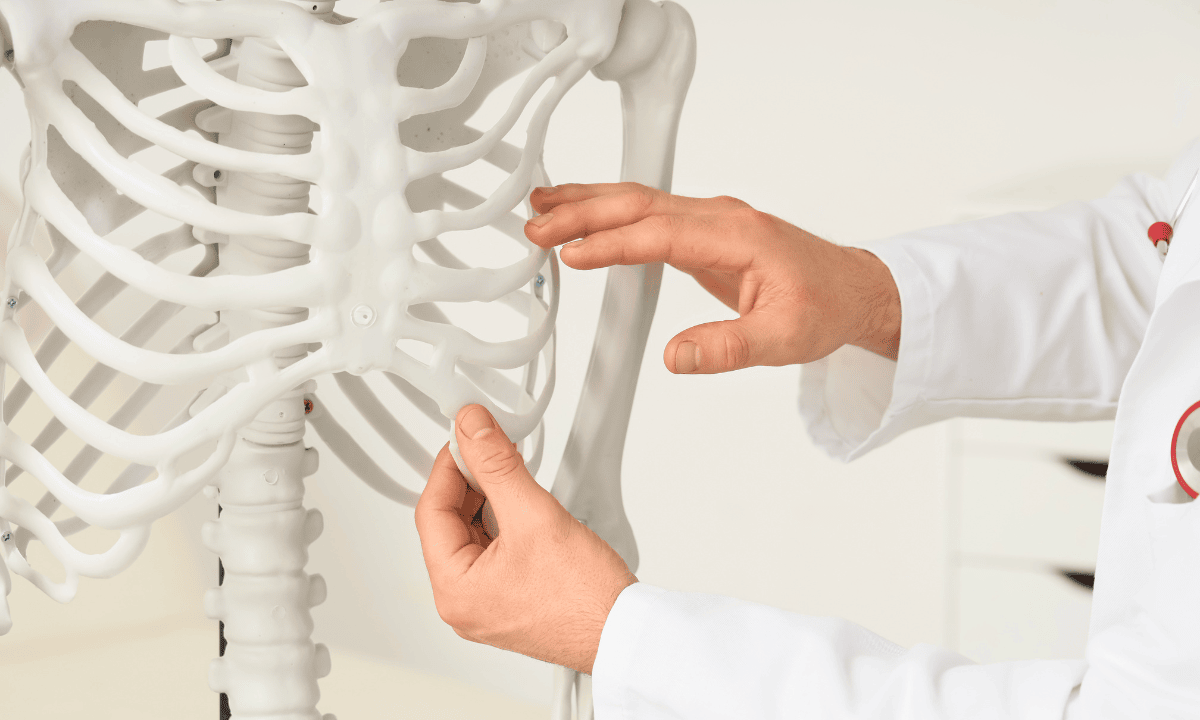
Your rib cage protects your heart, lungs, and parts of your digestive system. It also connects to muscles, joints, and cartilage that shift with each breath you take.
As so much is packed in and around that area, pain may come from more than one place. The table below covers the most common causes to help you get a clearer picture.
System | Common causes | Symptoms |
Musculoskeletal conditions |
| Pain that worsens with movement, coughing, or certain postures |
Respiratory problems |
| Chest pain with breathing, persistent cough, or shortness of breath |
Gastrointestinal issues |
| Upper abdominal discomfort, bloating, or pain after eating |
Cardiovascular problems |
| Chest pressure, tightness, or pain that worsens during physical activity |
Pregnancy-related |
| Rib discomfort or tightness that increases as the pregnancy progresses |
A few of these may be unfamiliar. Pleurisy is inflammation of the lining around the lungs, pulmonary embolism is a blood clot in the lung, and pericarditis is inflammation of the sac surrounding the heart. Your doctor can help determine which, if any, applies to you.
A proper medical assessment can quickly narrow down the cause and help you understand whether your rib pain is something minor or something that needs treatment. Request an appointment with Thomson Medical.
When to see a doctor
Most rib cage pain isn't dangerous, but some symptoms should get checked for clarity sooner rather than waiting it out.
Seek urgent medical care if your rib pain comes with any of the following:
Chest pressure or tightness spreading to your arm, jaw, or back
Shortness of breath
Fainting or dizziness
Coughing up blood
High fever with chest pain
These symptoms can point to a heart, lung, or circulation issue that needs prompt assessment.
Even if things don't feel severe, it's worth seeing a doctor when:
The pain lasts more than a few days without improvement
It keeps returning
It interferes with daily life
You feel unsure or anxious about the cause
If you're not sure whether what you're feeling is serious, it's always better to ask. Getting checked sooner gives you peace of mind, a clear answer, and the right care at the right time if something does need attention.
Our healthcare specialists
Loading...
How is rib cage pain diagnosed?
Because rib cage pain can come from different places, your doctor's first job is to work out where it's actually coming from.
It starts with a conversation about your symptoms and a physical examination. Your doctor will likely ask about what the pain feels like, when it started, and what makes it better or worse.
During the exam, they may:
Press along your rib cage to check for tenderness
Assess how you're breathing
Listen to your heart and lungs
Evaluate your posture and muscle tension
If your doctor needs a clearer picture, they may recommend one or more of the following:
Electrocardiogram (ECG):
An ECG test checks the electrical activity of your heart and helps rule out rhythm problems and signs of reduced blood flow.
Chest X-ray:
It gives your doctor a view of your lungs, ribs, and chest structure. It can pick up things like pneumonia, a collapsed lung, fluid buildup, or an obvious rib injury.
Blood tests:
A blood test is used to look for signs of infection, inflammation, or strain on the heart. In some cases, specific markers like cardiac enzymes help rule out a heart problem.
CT scan or MRI scan:
These imaging scans are usually used when there's concern about something like a pulmonary embolism or another internal issue that a chest X-ray wouldn't fully show.
Not everyone with rib cage pain require these investigations, your doctor will recommend the right procedures based on your symptoms, your medical history, and what they find during the examination.
Treatment options for rib cage pain
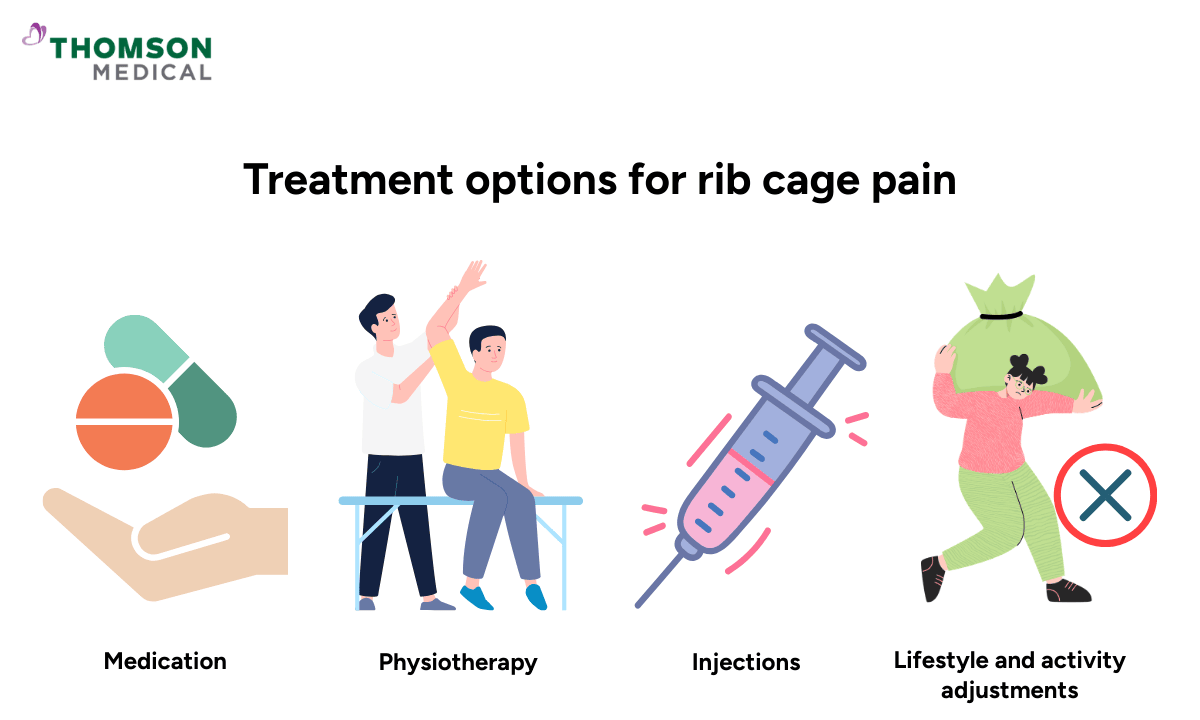
How rib cage pain is treated depends on what's causing it. The reassuring news is that most cases get better with straightforward, non-invasive care.
Medication
Medication is often the starting point for managing discomfort.
Depending on what's behind your pain, your doctor may recommend:
Anti-inflammatory medication to reduce chest wall inflammation
Pain relief to help you stay comfortable and mobile
Acid-reducing medication if reflux seems to be a factor
Antibiotics if a bacterial infection is confirmed
Heart-related medication if cardiac causes are identified
What medication you're prescribed with will be tailored to your symptoms and medical conditions. For most musculoskeletal cases, a short medication course is all that's needed.
Physical therapy
If your pain is coming from an issue from muscle, posture, or joints, physiotherapy can make a real difference.
Treatment will usually focus on:
Improving your posture
Releasing muscle tension
Building strength in the surrounding muscles
Correcting how you breathe
Because your ribs move with every breath, getting your chest wall moving better can go a long way in easing the discomfort.
Injections
Injections are usually considered if pain has persisted for several weeks despite after rest, medication, and physiotherapy. It’s also recommended when your discomfort is tied to a specific inflamed area like costochondritis.
In those cases, a small dose of corticosteroid, sometimes paired with a local anaesthetic, may be injected directly into the affected rib joint. The anaesthetic can bring short-term relief within hours, while the steroid works over the following days to bring down inflammation. Many people notice a clear improvement within one to two weeks.
Lifestyle and activity adjustments
Sometimes small changes are enough to shift things. You may be advised to:
Ease back on exercise and avoid heavy lifting for a while
Sleep on your side or with extra pillow support
Eat smaller meals if reflux is playing a role
Try some gentle breathing exercises.
These changes are usually temporary – just long enough for your body to recover.
You may only need one of these treatments, or a combination of them. Your doctor will work with you to create a plan that fits your specific condition and goals, guiding you step by step toward steady recovery.
If your rib pain persists, worsens, or is causing concern, our specialists at Thomson Medical are here to help. A thorough evaluation can help identify what's causing your discomfort and provide a treatment plan tailored to your needs. Schedule an appointment today.
FAQ
What causes pain in the ribs?
Rib pain is most commonly caused by muscle strain, muscle spasms, costochondritis, or minor injury. Less commonly, it may relate to digestive issues, lung problems, or heart conditions.
When should I worry about rib pain?
You should seek urgent care if rib pain comes with chest pressure, shortness of breath, or fainting. Persistent unexplained pain also deserves medical evaluation to rule out lung or other internal causes.
How to fix rib pain?
Most rib pain improves with rest, anti-inflammatory medication, gentle stretching, and physiotherapy. Treatment depends on the cause, but pain of musculoskeletal conditions usually settles with conservative care.
How do you know if rib pain is a muscular issue?
Rib pain comes from the musculoskeletal system if it worsens with movement, pressing on the area, coughing, or twisting.
What does heart attack rib pain feel like?
Pain from a heart attack usually feels like pressure, tightness, or squeezing in the chest rather than sharp, localised rib pain. It may spread to the arm, jaw, or back and is linked to serious heart conditions that require urgent medical attention.
What cancers cause rib pain?
Rib pain is rarely caused by cancer, but in uncommon cases it may be associated with advanced lung cancer, breast cancer, or cancer that has spread to the bones.
The information is intended for general guidance only and should not be considered medical advice. For personalised recommendations and advice based on your unique situation, please consult a specialist at Thomson Medical. Request an appointment with Thomson Medical today.
For more information, contact us:
Thomson Medical Concierge
- 8.30am - 5.30pm
- WhatsApp: 9147 2051
Need help finding the right specialist or booking for a group?
Our Medical Concierge is here to help you. Simply fill in our form, and we'll check and connect you with the right specialist promptly.
Notice:
The range of services may vary between Thomson clinic locations. Please contact your preferred branch directly to enquire about the current availability.
Get In Touch